
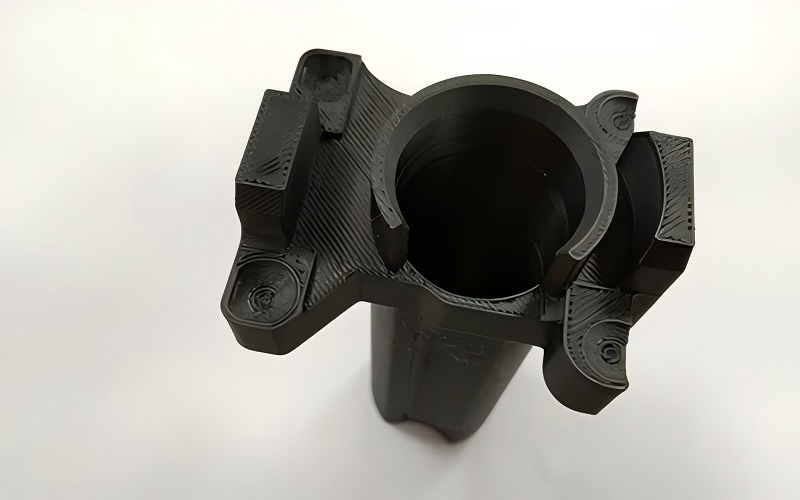
In the contemporary landscape of additive manufacturing, the transition from rapid prototyping to the production of functional parts demands a rigorous understanding of polymer science.
While early adopters relied heavily on Polylactic Acid (PLA), the industrial sector has pivoted towards materials capable of maintaining structural integrity under thermal and mechanical stress.
This guide provides an authoritative, logically progressive analysis of Polyethylene Terephthalate Glycol (PETG), Nylon (Polyamide), and Acrylonitrile Butadiene Styrene (ABS), evaluating their material properties, chemical stability, and performance in industrial applications.
Introduction to 3D Printing Materials
Material selection is a foundational decision in 3D printing, directly impacting the performance, durability, and suitability of the final product.
The world of additive manufacturing offers a diverse palette of materials, each engineered to meet specific demands.
From widely used plastics like Acrylonitrile Butadiene Styrene (ABS) and Polyethylene Terephthalate Glycol (PETG) to advanced carbon fiber-reinforced filaments, every option brings distinct advantages to the table.
Key factors such as chemical resistance, heat resistance, and impact resistance define how a material will perform in real-world applications.
For example, ABS is prized for its robust impact resistance and ability to withstand higher temperatures, making it a staple for automotive and industrial components.
PETG, on the other hand, is valued for its excellent chemical resistance and ease of use, bridging the gap between strength and printability.
Carbon fiber-infused filaments elevate mechanical properties even further, offering exceptional stiffness and wear resistance for demanding functional parts.
Understanding these material properties is essential for engineers and designers aiming to produce functional prototypes or end-use products that meet rigorous operational requirements.
By aligning the unique characteristics of each filament with the intended application, users can unlock the full potential of 3D printing technology.
PETG vs Nylon vs ABS Overview
To understand the macro performance of these materials, we must first examine their chemical foundations.
PETG
Polyethylene Terephthalate Glycol (PETG) is a clear amorphous thermoplastic.
The addition of glycol prevents the crystallization common in PET, resulting in a material that offers excellent layer adhesion and transparency.
PETG’s good layer adhesion contributes to strong, durable 3D printed parts, making it a reliable choice for structural applications.
It bridges the gap between the ease of PLA and the durability of ABS, offering a unique balance of strength and flexibility. PETG is less hygroscopic than nylon, making it easier to store and handle without significant moisture-related issues.
PETG is commonly used for water bottles, food containers, and medical prototypes due to its biocompatibility and chemical resistance.
It is also ideal for functional parts for outdoor use, protective housings, and containers, and is suitable for general-purpose functional parts thanks to its excellent chemical resistance and ease of printing.
Nylon
Nylon filaments, or polyamides, are semi-crystalline polymers known for their exceptional tensile strength and wear resistance.
When reinforced with carbon fiber, Nylon becomes a formidable substitute for metal in mechanical components like gears and bushings, where abrasion resistance is a non-negotiable requirement.
ABS
Acrylonitrile Butadiene Styrene (ABS) is a terpolymer.
The acrylonitrile provides chemical resistance and heat stability, while butadiene delivers superior impact resistance and toughness.
In structural parts, ABS is utilized for its rigidity.
However, the acrylonitrile butadiene styrene synthesis makes it prone to thermal contraction, requiring precise environment control during the printing process.
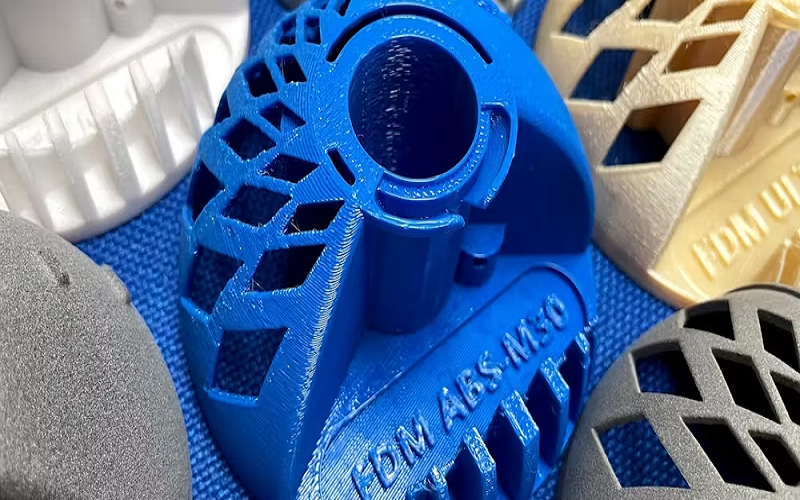
Thermal Dynamics and Heat Resistant Parameters
Thermal performance is defined by two critical metrics: Glass Transition Temperature and Heat Deflection Temperature (HDT).
When selecting a filament, temperature resistance is a key property to consider, as it determines how well a material can perform under elevated temperatures and environmental stress.
| Material | Glass Transition (Tg) | Heat Deflection (HDT) | Max Operating Temp |
|---|---|---|---|
| ABS | ~105°C | ~98°C | 90°C |
| PETG | ~80°C | ~70°C | 65°C |
| Nylon (PA6) | ~50-60°C (Dry) | ~60-160°C (Variable) | 120°C+ |
While engineering materials and high-temperature resins can withstand temperatures over 200°C, common filaments like PLA, PETG, and ABS soften at much lower temperatures.
Among these three, ABS demonstrates the highest heat resistance, with a heat deflection temperature around 98°C, followed by PETG at about 70°C, and PLA at approximately 55°C.
Analyzing Heat Resistance ABS
ABS demonstrates the highest heat resistance of the standard filaments, offering high heat resistance along with toughness and impact resistance.
ABS is best applied in automotive parts, rugged enclosures, and functional high-temperature components.
In automotive parts—specifically interior components and electronic enclosures—heat resistance abs ensures that the part does not undergo plastic deformation under elevated temperatures.
PETG Thermal Tolerance
PETG Thermal Tolerance
While PETG has a lower (Tg) than ABS, it maintains excellent structural integrity in moderate environments.
PETG offers good temperature resistance, making it suitable for applications that require durability under elevated temperatures.
Its heat tolerance is sufficient for functional prototypes that are not exposed to direct combustion or high-friction heat.
PETG also has better UV resistance than ABS, but it will still degrade over time with prolonged exposure to sunlight.
PETG typically prints at temperatures between 230°C and 255°C.
Nylon’s High-Temperature Versatility
Nylon is unique because its properties change with moisture content.
However, specialized grades are designed to withstand higher temperatures than both PETG and ABS, making it the versatile material for engine bay components.
While nylon offers better heat resistance than many standard filaments, high-performance plastics like polycarbonate, PEEK, and PEI surpass nylon’s capabilities for high-temperature applications.
Chemical Stability and Environmental Durability
In industrial applications, components are frequently exposed to corrosive agents.
For applications involving exposure to chemicals, moisture, or UV light, selecting a material with high resistance is critical.
Excellent Chemical Resistance of PETG
PETG exhibits greater chemical resistance than ABS, particularly against various acids, alcohols, and salts.
This chemical resistance petg makes it the preferred choice for medical devices and food containers.
Its chemical stability ensures that it does not leach harmful substances, aligning with its biocompatibility.
ABS and Solvents
ABS plastic has good chemical resistance but is susceptible to aromatic hydrocarbons and ketones (like acetone).
This vulnerability is actually a benefit in post processing abs, where acetone is used to create a smooth surface.
The Hygroscopic Challenge of Nylon
Nylon is more sensitive to moisture than both PETG and ABS.
It will absorb moisture from the atmosphere (hygroscopy), which acts as a plasticizer, increasing flexibility but reducing tensile strength.
Proper storage in dry boxes is critical to prevent layer bonding failure during printing.
Advanced 3D Printing Mechanics and Setup
Achieving excellent mechanical properties requires rigorous control over print settings.
PLA is known for its lower printing temperature compared to PETG and other materials, making it easier to print with and reducing issues such as warping.
Bed Temperature and Adhesion Logic
- Heated Bed Requirements: ABS requires a heated bed temperature of 90°C to 120°C to prevent warping caused by thermal contraction.
- Layer Adhesion Dynamics: PETG generally exhibits the strongest layer adhesion due to its slower cooling rate and chemical affinity. This results in stronger layer adhesion compared to ABS, which can suffer from delamination if the ambient temperature fluctuates.
Managing Volatile Organic Compounds (VOCs)
ABS emits strong fumes (VOCs) when heated, necessitating an enclosed 3d printer with HEPA/Carbon filtration. In contrast, PETG is generally considered safer for indoor printing due to its lower emission profile.
Industrial Applications and Post-Processing Techniques
The final utility of a part is determined by its post processing.
ABS Prints: Best for post processing techniques involving chemical smoothing. It is essential for automotive parts where a “Class A” finish is required. ABS offers a wider range of post-processing options compared to other plastics, making it highly versatile for various applications.
PETG Filament: Ideal for functional parts requiring transparency and UV light resistance. It is the versatile material for outdoor protective housings. PETG is a good choice for outdoor applications due to its moisture resistance and UV stability compared to ABS.
Nylon Mechanical Components: Used for gears, hinges, and parts undergoing maximum stress or repeated friction. Its abrasion resistance is unmatched among thermoplastics.
Key Factors for Material Selection
When evaluating PETG vs Nylon vs ABS, engineers must weigh several key factors:
- Structural Integrity vs. Flexibility: PETG offers the best balance; Nylon offers the highest durability.
- Environmental Exposure: PETG for UV and chemicals; ABS for high heat.
- Manufacturing Ease: PETG is the most “forgiving,” while Nylon and ABS require controlled environments to minimize layer lines and warping.
Key Differences: Surface Finish, Post-Processing, and Detail
Post processing options influence material choice significantly when appearance, tolerances, or assembly fit matter. Each filament offers different finishing possibilities and detail retention.
As-Printed Surface Finish
Right off the bed, these materials look and feel different:
- PETG: Naturally glossy with potential semi-transparency in clear versions. Can show stringing artifacts between features if retraction settings aren’t optimized. Layer lines remain visible but with an attractive sheen.
- Nylon: Slightly matte with a waxy appearance. Fine detail can appear softer due to flexibility and shrinkage during cooling. Surface feels smooth but not glossy.
- ABS: Matte-to-semi-gloss finish depending on temperature and cooling. Good baseline for visible parts that will receive post processing. Layer lines are clearly visible without treatment.
Post Processing Techniques
ABS offers the widest post processing abs options:
- Easily sanded, drilled, tapped, and glued with common adhesives
- Acetone vapor smoothing produces a glossy, near-injection-molded finish by chemically melting the outer surface
- Takes paint well after light sanding
- Can be bonded with solvent welding for multi-part assemblies
PETG provides moderate finishing options:
- Can be sanded and drilled with sharp tools
- Difficult to chemically smooth due to solvent resistance
- Painting requires proper adhesion primers for good results
- Glues reasonably well with CA (super glue) or two-part epoxies
Nylon presents unique challenges:
- Difficult to sand cleanly due to toughness—material tends to fuzz rather than powder
- Can be dyed (especially PA12) for color changes
- Drills and taps well for threaded inserts and hardware
- Generally requires specialized primers for paint adhesion
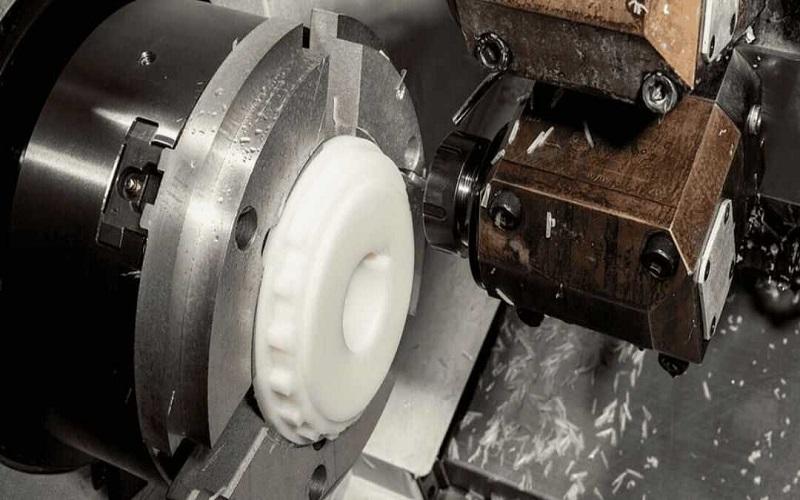
Moisture Resistance and Storage
All three filaments are hygroscopic to varying degrees, absorbing water from the air.
This moisture directly affects print quality, surface finish, and mechanical strength. Proper storage separates successful prints from frustrating failures.
Nylon Storage Requirements
Nylon absorbs moisture aggressively. In humid climates, filament can pick up noticeable water weight within hours of exposure. The effects become immediately visible:
- Popping and hissing sounds during extrusion as water vaporizes
- Excessive stringing between features
- Rough, pitted surface finish
- Reduced stronger layer adhesion and part strength
- Dimensional changes as material swells
Storage protocol for nylon:
- Store in airtight containers with strong desiccant (silica gel or molecular sieve)
- Dry filament before printing: 70-80°C for 4-6 hours in a filament dryer or oven with precise temperature control
- Consider inline dryers that keep filament warm during extended prints
- In high-humidity environments, print directly from a dry box
Practical example: Printing nylon gears in a non-climate-controlled workshop during summer produces visibly rough surfaces and weak layer bonding.
Drying the same filament overnight at 75°C transforms results—smooth surfaces, excellent interlayer strength, and dramatically improved wear characteristics.
PETG Storage Requirements
PETG absorbs moisture more slowly and tolerates brief humidity exposure better than nylon. However, wet PETG still causes problems:
- Stringing and oozing increase
- Bubbling in extruded filament
- Minor drops in strength and layer adhesion
PETG drying guidelines:
- Dry at 55-65°C for several hours when print quality degrades
- Store in sealed bags with desiccant between uses
- More forgiving than nylon, but dry storage still improves consistency
ABS Storage Requirements
ABS shows the least moisture sensitivity among these three but still benefits from proper storage:
- Wet filament may crack, bubble, or extrude inconsistently
- Prolonged humidity mainly affects print consistency rather than dramatic property changes
- Store in sealed containers with desiccant for best results
Best Use Cases and When to Choose Each Material
No single filament is universally “best.” Your choice depends on stress type, operating environment, printer capabilities, and willingness to manage storage and print settings. Here’s when each material shines.
When PETG is the Best Choice
PETG hits the sweet spot between performance and printability for many applications:
- Functional brackets, fixtures, and housings that see moderate loads at room temperature
- Outdoor or damp environments where parts face UV light exposure, rain, and humidity—garden fixtures, wall mounts, outdoor sensor housings, and weatherproof enclosures
- Food-adjacent applications where good chemical resistance matters (though true food-safe certification requires additional considerations)
- Users transitioning from PLA who want stronger, more durable parts without jumping into difficult filaments requiring enclosures and all-metal hotends
- Parts requiring a smooth surface and glossy appearance without extensive post processing
PETG makes sense when you need excellent mechanical properties beyond PLA without the printing challenges of ABS or nylon.
When Nylon is the Best Choice
Nylon dominates applications involving wear, fatigue, and repeated mechanical stress:
- High-wear moving parts like gears, bushings, pulleys, door latches, and sliding mechanisms where abrasion resistance matters
- Components that must flex repeatedly without breaking—cable guides, clips, snap-fit housings, and living hinges that need to survive thousands of cycles
- Mechanically demanding prototypes and end-use parts where toughness outweighs print difficulty—RC car drivetrains, custom machine components, industrial applications
- Parts exposed to oils and fuels in automotive or mechanical environments (with temperature limitations considered)
- Applications requiring maximum stress tolerance under impact combined with flexibility
Accept nylon’s storage demands and print challenges when no other materials deliver the required performance.
When ABS is the Best Choice
ABS excels in heated environments and when post processing determines final quality:
- Parts near heat sources such as automotive interior clips, engine bay components (non-structural), fan shrouds, heated tool housings, and enclosures near motors
- Projects requiring extensive post processing where sanding, solvent smoothing, and painting will create the final finish
- Industrial-style prototypes that must mimic injection-molded ABS parts for fit, function, and appearance testing
- Impact-prone functional parts like protective housings, handles, and structural components subject to drops or strikes
- ABS filament remains the standard when clients or stakeholders expect parts with specific material certifications matching production intent
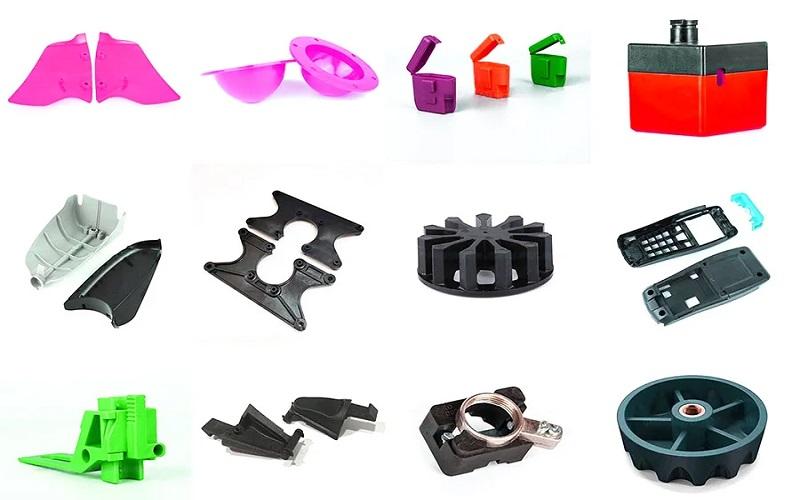
Conclusion
The selection between petg nylon and abs is not a matter of which material is “better,” but which is more technically aligned with the part’s operational environment and their key properties.
For functional prototypes and mechanical components, Nylon remains king.
For ease of use and chemical resistance, PETG is the modern standard. For high-temperature rigidity and impact, ABS remains an industrial staple.