
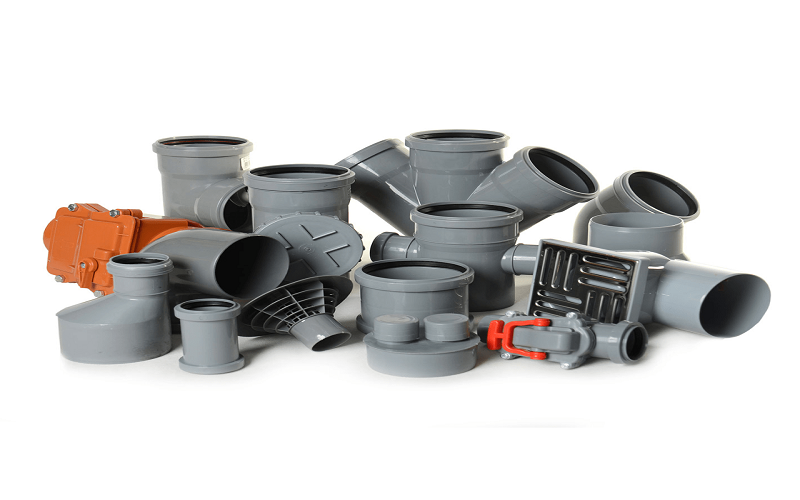
PVC is one of the most widely used plastics in the world — and for good reason.
Whether you’re looking at pipes running beneath a building, medical tubing in a hospital, or the humble bottle cap on your kitchen shelf, polyvinyl chloride shows up everywhere.
PVC injection moulding is the process that makes mass production of these parts possible, and understanding how it works can help you make better decisions for your next project.
This guide walks you through everything from the basics of PVC as a material to the techniques, design guidelines, and real-world applications that matter most.
What Is PVC and Why Is It So Popular?
Polyvinyl chloride, or PVC, is a popular thermoplastic polymer and the world’s third-most extensively produced synthetic plastic.
It’s been around for a long time — its development is often credited to the Goodrich Company and an American inventor who first discovered its commercial potential in the early twentieth century.
Since then, it’s become a staple across many industries thanks to its combination of low cost, durability, and versatility.
One of the things that makes PVC stand out from other plastics is that it comes in two very different forms.
Rigid PVC, also known as uPVC, is known for its structural strength and dimensional stability, making it a go-to material for construction materials, machine housings, and plumbing components.
Flexible PVC, on the other hand, contains additional plasticizers that give it greater elasticity and softness, making it suitable for garden hoses, cable insulation, IV bags, and medical tubing.
PVC plastic also has a strong set of key properties that make it attractive for injection molding applications.
- It offers excellent chemical resistance against many acids, bases, salts, fats, and alcohols.
- It has good electrical insulation properties and flame retardancy, making it well suited for electrical applications.
- It’s highly resistant to moisture and environmental degradation, which is why it performs so well outdoors.
- And compared to many other plastics, it’s relatively inexpensive as a raw material, which contributes directly to its cost effectiveness in high volume production.
How the PVC Injection Moulding Process Works?
The injection moulding process for PVC follows the same general steps as other thermoplastics, but there are some important differences worth knowing about due to PVC’s unique chemical properties.
Material Preparation and Melting
PVC plastic material comes in pellet or powder form and must be dried before processing to avoid moisture-related defects. Once prepared, the raw material is fed into an injection molding machine, where heater bands along the barrel gradually melt the plastic as it moves forward.
The reciprocating screw plays a key role here — it rotates to push the material forward while also generating some of the heat needed to reach the melting point. The screw rotation speed during PVC injection molding should typically be between 35 and 50 rpm, though this can be adjusted depending on the specific grade of PVC and the part being produced.
Once the molten material reaches the right consistency and temperature, it is injected under high pressure into a temperature-controlled mould.
The optimum PVC molding temperature is generally between 345°F and 375°F to avoid severe decomposition problems. Going above typically 200°C can cause the material to break down and release hazardous hydrochloric acid gas, which is why temperature control is so critical throughout the process.
Injection, Cooling and Cycle Efficiency
Injection pressure in PVC moulding depends on the size and shape of the product and should be maintained between 20 and 40% of the maximum allowable pressure.
Back pressure and injection speed also need to be managed carefully to ensure consistent fill and avoid defects.
Mould temperature for PVC injection moulding should be kept between 20°C and 60°C to ensure efficient cooling of the part.
Cooling time is a critical phase of the process. Parts must be cooled quickly enough to solidify properly but not so fast that internal stresses or warping develop.
The production cycle for PVC injection moulding is efficient, often ranging from 15 to 120 seconds per cycle depending on part complexity and size.
PVC parts shrink as they cool, but with a relatively low shrinkage rate of 0.2% to 0.5%, dimensional accuracy is generally easier to maintain than with higher-shrinkage materials.
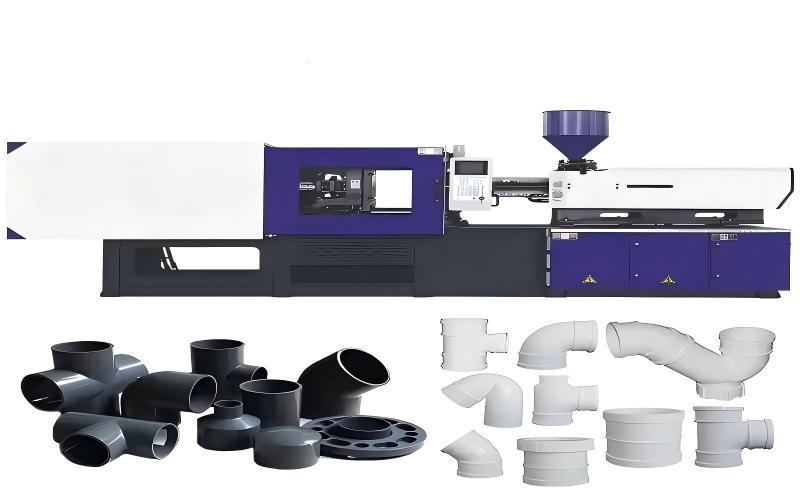
Equipment Considerations for PVC Injection Moulding
PVC is not the easiest plastic to process, and it places specific demands on injection machines.
Specialized equipment is often required, including corrosion-resistant machines with stainless steel or chrome-plated barrels.
This is because PVC can release hydrochloric acid during processing, which will corrode standard equipment over time if the right materials aren’t used.
Screw injection machines are the standard choice for PVC, and the reciprocating screw design works well with this material.
The screw geometry needs to be appropriate for PVC — too aggressive and it will generate excessive heat through shear, risking decomposition; too gentle and the material won’t be properly homogenized before injection.
Different additives are typically mixed into PVC before or during processing to improve heat stability and prevent decomposition.
These include heat stabilizers, lubricants, and in the case of flexible PVC, plasticizers that modify the material’s physical properties.
Getting the additive package right for your specific application is an important part of material selection when working with polyvinyl chloride PVC.
The Benefits of PVC Injection Moulding
Unlike compression molding, PVC injection moulding offers faster cycle times and greater design complexity for mass production.There are many benefits to choosing PVC injection moulding for producing parts across various industries. Here’s a breakdown of the most important advantages.
Cost Effectiveness at Scale
PVC is relatively inexpensive compared to other thermoplastics, and the injection moulding process itself is well suited to mass production.
Once tooling is in place, the cost per part drops significantly, making it a highly cost-effective choice for high volume production of consumer goods, construction components, and industrial applications.
Versatility Across Rigid and Flexible Forms
The ability to produce both rigid PVC and flexible PVC parts from the same basic manufacturing process gives designers a lot of options.
The same injection molding machine can be used to produce hard, dimensionally stable components and soft, flexible parts simply by changing the material formulation.
Chemical Resistance
PVC’s resistance to a wide range of chemicals makes injection moulded PVC components suitable for demanding industrial applications, chemical processing environments, and medical applications where exposure to fluids and cleaning agents is common.
Flame Retardancy and Electrical Insulation
PVC exhibits good flame retardancy and electrical insulation properties, which is why it’s so widely used in electrical applications including cable insulation, conduit, and electrical components.
These flame retardant properties make it a safer choice in environments where fire risk needs to be managed.
Precision and Complexity
PVC injection moulding can produce highly efficient, durable, and complex parts with high precision.
The process can achieve intricate designs with tight tolerances, often eliminating the need for post-production finishing. This saves production time and reduces overall manufacturing costs.
Durability and Weather Resistance
PVC is highly resistant to moisture, environmental degradation, and UV exposure, making it a durable option for outdoor applications and long-service-life components.
Recyclability
PVC is recyclable, contributing to sustainable manufacturing practices and reducing waste production — an increasingly important consideration across many industries.
The Disadvantages You Should Know About
PVC injection moulding has many benefits, but it also has some limitations that are worth considering during material selection.
Poor Heat Stability
PVC has poor heat stability and begins to degrade when exposed to high temperatures.
Overheating during the injection moulding process can cause decomposition and release of hazardous hydrochloric acid gas, which creates both safety risks and equipment damage.
This means processing windows are tighter than with many other plastics, and temperature monitoring is critical.
High Tooling Costs
The high cost of tooling a mould for PVC injection moulding is a significant upfront investment.
This cost is easier to justify for mass produced products at high volume, but it can be a barrier for low-volume or prototype work.
Specialized Equipment Requirements
As mentioned, processing PVC requires corrosion-resistant injection machines, which can mean higher equipment costs compared to processing more chemically benign plastics.
Flexible PVC Durability Concerns
Flexible PVC can experience a reduction in material properties over time as plasticizers migrate out of the material, affecting its durability and flexibility in long-term applications.
Design Guidelines for PVC Injection Moulding
When commencing PVC injection moulding, you must consider many factors. Following good design guidelines from the start will save you time, money, and headaches down the line when producing parts through PVC injection moulding.
Wall thickness. The recommended minimum wall thickness for injection-moulded PVC parts ranges between 1.27 and 6 mm. Keeping wall thickness as uniform as possible throughout the part helps ensure even cooling and reduces the risk of sink marks, warping, and internal stress.
Gate placement. Gates should be placed at the thickest section of the part to promote proper flow of the molten material and minimize pressure drop. Poor gate placement can lead to incomplete fill, weld lines, or surface defects.
Draft angles. Including adequate draft angles on vertical walls makes it easier to eject parts from the mould without damage. This is particularly important for rigid PVC parts, which have less flexibility than their softer counterparts.
Temperature control. Given PVC’s sensitivity to heat, maintaining tight control over mould temperature and melt temperature throughout the process is essential. Mould temperature should be kept between 20°C and 60°C, and processing temperatures should stay within the safe range to prevent decomposition.
Material drying. Always ensure PVC material is properly dried before processing, whether it arrives in pellet or powder form. Moisture in the raw material can cause surface defects, voids, and reduced mechanical properties in the finished part.
Additives. Work with your material supplier to ensure the right combination of heat stabilizers, lubricants, and plasticizers for your specific application. Different additives serve different purposes, and the right formulation can make a significant difference to both processability and finished part performance.
Common Applications of PVC Injection Moulding
PVC injection moulding is used across a vast majority of industries, and the range of applications is genuinely broad. Here are some of the most common areas where injection moulded PVC components are found.
In the construction industry, PVC is used for pipes, plumbing fittings, siding, machine housings, and a wide range of construction materials. Rigid PVC’s dimensional stability and weather resistance make it well suited to structural and exterior applications.
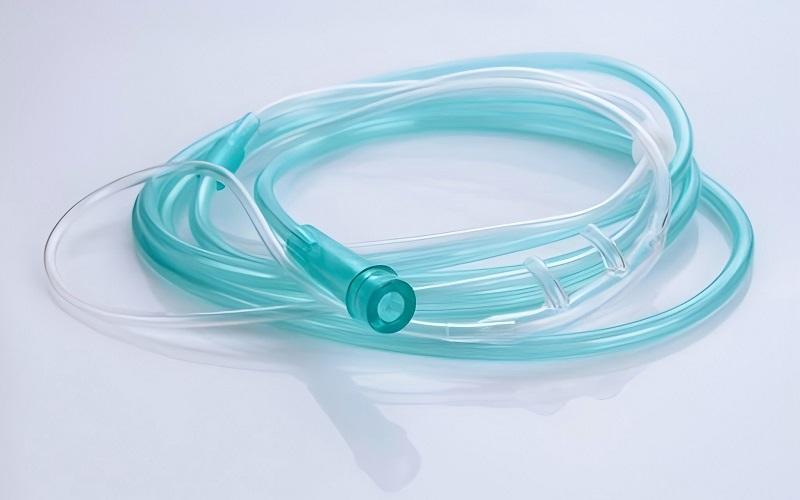
In healthcare, PVC injection moulding produces medical tubing, IV bags, medical containers, and other plastic parts that need to be safe, sterile, and chemically resistant. The flexibility of plasticized PVC makes it ideal for tubing and bags that need to conform and flex during use.
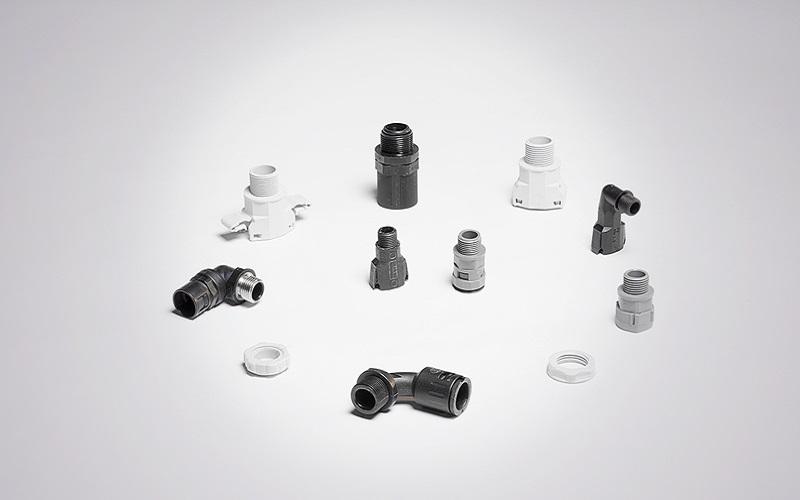
In electrical applications, PVC’s combination of electrical insulation, flame retardancy, and moisture resistance makes it the material of choice for cable insulation, conduit, and electrical enclosures. It’s used in both residential wiring and industrial electrical systems.
In the automotive industry, PVC is used for dashboards, interior trim components, and cable insulation throughout the vehicle. Its durability, cost effectiveness, and ability to be produced in both rigid and flexible forms give automotive designers a lot of flexibility.
In consumer goods, mass produced products like bottle caps, packaging, garden hoses, and household items are commonly made from PVC through injection moulding. The material’s low cost, good appearance, and processability make it a natural fit for high volume consumer applications.
In industrial applications, PVC’s chemical resistance makes it suitable for components used in chemical processing environments, fluid handling systems, and industrial equipment where exposure to aggressive substances is common.
Conclusion
PVC injection moulding is a versatile, cost-effective, and widely proven manufacturing process that delivers reliable results across many industries.
Its combination of chemical resistance, flame retardancy, electrical insulation, and availability in both rigid and flexible forms gives it a range of applications that few other plastics can match.
That said, working with PVC does require attention to detail — particularly around temperature control, equipment selection, and material preparation. Following the design guidelines and processing best practices outlined here will help you avoid the most common pitfalls and get the best possible results from your next project.
Whether you’re producing plumbing components, medical devices, electrical parts, or consumer goods, PVC injection moulding offers a compelling combination of performance, flexibility, and value that makes it worth serious consideration in your material selection process.