
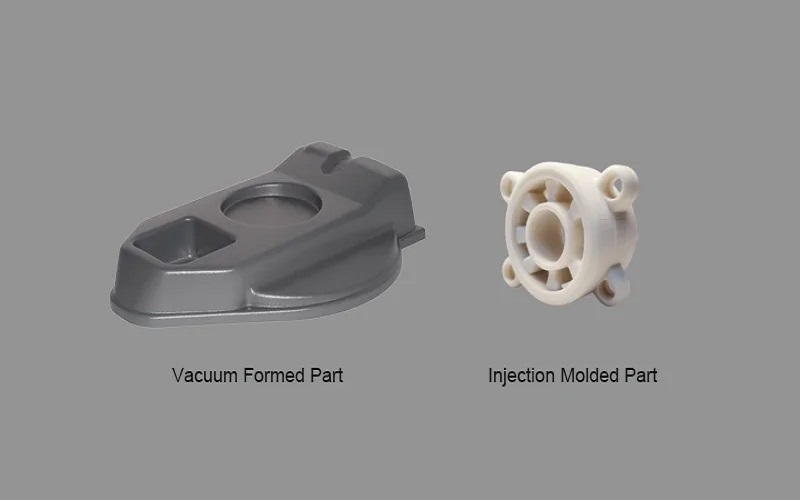
Picking the wrong manufacturing process can cost you weeks of lead time and thousands of dollars in wasted tooling.
If you’ve been going back and forth between injection molding vs vacuum forming, you’re not alone — these two processes get compared constantly, and for good reason.
They both work with plastic, they both produce useful parts at scale, but the similarities fade pretty quickly once you dig in.
Understanding the key differences between these two common methods will help you make a smarter decision for your project, whether you’re building a one-off prototype or gearing up for mass production. Let’s walk through everything you need to know.
What Is Injection Molding?
Injection molding is one of the most widely used manufacturing methods in the world, and it’s easy to see why.
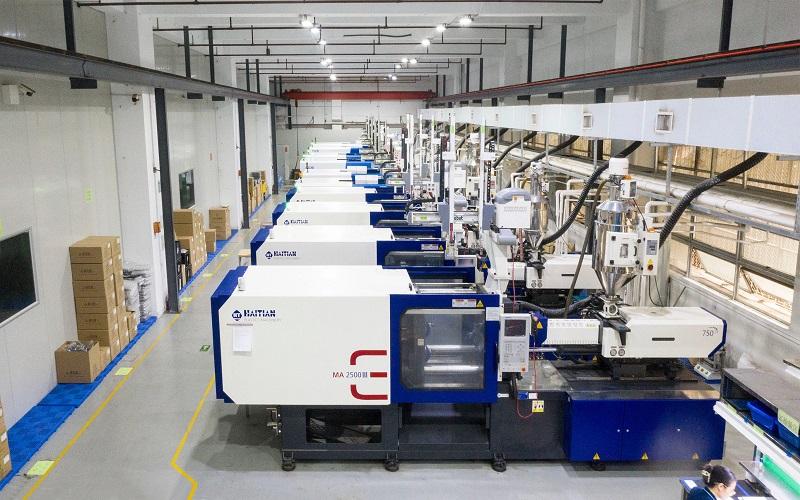
The injection molding process starts with plastic pellets — typically a thermoplastic material — being fed into a heated barrel.
As the material melts into a liquid state, it gets pushed through a pressurized nozzle and injected inside a closed mold cavity at high pressure.
The molten plastic fills every corner of the cavity, cools down, and solidifies into the desired part. When the mold opens, you’ve got a finished piece ready to go.
How the Injection Molding Process Works Step by Step?
The mold itself is usually made from hardened steel or aluminum, and it can include multiple cavities, which means you can produce several injection molded parts in a single cycle.
The entire process is highly automated, which is part of why it scales so well into high volume production.
Cycle times are short — sometimes just a few seconds per part — and because the molten plastic is injected inside under high pressure, it takes shape in three dimensions, conforming to just about any shape the mold defines.
That’s what makes injection molding so powerful for complex parts and intricate designs that other manufacturing techniques simply can’t match.
One thing worth knowing upfront: plastic injection molding supports a wider range of materials compared to vacuum forming.
You can use standard thermoplastics, but also thermoplastic rubber, chemical resistant plastics, antistatic plastic, biodegradable options, and even thermosets.
That material compatibility is a genuine advantage when your application demands specific performance properties.
What Is Vacuum Forming?
Vacuum forming takes a completely different approach to manufacturing plastic parts. Instead of injecting molten plastic into a mold cavity, the process starts with a flat plastic sheet.
That heated sheet gets softened until it’s pliable, then it’s draped over a mold — or pressed into one — and vacuum pressure is applied to pull the plastic tightly against the mold surface.
Once the part cools, the excess plastic around the edges is trimmed away and you’ve got your finished piece.
How the Vacuum Forming Process Works Step by Step?
The vacuum forming machine does the heavy lifting here, using vacuum pressure to draw the heated sheet down against the mold.
Because the process works in only one direction, the tooling itself is much simpler than what you’d need for plastic injection molding. Molds can be made from wood, foam, resin, or aluminum, which keeps the tooling budget low.
This simplicity is what makes vacuum forming so attractive for low-volume runs and early-stage prototyping.
Vacuum forming is limited to specific thermoplastic sheets — common choices include polyvinyl chloride (PVC), polypropylene (PP), and UV-stable PETG.
You won’t get the same material compatibility you’d find with injection molding and vacuum forming side by side, and you’re working with thermoplastics only.
No thermosets, no thermoplastic rubber, and a generally limited range of material options compared to injection molding.

Injection Molding vs Vacuum Forming: Key Differences
Now that you understand how each process works, let’s get into what actually drives the decision between molding and vacuum forming.
The right manufacturing process for your project hinges on a handful of critical factors: production volume, design complexity, tooling costs, and lead times.
Here’s how the two processes compare across each one.
Part Complexity and Design Flexibility
This is where injection molding has a clear and decisive edge.
Injection molding allows for the creation of highly intricate designs and complex geometries — features like ribs, bosses, internal cavities, and undercuts are all achievable because the molten plastic is injected inside the mold under high pressure, filling every detail of the mold cavity.
Complex designs that require features going in multiple directions are possible because the mold itself opens along a parting line, not because of vacuum pressure acting in only one direction.
Vacuum forming is limited to simpler shapes and hollow parts. Because the heated sheet stretches and conforms to a mold surface using vacuum pressure alone, you can’t create internal cavities, you have very little control over inside dimensions, and design complexity is constrained by the fact that the plastic can only move in only one direction.
If your desired part has fine details, undercuts, or complex designs that go beyond surface geometry, vacuum forming won’t deliver what you need.
Draft angles are important in both processes, but correct design for vacuum forming typically requires more generous draft angles to ensure the part releases cleanly.
In injection molding, draft angles are still necessary, but the process gives you more control and more room for nuanced geometry across the full surface area of the part.
Tolerances tell the same story.
Injection molded parts can achieve dimensions as precise as ±0.1 mm, while vacuum forming typically has looser tolerances starting around 0.3 mm.
For anything requiring tight tolerances or consistent part quality across large volumes, injection molding is the only sensible choice.
Tooling Costs and Setup
Tooling costs are often the first thing that steers people toward or away from a particular manufacturing method, and for good reason — they represent a major upfront commitment. Injection molding requires expensive, high-precision steel or aluminum molds.
Depending on part complexity and the number of cavities required, tooling costs can range from a few thousand dollars on the low end to well over $100,000 for complex, multi-cavity molds. And that’s before accounting for the long setup times involved in building and validating the tooling.
Vacuum forming has a low tooling cost by comparison. Because the molds are simpler and can be fabricated from less expensive materials, your tooling budget goes much further.
This makes vacuum forming genuinely cost effective for projects with small production runs, limited budgets, or designs that are likely to change.
If you’re not sure your design is finalized, vacuum forming lets you iterate without the financial pain of scrapping an expensive injection mold.
That said, tooling cost is only one side of the equation. The cost per part changes dramatically with production volume — and that’s where the comparison between injection molding and vacuum forming gets more nuanced.
Production Volume and Per-Part Economics
Production volume is arguably the single most important factor when choosing between these two manufacturing methods.
The injection molding process can produce hundreds to thousands of parts per day, thanks to short cycle times, high pressure efficiency, and the ability to run multiple cavities simultaneously.
That speed means the high initial tooling cost gets spread across an ever-growing number of production parts, driving the per-part cost down significantly at high production volumes.
Vacuum forming is far more limited on this front. The process is more manual and labor-intensive, typically producing 1 to 10 parts per day depending on part size and complexity.
While that’s perfectly adequate for low volume production or early prototyping and production needs, it becomes a real bottleneck when you’re trying to scale up.
When production parts exceed around 3,000 units, injection molding becomes more viable and cost effective compared to vacuum forming, especially since vacuum forming molds tend to have a shorter lifespan and may need replacement before high volume production goals are met.
Lead Times
Time is often as important as money, especially during product development.
Injection molding has a higher lead time compared to vacuum forming — typically 12 to 16 weeks for injection molding versus just 6 to 8 weeks for vacuum forming.
The gap comes down to tooling complexity: building a precise steel mold takes time, and there’s usually a validation and testing phase before production parts can be approved.
Vacuum forming is often preferred for rapid prototyping precisely because it allows for quicker production times and lower setup costs.
You can get a physical part in your hands within days or weeks, test it, and make adjustments before committing to a final design.
Many teams use vacuum forming as a deliberate bridge between early concept work and the larger commitment of injection molding tooling.
Material Compatibility: What Can Each Process Handle?
Material choice has a direct impact on part performance, and the two processes don’t offer the same options. Injection molding supports a wider range of materials compared to vacuum forming — and that’s not a minor difference.
You can run standard thermoplastics, thermoplastic rubber, chemical resistant plastics, antistatic plastic, and biodegradable plastics through the injection molding process.
You can even work with thermosets if your application calls for it.
Materials compared across both processes, injection molding is the clear winner for flexibility.
Vacuum forming is limited to thermoplastic sheets only. Common options include polyvinyl chloride, polypropylene, and UV-stable PETG.
That limited range of materials works fine for many packaging, enclosure, and display applications, but if your part needs chemical resistance, flexibility, or other specialized properties that fall outside what those thermoplastic sheets can offer, vacuum forming simply isn’t an option.
Material compatibility is one area where injection molded parts have a genuine and significant advantage.
When to Choose Injection Molding
Injection molding is well-suited for a specific type of project.
If you’re producing complex parts at high volume, need tight tolerances and consistent part quality across thousands of units, require a wide range of materials, or are building small detailed parts that need to be identical every single time — injection molding is almost certainly the right manufacturing process for you.
The manufacturing capabilities of plastic injection molding are simply unmatched when both precision and scale are required.
Injection molding is better suited for high-volume production and complex designs. Once you’re heading into thousands or tens of thousands of production parts, the per-part economics work strongly in your favor, even after factoring in that initial tooling investment.
Industries and Applications That Rely on Injection Molding
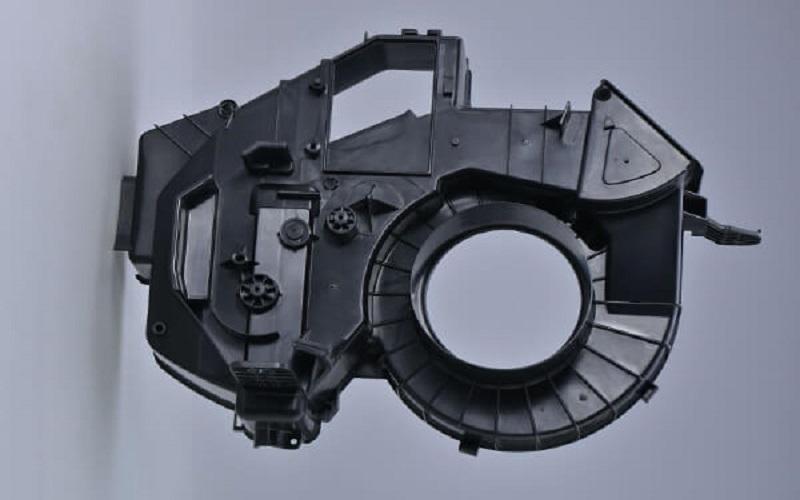
Consumer electronics housings, automotive components, medical device parts, and any application where design complexity or dimensional consistency is non-negotiable are all natural fits for injection molding.
The process gives you manufacturing capabilities and intricate designs that vacuum forming and most other manufacturing methods can’t replicate.
If your product needs to be identical across large volumes with no variation, injection molding is what you need.
When to Choose Vacuum Forming
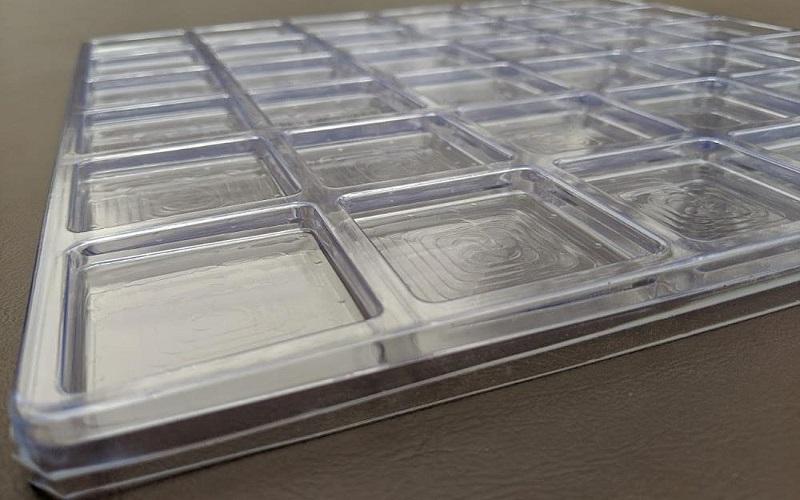
Vacuum forming is advantageous for low-volume production with limited budgets and for producing large parts with relatively simple surface geometry.
If your prototyping and production needs are focused on speed, lower tooling budget, and getting a part in hand quickly, it’s a genuinely strong choice that shouldn’t be dismissed just because it’s simpler.
Projects like custom packaging, point-of-purchase displays, vehicle interior panels, large enclosures, and trays often land in vacuum forming territory.
The process excels when surface area and overall form matter more than design complexity, and when your production volume doesn’t justify the investment in injection molding tooling.
Industries and Applications That Rely on Vacuum Forming
Vacuum forming also shines early in the product development process.
Using it for rapid prototyping and early validation before committing to injection molding is a common and smart manufacturing strategy. For many teams, it’s not a permanent solution — it’s a practical way to confirm that the correct design is locked in before the bigger investment begins.
For low to medium volumes, large parts, and budget-conscious projects, it genuinely is the right manufacturing process.
Pressure Forming: A Step Between the Two Processes
It’s worth taking a moment to talk about pressure forming, which sits between standard vacuum forming and injection molding in terms of capability.
While vacuum forming uses only vacuum pressure to pull the heated sheet against the mold, pressure forming adds pressurized air from the opposite side to push the plastic more firmly into the mold surface.
This produces sharper details, better surface finishes, and tolerances that are meaningfully tighter than standard vacuum forming — though still not quite at injection molding levels.
Pressure forming is a useful manufacturing technique when standard vacuum forming doesn’t deliver enough detail but full injection molding tooling costs feel excessive for your production volume.
It’s a legitimate middle ground worth including in your comparison of manufacturing methods.
How Vacuum Casting Fits In
Vacuum casting is another manufacturing method worth knowing about, particularly for low-volume production of complex parts in a liquid state.
In vacuum casting, a silicone mold is created from a master pattern, and liquid polyurethane resin is then cast under vacuum to remove air bubbles and ensure accurate part reproduction.
It’s commonly used as a bridge between rapid prototyping and full plastic injection molding production, especially when you need small batches of detailed parts that closely mimic injection molded parts in terms of appearance and material properties.
While vacuum casting and vacuum forming share a name and both use vacuum in their process, they’re quite different manufacturing techniques. Vacuum casting is about pouring liquid material into a flexible mold; vacuum forming is about shaping a heated sheet with vacuum pressure.
Knowing where each fits helps you map out the full range of your manufacturing capabilities before committing to a process.
Where CNC Machining Fits Into the Picture
CNC machining is another common method that often gets pulled into comparisons with injection molding and vacuum forming, particularly for low-volume production of complex parts.
Unlike both molding processes, CNC machining is subtractive — it starts with a solid block of material and removes material to create the desired part.
It can achieve extremely tight tolerances and complex designs, and it doesn’t require the same kind of tooling investment as plastic injection molding.
That said, CNC machining is typically slower and more expensive per part at higher volumes.
It’s most useful for prototypes, one-off parts, or production runs where tooling costs for injection molding can’t yet be justified.
When you’re comparing manufacturing methods for a new project, knowing where CNC machining sits relative to injection molding and vacuum forming helps you pick the right manufacturing process for each stage of development.
Detailed Comparison of the Two
| Factor | Injection Molding | Vacuum Forming |
| Design Complexity | High — intricate designs, internal cavities | Low — simpler shapes, limited geometry |
| Tolerances | ±0.1 mm (tight tolerances) | ~0.3 mm and above |
| Tooling Costs | High ($5K–$100K+) | Low ($500–$5K) |
| Lead Times | 12–16 weeks | 6–8 weeks |
| Production Speed | Hundreds to thousands/day | 1–10 parts/day |
| Best Volume | High volume (3,000+ units) | Low to medium volumes |
| Material Range | Wide — thermoplastics, thermosets, rubber | Limited range — thermoplastic sheets only |
| Rapid Prototyping | Slower, higher upfront cost | Fast, low cost |
| Part Size | Small to medium | Small to large |
| Thinner Walls | Achievable with precision | Limited by sheet thickness |
| Size Limitations | Smaller parts, high detail | Larger parts, simpler geometry |
Conclusion
Choosing between injection molding and vacuum forming comes down to understanding your project’s actual requirements — not just what sounds more impressive.
Injection molding wins on design complexity, tight tolerances, material compatibility, and long-run economics.
Vacuum forming wins on speed, low tooling cost, and flexibility for larger or simpler parts at lower production volumes.
These two processes serve different needs, and in many product development cycles they genuinely complement each other — vacuum forming for rapid prototyping and early validation, injection molding for scaled-up manufacturing plastic parts at high production volumes.
Before you commit to either, map out your production volume, part complexity, tooling budget, and lead time requirements clearly.
Add pressure forming and vacuum casting to your list of options too, because the right manufacturing process isn’t always one of just two choices.
Once you’ve got those factors on the table, the correct decision usually becomes obvious. The goal isn’t to pick the most sophisticated manufacturing technique — it’s to pick the one that delivers the right parts at the right cost, on the right timeline, for your specific production needs.