
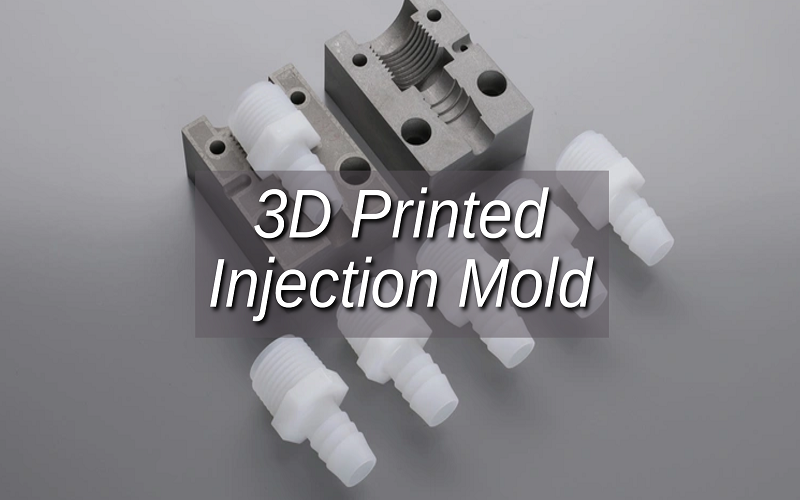
With the increasing demand for rapid response and flexible production in manufacturing, traditional metal injection molds have gradually revealed their limitations due to high costs and long lead times.
Especially in small batch production and prototype validation stages, traditional molds struggle to meet the requirements for quick iteration and cost control.
In recent years, 3D printed injection molds have emerged as an effective solution to this challenge, offering fast manufacturing speed, low cost, and design flexibility.
This article aims to provide a practical overview of 3D printed injection molds, helping readers understand their basic principles, material selection, design and manufacturing processes, as well as applicable scenarios, advantages, and limitations, enabling a quick assessment of whether this technology suits their project needs.
What Are 3D Printed Injection Molds?
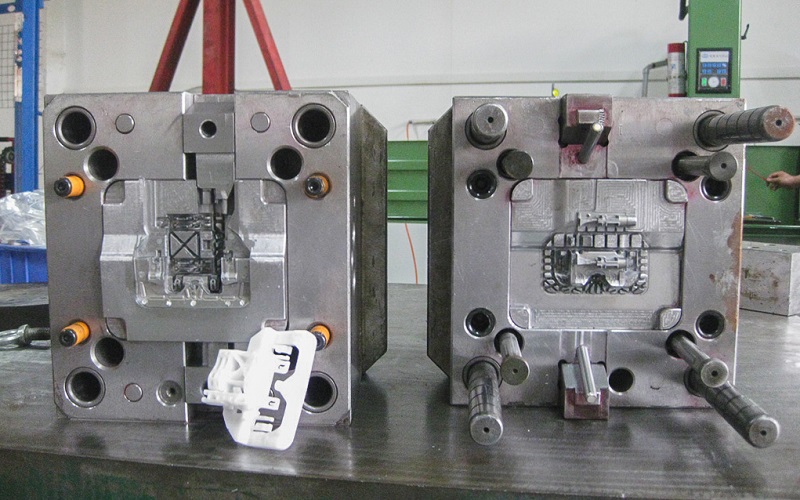
3D printed injection molds are molds used in the injection molding process that are produced directly through additive manufacturing, rather than being traditionally machined from metal blocks via CNC milling or electrical discharge machining.
The fundamental principle remains the same: molten plastic is injected under high injection pressures into the mold cavity, where it cools and solidifies to form a part matching the cavity’s shape. The key difference is that the mold itself is built layer by layer using 3D printing technology.
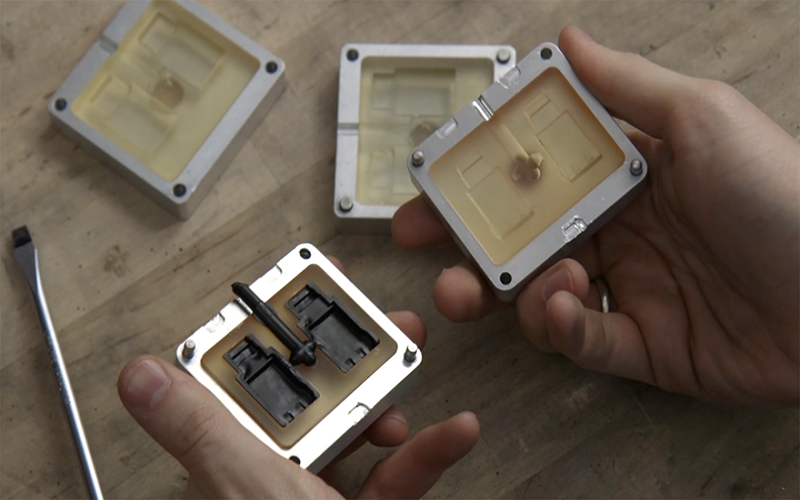
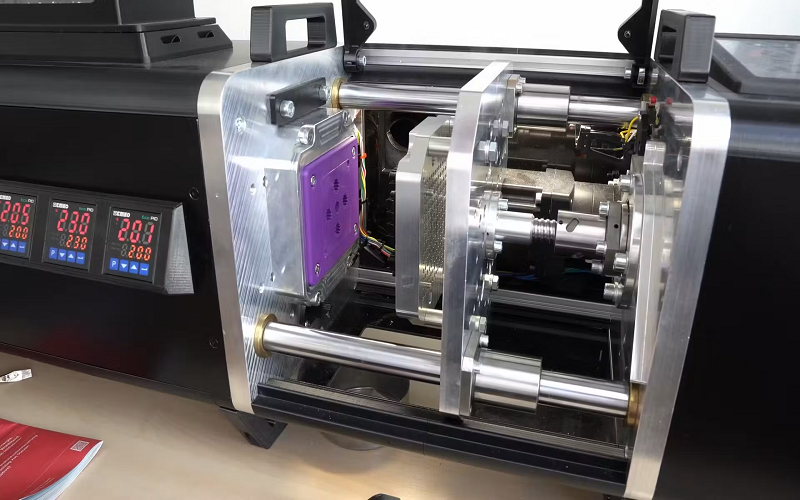
Typically, mold inserts are printed and then mounted into an aluminum alloy frame to improve overall rigidity and withstand injection pressures before being installed on the injection molding machine.
Among these, 3D printed molds are most widely used for rapid prototyping and low volume production due to their smooth surface finish and fine detail reproduction.
Material Selection Of 3D Printed Molds
Selecting the appropriate material for 3D printed injection molds depends on balancing several factors such as thermal stability, mechanical strength, and surface finish requirements.
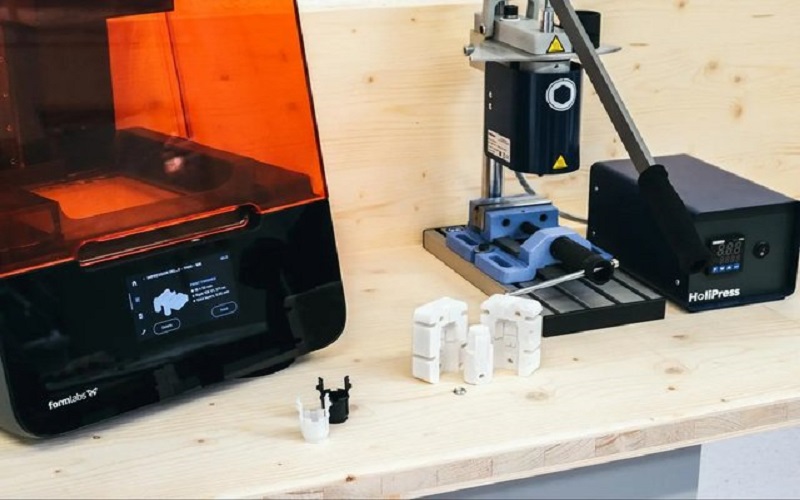
Common 3D printing technologies include SLA/DLP (photosensitive resin), SLS/MJF (powder sintering), and metal 3D printing technologies such as SLM/DMLS.
Materials cover high-temperature photosensitive resins, engineering-grade thermoplastics, and metal powders used in additive manufacturing, meeting the performance requirements of different injection molds.
High-Temperature Resins
Photopolymer resins like Formlabs High Temp Resin and Digital ABS are engineered to withstand injection molding temperatures often exceeding 200°C. Digital ABS is ideal for molding and tooling applications.
This type of material is mainly based on SLA/DLP photopolymerization technology and is currently the most widely used choice. The price of SLA resin used for 3D printed molds is approximately $150-170 per liter.
Their chemically bonded polymer chains provide isotropic strength, which is crucial for enduring clamping forces during molding.
Engineering-Grade Thermoplastics
Materials such as nylon and reinforced composites printed via SLS or MJF provide increased wear resistance and mechanical durability.
They are ideal for molds requiring moderate production quantities and can handle higher injection pressures. Enhanced thermal conductivity in some composite materials helps reduce cycle times by improving heat dissipation.
Metal 3D Printing Materials
It should be noted that polymer materials used in 3D printed molds generally have lower heat resistance compared to metals, which to some extent limits their service life and durability under high-temperature injection molding conditions.
To achieve better mechanical performance, metal powders such as aluminum, steel, and copper alloys are used in processes like Selective Laser Melting (SLM) or Direct Metal Laser Sintering (DMLS) to manufacture molds with excellent heat resistance, wear resistance, and service life.
Metal 3d printing molds can support scale production and high-volume manufacturing, but compared to polymer molds, they have higher initial costs and longer delivery times.
Material Selection Considerations
When choosing a material, factors such as part volume, expected production quantities, and the use of benchtop injection molding machines should be considered.
For low volume injection molding, polymer-based molds may offer lower costs and faster turnaround, while metal molds are better suited for scale production and high volumes.
Additionally, materials must support post-processing techniques like CNC machining, polishing, or urethane casting coatings to enhance mold performance and surface finish.
By carefully selecting materials and optimizing mold design, 3D printed molds can provide a cost effective alternative to traditional metal molds for low volume manufacturing, functional prototypes, and small production runs.
Combining resin printers with high performance resins or metal printing technologies allows manufacturers to balance mold life, production volume, and cost to best suit their specific application needs.
3D Printed Injection Molds Design Considerations
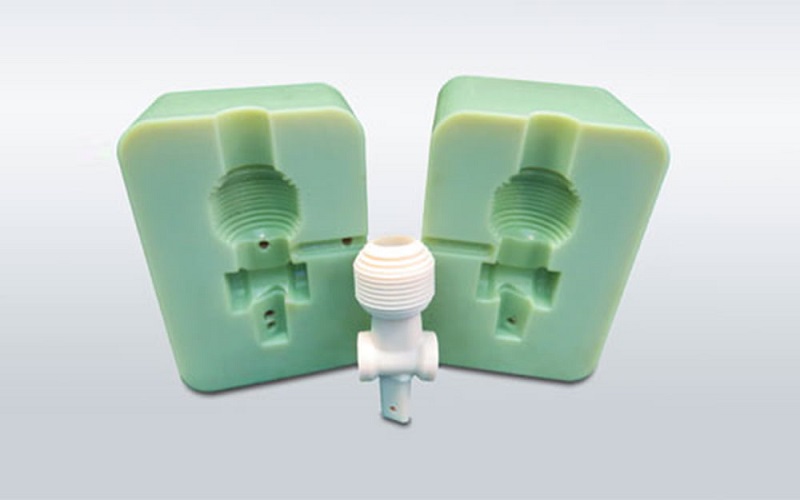
Unlike traditional mold making, the unique characteristics of additive manufacturing and the materials used demand specific design adaptations.
Wall Thickness
Maintaining appropriate wall thickness is critical. For 3D printed molds, walls should generally be thicker than 1-2 mm to provide sufficient strength and resistance to injection pressure. Uniform wall thickness helps minimize internal stresses and deformation during molding.
Thin walls or abrupt thickness changes can lead to weak spots, increased risk of cracking, and uneven cooling, which adversely affect both mold life and part quality. Designing with uniform wall thickness also helps to minimize material usage, reducing print time and cost.
Draft Angles and Parting Line
Incorporating draft angles between 2 to 5 degrees on vertical surfaces facilitates easier part ejection by reducing friction and preventing damage to the mold and final part.
Proper draft angles are essential, especially given the limited durability of 3D printed molds compared to traditional steel molds.
The parting line, where mold halves meet, must be designed to ensure a tight seal to minimize flash and maintain dimensional accuracy. Polishing the parting line surfaces improves mold sealing and reduces wear.
Cooling Channels and Air Vents
Although integrating cooling channels in 3D printed molds is more challenging than in traditionally machined molds, their inclusion can significantly improve thermal management, reducing cycle times and enhancing part quality.
Innovative design enabled by additive manufacturing allows for complex internal geometries such as conformal cooling channels that follow the mold cavity shape.
Air vents, typically about 0.05 mm wide, are necessary to allow trapped air to escape during injection, preventing defects like air bubbles and incomplete filling. Proper placement and sizing of air vents are crucial to maintain mold integrity and part surface finish.
Printing Orientation and Support Structures
The orientation of the mold during 3D printing impacts surface quality, mechanical strength, and accuracy. Optimizing print orientation can reduce the need for support structures, which may leave marks and require post-processing.
Designers should consider how layer lines and anisotropic properties of printed materials affect mold performance.
Reinforcements and Ejector Pins
Incorporating ribs and reinforcement features enhances mold stiffness, preventing deformation under clamping and injection forces.
While ejector pins are common in traditional molds to assist part removal, their use in 3D printed molds is limited due to the molds’ shorter lifespan and cost constraints.
However, for molds intended for repeated use, integrating ejector pin holes and mechanisms can improve automation and cycle efficiency.
By carefully considering these design aspects, manufacturers can optimize 3D printed injection molds to produce accurate parts with thin walls and complex geometries efficiently while balancing mold durability and cost.
This approach enables rapid prototyping and low-volume production of consumer products, medical devices, and other applications requiring quick turnaround and flexible design changes.
Advantages Of 3D Printed Injection Molds
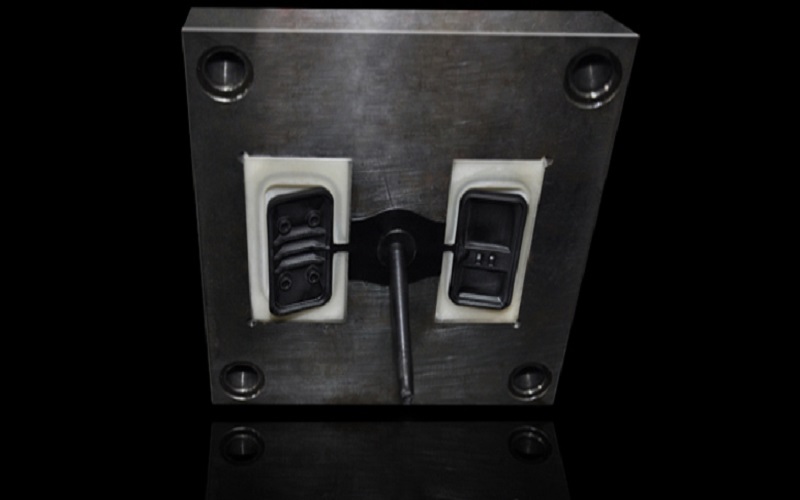
3D printed injection molds offer significant advantages over traditional metal molds, especially in terms of speed, cost, and design flexibility.
Shortened Mold Production Cycle
Traditional steel or aluminum mold machining can take weeks or even months, whereas 3D printed molds typically take only 1 to 5 days to complete. This rapid turnaround is especially beneficial for projects requiring quick validation or urgent delivery.
Support for Complex Geometries and Rapid Iteration
Additionally, 3D printed molds can produce complex geometries and internal features that are difficult or impossible to achieve with traditional machining. This design freedom supports innovation and customization of molded parts.
3D printed molds can produce parts with high dimensional accuracy, ensuring molded parts meet precise specifications. This capability enables manufacturers to quickly test and improve designs without the long wait times associated with traditional molds.
Moreover, 3D printed molds can be used to produce parts while waiting for permanent metal molds, effectively bridging the gap between prototyping and mass production. This flexibility reduces downtime and accelerates product development cycles.
Lower Costs For Low Volume Production
Finally, 3D printed molds significantly reduce tooling costs, lowering the barrier to entry for low volume injection molding. At modest production volumes, the total cost of 3D printed molds is much lower than traditional steel molds.
Material costs and processing times are greatly reduced, making small batch production economically feasible.
Together, these advantages make 3D printed injection molds a powerful tool in modern manufacturing, enabling faster, more flexible, and cost-efficient production processes.
Disadvantages Of 3D Printed Injection Molds
Despite the many advantages of 3D printed injection molds, there are also some limitations to be aware of.
Limited Service Life
Compared to traditional steel or aluminum molds, 3D printed molds have a shorter lifespan, typically withstanding only a few hundred to a few thousand injection cycles, making them unsuitable for large-scale production.
Inferior High Temperature Resistance
Most polymer molds have lower high temperature resistance than metal molds and are prone to deformation or cracking under high heat. Metal 3D printed molds offer better heat resistance but come with higher costs and longer lead times.
Surface Quality and Dimensional Accuracy Deficiencies
The surface finish and dimensional accuracy of printed molds generally do not match those of metal molds, often requiring post-processing such as sanding, polishing, or coating, which adds time and expense.
Therefore, 3D printed molds are better suited for prototype validation, small batch production, and transitional manufacturing rather than large-scale, long-term manufacturing.
When To Use 3D Printed Injection Molds?
3D printed injection molds are not a complete replacement for traditional steel molds but serve as a highly valuable complementary solution in specific scenarios. The following are the most suitable situations for their use:
1. Prototype Validation and Design Iteration Phase
- When there is a need to quickly validate the structural strength, assembly fit, and functional performance of parts using actual injection molding materials (rather than 3D printed parts).
- When designs are still undergoing frequent changes and low-cost, short-cycle repeated mold trials are desired.
- Typical production volume: a few to several dozen parts.
2. Small Batch Production
- For relatively small order quantities (usually 50–500 parts, with some high-quality molds reaching around 1000 parts), where the cost of traditional steel molds is too high and uneconomical.
- When the product lifecycle is short or the product is customized or limited edition.
- When there is a desire to achieve injection molded material properties and surface quality while controlling costs.
3. Bridge Tooling
- When the official steel mold is not yet completed, but the market or customers have urgent demands.
- Using 3D printed molds for temporary production to fill the “gap period,” enabling simultaneous validation, delivery, and waiting for the official mold.
- Common in the early stages of new product launches or urgent orders.
4. Other Suitable Scenarios
- Parts are relatively small in size and structurally simple.
- Injection molding materials are medium to low temperature and low abrasion plastics (such as PP, PE, ABS, PS, etc.).
- There is an extremely high demand for lead time, and the weeks-long wait for traditional mold making is unacceptable.
- The company already possesses 3D printing capabilities internally or can easily connect with external rapid service providers.
In summary, 3D printed molds are best used for rapid prototyping, low to medium volume production, bridge tooling, and projects demanding complex designs or quick iterations.
Evaluating production volume, part complexity, and budget constraints will help determine if this technology is the right fit for a given application.
Conclusion
In summary, 3D printed injection molds serve as an important complement to traditional molds, greatly enhancing product development and small batch production efficiency with their advantages of rapid manufacturing, low cost, and design flexibility.
Although their durability and high-temperature resistance cannot yet fully replace steel molds, they demonstrate unique value in prototype validation, bridge tooling, and customized demands.
With continuous advancements in 3D printing technology and materials, combined with the integration of resources through a global network, 3D printed molds will play an increasingly important role across various industries, helping manufacturing achieve more flexible and efficient digital transformation.