
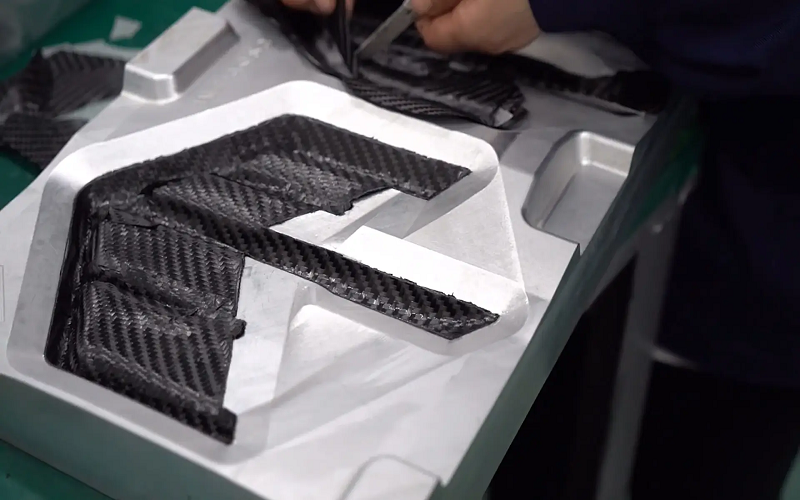
Carbon fiber injection molding technology combines carbon fiber reinforced thermoplastic composites with traditional injection molding processes, enabling the production of parts that are lighter and have higher rigidity than glass fiber reinforced plastics, thus achieving large-scale production of high-strength, lightweight components.
Due to its high strength, lightweight, and excellent mechanical properties, it is gradually becoming an important choice in fields such as automotive, aerospace, and electronics.
This article will delve into the material characteristics, process flow, mold design, and the advantages and challenges of carbon fiber injection molding in practical applications, helping readers gain a comprehensive understanding of the latest developments and future trends of this technology.
What Is Carbon Fiber Injection Molding ?
Carbon fiber injection molding (abbreviated as CFIM, i.e., carbon fiber reinforced injection molding) is an advanced manufacturing process.
This process mixes carbon fiber materials with polymer resin and injects the mixture into a mold through an injection molding machine to produce molded parts with excellent mechanical properties.
By mixing carbon fiber with polymer matrices (such as nylon, polycarbonate, etc.), heating and melting the mixture, and then injecting it into the mold cavity, injection molded parts with high strength, lightweight, and high rigidity are formed.
This method typically uses shorter carbon fibers, enabling efficient production of injection molded parts with complex shapes, widely used in industries such as automotive, aerospace, and electronics.
However, with advances in long-fiber injection molding technology, longer fibers can now be used. This not only enhances the stiffness and toughness of the final product but also maintains short cycle times and the high automation advantages of production.
Steps Of Carbon Fiber Injection Molding Process
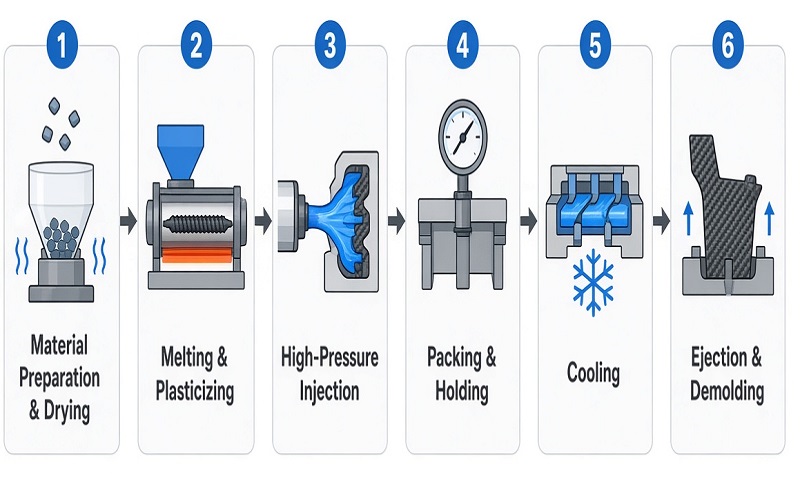
The carbon fiber injection molding process involves several critical steps to ensure the production of high-quality parts with excellent mechanical properties. These steps include material preparation, melting and mixing, injection, cooling, and demolding.
- Material Preparation: Carbon fiber pellets or granules, often combined with polymer resin, are prepared for the molding process. These pellets usually contain shorter fibers to facilitate smooth flow during injection.
- Melting and Mixing: The prepared material is fed into the injection molding machine’s barrel, where it is heated to a specific temperature to melt the polymer resin. During this stage, carbon fibers are thoroughly mixed with the molten resin to ensure uniform distribution throughout the material.
- Injection: The molten composite material is injected under high pressure into the mold cavity, which defines the shape of the final part. The mold is designed to accommodate the flow and orientation of carbon fibers, which significantly influence the mechanical performance and surface quality of the molded part.
- Cooling and Solidification: Once the material fills the mold cavity, it is cooled to solidify the part. The cooling time is carefully controlled to minimize shrinkage and warping, ensuring dimensional accuracy and surface finish.
- Demolding: After solidification, the mold opens, and the finished part is ejected. The part may undergo additional machining or surface treatments to meet specific application requirements.
Throughout the process, parameters such as temperature, pressure, and injection speed are closely monitored and controlled to maintain consistent quality. Advances in automation and process control technologies have further enhanced the efficiency and reliability of carbon fiber injection molding.
Additionally, the use of longer fibers and continuous fiber reinforcements in advanced injection molding techniques allows manufacturers to create parts with superior tensile strength and toughness, suitable for high-stress applications in automotive and aerospace industries.
Different Types Of Materials Used In Carbon Fiber Injection Molding
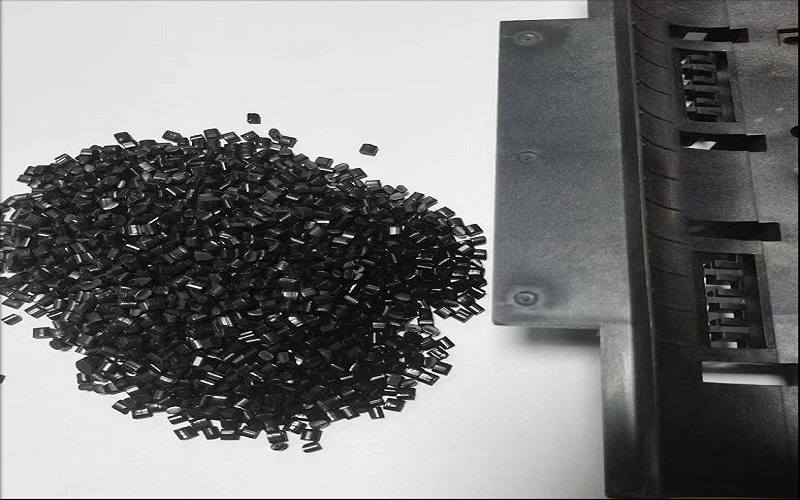
According to the length of the fibers before injection molding, there are mainly two forms:
- Short Fiber Carbon Composites: Carbon fiber length is usually less than 12 millimeters, easy to process, suitable for high-volume production with short cycles. They have good mechanical properties, such as improved stiffness and strength, but may cause increased brittleness and reduced elongation at break in the finished product.
- Long Fiber Carbon Composites: Fiber length exceeds 12 millimeters, typically between 10 and 50 millimeters, with some advanced processes using continuous fibers (over 50 millimeters). Long fibers significantly enhance the stiffness, strength, and toughness of molded parts, suitable for complex shapes and high structural strength requirements in automotive and aerospace fields.
In addition to fiber length, the form of carbon fiber used in injection molding can vary between chopped fibers, woven carbon fiber cloth, or continuous fiber reinforcements.
For example, carbon fiber cloth and fabric are often used in other molding methods like compression molding or vacuum-assisted resin transfer molding, which are suitable for producing parts with excellent surface finish and mechanical properties but generally involve longer cycle times.
Carbon Fiber Reinforced Thermoplastics
These materials combine carbon fiber with thermoplastic resins such as nylon, polycarbonate, or polypropylene to meet different industrial needs:
- Nylon (PA6 / PA66 / PA610): The most commonly used base material, combining high strength, wear resistance, fatigue resistance, and good heat resistance.
- Polypropylene (PP): Low density, chemical resistance, very low water absorption, and more cost-effective.
- High-performance Engineering Plastics (PPS / PEEK): Used in extreme environments, with excellent ultra-high temperature resistance and outstanding chemical stability.
- General/Purpose Engineering Plastics (ABS / PC): Provide excellent flowability, smooth molded surface finish, and dimensional accuracy.
Carbon fiber is usually present in the form of short-cut or long-cut fibers, significantly improving mechanical strength and reducing weight compared to ordinary plastics. This combination offers good cost-effectiveness and is very suitable for mass production.
Benefits Of Carbon Fiber Injection Molding
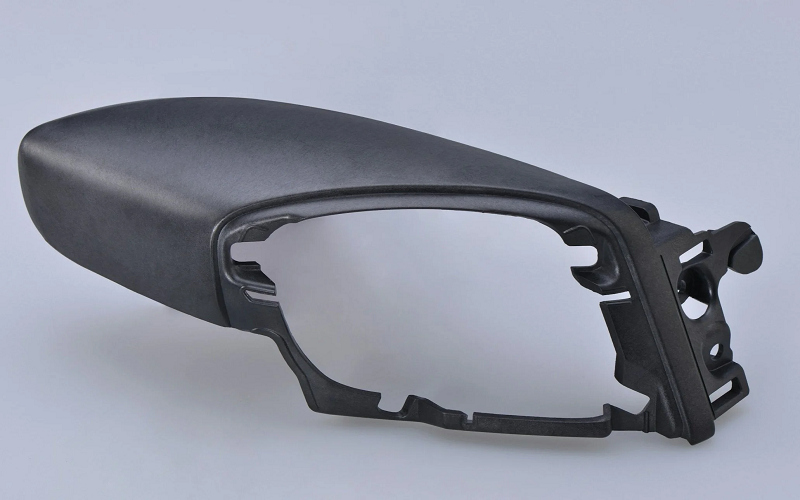
Carbon fiber injection molding offers numerous advantages that make it a preferred choice in various high-performance applications.
Weight Savings
Compared to traditional metal parts such as steel and aluminum, carbon fiber injection molding offers significant advantages by providing a range of lightweight, corrosion-resistant, and high-strength alternatives.
This not only helps reduce the overall weight of products, thereby improving fuel efficiency and performance in automotive and aerospace sectors, but also contributes to sustainability by reducing material usage and energy consumption during manufacturing.
Tailorable Mechanical Properties
The versatility of carbon fiber composites enables manufacturers to tailor the mechanical properties of parts by adjusting fiber length, orientation, and resin matrix types.
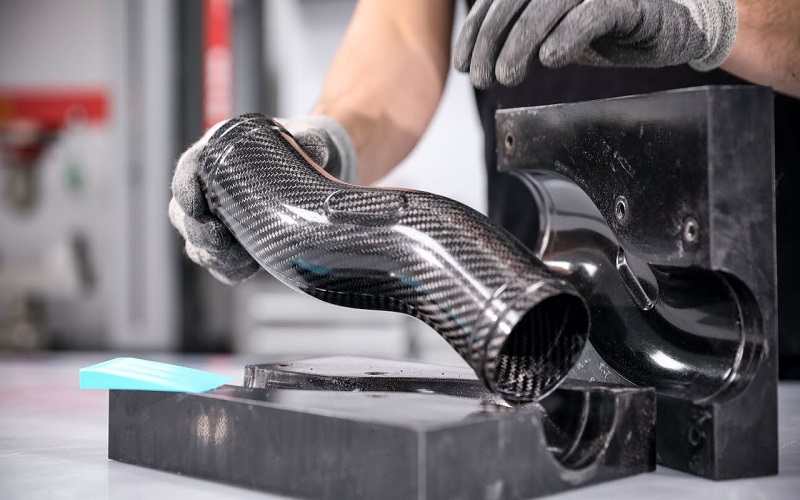
For example, in processes like filament winding or sheet-wrap molding, the use of a mandrel or core allows the production of tubular or cylindrical components with an excellent strength-to-weight ratio.
Sustainability
Another important advantage is the enhancement of sustainability. Carbon fiber injection molding can produce lighter products, which leads to lower energy consumption during actual use and thus reduces carbon emissions.
To improve sustainability, the industry has developed carbon fiber composites incorporating recycled fibers or bio-based resins. These materials aim to minimize environmental impact while maintaining good performance and cost-effectiveness.
Cost-effectiveness
This process also enables low-cost mass production, especially compared to traditional carbon fiber lay-up methods. By utilizing automated injection molding machines, companies can achieve high-quality, large-volume production to meet the demands of modern customers.
Thanks to smart manufacturing technologies and optimized supply chains, this process ensures consistent product quality and effectively reduces production costs.
Moreover, advancements in automation and process control technologies, including vacuum-assisted molding processes, have further improved the consistency and quality of carbon fiber parts, satisfying the stringent requirements of various industry customers.
Tested and refined over decades, carbon fiber injection molding has become a reliable and efficient manufacturing technology.
Limitations Of Carbon Fiber Injection Molding
While carbon fiber injection molding offers numerous benefits, it also has certain limitations that manufacturers and designers need to consider.
Cost Considerations
Carbon fiber materials are generally more expensive than standard unreinforced thermoplastics and glass fiber composites.
The higher raw material cost can impact the overall production budget, especially for large-volume manufacturing. Additionally, the need for specialized equipment and tooling to handle carbon fiber composites can add to the initial investment.
Fiber Length and Orientation Challenges
The injection molding process typically uses short carbon fibers, which can lead to reduced elongation at break and increased brittleness of the molded components.
Fiber orientation within the mold can be difficult to control precisely, which may result in variable mechanical properties and cosmetic issues such as visible fiber patterns on part surfaces.
Design Constraints
Although injection molding allows complex geometries, the presence of carbon fibers imposes some design restrictions. Sharp corners and thin walls can be problematic due to fiber breakage and flow challenges.
Risk Of Visual Defects
Additionally, injection molded parts may exhibit cosmetic issues due to fiber patterns on surfaces.Designers must carefully consider fiber flow and potential warping or shrinkage to ensure dimensional accuracy.
In summary, while carbon fiber injection molding is a powerful manufacturing technique for producing lightweight, strong, and complex parts efficiently, careful consideration of its limitations is essential to optimize design, processing, and cost-effectiveness.
Applications Of Carbon Fiber Injection Molded Parts
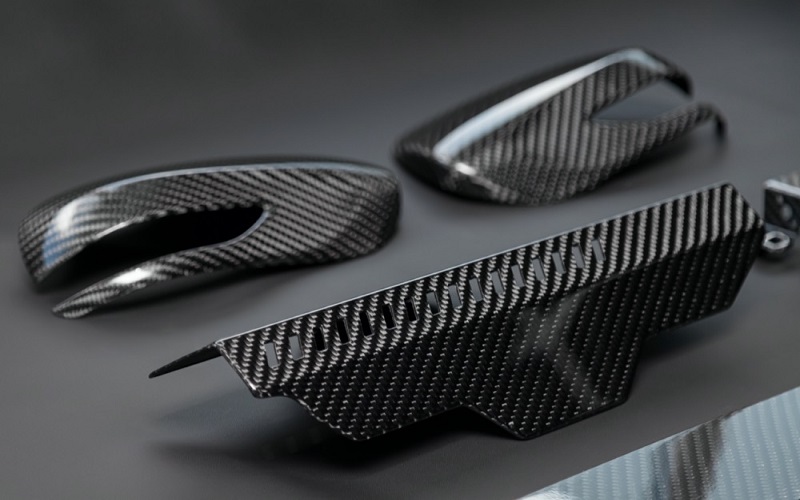
The range of applications for carbon fiber injection molding is broad, covering everything from automotive parts to consumer electronics and sports equipment. This versatility is due to the process’s ability to produce complex geometries with high precision and repeatability.
- Automotive Industry: Carbon fiber injection molding is widely used in the automotive industry for manufacturing lightweight, high-strength interior panels, structural supports, and engine compartment components.
- Aerospace Applications: The aerospace sector utilizes carbon fiber injection molding to produce non-structural parts, housings, and interior components, focusing on weight reduction.
- Consumer Electronics: The electronics industry uses carbon fiber injection molding to create lightweight and durable device housings and structural parts, such as for laptops, smartphones, and drones.
- Sports and Recreational Equipment: Sports equipment manufacturers adopt carbon fiber injection molding to produce gear requiring high strength and low weight, such as bicycle frames, golf clubs, and tennis rackets.
- Industrial and Medical Equipment: This process is also used to manufacture industrial tools and medical devices, emphasizing precision, strength, and lightness. Carbon fiber injection molded parts are widely applied in surgical instruments, prosthetics, and various precision mechanical components, enhancing functionality and user comfort.
With technological advancements, carbon fiber injection molding is expanding into fields such as new energy, robotics, and advanced manufacturing. Its low cost, high performance, and customizable mechanical properties offer possibilities for innovative product designs and sustainable solutions.
Comparison With Other Carbon Fiber Molding Methods
Carbon fiber injection molding stands out among various carbon fiber molding techniques due to its unique advantages and specific applications. Understanding how it compares with other molding methods can help manufacturers and designers select the most suitable process for their needs.
Pultrusion
Pultrusion is a continuous molding process where carbon fibers impregnated with resin are pulled through a heated die to form fixed cross-sectional shapes such as rods and beams. It is highly efficient for producing long, uniform profiles but is limited to simple geometries.
Compared to injection molding, pultrusion offers excellent fiber alignment and mechanical properties but lacks the design flexibility for complex shapes, making it less suitable for parts requiring intricate details or varying cross-sections.
Filament Winding
Filament winding involves winding resin-impregnated carbon fiber tow around a mandrel to create tubular or cylindrical parts like pipes and tanks. This method provides high strength and low weight in curved structures.
While filament winding excels in producing hollow, round shapes with continuous fibers, carbon fiber injection molding is better suited for intricate, compact components with varied geometries and faster production cycles.
Resin Transfer Molding (RTM)
RTM uses a carbon fiber preform placed in a mold cavity, into which resin is injected under pressure. This method is suitable for small to medium-sized parts, offering good surface finish and mechanical properties.
However, RTM generally involves longer cycle times and higher costs than injection molding. Injection molding, by contrast, supports high-volume production with shorter cycles but typically uses shorter fibers, which may affect mechanical performance.
RTM can incorporate longer fibers and complex fiber orientations, resulting in superior strength and stiffness for certain applications.
Compression Molding
Compression molding presses carbon fiber sheets or prepreg materials in a heated mold to form parts. This method is accurate, cost-effective, and produces high-quality components with excellent fiber distribution. Compression molding is often preferred for medium to large parts with relatively simple shapes.
Carbon fiber injection molding offers faster cycles, greater design complexity, and the ability to produce intricate shapes, but may have limitations in fiber length and orientation control, potentially affecting mechanical properties.
Overall, carbon fiber injection molding is ideal for high-volume production of complex, lightweight parts with relatively short cycle times and good mechanical properties.
Other methods like pultrusion, filament winding, RTM, and compression molding excel in specific applications requiring longer fibers, continuous fiber reinforcement, or particular shapes and surface finishes.
Selecting the appropriate molding method depends on factors such as part geometry, mechanical requirements, production volume, and cost considerations.
| Molding Method | Fiber Type | Suitable Part Types | Production Volume | Cycle Time | Mechanical Properties | Design Complexity | Cost Effectiveness | Typical Applications |
|---|---|---|---|---|---|---|---|---|
| Carbon Fiber Injection Molding | Short and long fibers (mostly short) | Complex shapes, lightweight parts | High-volume production | Short cycle times | Good stiffness and strength; may have brittleness and fiber orientation issues | High (complex geometries possible) | Cost-effective for mass production | Automotive interior panels, electronics housings, sports equipment |
| Pultrusion | Continuous fibers | Fixed cross-sectional profiles | Medium to high | Continuous process | Excellent fiber alignment and mechanical properties | Low (simple profiles) | Moderate | Rods, beams, structural profiles |
| Filament Winding | Continuous fibers | Tubular, cylindrical parts | Low to medium | Moderate to long | High strength and low weight in curved structures | Moderate (round shapes) | Moderate to high | Pipes, tanks, aerospace components |
| Resin Transfer Molding (RTM) | Long fibers, preforms | Small to medium-sized parts | Low to medium | Longer cycle times | Superior strength and stiffness with complex fiber orientations | Moderate | Higher than injection molding | Automotive body parts, aerospace panels |
| Compression Molding | Sheets, prepregs | Medium to large parts with simple shapes | Medium to high | Moderate | High quality with excellent fiber distribution | Moderate | Cost-effective | Automotive parts, structural components |
Conclusion
Carbon fiber injection molding is a transformative manufacturing technology that combines the lightweight and high-strength benefits of carbon fiber composites with the efficiency and versatility of injection molding.
It enables the mass production of complex, durable, and lightweight parts across automotive, aerospace, electronics, and sports industries.
While it offers significant advantages such as weight reduction, tailored mechanical properties, and cost-effectiveness, challenges like material cost, fiber orientation control, and design limitations must be carefully managed.
With ongoing advancements in fiber technology, automation, and sustainable materials, carbon fiber injection molding is poised to play an increasingly vital role in the future of high-performance manufacturing, driving innovation and sustainability in multiple sectors.