
If you want to understand why some blow molded products come out perfect and others don’t, the answer almost always starts with the tooling.
The machine matters, the resin matters, the process settings matter — but the mold itself is what defines the shape, surface quality, wall consistency, and dimensional accuracy of every single part that comes off the line.
Get the tooling right, and everything downstream gets easier. Get it wrong, and no amount of process adjustment will fully compensate.
This guide covers what blow mold tooling actually involves, what separates good tooling from great tooling, and how the industry is evolving to help manufacturers shorten lead times, reduce costs, and build more reliable production operations across a wide range of industries.
What Blow Mold Tooling Actually Is?
Blow mold tooling refers to the specialized molds and related components used in the blow molding manufacturing process to shape heated plastic into hollow finished products.
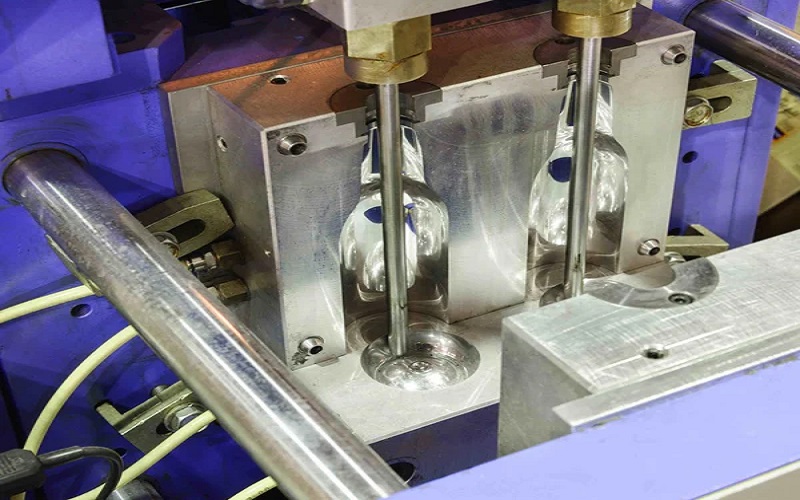
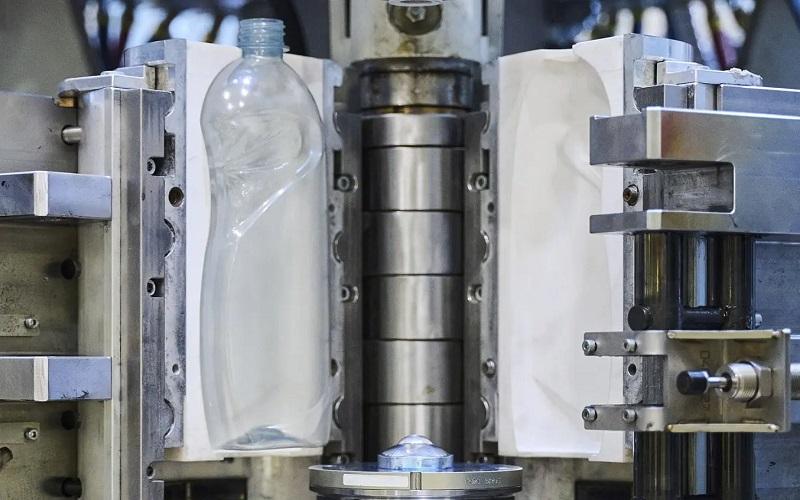
At its core, a blow mold is a two-part metal shell — the blow mold cavity — that contains the precise negative image of the product’s exterior.
When a heated parison or preform is inflated with pressurized air delivered through a blow pin or nozzle, it expands outward against those cavity walls, taking on their exact shape as it cools and solidifies into the finished product.
Cooling channels are internal passages within the mold where water or other fluids circulate to pull heat out of the plastic after shaping.
How well those channels are designed and how evenly they distribute cooling has a direct impact on cycle time, dimensional stability, and the likelihood of defects.
Every detail of the mold — from the cavity geometry to the parting line placement to the depth of the cooling channels — feeds directly into the quality and consistency of the blow molded products coming off the line.
Why Tooling Decisions Have Long-Term Consequences
Tooling is not a one-time cost you pay and forget. The specifications you lock in at the design stage follow every part through its entire production life.
A mold built with tight tolerances and a reliable cooling design will run consistently for millions of cycles.
A mold built to the lowest possible upfront cost will generate problems — flash, sink marks, inconsistent wall thickness, extended cycle times — that add up in labor, waste, and downtime over time.
The decision of how much to invest in tooling development is really a decision about how much production risk you’re willing to carry into the marketplace.
Core Components and Materials
Understanding what’s inside a blow mold helps explain why building one well requires genuine engineering expertise.
The mold cavity must be machined to tight dimensional specifications, because any deviation from the intended geometry shows up in every part produced.
The parting line — where the two halves of the mold meet — needs to be clean and precise to minimize flash and reduce the secondary trimming operations that add time and labor costs to the manufacturing process.
Aluminum as the Material of Choice
Aluminum has become the material of choice across a large segment of the blow mold industry.
Aluminum blow molds cost less to machine than steel alternatives and offer significantly better heat dissipation, which speeds up cooling and shortens cycle times.
For high volume production runs where thermal efficiency matters, that advantage compounds quickly.
Woodward Industries uses aluminum specifically to reduce costs and improve heat dissipation for their customers — a practical approach that reflects where the industry has landed for most standard applications.
Steel tooling still has its place for applications demanding extreme wear resistance or very long production runs, but aluminum handles the broad range of typical blow molding applications reliably and cost-effectively.
What Goes Into a Quality Mold Build?
Building effective production tooling means accounting for far more than just the cavity shape.
The blow pin design, the placement and sizing of cooling channels, the parting line geometry, the venting strategy, and the choice of surface finish all contribute to how the mold performs in a plant environment over its working life.
Details that seem minor at the design stage — a slightly undersized cooling channel, a parting line placed in the wrong location — become critical issues once the mold is running at production volumes.
This is why the build phase requires both precision machining capability and the kind of hands-on expertise that only comes from years of making molds across a variety of applications.
The Companies Shaping the Blow Mold Tooling Industry
The blow mold tooling space is served by a relatively small number of highly specialized manufacturers, each with a distinct focus and range of capabilities.
Understanding what these companies do — and what sets them apart — helps manufacturers make better decisions when sourcing tooling for new programs or looking for repair and support on existing molds.
Creative Blow Mold Tooling
Creative Blow Mold Tooling has built its reputation over more than 40 years of experience in the blow mold industry, with a consistent focus on manufacturing high quality blow molds and maintaining strong customer service throughout the life of every program.
What sets Creative apart is the team of design engineers they employ specifically to assist customers with initial package design — helping bridge the gap between a product concept and a manufacturable mold before a single chip is cut.
That front-end engineering support is valuable not just for getting the design right, but for catching feasibility issues early that would otherwise generate costly changes later in development.
Their expertise spans a wide range of industries and applications, and their commitment to quality at every stage of the process has made them a trusted partner for customers who need reliability in the marketplace.
RPS Tool and Engineering
RPS Tool and Engineering brings over 30 years of experience in blow mold tooling design and manufacturing, with a particular focus on fluid management and consumer products segments.
What distinguishes RPS is their emphasis on long-term support — they don’t just build a mold and ship it.
They provide ongoing support for engineering changes and maintenance of blow mold tools throughout the production life of a program, which is critical for customers who need to make design updates or keep aging tooling running efficiently.
Their solutions are built around the practical realities of production environments where downtime is expensive and reliability isn’t optional.
Woodward Industries
Woodward Industries offers aluminum blow mold making and tooling manufacturing for the plastics industry, with the capability to manufacture molds for a variety of end-use applications.
Their use of aluminum as the primary tooling material is a deliberate choice — it reduces costs for customers while improving heat dissipation in the mold, both of which contribute to more efficient production.
Woodward’s range extends across multiple industries, and their ability to create tooling for diverse applications makes them a flexible partner for manufacturers working across different product categories.
Design, Feasibility, and the Engineering Process
Not every product design translates cleanly into a blow moldable part, and figuring that out early is one of the most valuable things a skilled tooling team can do for a customer.
The feasibility of a given shape depends on draft angles, undercuts, parting line placement, and how the parison will distribute across the cavity during the stretch and inflation phase.
Working Through Feasibility Before Cutting Steel
Experienced engineers evaluate feasibility before committing to a mold build by analyzing how the plastic will behave during inflation, where wall thickness is likely to be inconsistent, and whether the proposed design can be demolded cleanly without secondary operations.
Catching these issues at the design stage — rather than discovering them after a mold has been built — is where tooling expertise creates real value.
It shortens lead times, reduces the number of engineering changes needed after initial trials, and gets customers to production faster.
Prototyping and Design Iteration
Prototyping is increasingly becoming part of the standard tooling development process rather than an optional step.
Building a prototype before committing to production tooling allows engineers to validate the design, test material behavior, and make design tweaks at a fraction of the cost of modifying a finished mold.
The information gathered during prototyping feeds directly into the production tooling build, resulting in molds that are more accurate, more reliable, and less likely to require expensive changes after they reach the plant.
3D Printing and the Future of Tooling Development
One of the more significant shifts in the blow mold industry over the past several years is the integration of 3D printing into the tooling development process.
Companies can now prototype and design molds in-house using 3D printing, reducing both costs and turnaround time substantially compared to relying entirely on traditional metal machining for early-stage development.
How 3D Printing Is Changing Lead Times?
3D printing enables iterative prototyping of molds, giving manufacturers greater control over the development of hollow plastic parts and allowing for quick, inexpensive design tweaks that would have required expensive re-machining in the past.
Companies can create highly detailed rapid tooling using 3D printing materials that are strong and temperature-resistant enough for limited production runs and design validation.
Industry leaders are actively using this approach to shorten development cycles — in some cases cutting weeks off the average lead time for new tooling programs.
For manufacturers under pressure to compress timelines without sacrificing quality, 3D printing as a development tool has moved from a novelty to a standard part of the process.
The Limits of 3D Printed Tooling
It’s worth being clear about what 3D printing can and can’t do in this context.
Printed molds are well-suited for prototyping, design feasibility validation, and low-volume trial production — but they’re not a replacement for precision-machined aluminum or steel production tooling when it comes to generating parts at scale.
The value of 3D printing is in the development phase: use it to prove out the design, shorten the feedback loop, and build confidence before finally committing to full production tooling.
Quality Control Throughout the Tooling Process
Quality control is not something you add at the end — it needs to run through every stage of the tooling process, from initial design review through final part verification.
A quality lab is pivotal to achieving the highest standards in blow mold tooling.
Every mold and component manufactured should undergo documented verification, and quality inspection forms and reports for each part should be available in both electronic and hardcopy formats for traceability and accountability.
Automated systems can monitor process parameters consistently, but human oversight remains critical in the blow molding process for quality control purposes.
Experienced engineers and quality technicians catch the things that sensors miss — subtle surface defects, early signs of mold wear, part weight variations that signal process drift.
Effective quality control identifies defects before the finished product ships, which is far less costly than dealing with returns, field failures, or customer complaints.
Additionally, a disciplined quality approach reduces material waste, improves overall efficiency, and builds the kind of reliability in production that customers in demanding industries — automotive, healthcare, consumer products — require as a baseline.
Advantages and Limitations of Blow Mold Tooling
Like any manufacturing process, blow molding has real advantages and real limitations, and understanding both helps manufacturers make better decisions about when to use it and how to set realistic expectations.
The primary advantages are well established: rapid production cycles capable of producing thousands of parts per hour, low cost per part at scale, the ability to create lightweight one-piece hollow structures, and tooling costs that are generally lower than injection mold equivalents.
The process achieves nearly 100% material utilization in stretch blow molding applications, which makes it attractive from both a cost and sustainability standpoint.
The limitations are equally real. Blow molding is most effective for hollow, thin-walled shapes — it can’t produce solid or thick-walled parts.
Achieving uniform wall thickness can be difficult for parts with complex geometries.
Blow molded parts may have limited design detail on the exterior compared to what injection molding can achieve. And the initial setup and machinery costs remain high enough that the process is largely uneconomical for low-volume production runs.
Finally, while blow molding is compatible with common materials like HDPE, LDPE, and PET, it is less adaptable to specialty or reinforced materials than some other processes.
Applications Across Industries
The range of products built on blow mold tooling spans virtually every major industry.
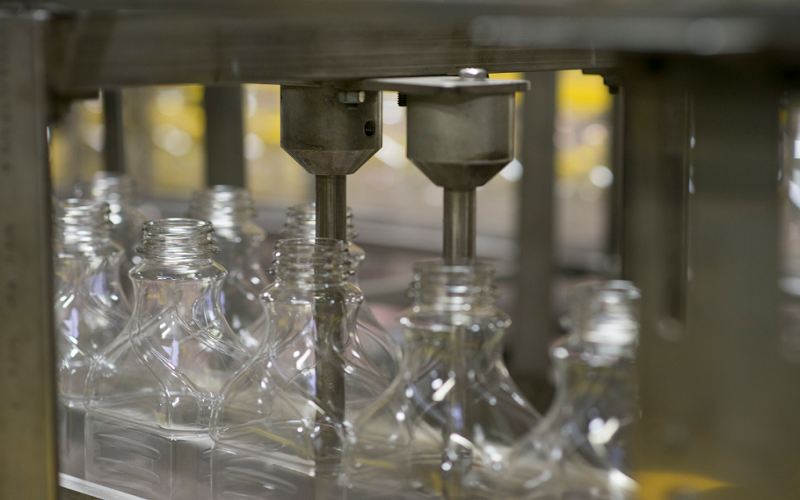
In the packaging industry — the largest user of blow molding — tooling is built to produce bottles, containers, and enclosures at extremely high volumes with consistent quality.
Automotive applications include fuel tanks, ducting, fluid reservoirs, and under-hood components where dimensional accuracy and material performance are critical.
Agricultural use cases range from large bulk containers and irrigation components to chemical storage tanks.
Consumer products, healthcare packaging, and industrial components all make regular use of blow molded products built on high-quality production tooling.
Each of these applications puts different demands on the tooling, and the engineers designing those molds need to understand not just how to machine metal, but how the specific end-use requirements of each industry translate into tooling decisions.
That depth of application knowledge — built up over years of working across multiple industries and product types — is ultimately what separates the best tooling companies from the average ones.
Conclusion
Blow mold tooling is the foundation that every blow molded product is built on.
Invest in it properly — with experienced engineers, quality aluminum construction, rigorous process verification, and a tooling partner who stays engaged through the full production lifecycle — and the benefits show up in every part that comes off the line.
Cut corners to save money upfront, and those savings tend to disappear quickly in downtime, scrap, and production inconsistencies.
The most successful operations in the blow mold industry treat tooling not as a cost to minimize but as an investment in production reliability, product quality, and long-term success in the marketplace.