
When you’re deciding how to manufacture a part, two of the most common options you’ll come across are CNC machining and injection moulding.
Both are widely used across diverse industries — from aerospace components to medical devices to everyday consumer products — but they work in very different ways and suit very different situations.
Understanding the key differences between CNC machining vs injection moulding before you commit can save you significant time and money down the line.
This guide breaks down how each process works, what materials each method supports, and how to figure out which manufacturing method makes the most sense for your specific project.
How Each Process Works?
Before diving into the comparison of CNC machining and plastic injection molding, it helps to understand what’s actually happening in each manufacturing process.
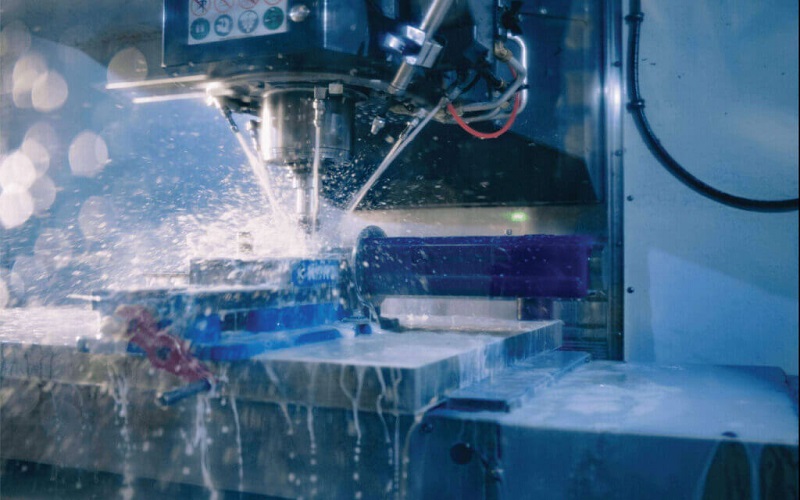
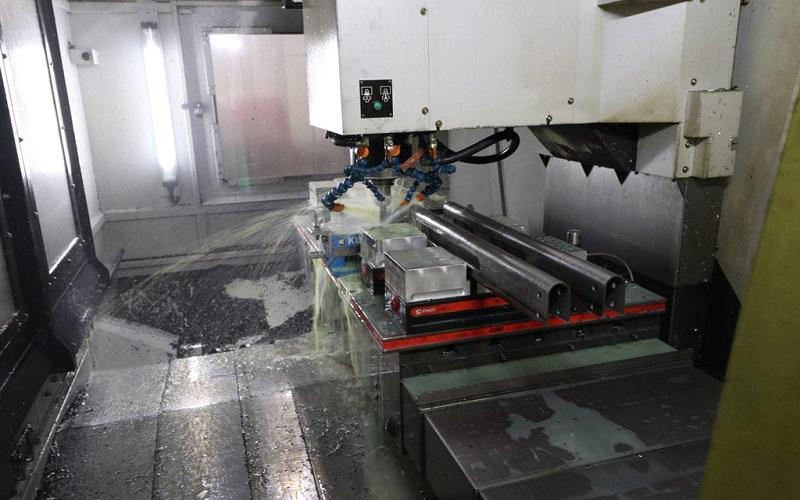
CNC machining is a subtractive manufacturing process. It starts with a solid block of raw materials — which could be metal, plastic, or even wood — and uses cutting tools guided by computer numerical control (CNC) to remove material until the desired shape is achieved. CNC machining involves cutting away material rather than adding or forming it, and the machine follows instructions from a CAD file to produce cnc machined parts with exceptional precision. Unlike injection molding, CNC machining removes material from the outside in, which gives it an edge when working with rigid materials or metals.
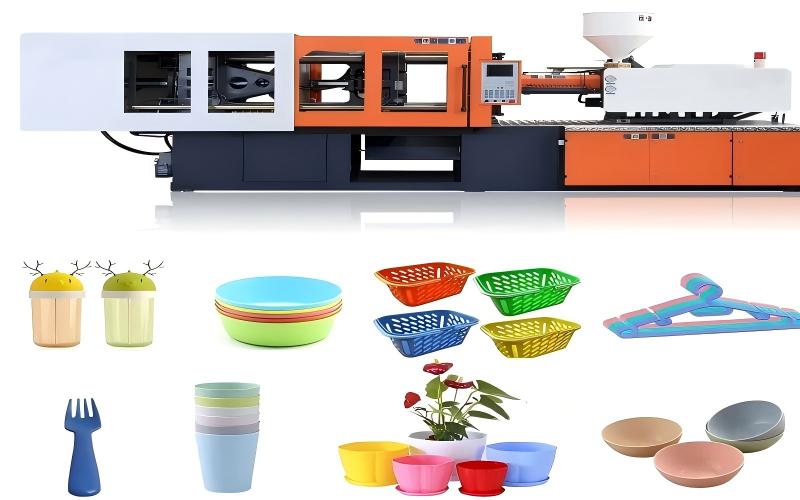
Injection molding works differently. It melts plastic materials and injects the molten plastic into a mould cavity using an injection unit. The molten material fills the cavity, cools, and solidifies into the finished part shape. A clamping unit holds the mould closed under pressure during the injection process, and once the part cools, the mould opens and the injection moulded part is ejected. The injection molding process is highly repeatable, making it ideal for producing plastic parts at scale with consistent quality.
Both methods can produce high quality parts, but the conditions under which they do it best are quite different.
Cost: Upfront Investment vs. Long-Term Savings
Cost is usually one of the first things people consider, and here the two manufacturing methods have a very different structure.
CNC machining has a lower upfront investment.
There’s no mould creation or mould fabrication involved, so you can get started quickly without a large initial outlay. This makes it a practical choice for early stage product development, rapid prototyping, and low volume production where committing to expensive tooling doesn’t make sense.
Injection moulding requires a higher initial investment due to mold cost and mold fabrication.
Designing and building a mould can be expensive, and that cost needs to be spread across the production run. Mold creation determines mold cavity quality.
However, once the mould is made, production costs per part drop significantly. For large scale production and high volume production runs involving thousands or millions of plastic parts, injection moulding becomes far more cost effective than CNC machining.
The cost per part for CNC machining does not decrease as significantly with volume as it does with injection moulding, which is an important consideration when planning production volumes.
The simple way to think about it: if you need a small number of parts, CNC machining will likely be cheaper overall. If you’re doing mass production, injection moulding wins on unit cost.
Production Volume: Where Each Method Shines
Production volume is one of the clearest factors when comparing CNC machining vs injection moulding.
CNC machining is better suited for low volume production and medium volume runs. Because CNC machining requires individualised cutting and shaping for each part, cycle times are longer.
There’s no significant economy of scale the way there is with injection moulding, and the cost per part doesn’t decrease dramatically as production volumes increase.
Injection moulding is the preferred method for high volume production. Once tooling is complete, the injection moulding process produces parts very quickly — cycle times can be as short as a few seconds depending on the part’s complexity and size.
This speed makes injection moulding ideal for high volume production runs where consistent quality and fast turnaround are priorities. Injection molding produces parts at a rate that CNC machining simply cannot match at scale.
If you’re in early stage product development and still refining your design, CNC machining gives you the freedom to iterate without penalty. But once your design is locked in and you’re ready for large scale production, injection moulding is almost always the better choice.
Precision, Tolerances, and Surface Finish
Both processes can produce high quality parts, but CNC machining has the edge when it comes to dimensional accuracy and tight tolerances.
CNC machining can achieve tolerances as tight as ±0.001 inches, delivering exceptional precision that makes it the go-to choice for aerospace components, medical devices, and other applications where even tiny variations matter.
CNC machining excels at fine detailing, complex geometries, and complex shapes that require exact measurements.
CNC machined parts also tend to have a superior surface finish straight off the machine, which reduces the need for post-processing.
Injection moulding typically achieves tolerances within the range of ±0.005 inches. That level of dimensional accuracy is sufficient for most plastic components, and injection moulded parts benefit from consistent quality across every single unit produced.
However, if your application demands high precision or very tight tolerances, CNC machining is the more reliable option.
Injection moulding machines can also introduce slight variation due to factors like shrinkage in the mould cavity, which designers need to account for during the injection moulding process.
Materials: Flexibility vs. Specialisation
The range of materials each process can handle is another important difference when evaluating CNC machining vs injection molding.
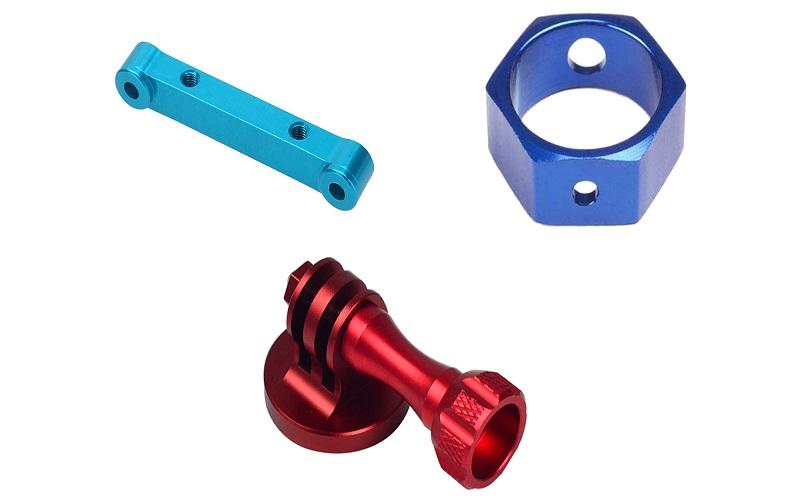
Materials CNC machining can work with include metals, rigid materials, high performance plastics, flexible materials, and even wood.
This broad compatibility makes CNC machining suitable for applications where plastic simply won’t do — like structural aerospace components or parts that need to withstand extreme stress.
CNC machining processes can handle a wide variety of raw materials, giving engineers and designers much more flexibility in material selection.
Injection moulding primarily works with plastic materials — thermoplastics, elastomers, and thermosets.
It handles high performance plastics very well and is extremely effective for producing plastic components and injection moulded parts at scale, but it doesn’t extend to metals or other non-plastic raw materials.
If your application calls for plastic parts at high volumes, injection moulding handles this better than any other process.
But if you need to work across various materials, CNC machining gives you far more options.
Design Flexibility and Complexity
Design flexibility is another area where CNC machining and injection molding produces a clear contrast.
CNC machining offers greater design flexibility. Because the machine follows a CAD file, changes to a design are relatively straightforward — update the computer aided design file and the machine follows the new instructions.
This makes CNC machining ideal for rapid prototyping and early stage product development workflows where design iterations are expected.
CNC machining can handle complex geometries, intricate surface details, and complex parts, though it may struggle with certain internal features due to cutting tool access limitations.
CNC machining excels particularly when producing one-off or small batch parts that each have unique specifications — including entire body panels or custom aerospace components.
Injection moulding is far less flexible once you’ve committed to a mould. Making design changes after mould fabrication is costly and time-consuming — in many cases it means building a completely new mould.
This limitation makes injection moulding a poor choice for early stage product development.
However, injection moulding excels at producing complex shapes with internal cavities, uniform wall thickness, and intricate surface details consistently across every single moulded part.
Unlike CNC machining, the injection moulding process replicates the same geometry and surface finish on every part with no variation, which is a major advantage for mass production.
Speed and Cycle Times
When it comes to production speed, injection moulding has a clear advantage at scale.
CNC machining requires individualised cutting and shaping for each part, which makes it inherently slower.
Each cnc machined part takes time to set up, programme, and machine, and that time doesn’t compress significantly as production volumes grow.
CNC machining processes are well-suited to situations where speed is less critical than precision and flexibility.
Injection moulding achieves much shorter cycle times once tooling is complete. With cycle times potentially as short as a few seconds per part, injection moulding machines can produce high volumes of plastic parts far faster than CNC machining.
For large scale production, these time savings translate directly into lower production costs and faster time to market — a significant advantage for businesses operating at high volume production levels.
Comparing Key Applications Across Industries
Both CNC machining and injection moulding are used across diverse industries, but they tend to be applied to different types of work.
CNC machining is commonly used for aerospace components that require tight tolerances and high performance plastics or metals, medical devices that demand exceptional precision and dimensional accuracy, rapid prototyping during early stage product development, and low volume production of custom or complex parts.
CNC machining processes are also well-suited to additive manufacturing workflows where parts are first prototyped and then refined before committing to tooling.
Injection moulding is the dominant process for plastic components in consumer products, automotive plastic parts including entire body panels, packaging, medical devices produced at scale, and any application requiring high volume production runs of consistent plastic parts.
The injection moulding process is particularly valuable in industries where longevity and maintenance requirements demand parts that are produced identically every time.
CNC Machining vs Injection Moulding: Side-by-Side Summary
| Factor | CNC Machining | Injection Moulding |
| Process type | Subtractive manufacturing process | Mould-based injection process |
| Best for | Low volume production, prototyping | High volume production, mass production |
| Upfront cost | Lower | Higher (mould cost) |
| Cost per part at scale | Higher | Lower |
| Tolerances | ±0.001 inches | ±0.005 inches |
| Materials | Metals, plastics, various materials | Primarily plastic materials |
| Design flexibility | High — easy CAD file updates | Low — mould changes are costly |
| Cycle time | Slower | Very fast |
| Consistent quality | Good | Excellent at high volumes |
Which One Should You Choose?
There’s no single answer that fits every situation, but here’s a straightforward framework to guide your decision when comparing CNC machining vs injection moulding:
Choose CNC machining if:
- You need low volume production or one-off parts
- Your design is still evolving during early stage product development
- You need tight tolerances or exceptional precision
- You’re working with metals, rigid materials, or flexible materials outside the plastics range
- You’re doing rapid prototyping or computer aided design iteration
- Your parts have complex geometries that require fine detailing
Choose injection moulding if:
- You need high volume production runs or mass production
- Your design is finalised and ready for large scale production
- You’re producing plastic components consistently at scale
- You want lower production costs per unit over time
- Your plastic parts have complex shapes with internal cavities or uniform wall thickness requirements
- Consistent quality and longevity and maintenance requirements are top priorities
It’s also worth knowing that CNC machining and injection moulding are not mutually exclusive.
Many products start life as CNC machined prototypes during development, then transition to injection moulding once the design is locked and production volumes ramp up.
Using both processes strategically — CNC machining for early stage development and injection moulding for scale — is a common and effective approach across diverse industries.
Conclusion
CNC machining and injection moulding are both excellent manufacturing methods — they’re just built for different jobs.
CNC machining brings flexibility, high precision, and material variety to the table, making it the better choice for low volume production, complex parts, and evolving designs.
Injection moulding delivers speed, consistent quality, and cost efficiency at scale, making it the clear winner for high volume plastic parts production.
Understanding your production volumes, material requirements, design stage, mould cost tolerance, and longevity and maintenance requirements will point you toward the right choice.
When in doubt, start with CNC machining to validate your design, then move to injection moulding when you’re ready to scale up and produce high quality parts consistently across every unit.