
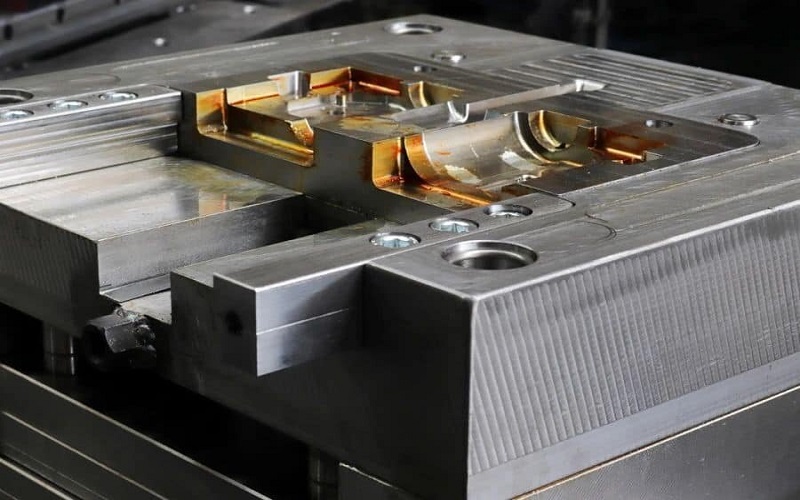
In the fast-paced world of manufacturing, picking the right way to make your parts can be the difference between a hit product and a total failure.For most engineers and buyers, the big choice is die casting vs injection molding.
Both are top-tier mass production methods that can create complex parts over and over again.
However, they are used for very different things depending on the materials and strength you need.
This guide takes a technical look at these manufacturing processes, showing how molten metal and molten plastic act inside a mold cavity to create the industrial and commercial products we use every day.
How Each Process Works?
To understand the key differences, we must first define the broader process of each manufacturing method.
Die Casting
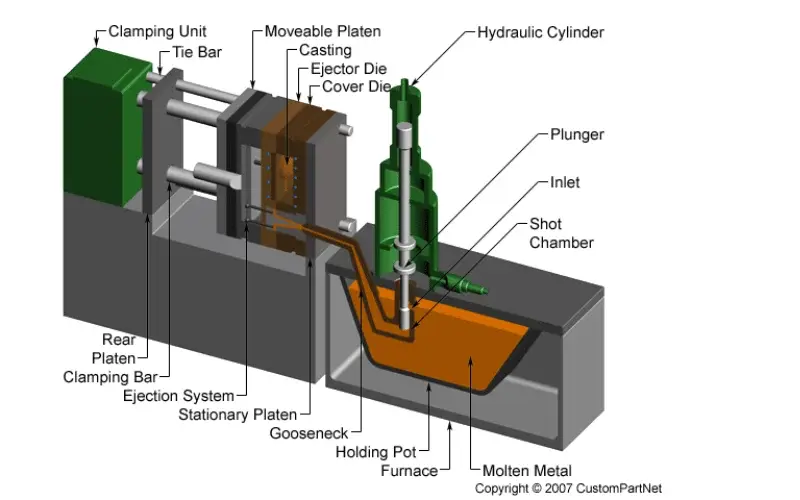
Die casting is a manufacturing process that involves casting metal under extreme force.
In this casting process, non-ferrous metals—primarily aluminum, zinc, and copper—are heated until they reach a molten form.
This molten metal is then injected into die casting molds under high pressure.
The die casting vs injection comparison begins here: die casting requires high temperatures to melt and maintain metal, making it less cost-effective for small volumes.
However, it is a popular manufacturing process for intricate metal parts that require high durability and thermal resistance.
Injection Molding
Injection molding is the most used manufacturing process for producing substances out of plastics.
The injection molding process involves feeding thermoplastic pellets into a heated barrel, where they are melted into molten plastic and forced into a mold or die.
While injection molding primarily uses plastics and polymers as raw materials, the industry also utilizes Metal Injection Molding (MIM).
Metal injection molding can use a variety of metals that can be converted into powder form, including stainless steel and titanium.
MIM parts are then subjected to a sintering process to reach full density.
Raw Materials: Metal vs. Plastic
The primary difference between die casting and injection molding is the raw material used — and this single factor shapes almost everything else about how the two processes compare.
Die casting works exclusively with non-ferrous metals. The most commonly used materials are aluminum, zinc, and copper alloys.
Ferrous metals and materials with high melting points are generally not suitable for standard die casting because they would cause rapid die erosion and shorten mold life significantly.
The die casted materials need to be compatible with the steel components used in the mold itself.
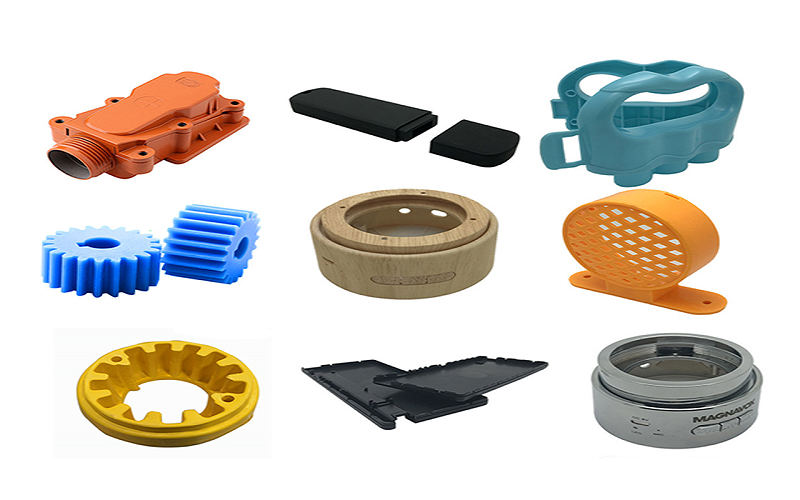
Injection molding primarily uses plastics and polymers.
The broader process accommodates a wide variety of thermoplastics, making it extremely versatile for consumer products, mechanical parts, and industrial applications.
Some specialized forms of injection molding, like metal injection molding, can also handle metals — but the standard injection molding process is built around plastic.
This fundamental difference in raw material means that when you’re choosing between molding and die casting, your material requirements will often make the decision for you before you even consider cost or complexity.
Tooling Costs and Initial Investment
Both die casting and injection molding require significant upfront investment in tooling, but the cost structures are different.
Tooling in die casting is often two to three times higher than injection molding due to the need for heat-resistant steel molds that can withstand the extreme temperatures involved in working with molten metal.
The total costs of die casting consist of labor and equipment, with tooling costs being particularly high for high-precision die casting.
However, die casting molds have a long tool life and can produce very high volumes of parts before needing replacement, which helps spread that initial cost over a larger number of units.
Injection molding molds can wear out faster due to the abrasive nature of some materials used, but they are generally cheaper to produce than die casting molds.
Injection molding costs can also be reduced by simplifying design complexity and minimizing unnecessary finishes. Despite high initial costs, injection molding is generally cheaper for mass-produced plastic parts due to lower labor costs and material expenses.
The startup costs for both die casting and injection molding can be high, but production costs decrease significantly with larger volumes — making both processes best suited to mass production rather than small runs.
Precision, Tolerances, and Surface Finish
Both processes are capable of producing geometrically complex parts with good dimensional accuracy, but there are meaningful differences in how precise each method can be.
Die casting products tend to have greater precision and tolerance than those produced by plastic injection molding.
The metal alloy used in die casting determines the tolerance of the part produced, and as a rule, tighter tolerance leads to higher precision products.
Die casting can produce parts with a finer surface finish compared to injection molding and is better suited for manufacturing products with more detailed components.
That said, die casting can produce parts with varying dimensions that sometimes require trimming and extra finishing to meet specifications — excess material from the casting process occasionally needs to be removed.
Injection molding excels at creating intricate parts with thin walls that are difficult to cast in metal.
Wall thickness in injection molded parts needs to be managed carefully to ensure even cooling and avoid defects, but the process is extremely capable of producing complex parts and intricate parts with consistent quality.
Injection molding often produces parts that are finished and require no further steps, which reduces production time and labor costs.
Surface finishing options for injection molded plastic parts are also broad, ranging from smooth and glossy to textured finishes.
Mechanical Properties and Strength
When it comes to raw mechanical performance, die casting has a clear edge over standard plastic injection molding.
Die-cast parts have higher tensile strength, impact resistance, and thermal tolerance compared to plastic injection-molded parts.
Die casting offers superior mechanical properties such as fatigue strength and structural integrity that plastics simply cannot match.
This makes die casting the right choice for applications where parts need to withstand heavy loads, high temperatures, or significant mechanical stress — such as engine blocks, transmission cases, and steel components used in industrial equipment.
Injection molding parts, on the other hand, are significantly lighter than their die cast metal counterparts.
Die casting components are significantly heavier than plastic alternatives, which matters a lot in applications where weight reduction is a priority.
For plastic tables, hair combs, plastic housings for electronics, and consumer goods where structural metal strength isn’t needed, injection molded plastic parts offer an excellent balance of performance and cost.
Metal injection molding bridges this gap to some extent — MIM parts offer much higher strength than plastic injection molded parts and can be made from stainless steel and titanium — but MIM comes with higher costs and longer production times due to the sintering process involved.
Production Speed and Volume
Both processes are well suited to high volume mass production, but they differ in cycle time and overall throughput.
Die casting cycle times are fast once the process is running, but the high temperatures involved in melting and maintaining molten metal mean that the process requires careful mold preparation and necessary precautions to ensure safety and consistency.
Die casting requires high temperatures to melt and maintain molten metal, making it less cost-effective for small volumes where the setup cost isn’t offset by production scale.
Injection molding is faster and becomes more cost-effective for large-scale production despite high initial costs.
Cycle times for injection molding can be very short — often just seconds per part — making it one of the most efficient manufacturing processes available for high volume plastic parts.
The injection molding process also tends to involve less labor per part than die casting, since parts frequently come out of the mold ready to use with no extra finishing required.
Common Applications Die Casting and Injection Molding Are Used For
Understanding where each process is typically used helps clarify which one is right for a given project.
Applications of Die Casting
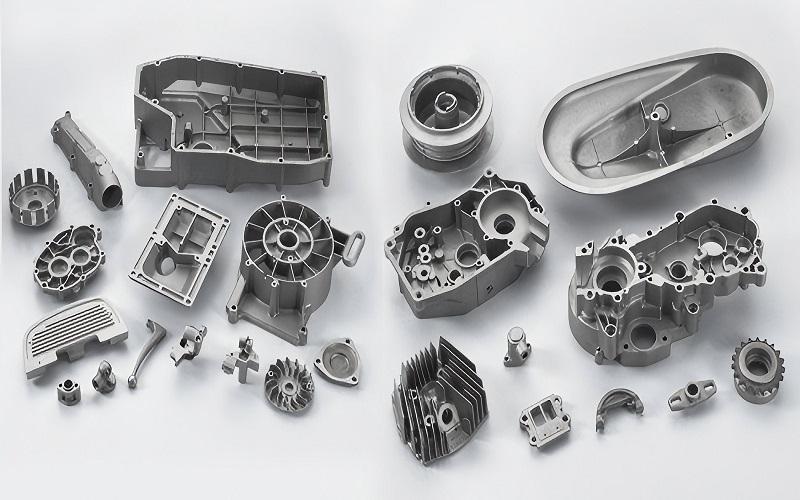
Die casting is commonly used for industrial and functional parts requiring high durability. Common applications die casting professionals encounter include:
- Engine blocks and transmission cases.
- Plumbing fixtures and faucets.
- Gears and heavy-duty hardware.
Applications of Injection Molding
Injection molding is best suited for consumer products and high-volume manufacturing.
It is commonly used to create kid’s toys, hair combs, wire spools, and mechanical parts.
It is the go-to for lightweight, high-volume, cost-effective plastic items.
Surface Finishing Options
Both two methods offer a range of surface finishing options, though the specifics differ based on the material involved.
For die cast metal parts, surface finishing options include chem film coatings, gold plating, anodizing, powder coating, and painting. These finishes can enhance appearance, improve corrosion resistance, and add functional properties to the finished part.
Die casting can produce parts with a finer surface finish straight from the mold compared to injection molding, which means less post-processing is often needed.
For injection molded plastic parts, surface finishing options include painting, texturing, plating, and a variety of in-mold finishes that can be achieved directly during the molding process.
Injection molding often produces parts that are finished and require no further steps, which is a significant advantage for high volume production where extra finishing would add cost and time.
Die Casting vs Injection Molding: Side-by-Side Summary
| Factor | Die Casting | Injection Molding |
| Raw material | Non-ferrous metals (aluminum, zinc, copper) | Plastics and polymers |
| Process | Molten metal injected under high pressure | Molten plastic injected into mold cavity |
| Tooling costs | Higher (2–3x injection molding) | Lower upfront |
| Part strength | High — superior tensile and impact strength | Lower — suitable for lightweight applications |
| Weight | Heavier | Up to 50% lighter than metal |
| Precision | Very high | High, especially for thin walls |
| Surface finish | Fine, often minimal post-processing | Broad options, often no finishing needed |
| Best for | Metal parts, industrial, automotive | Plastic products, consumer goods, high volume |
| Production speed | Fast at scale | Very fast at scale |
Which Process Should You Choose?
There’s no universal answer, but here’s a straightforward way to think about the decision between die casting vs injection molding:
Choose die casting if:
- Your part needs to be made from metal
- You need high tensile strength, impact resistance, or thermal tolerance
- You’re producing geometrically complex parts with fine surface detail
- Your production volumes justify the higher tooling costs
- Your application involves industrial, automotive, or commercial products
Choose injection molding if:
- Your part can be made from plastic or other polymers
- You need lightweight, cost-effective parts at high volume
- You’re producing consumer products, plastic housings, or mechanical parts
- You want shorter cycle times and lower per-unit costs
- Your design includes thin walls or intricate plastic details
Consider metal injection molding if:
- You need small, intricate metal parts with tight tolerances
- Your application is in medical, electronics, or firearms industries
- Die casting can’t achieve the complexity or size your part requires
Conclusion
Die casting and injection molding are both excellent manufacturing processes — they’re just designed for different jobs.
Die casting delivers the strength, precision, and durability of metal parts and is the go-to choice for industrial and automotive applications.
Injection molding offers speed, cost efficiency, and design flexibility for plastic parts, making it the dominant process for consumer goods and high volume manufacturing.
Understanding the key differences between these two methods — from raw materials and tooling costs to mechanical properties and surface finishing options — puts you in a much better position to make the right call.
Start with your material requirements, factor in your production volumes and budget, consider the necessary precautions each process demands, and the right choice between injection molding and die casting will usually become clear.