
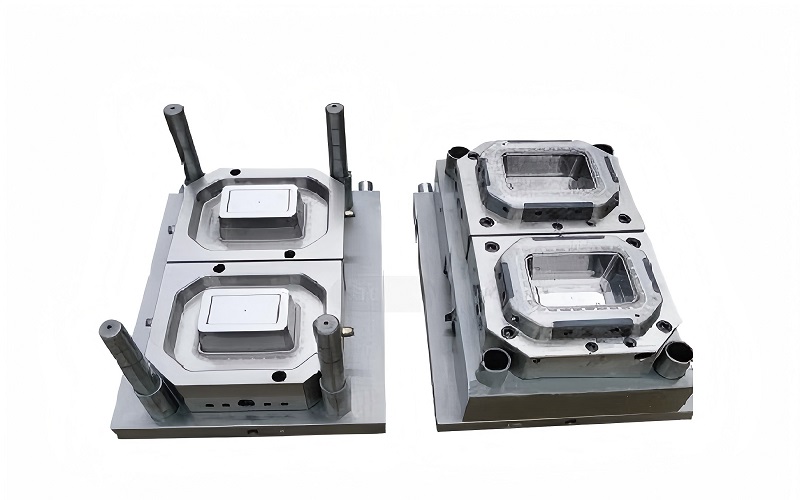
Food container molds are a core technological tool in the modern food packaging industry.
From takeout containers to ice cream cups, from salad bowls to microwaveable lunch boxes, most of the rigid plastic food packaging we encounter daily is created through the collaborative operation of these precision molds and injection molding machines.
This article will systematically introduce the working principles, material selection, structural design, and high-speed production processes of food container molds, helping you to fully understand this key manufacturing technology that supports large-scale hygienic packaging production.
Introduction to Food Container Moulds
A food container mould is a precision-engineered die set that shapes molten thermoplastic into rigid containers for food storage, transport, and retail display.
These tools form the backbone of the food packaging industry, enabling mass production of hygienic, stackable packaging.
Food container moulds work inside injection moulding machines to form plastic containers, lids, and related food packaging components from plastic materials like PP, PET, and polyethylene.
Whether you see the term “food container molds,” “container mould,” or “plastic food container injection mold,” they all refer to the same class of tooling used in high-volume production.
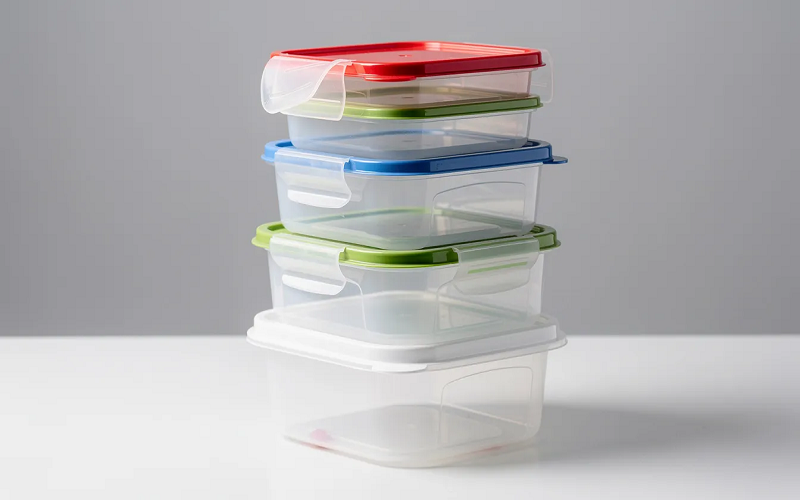
Typical end products include takeaway boxes, yoghurt tubs, salad bowls, ice cream cups, microwaveable lunch boxes, and freezer-safe food containers available in different sizes and various sizes to meet market demands.
How Food Container Injection Molding Works
Injection molding dominates plastic food container production at 70-80% market share, outperforming thermoforming and blow molding for rigid containers due to superior strength and sealability.
The production process follows these steps:
- Plastic granules are melted in a servo-hydraulic screw barrel
- Molten plastic is injected at 100-150 MPa into the clamped mold cavity within 1-2 seconds
- Turbulent water channels cool the part in 2-4 seconds
- The solid container is ejected via pins or air blasts
The mold dictates critical attributes like wall thickness (0.35-0.6mm for efficient molds), sealing surface quality, and stackability.
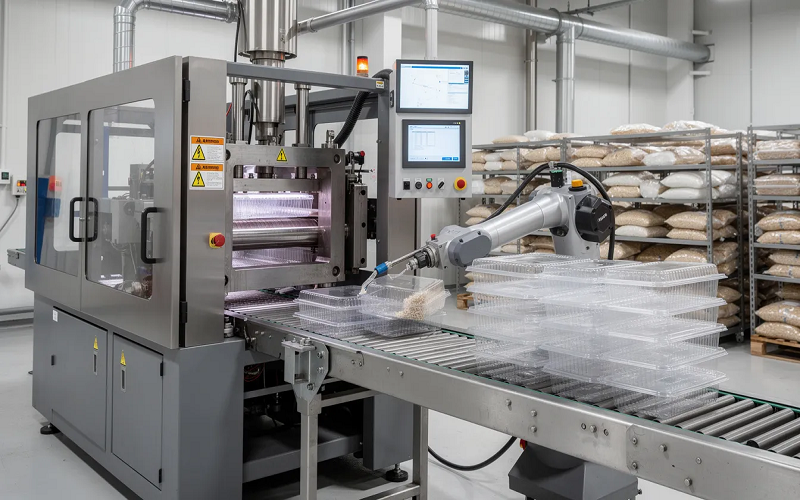
High speed injection molding for thin wall boxes achieves cycle times of 3-6 seconds per shot, with machines like LK Machinery’s POTENZA PT-III 250 optimizing energy use for food-grade production.
Automation integrates 6-axis robots for part take-out in less time and IML systems that insert foil labels pre-injection.
Key Features of a High‑Quality Food Container Mold
Mold design details determine production efficiency, product quality, and longevity. Here’s what separates premium tooling from commodity molds:
Structural Features
- Hardened steel cores and cavities
- Precise guiding systems with angular pins or hydraulic cores
- Robust locking mechanisms handling 1,000+ bar pressures
Thin Wall Capability
Uniform thin wall construction maintains strength while reducing material consumption by 15-25%.
This requires sequential valve-gating with up to 16 gates per cavity balancing fill time to 0.8 seconds.
Cooling System Design
Optimized conformal cooling channels achieve temperature differential under 2°C across walls, preventing warpage in round and rectangular boxes.
Copper inserts are sometimes used where precise temperature control is necessary due to copper’s exceptional thermal conductivity.
Surface Finish and Venting
Polished SPI A1 surfaces suit premium yoghurt containers, while MT11000 textures provide grip on takeaway bowls.
Laser-etched vents evacuate air to avoid burn marks on transparent plastic containers.
Food Safety
Proper sealing of containers is essential to prevent air and moisture from entering and initiating mold growth.
Bacteria and fungi multiply fastest between 40°F and 140°F, making corrosion-resistant steels and smooth cavity surfaces vital for safe, clean food contact surfaces.
Quality molds feature electropolished surfaces (Ra<0.2μm) compliant with FDA 21 CFR 177 and EU 10/2011 standards.
Different Types of Food Container Moulds
Mold type selection depends on container shape, size, and application—whether for food storage at home or the fridge, or commercial takeaway packaging.
| Type | Applications | Key Characteristics |
|---|---|---|
| Round | Soup cups, noodle bowls, yoghurt cups | Stackable, tamper-evident lids, uniform cooling |
| Square/Rectangular | Meal prep boxes, lunch boxes, deli trays | Shelf optimization, 1.2:1 stack ratio |
| Microwave-Safe | Reheatable meals | Heat-resistant plastics (CPET/PP copolymers), 1-2° draft angles |
| Multi-Cavity | High-volume production | 2-32 cavities, balanced runners (±1% fill variance) |
| IML-Ready | Premium branded containers | Robotic label insertion, permanent branding fusion |
Silicone is used for making flexible food container moulds, as it is heat resistant and allows for easy release of food items without damaging integrity.
Customized food container moulds can be adjusted in size and shape to meet specific needs, allowing for standard storage boxes or uniquely-shaped containers for portion control.
Design features such as lid styles, locking mechanisms with seal capabilities, and internal dividers can be incorporated to enhance functionality.
Custom food container moulds can include branding opportunities, allowing manufacturers to adjust colors, patterns, and embossed logos to create a cohesive brand image that customers recognize.
Materials and Technologies Used in Food Container Mold Manufacturing
Modern food container moulds rely on high quality materials and precision machining for durability over millions of cycles.
Core Mold Materials: Steel alloys are commonly used in food container moulds due to their strength and durability. High-carbon steel is favored for retaining sharp angles for precise detailing. Premium builds use:
- H13/S136 for cavities
- 718 or NAK80 for inserts
- Stainless steel in moisture-exposed areas to prevent rust
Aluminum is preferred for certain food container moulds because it is lightweight, offers excellent heat conductivity, and allows for easy machining and design alterations—particularly useful for prototyping.
Durability is an important consideration: materials like glass and metal molds are generally more resistant to temperature changes compared to plastics.
Key Technologies:
- 5-axis CNC machining
- Wire EDM for undercuts
- High-speed milling
Thermoplastic materials such as polypropylene (PP) and polyethylene (PE) are commonly used in food container moulds for their recyclability, low cost, and moisture resistance.
Materials such as thermoplastics, silicone, and metals used in food container moulds are recyclable, contributing to a more sustainable lifecycle for food packaging.
Hot runner systems dominate 80% of multi-cavity setups, recycling 99% of sprue versus cold runner’s 15% waste—delivering cost effectiveness over production runs.
Applications: Industries That Use Food Container Moulds
Food container molds support a $150B rigid plastics segment across diverse markets. The mold industry serves:
Retail Food Packaging: Yoghurt, cheese spreads, ready-to-eat salads, and desserts packed for supermarkets. Best food containers maintain 6-month shelf life while being BPA free.
Takeaway and Delivery: Leak-resistant, stackable plastic containers and lids for hot and cold meals. Durable construction prevents liquids from escaping during transport.
Frozen and Refrigerated Storage: Ice cream tubs, frozen meal trays, and freezer-safe boxes designed for long-term food storage without cracking at low temperatures.
Catering and Institutional Use: Compartment trays and cups used by hospitals and schools for serving and portion control with specific quantity requirements.
Eco-Focused Applications: Advanced food container moulds facilitate the development of greener alternatives by creating new containers with post-consumer recycled content. Food container moulds play a significant role in recycling operations by helping to separate plastics, metals, and other material types, contributing to resource recovery.
How to Choose the Right Food Container Mold and Supplier
Mold choice directly affects cost per part, uptime, and plastic container performance. When choosing food container moulds, it is essential to consider the type of food being stored, as different foods require different types of containers for optimal preservation.
Define Product Requirements:
- Container volume
- Wall thickness
- Transparency, microwave/oven compatibility, fridge/freezer suitability
- Lid type and seal requirements
Evaluate Mold Design: Request 3D STEP/IGS drawings, cooling layout, expected cycle time, and machine compatibility. Generally, efficient suppliers provide mold-flow simulations predicting warpage.
Check Materials and Components: Verify steel grades, hot runner brand, and spare parts availability for long-term maintenance.
Vet Supplier Track Record: Prioritize 10+ year firms with 1M-shot references. Lead times typically run 8-14 weeks.
Ease of cleaning is a crucial factor when selecting food container moulds, as containers that are difficult to clean can lead to damage and reduced lifespan.
Consider total lifecycle cost—not only initial price but running costs, maintenance, and scrap rates.
Maintenance and Optimization of Food Container Moulds
Preventive maintenance extends mold life by 50% and maintains quality over millions of cycles.
Mold growth in food containers is primarily caused by a combination of moisture, organic residue, and improper temperature control.
Residual moisture is a primary cause of mold contamination.
Routine Maintenance Actions:
- Clean cavities and cores (ultrasonic cleaning restores Ra<0.4μm)
- Inspect vents (redress to 0.02mm depth)
- Polish sealing surfaces
- Check ejector pins and sliders for wear
Containers should be cleaned thoroughly to remove residues that provide nutrients for mold. Common causes of contamination include trapped moisture, high humidity, improper sealing, and residual food particles.
Cooling Channel Monitoring: Remove scale or rust using citric acid treatment. Flow tests should maintain >90% original capacity to avoid production waste.
Critical Safety Note: Certain molds, such as Aspergillus, produce harmful toxins known as mycotoxins that can lead to acute symptoms like stomach cramps, diarrhea, and vomiting. Chronic exposure can increase cancer risks. Inhaling mold spores can trigger allergic reactions and respiratory issues. Proper maintenance protects both products and workers.
Record key production parameters (cycle time, injection pressure, mold temperature) via IoT monitoring for 5% efficiency gains.
Schedule overhauls every 500K shots—regrind gates, realign (0.01mm tolerance), and swap hot runner nozzles to protect against unplanned downtime.
Conclusion
The continuous advancement of food container mold technology is profoundly impacting the efficiency and sustainable development of the entire food packaging industry.
From precise mold design to the optimized selection of materials such as PP and PET, from high-speed multi-cavity injection molding processes to strict hygiene standards, every step determines the quality and competitiveness of the final product.