
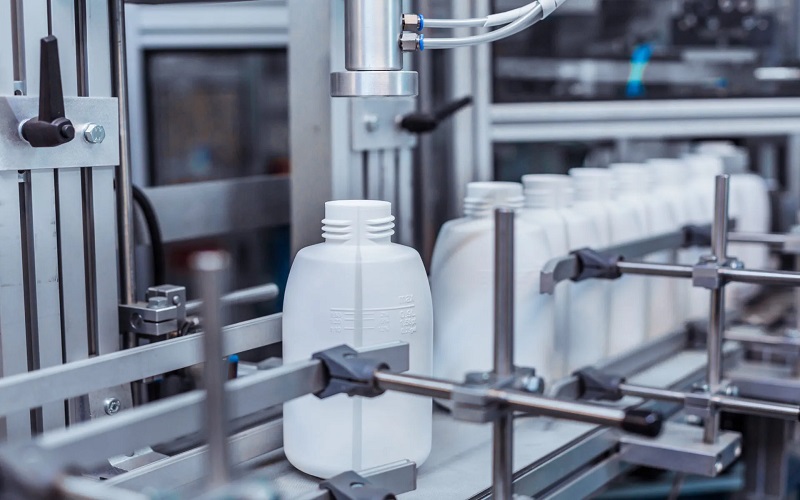
High-density polyethylene (HDPE) has become one of the most trusted materials in modern manufacturing — and for good reason.
From small bottles on supermarket shelves to large industrial drums used in chemical storage, HDPE blow moulding delivers the strength, versatility, and efficiency that manufacturers across industries depend on.
This guide explores how the blow moulding process works, why HDPE is the material of choice, and where it is making the biggest impact.
What Is HDPE Blow Moulding?
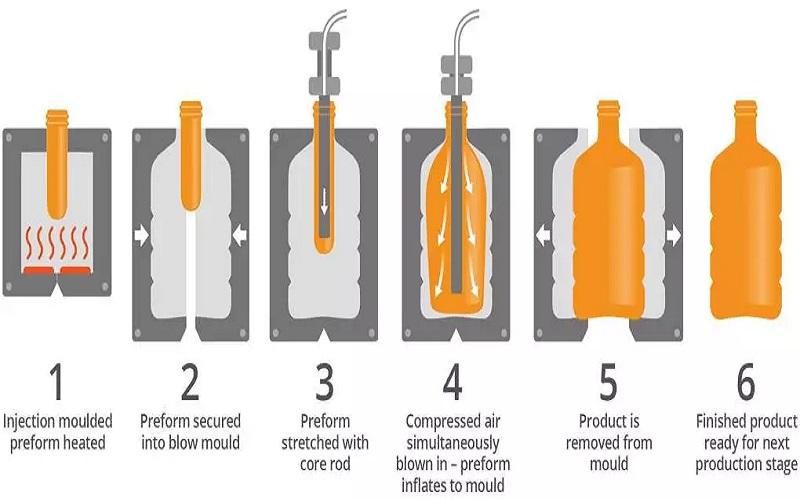
HDPE blow moulding is the process of shaping high-density polyethylene into hollow products by inflating molten HDPE inside a closed mold using compressed air.
The general sequence begins with heating HDPE material to its molten state, forming it into a parison — a tube of molten plastic — and then expanding it against the cooled walls of a mold cavity until it solidifies into its final product shape.
What makes this process particularly valuable is its ability to create hollow products of various shapes and sizes with minimal finishing required after moulding.
The expanded plastic solidifies cleanly against the mold, which means manufacturers can achieve high quality products straight off the machine, reducing both labour and production time.
Blow Moulding vs Injection Moulding: A Cost Perspective
For manufacturers evaluating production methods, the economics of blow moulding present a compelling case.
Compared to injection moulding, blow moulding generally incurs lower tooling costs and is less complex to set up and operate. Injection moulding requires precision mold cavities that must withstand extremely high clamping pressures, driving up both tooling investment and maintenance costs.
Blow moulding molds, by contrast, only need to withstand the relatively low pressure of compressed air inflation, which significantly reduces the cost of mold fabrication.
This cost advantage makes blow moulding particularly attractive for manufacturers producing hollow products in large quantities, where keeping per-unit costs low is essential to remaining competitive.
The highly automated nature of the blow moulding process further compounds this advantage — less manual intervention means faster cycle times, fewer labour costs, and a production line that scales efficiently to meet growing demand.
The Three Main Blow Moulding Processes
Not all blow moulding is the same. There are three primary methods, each suited to specific needs and applications.
Extrusion Blow Moulding
It is the most widely used approach.
A parison is extruded continuously or non-continuously from an extruder head and then captured between two mold halves before being inflated.
This method is highly efficient for mass production of containers such as plastic bottles, hdpe containers, water tanks, and industrial drums.
There are two types of extrusion systems: continuous and non-continuous.
Accumulator head blow moulding machines — a type of non-continuous system — provide better control of the parison temperature, making them particularly well suited to producing large containers and open top drums where wall consistency is critical.
Injection Blow Moulding
Injection blow moulding takes a different approach: a preform is first created by injecting molten plastic into a mold, and this preform is then transferred to a blow moulding station where it is inflated into its final shape.
This method offers precise shaping and excellent dimensional accuracy, making it ideal for small bottles and applications with tight packaging requirements.
Stretch Blow Moulding
Stretch blow moulding adds an additional step by stretching the preform both axially and radially before inflation.
This biaxial orientation significantly enhances the mechanical resistance and strength of the final product, allowing manufacturers to produce lighter-weight containers without sacrificing durability.
Why HDPE Is the Material of Choice?
HDPE’s dominance in blow moulding is no accident. Its unique combination of properties makes it exceptionally well matched to the demands of both industrial packaging and everyday consumer products.
Its chemical resistance is among its most valuable attributes. HDPE stands up to harsh chemicals, cleaning agents, motor oil, and a wide range of solvents without degrading — which is why it is trusted for packaging everything from household products to industrial chemicals.
Its resistance to harsh climates adds further durability, ensuring that HDPE containers perform reliably whether stored in warehouses, transported outdoors, or exposed to temperature fluctuations.
HDPE is also food-grade safe. It is chemically inert and resistant to moisture, making it suitable for containers carrying milk, fruit juices, and solid foods. This versatility — spanning food packaging to industrial products — is one of HDPE’s defining advantages.
From a sustainability perspective, HDPE carries recycling code 2 and is the most commonly recycled plastic. As environmental regulations tighten and awareness of recyclability grows, HDPE has become the preferred choice for manufacturers seeking to meet both performance and environmental standards.
Choosing the Right HDPE Blow Moulding Grade
Not all HDPE is created equal, and selecting the right blow moulding grade is one of the most consequential decisions a manufacturer can make.
HDPE blow moulding grades are specific formulations of high-density polyethylene that have been optimised for the demands of the blow moulding process.
They are engineered with a carefully calibrated balance of melt strength, viscosity, and molecular weight distribution — properties that directly determine how the molten HDPE behaves during extrusion and inflation.
Choose a grade with insufficient melt strength, and the parison may sag or thin unevenly before the mold closes. Choose one with the wrong viscosity profile, and filling the mold consistently becomes a challenge.
The practical consequences of grade selection ripple through the entire production process.
The right HDPE blow moulding grade influences production speed, the structural strength of the finished container, and even the surface appearance of the final product.
For food-grade containers, grades must meet regulatory standards for chemical inertness.
For industrial drums and jerry cans, grades with enhanced stress crack resistance are prioritised.
Major material suppliers including Reliance and SABIC offer a wide range of dedicated HDPE blow moulding grades, giving manufacturers the ability to match material properties precisely to their application and packaging requirements.
Key Applications of HDPE Blow Moulding
The range of HDPE blow moulding applications is extraordinarily broad, cutting across industries from packaging to automotive to recreation.
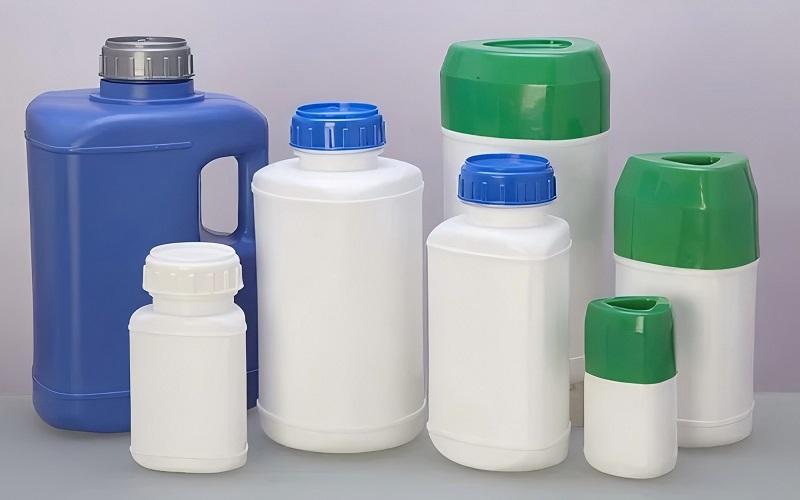
In industrial packaging, HDPE blow moulding produces jerry cans, industrial drums, open top drums, IBC tanks, and water tanks. These large containers must withstand the pressures of chemical storage and heavy-duty transport, and HDPE’s impact resistance and chemical resistance make it the natural fit.
In consumer packaging, blow moulding machines produce plastic bottles for shampoo, detergents, motor oil, and household products in large quantities. The process is highly automated, allowing for high-speed production that keeps unit costs low even at scale.
In the automotive industry, HDPE is used to manufacture fuel tanks and air ducts. Its durability under harsh conditions and resistance to fuel and chemicals make it a reliable material for components that must perform consistently over the lifetime of a vehicle.
In food and beverage packaging, HDPE containers are produced for milk, juices, and solid food products, where hygiene, moisture resistance, and structural integrity are non-negotiable.
HDPE blow moulding also extends into toys and playground equipment, where the material’s toughness, safety characteristics, and ability to be moulded into various shapes give manufacturers both creative and practical flexibility.
Process Considerations: Quality and Efficiency
Achieving uniform wall thickness is one of the most important — and most challenging — aspects of the blow moulding process.
Inconsistent wall thickness can create weak spots in the product, compromising both performance and safety.
Modern blow moulding machines address this through precise parison programming and, in the case of accumulator head machines, enhanced control over parison temperature during extrusion.
Production speed is another key variable.
The blow moulding process is highly automated and well suited to mass production, with machine configurations available in both automatic and semi-automatic setups depending on the required production capacity.
When selecting an HDPE blow moulding machine, manufacturers should consider heating power, the specific application, the size and shape of the intended product, and the desired production speed.
Regular maintenance of blow moulding machines is essential for sustained product quality and operational efficiency.
Heating elements, extruder components, and mold surfaces all require attention to ensure that molten HDPE is processed consistently and that the final product meets dimensional and aesthetic standards.
Market Outlook
The global market for HDPE blow moulded products is on a strong growth trajectory, projected to expand at a CAGR of 5.7% through 2032.
The demand for lightweight, durable packaging solutions across industries is increasing, and the shift away from non-recyclable plastics is accelerating as both regulations and consumer preferences evolve.
Major material suppliers including Reliance and SABIC continue to develop dedicated HDPE blow moulding grades — specific formulations engineered with the right balance of melt strength, viscosity, and molecular weight distribution to optimise production outcomes.
Conclusion
HDPE blow moulding is one of manufacturing’s most capable and versatile processes.
Its ability to produce hollow products of various shapes and sizes — from small bottles to large industrial containers — with speed, efficiency, and consistent quality explains why it has become a cornerstone of industries ranging from food packaging to heavy industry.
As demand for durable, recyclable, and chemically resistant packaging continues to grow, HDPE and the blow moulding process will remain at the centre of how the world makes its most essential containers.