
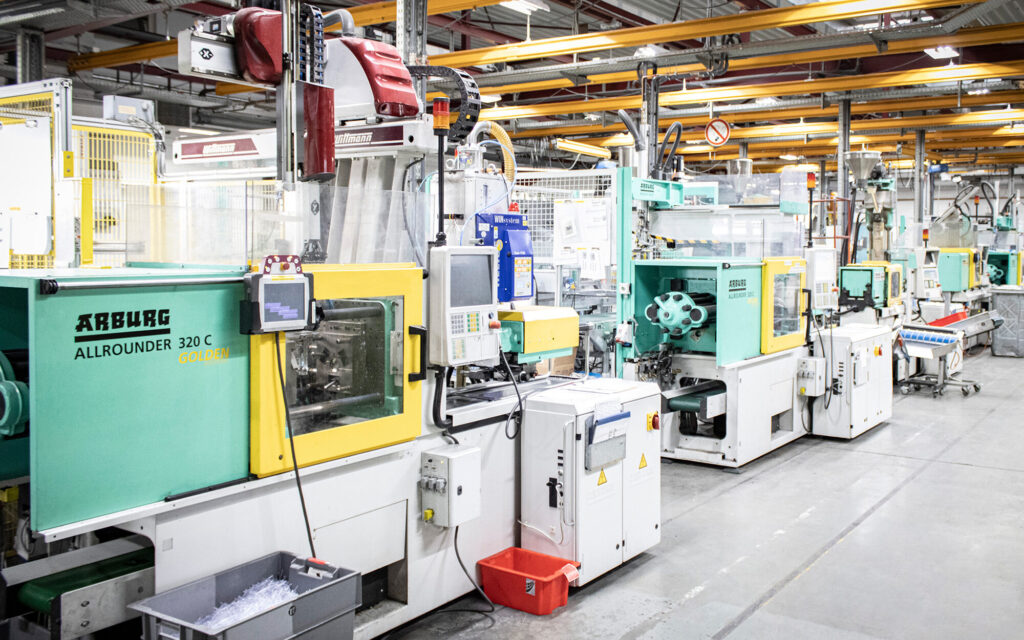
In modern plastic manufacturing, injection molding machines are among the most commonly used types of equipment for processing plastic.
They heat thermoplastic or thermosetting material until it melts, then inject it under high pressure into a mold cavity. After cooling and solidifying, the material forms plastic products in a wide range of shapes.
From the injection unit and clamping unit to the control system, each component contributes to production efficiency, product quality, and processing precision.
This article explains the main components, working principles, and common types of injection molding machines. It will help injection molder and molding manufacturers understand how the equipment operates and provide guidance on choosing a machine suited to their production needs.
The Working Principle Of Injection Molding Machine
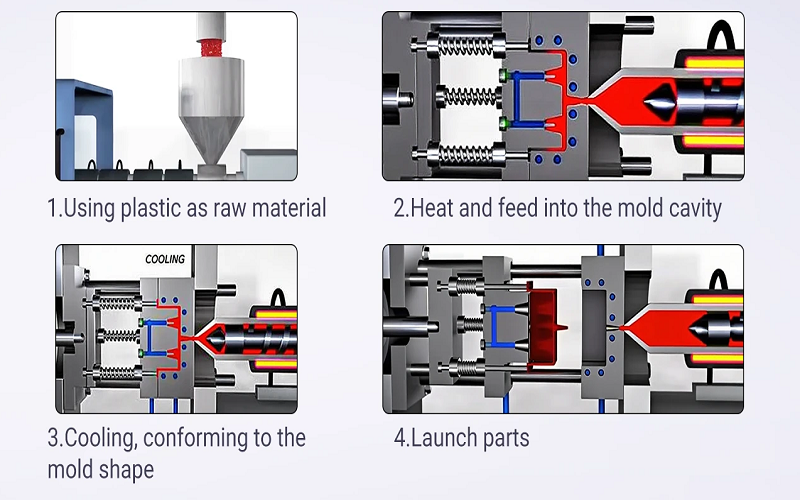
An injection molding machine transforms raw plastic resin into finished products through a continuous, carefully controlled cycle.
Clamping
The clamping unit closes and secures the mold, then applies pressure to keep it shut during injection. Sufficient clamping force prevents the mold from opening under injection pressure, helping produce accurate plastic parts without flash.
Injection
Plastic pellets move from the hopper into a heated barrel, where heaters and a rotating screw melt and mix the material.
The injection unit then pushes molten plastic through the nozzle and into the mold cavity at a controlled injection speed and pressure. These settings, along with temperature and material selection, affect the quality of the finished parts.
Cooling
Once the cavity is filled, the machine holds pressure briefly to compensate for material shrinkage as the plastic cools and solidifies. Cooling time depends on the material, part thickness, and mold design. Consistent cooling helps limit defects and maintain the required dimensions.
Ejection
Once the plastic has solidified, the clamping unit opens the mold and ejector systems push the finished parts out. The machine can then close the mold and begin the next cycle. Feeding, melting, injection, cooling, and ejection repeat continuously during production.
Machine capacity and settings affect the result. Injection capacity is the maximum amount of plastic a machine can inject in one cycle, and the mold must fit within the machine’s available dimensions and clamping force.
Manufacturers choose a suitable screw diameter, injection pressure, injection speed, and maximum injection amount based on material, part thickness, shape, and required output.
Main Components Of An Injection Molding Machine
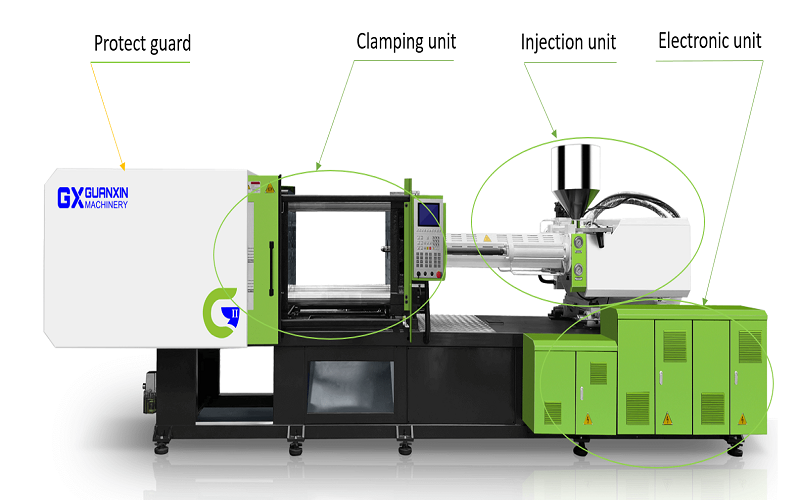
Injection molding machines consist of three main components: the injection unit, the clamping unit, and the drive and control systems.
Together, these assemblies meter and melt plastic, fill the mold, hold it closed under pressure, and coordinate each stage of the production cycle.
Their configuration affects cycle time, energy use, part quality, and the maximum size and shape of parts a machine can produce.
Injection Unit
The injection unit is the key part that transforms plastic pellets into molten material and injects it into the mold. It is often called the “heart” of a plastic injection molding machine.
- Hopper: Holds dried plastic pellets and feeds them into the barrel by gravity.
- Barrel and heating bands: A screw sits inside the barrel, which is surrounded by several heating bands. The temperature is typically controlled between 180 and 300°C, depending on the material, to melt the plastic evenly.
- Reciprocating screw: During injection, the screw moves forward like a piston, pushing the melt into the mold. A check ring is usually fitted at the front of the screw to prevent the melt from flowing backward during injection.
- Nozzle: Connects the barrel to the mold gate and directs the melt accurately into the mold cavity.
Early injection systems also used a plunger, but they offered poorer plasticizing consistency and are now rarely used. Some high-precision or large machines use a two-stage design, in which a screw pre-plasticizes the material and a plunger injects it.
Clamping Unit
The clamping unit opens and closes the mold and locks it in place. It provides enough clamping force to resist the substantial internal pressure generated during injection (cavity pressure can typically reach 20–45 MPa).
- Fixed and moving platens: Hold the fixed and moving halves of the mold, respectively.
- Tie bars: Connect the two platens, withstand the clamping force, and guide the movement of the moving platen. Some newer machines use a tie-bar-less design to accommodate larger molds.
- Clamping mechanism: Common types include toggle and fully hydraulic systems. A toggle mechanism uses mechanical leverage to multiply force, enabling fast operation with lower energy consumption. Direct hydraulic drive is better suited to large-tonnage machines.
- Ejector system: After cooling, the mold opens and ejector pins or an ejector plate push the molded part out.
Clamping force is measured in tons (tonnage). Machines range from small models rated at several dozen tons to large models rated at several thousand tons, making tonnage an important measure of machine capacity.
Drive System
The drive unit powers screw rotation and axial movement, mold opening and closing, and other machine operations. Hydraulic drive systems convert fluid pressure into mechanical energy and deliver strong force.
All-electric machines use servo motors and ball screws for direct drive, while hybrid models combine features of both systems.
Control System
Modern injection molding machines are equipped with computer control systems that coordinate machine operations and monitor key parameters throughout the production cycle, including temperature settings, injection speed, pressure, clamping force, and cooling time.
Using sensors and programmable settings, modern control systems allow operators to adjust process parameters for different materials, molds, and production goals.
By stabilizing pressure and temperature, these systems help reduce variation between cycles and prevent defects such as short shots, flash, and warping.
Careful control is especially important for high-volume production, where high injection speeds and reduced cycle times must be balanced with reliable filling and cooling.
Main Types of Injection Molding Machines
Injection molding machines can be classified by their drive systems and overall structure. Each type has distinct characteristics in terms of precision, speed, energy consumption, equipment cost, and suitable applications.
When selecting a machine, consider the plastic material, part size and weight, mold design, production volume, and budget. Evaluate whether the machine will meet both current market and future production needs.
Classified by Drive System
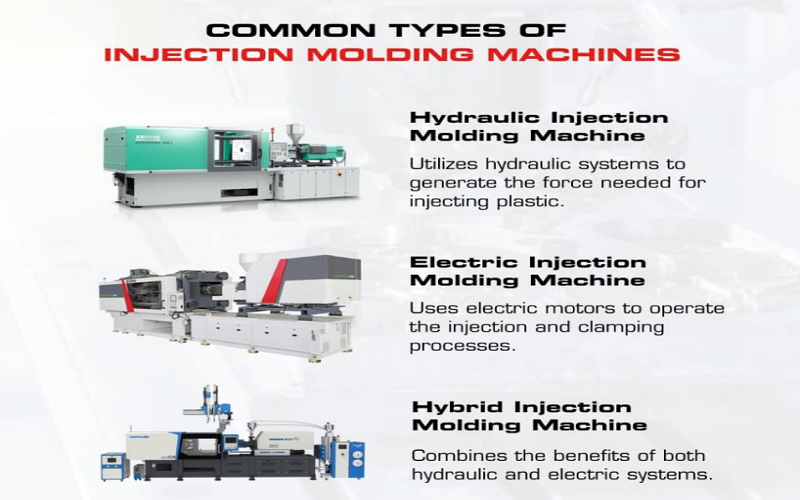
- Hydraulic injection molding machines: These machines are powered by a hydraulic system and can deliver high clamping forces, making them suitable for large parts, complex molds, and high-tonnage production. Before electric machines became available, hydraulic machines were the only option for molders. However, they are generally less energy-efficient than all-electric machines, and their precision control and maintenance costs should also be considered.
- Electric injection molding machines: Milacron developed the first all-electric injection molding machine in 1983. Driven by servo motors, these machines offer high speed, precision, low noise, and lower energy consumption. They are estimated to save about 0.73 kWh of electricity per kilogram of plastic processed, although actual results vary by process and machine model.
- Hybrid injection molding machines: These combine features of hydraulic and electric drives. For example, a machine may use an electric servo system to control some movements while retaining hydraulic power for high clamping force or other operations. Performance, energy use, and maintenance requirements vary by design, making hybrid machines an option for manufacturers seeking a balance between power, precision, and investment.
Classified by Overall Structure
- Horizontal injection molding machines: The injection and clamping units are arranged horizontally, and the mold opens and closes horizontally. These machines have a low profile, making them relatively easy to operate and maintain. Molded parts can also fall out more easily with the help of gravity, so horizontal machines are often used in automated production.
- Vertical injection molding machines: The clamping and injection structures are arranged vertically, typically requiring less floor space. Their layout makes it convenient to place metal inserts or other components in the mold before overmolding. They are commonly used for insert molding, small parts, and production lines with limited space. However, parts may not fall out automatically as readily as they do from horizontal machines, so the automation method should be chosen based on the mold design.
Manufacturers also offer injection molding machines in different specifications based on injection unit design, injection capacity, clamping force, and application.
High-speed machines can shorten cycle times and increase output, but the plastic’s flow properties, mold cooling capacity, and control precision must be suitable for the process.
For materials such as polyethylene, confirm that the screw, barrel, and temperature controls are designed for the material’s processing requirements to reduce wear and the risk of quality variation.
Factors That Affect Injection Molding Machine Performance
An injection molding machine’s performance depends not only on the equipment itself but also on the plastic material, mold design, process settings, and maintenance.
Understanding these variables helps stabilize cycle times, reduce scrap, and ensure injection molding machines consistently produce plastic components that meet requirements.
Plastic Materials and Compatibility
Material compatibility is essential for preventing screw and barrel wear in injection molding machines. Different plastics have different melting temperatures, viscosities, flow properties, shrinkage rates, and drying requirements.
Material selection affects plasticizing performance, injection pressure, cooling time, and finished-part dimensions.
Operators should follow the material supplier’s processing guidelines when setting barrel temperature and screw speed. They should also confirm that the screw and barrel materials are suitable for the resin being processed to prevent excessive wear or corrosion.
Hygroscopic plastics must be dried thoroughly; otherwise, moisture can cause bubbles, silver streaks, or surface defects.
Temperature, Pressure, and Injection Speed
Barrel temperature, mold temperature, injection speed, and injection pressure must work together. If the temperature is too low, the melt may flow poorly, causing short shots or weld lines.
If it is too high, the material may degrade or discolor, or flash may occur. Insufficient injection speed or pressure can prevent the melt from filling the cavity, while excessive settings may increase flash, internal stress, and mold wear.
Stable control of these parameters helps improve dimensional accuracy and consistency from one production cycle to the next.
Mold Design and Clamping Force
Gates, runners, vents, cooling channels, and ejection structures all affect filling, cooling, and part release. Complex shapes, thin-walled areas, or small holes may require more precise flow control.
The machine’s clamping force must be sufficient to withstand the pressure inside the cavity during injection.
The mold dimensions, opening stroke, and mounting space must also comply with the machine’s specifications. If clamping force is insufficient, the mold may open slightly during injection and cause flash.
Excessive clamping force, however, can increase energy consumption and accelerate wear on the mold and machine components.
Equipment Condition and Production Cycle
The condition of the screw, check ring, heaters, hydraulic system, sensors, and control system affects plasticizing stability and repeatability. Regularly checking temperature sensors, lubrication, hydraulic oil, and cooling circuits helps identify problems early.
In high-volume production, shortening cycle times is important, but inadequate cooling or excessive injection speed can compromise part quality.
Optimize process settings gradually based on the material, product thickness, and mold capabilities, and record a stable process window. This makes it easier to restore the correct settings when changing molds or repeating production.
Conclusion
Injection molding machines turn plastic resin into finished parts through a controlled cycle of melting, injection, cooling, and ejection. Their injection, clamping, drive, and control systems work together to maintain production speed and part quality.
Choosing the right machine means matching its drive type, capacity, clamping force, and structure to the material, mold, product requirements, and production volume.
If you’re considering buying an injection molding machine for your project, first define the product material, part dimensions, mold design, and expected production volume. Then compare machines by drive system, injection capacity, and clamping force.
For functional parts used in automotive, electronics, packaging, or medical technology, material requirements and quality standards can also affect machine configuration.
If your project is still in development, assess your prototype and small-batch production needs before deciding whether to buy a new or used machine or outsource production. This helps ensure the machine’s capabilities match your actual production volume.