
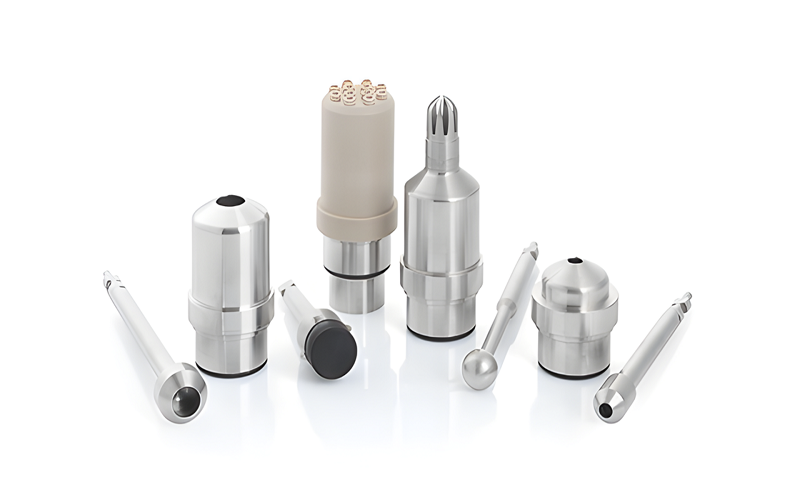
In an injection molding machine, a small nozzle directly affects how molten plastic flows from the barrel into the mold cavity.
An unsuitable nozzle type, nozzle tip size, or temperature setting can cause pressure loss, unstable flow, drooling, or stringing, which can in turn affect part quality, scrap rates, and cycle time.
This article is for injection molding process engineers and mold designers. It covers the main types of injection molding nozzles, key selection considerations, and common issues to help readers choose the right nozzle for their material, mold gate, and production requirements—and maintain stable production.
What Is An Injection Molding Nozzle?
An injection molding nozzle is the heated connection at the end of the barrel that transfers molten plastic into the mold’s sprue bushing.
The nozzle sits between the injection unit and the mold, forming the final melt channel before the material enters the cavity. It must maintain a consistent seal, temperature, and flow as the screw pushes each shot forward.
A well-matched injection molding nozzle helps limit pressure loss, leakage, and defects while supporting better part quality and reliable production.
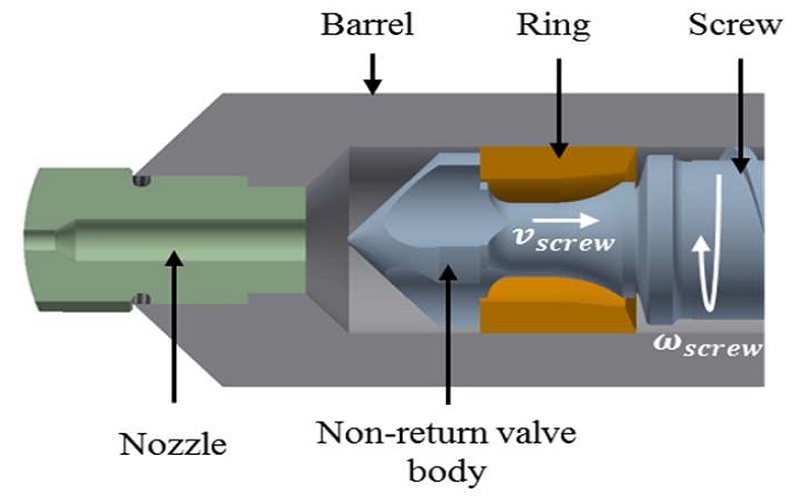
Main Components Of Injection Molding Nozzles
An injection molding nozzle is made up of several parts that work together to transfer molten plastic from the barrel into the mold.
Exact designs vary by machine and application, but understanding the main components makes nozzle selection, setup, and maintenance easier.
Nozzle body
The body connects to the barrel adapter and forms the main heated passage for melt flow. Its internal geometry, length, and material affect pressure loss, residence time, and the risk of degraded material.
A full-taper design can help reduce hang-up in some applications, while specialized molding solutions may use internal elements for mixing or filtration.
Nozzle Tip
The tip mates with the mold’s sprue bushing and directs the melt through its orifice. Standard nozzle tips are available in different sizes and shapes; a new nozzle tip must match the required orifice and sprue-bushing radius.
As a starting point, the tip orifice is typically 1/32 to 1/16 inch smaller than the sprue rear opening. A mismatched radius can cause leakage, so inspect the contact surfaces and keep them in good condition.
Heater And Temperature Sensor
The heater supplies heat, while the sensor monitors temperature near the nozzle. Even temperature control across the nozzle’s working length helps prevent premature cooling, excessive melt temperature, and sticking at the mold interface. Check the sensor and heater during setup if temperature readings fluctuate.
Shut-off Mechanism (On Applicable Designs)
Fixed nozzles have an open flow path, while shut-off nozzles use a pin or valve to close the melt channel between shots. This can reduce drooling and stringing, though the mechanism adds parts that require inspection for wear or sticking.
Optional Internal Features
Mixing nozzles use elements to improve color and additive distribution, but added shear and residence time may affect heat-sensitive materials. Filter nozzles catch contaminants or unmelted particles, which can be useful when processing regrind but may increase pressure drop or clog if not maintained.
When choosing components, account for the resin, filler content, machine, mold, and production job. A correctly matched nozzle in good condition supports reliable filling, better part quality, and productivity while lowering the risk of scrap and premature wear.
| Nozzle type | Main function | Key benefits |
|---|---|---|
| Fixed (open) | Provides an unobstructed melt channel | Simple design with few parts and low maintenance |
| Shut-off | Closes the melt path between injection cycles | Reduces drooling and stringing; supports consistent shots |
| Mixing | Divides and recombines melt | Improves color and additive uniformity |
| Filter or gap-filter | Traps particles and unmelted pellets | Helps protect fine gates and mold features |
| Extended-tip | Extends the nozzle to reach deeper mold areas | Can improve alignment with deep cavities or sprue bushings |
| Modular | Uses replaceable sections or tips | Allows worn parts to be replaced without changing the whole nozzle |
Common Injection Molding Nozzle Problems And Troubleshooting Tips
The temperature, alignment, and internal design of an injection molding nozzle all affect melt flow. If you notice leakage, drooling, or blockage, first check the fit between the nozzle and sprue bushing, then verify the temperature, pressure, and heating system.
Follow the machine manufacturer’s safety guidelines before making adjustments.
- Nozzle Leakage: Misalignment, a mismatched tip radius, or worn sealing surfaces can cause leakage. Check alignment and contact surfaces, and replace damaged parts. Match the tip radius to the sprue bushing.
- Drooling or Stringing: High nozzle temperature, fluid melt, excessive back pressure, or an open nozzle can cause drooling or stringing. Adjust temperature and back pressure gradually within the material’s processing range. If the problem continues, consider a shut-off nozzle. Avoid settings that cause cold slugs or incomplete filling.
- Freeze-Off: Low tip temperature, a damaged heater, incorrect thermocouple placement, or long residence time can block melt flow. Check the heater, thermocouple, and temperature controller. Follow the material’s processing range and purge and clean the nozzle before changing materials.
During troubleshooting, record the material, nozzle temperature, back pressure, and machine conditions at the time of the problem. This information can help identify the root cause and reproduce a stable process.
Regularly inspect the nozzle tip and sealing surfaces, and clean and purge the nozzle before material changes to help prevent leakage, blockage, and related scrap.
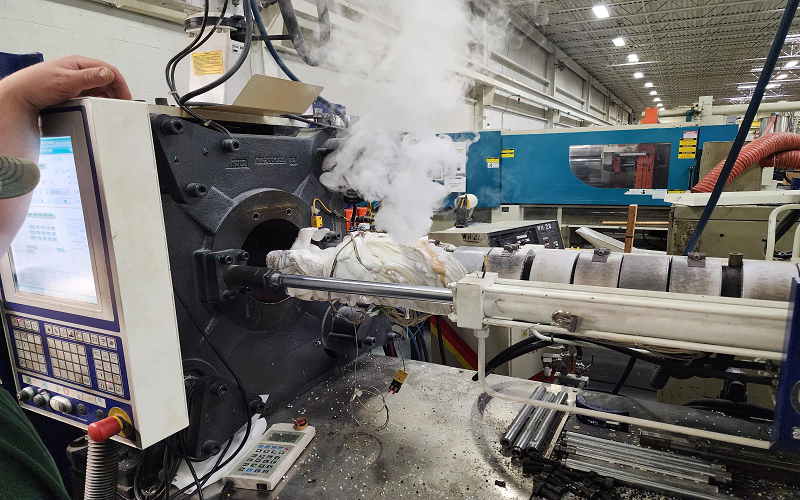
How To Select the Right Nozzle For Injection Molding Machine ?
Selecting the right injection molding nozzle starts with the material, mold, and machine—not with the nozzle alone.
A suitable design can improve scrap rate and throughput by supporting reliable filling, minimizing pressure loss, and maintaining stable melt temperature.
Before ordering, involve process, maintenance, and tooling teams so the nozzle fits the full production setup.
Match the Nozzle to the Resin
Choose a nozzle based on the resin’s viscosity, temperature sensitivity, and filler content. Shut-off nozzles can help control drool and stringing, while wear-resistant alloys suit abrasive or corrosive materials. For heat-sensitive resins, avoid designs with dead spots where material can degrade.
Check the Orifice, Radius, and Sprue
The tip orifice should generally be 1/32 to 1/16 inch smaller than the sprue opening. Match the tip radius to the sprue bushing and check alignment to prevent leakage and inconsistent flow.
Confirm Machine Compatibility
Check the nozzle connection, length, heater, and sensor against the machine and mold. Standardized barrel adapter diameters simplify purchasing. For deep molds, an extended tip may help, but ensure the nozzle heats evenly.
Balance Flow and Special Features
Mixing nozzles can improve color uniformity but may increase shear, residence time, and pressure drop. Filter nozzles catch contaminants but need regular cleaning to prevent blockage. Modular designs simplify wear-part replacement. Weigh these benefits against added cost and maintenance.
Use Process Data
Review defects, scrap, throughput, temperature, pressure, and part-weight variation to see whether the nozzle is affecting production. Record nozzle dimensions and operating conditions for repeatable setups. When ordering, provide the supplier with machine, resin, sprue, and process details.
After installation, check alignment, temperature stability, leakage, and part filling. Inspect the tip and seal regularly, purge before material changes, and monitor temperature at the tip. Follow the manufacturer’s installation and torque instructions.
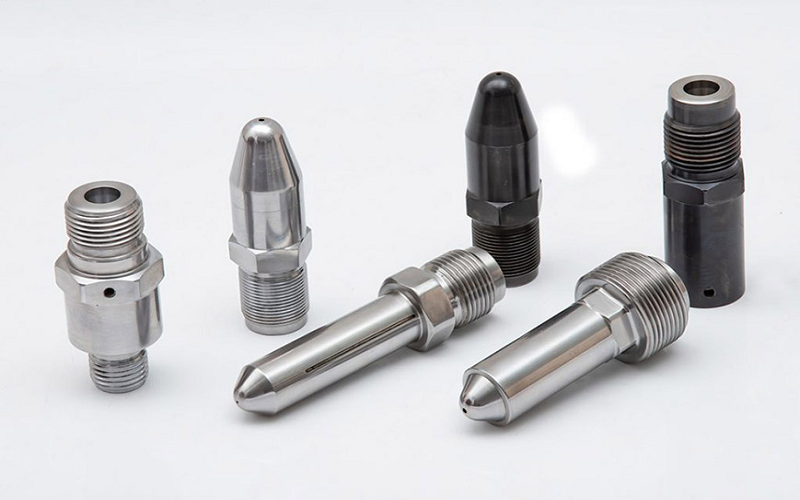
Conclusion
Choosing the right injection molding nozzle means matching its type, tip orifice, radius, temperature control, and materials to the resin, machine, and mold.
A well-fitted nozzle supports reliable melt flow, reduces pressure loss, leakage, drooling, and stringing, and can improve part quality, scrap rate, and throughput. Record nozzle dimensions and process settings, inspect the tip and seal regularly, and purge the nozzle before material changes.
If recurring issues persist, determine the root cause using process data and request guidance on a suitable standard or custom nozzle. Addressing nozzle selection and maintenance systematically helps keep production stable and repeatable.