
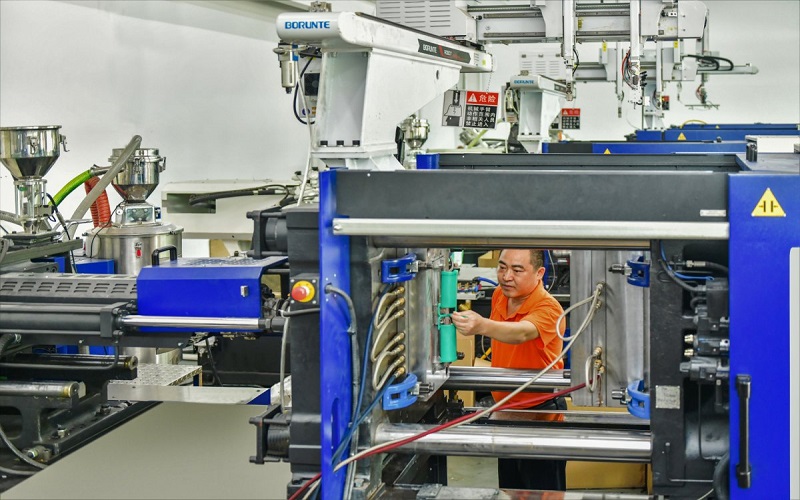
Injection molding, as a key manufacturing process in modern industry, is widely used for the mass production of plastic parts due to its efficiency, precision, and flexibility. Whether in the automotive, electronics, medical device, or consumer goods fields, injection molding plays an irreplaceable role.
This article will systematically introduce the specific steps of the injection molding process, deeply analyze its main advantages, and explore its extensive applications across various industries, helping readers gain a comprehensive understanding of this efficient manufacturing process.
What Is Injection Molding ?
Injection molding is a production process that the process works by injecting molten plastic into a mold cavity using high pressure. This method enables the production of thousands of items per hour with excellent precision and repeatability.
Injection molding is highly cost-effective for high-volume production, delivering consistent, high-quality injection molded components with complex geometries and precise dimensions.
Compared to other molding methods such as blow molding or extrusion, injection molding offers superior surface finish and material utilization, making it the preferred choice for many industries.
How Does Injection Molding Works ?
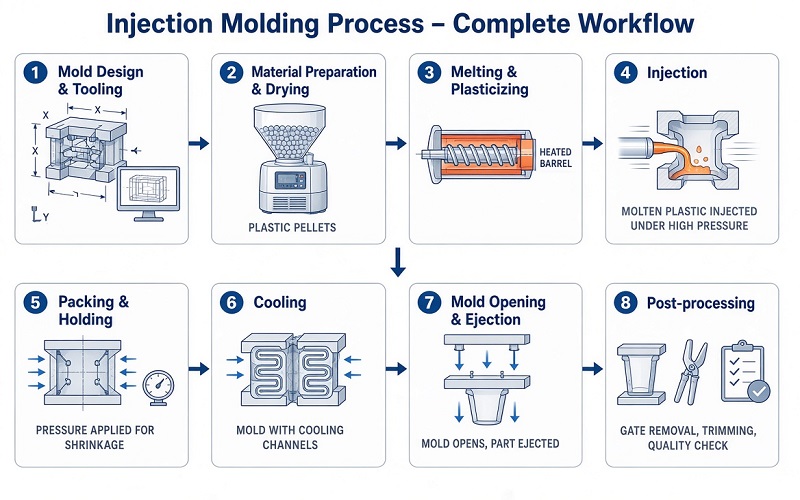
The injection molding process follows a well-defined sequence of stages. Each step plays a critical role in determining the final part’s quality, dimensional accuracy, and production efficiency. Below is a clear breakdown of the complete production workflow:
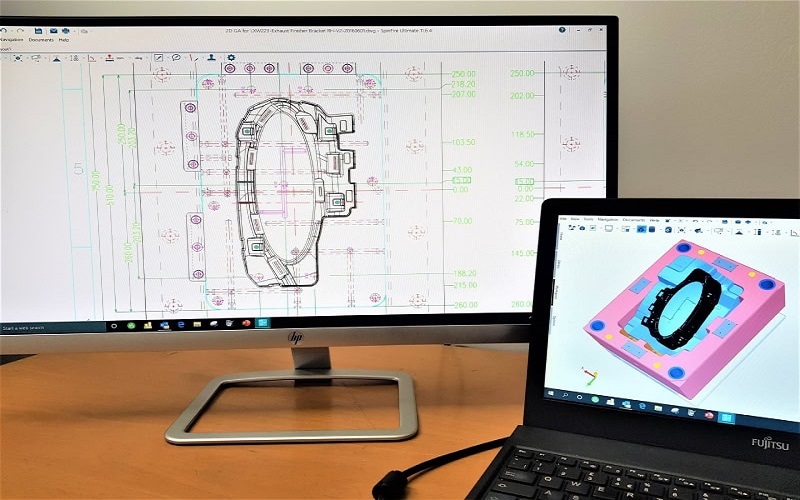
Step1:Mold Design & Tooling
The process begins with careful injection mold design, which is crucial as the mold is the most expensive element in injection molding.
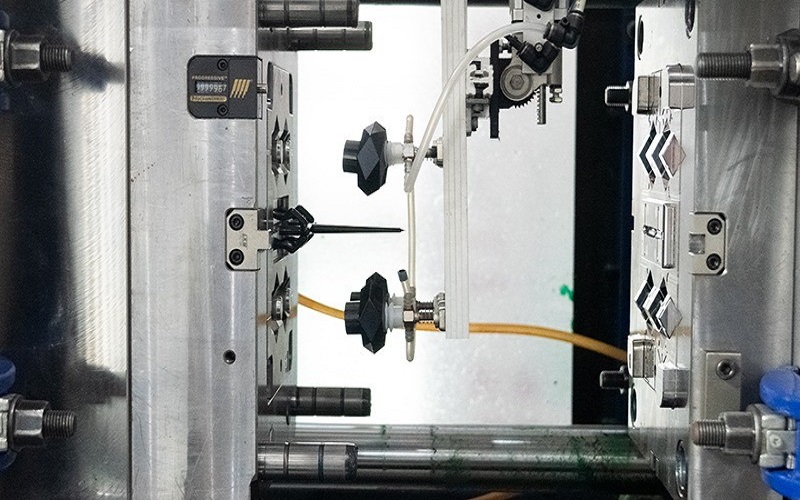
The mold consists of two halves, typically made from steel or aluminum, designed to form the shape of the final product. Aluminum molds are cost-effective for low-volume production.
Step2:Material Preparation & Drying
Plastic resin pellets are selected based on the desired properties of the final product, such as heat resistance and strength. Before processing, the resin is often dried to remove moisture, which can affect the quality of the molded plastic parts.
Step3:Melting & Plasticizing
The dried resin is fed into the injection molding machine’s barrel, where a reciprocating screw turns and heats the material to its melting point. This step converts the solid resin into molten material, ready for injection.
Step4:Injection
The molten resin is injected under high injection pressure through the machine’s nozzle into the mold cavity. The injection pressure must be carefully controlled to fill the mold completely and avoid defects such as short shots or weld lines.
Step5:Packing & Holding
After the mold cavity is filled, packing pressure is applied to compensate for material shrinkage as the plastic solidifies. This stage ensures that the resin fills thick sections properly and reduces sink marks.
Step6:Cooling
The molten resin inside the mold cools and sets plastic solidifies. Cooling time varies depending on the material and part geometry but typically lasts from a few seconds to several minutes. Efficient cooling channels in the mold help maintain consistent cycle times.
Step7:Mold Opening & Ejection
Once cooled, the mold opens, and ejector pins push the finished part out of the mold. Proper design of ejector pins and draft angles ensures smooth ejection without damaging the part surface.
Step8:Post-Processing
After ejection, excess material such as runners or flash is removed. Additional finishing processes may include surface treatment, assembly of multiple parts, or quality control inspections.
In highly automated production lines, these steps are repeated rapidly with cycle times optimized to produce thousands of identical injection molded parts efficiently and consistently.
Material Selection For Injection Molding
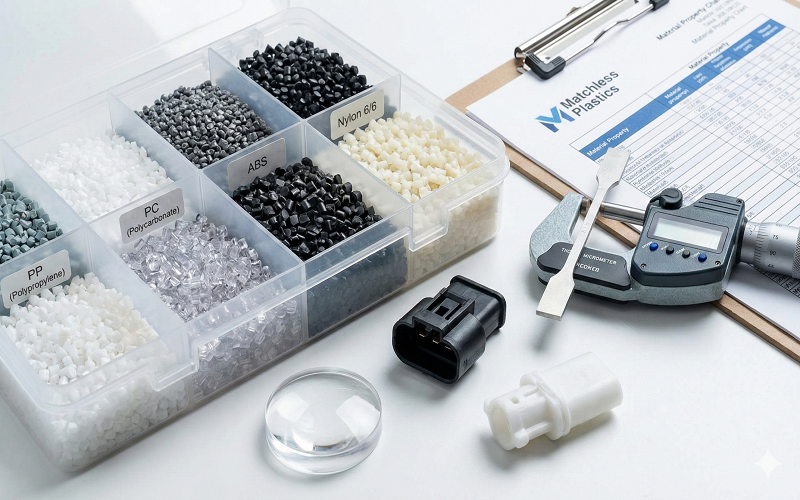
Over 18,000 materials are available for injection molding. The choice depends on the required mechanical properties, thermal resistance, chemical compatibility, and appearance of the final product.
Most plastic injection molding uses thermoplastics such as ABS, polypropylene, polycarbonate, nylon, polyethylene, and polystyrene.
- Polypropylene (PP) – Lightweight, chemical-resistant, good fatigue resistance. Common in packaging, living hinges, automotive interiors, and household items.
- Polyethylene (PE) – Includes HDPE and LDPE. Excellent chemical resistance and toughness. Used for containers, bottles, and toys.
- Acrylonitrile Butadiene Styrene (ABS) – Tough, impact-resistant, and easy to finish. Widely used in automotive parts, electronics housings, and consumer products.
- Polycarbonate (PC) – High impact strength and transparency. Ideal for safety glasses, electronic enclosures, and automotive lighting.
- Polyamide (Nylon / PA) – Excellent wear resistance and mechanical strength. Common in gears, bearings, and structural components.
These materials soften when heated and solidify when cooled, making them ideal for repeated molding cycles. Certain thermosetting polymers and elastomers can also be processed this way.
Virgin material offers the most consistent quality and performance. Recycled or regrind materials can be added to lower costs and improve sustainability, as long as they meet quality requirements.
Furthermore, advanced techniques such as insert molding embeds metal or other components into the plastic part, while overmolding combines multiple materials in one part to create soft-touch surfaces or functional features .
By carefully selecting the right material and understanding its processing behavior,injection molding manufacturers can optimize part weight, strength, and appearance.
Design Considerations Of Injection Mold
Designing parts for injection molding requires careful attention to several key factors to ensure manufacturability, quality, and cost efficiency. Proper design not only facilitates smooth resin flow but also minimizes defects and optimizes cycle times.
Draft Angles and Vertical Walls
To allow easy ejection of the molded part, vertical walls should incorporate a draft angle, typically between 1 to 2 degrees or more depending on surface texture and part depth.
Without sufficient draft, parts may stick to the mold, causing drag marks or damage during ejection. This is especially important for parts with tall vertical walls.
Wall Thickness
Uniform wall thickness is critical for consistent resin flow and cooling. Walls that are too thick can lead to sink marks and longer cooling times, while excessively thin walls may cause short shots or weak parts.
A typical recommended wall thickness ranges from 1.2mm to 3mm, but this varies with material and part function. Designing thin walls can reduce material usage and weight, beneficial for consumer electronics and other lightweight applications.
Resin Flow and Mold Filling
Understanding resin flow behavior helps optimize gate locations, runner design, and mold filling sequence. Proper flow reduces weld lines, knit lines, and air traps, which can compromise part strength and appearance.
Complex geometries with snap fits or functional parts require precise control over resin flow to ensure complete filling and dimensional accuracy.
Parting Line and Undercuts
The parting line, where the two mold halves meet, should be carefully positioned to minimize visible marks and facilitate mold opening. Undercuts—features that prevent straightforward ejection—should be avoided or designed with side actions or lifters to reduce mold complexity and cost.
Ribs, Bosses, and Functional Features
Ribs strengthen parts without increasing wall thickness, typically designed at about half the thickness of the main walls. Bosses provide mounting points for fasteners and should be designed with proper draft and wall thickness to avoid sink marks.
Functional features like snap fits or living hinges require material and design considerations to ensure durability and performance.
Text and Surface Finishes
Embossed text larger than 20 pt and shallow engravings improve moldability and legibility. Surface finishes on the mold directly affect the final part’s appearance and release characteristics. Selecting appropriate finishes can reduce secondary processing and enhance consumer products’ aesthetic appeal.
Tolerances and Dimensional Control
Injection molding can achieve tolerances around +/- 0.25mm for typical parts. Tighter tolerances are possible but increase mold and production costs. Design should balance precision requirements with manufacturing feasibility.
By integrating these design considerations, manufacturers can produce high-quality injection molded parts efficiently, reducing waste and cost while meeting functional and aesthetic requirements.
Key Parameters In The Injection Molding Process
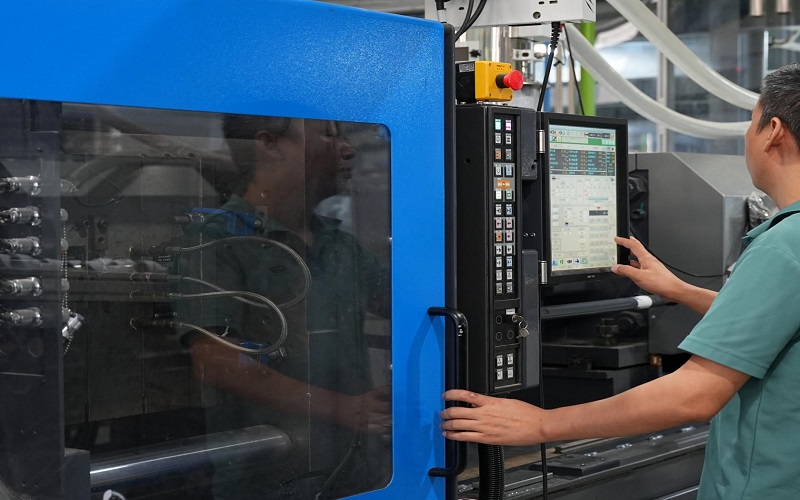
Several key parameters critically influence the quality, efficiency, and consistency of the injection molding process. Understanding and controlling these parameters is essential for optimizing production and minimizing defects.
Injection Pressure
Injection pressure determines how forcefully the molten plastic is pushed into the mold cavity. Adequate pressure ensures the mold fills completely, especially for complex geometries or thin-walled parts. Insufficient pressure can cause short shots, while excessive pressure may damage the mold or cause flash.
Injection Speed
The speed at which the molten material is injected affects the flow and filling of the mold. Faster injection speeds help fill intricate details and reduce the chance of premature cooling, but may lead to increased internal stresses or flow marks. Balancing speed is crucial for part quality.
Melt Temperature
The temperature of the molten plastic affects its viscosity and flowability. Proper melt temperature ensures smooth filling and minimizes defects such as weld lines or burn marks. Overheating can degrade the material, while underheating may cause incomplete filling.
Mold Temperature
Maintaining an optimal mold temperature allows controlled cooling and solidification of the part. Uniform mold temperature helps reduce warping, sink marks, and cycle time. Cooling channels within the mold are designed to circulate coolant efficiently to maintain consistent temperatures.
Cooling Time
Cooling time is the duration the molten plastic is kept in the mold to solidify before ejection. It depends on part thickness, material properties, and mold temperature. Optimizing cooling time balances production speed with part quality and dimensional stability.
Holding Pressure and Time
After injection, holding pressure is applied to compensate for material shrinkage during cooling. The holding time must be sufficient to ensure the cavity is completely packed, preventing sink marks and voids. Improper holding can lead to dimensional inaccuracies.
By carefully monitoring and adjusting these parameters throughout the injection molding process, manufacturers can achieve consistent, high-quality parts while optimizing production efficiency and reducing waste.
Set injection molding process parameters
Advantages Of Injection Molding
Injection molding offers numerous advantages that make it a preferred manufacturing process for producing plastic parts across various industries. These benefits contribute to its widespread adoption and cost-effectiveness, especially in large-scale production runs.
High Production Efficiency
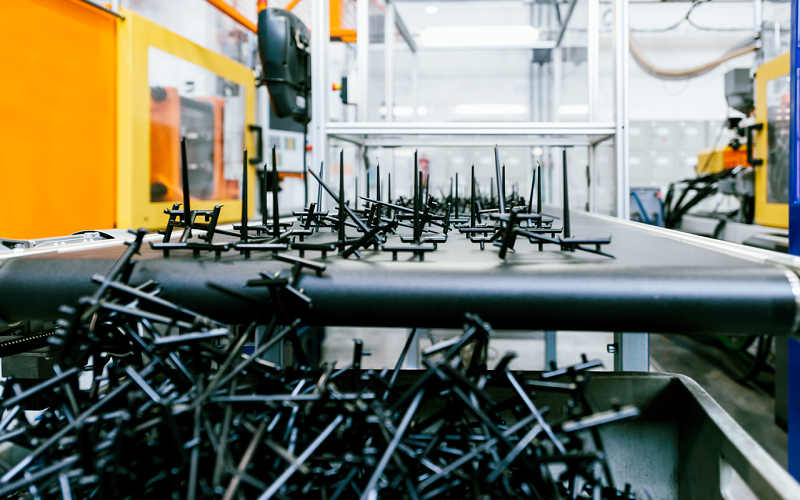
Injection molding is highly efficient, capable of producing thousands of parts per hour once the initial mold is created.
Electric injection molding machines reduce energy consumption by 20%,the automated nature of the process allows for rapid cycle times and minimal manual intervention, significantly reducing labor costs and increasing throughput.
Excellent Dimensional Accuracy and Consistency
The precision of injection molding ensures that parts have tight tolerances and consistent dimensions throughout large production volumes. This repeatability is crucial for applications requiring interchangeable parts or assembly with other components.
Ability To Produce Complex Geometries
Injection molding can create intricate shapes and detailed features that are difficult or impossible to achieve with other manufacturing methods. It also supports thin-wall designs, which help reduce material usage and weight without sacrificing strength.
Superior Surface Finish
Parts produced by injection molding typically have smooth surfaces with excellent cosmetic quality, reducing or eliminating the need for additional finishing processes such as machining or polishing.
Wide Range of Material Choices
Injection molding supports a broad spectrum of materials, including various thermoplastics, thermosetting plastics, and elastomers. This versatility allows designers to select materials that meet specific mechanical, thermal, and chemical requirements.
Cost-Effectiveness In High-Volume Production
Although the initial investment in mold design and tooling can be high, the cost per part decreases significantly with high volume injection molding. This makes injection molding economically advantageous for mass production compared to other processes like CNC machining or 3D printing.
Automation and Scalability
Modern injection molding lines can be highly automated, integrating robotic part removal, inspection, and packaging. This automation enhances scalability and maintains consistent quality across production runs.
Overall, the advantages of injection molding in terms of efficiency, precision, material versatility, and scalability make it a cornerstone of modern manufacturing processes.
Common Defects In Injection Molding Process
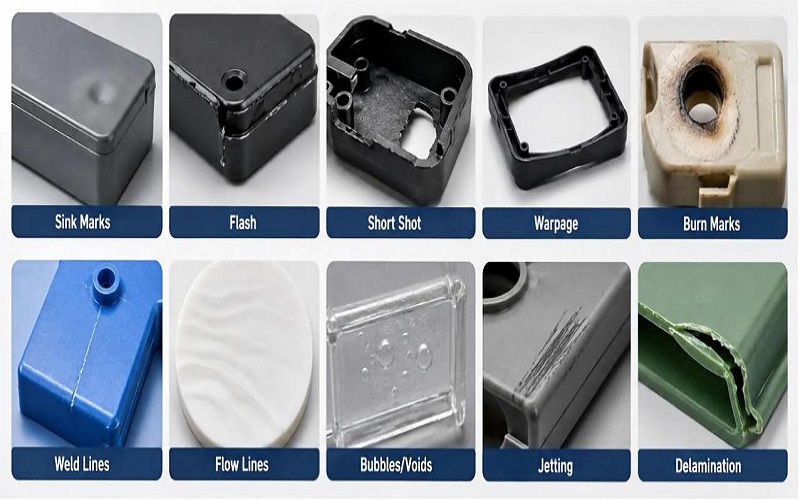
Even with precise process control, defects can occur during injection molding. Understanding these common issues, their causes, and prevention methods is essential for producing high-quality parts. Below are the most frequently encountered defects:
- Sink Marks:Sink marks are small depressions or dimples on the surface of the molded part caused by shrinkage in thicker sections. They typically appear when the interior of the part cools and solidifies before the surface. Using ribs to reinforce thick areas and applying adequate packing pressure during molding can help prevent sink marks.
- Warping:Warping occurs when different sections of the molded part cool and shrink unevenly, causing the part to bend or twist out of shape. This is often due to non-uniform wall thickness or improper cooling rates. Designing uniform wall thickness and optimizing cooling channels in the mold can reduce warping.
- Short Shots:Short shots occur when trapped air inhibits material flow. This defect can be caused by low injection pressure, insufficient melt temperature, or blocked gates. Properly balancing injection parameters and mold design ensures full cavity filling.
- Knit Lines:Knit lines, also known as weld lines, form where two flow fronts of molten plastic meet but do not fully fuse. These lines can weaken the part structurally and affect appearance. Optimizing gate locations and injection speed helps minimize knit lines.
- Flash:Flash is excess thin plastic that leaks out of the mold cavity at parting lines or around ejector pins. It results from excessive injection pressure or worn molds. Regular mold maintenance and correct pressure settings reduce flash.
- Voids:Voids are internal air pockets or bubbles within the molded part caused by trapped air or volatile gases. They compromise part strength and surface integrity. Proper venting in the mold and optimized injection speed can reduce void formation.
By addressing these common defects through careful mold design, material selection, and process control, manufacturers can achieve higher quality injection molded parts with improved performance and aesthetics.
Applications Of Injection Molded Parts
Injection molding is widely used across many industries because it can produce precise, complex, and durable plastic parts efficiently. Key application areas include:
- Automotive:Dashboard panels, door handles, bumpers, grilles, engine covers, connectors, and lighting housings.
- Electronics & Electrical:Smartphone and laptop housings, connectors, switches, remote controls, and appliance casings.
- Medical & Healthcare:Syringes, IV components, surgical instrument handles, inhalers, diagnostic device housings, and laboratory consumables.
- Packaging :Bottle caps, closures, thin-wall containers, dispensing pumps, and protective inserts.
- Consumer Goods:Kitchenware, storage containers, toys, tool housings, personal care product casings, and furniture components.
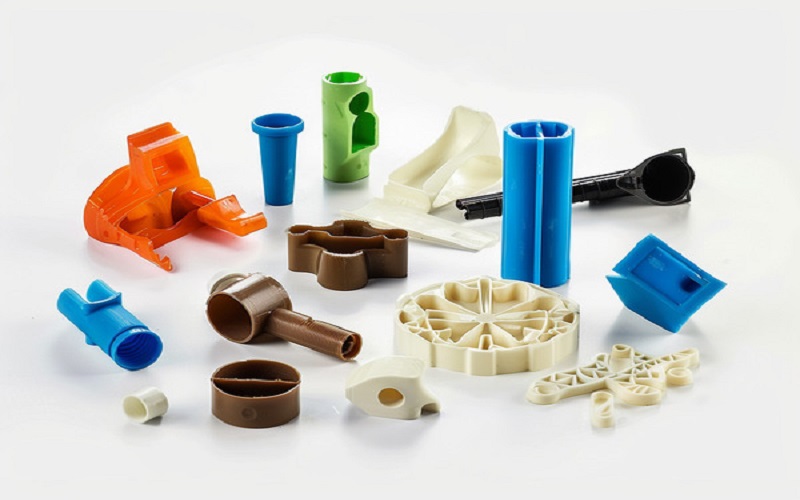
Overall, injection molding’s combination of design flexibility, consistent quality, and cost-effectiveness makes it suitable for nearly every industry that uses plastic components.
Conclusion
In summary, the injection molding process has become an indispensable technology in modern manufacturing thanks to its high production efficiency, excellent dimensional accuracy, and broad material compatibility.
With proper mold design and precise process control, injection molding can produce complex geometries and high-quality surfaces while meeting the economic demands of high-volume production.
It demonstrates strong application potential and flexibility across industries such as automotive, electronics, medical, and consumer goods.
If you are planning a new injection molding project, please contact Otivic! We offer customized injection molding services to help you make informed process decisions and enhance your product competitiveness.