
Choosing between injection moulding and extrusion isn’t always straightforward.
Both are widely used plastic manufacturing processes, both handle molten plastic material, and both can hit high production volumes — but they work in fundamentally different ways and suit very different applications.
If you’re trying to figure out which one fits your project, this guide breaks down the key differences, the trade-offs, and the practical considerations that actually matter.
How Each Process Works
Before comparing the two, it helps to understand what each process actually does.
The Injection Molding Process
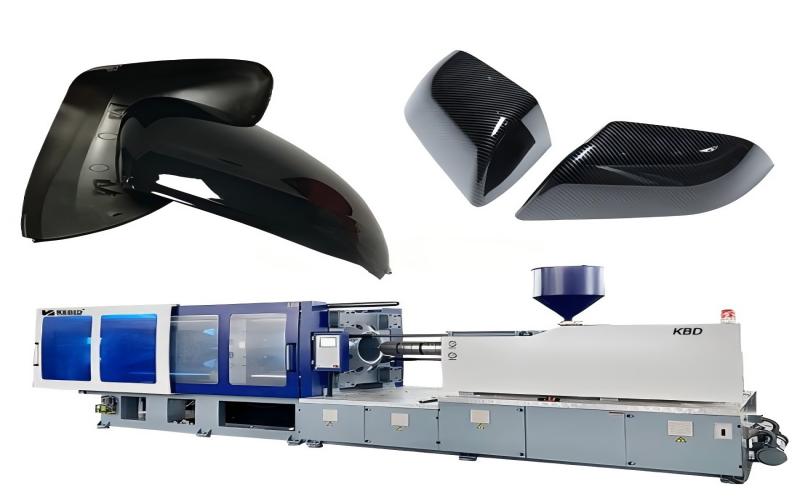
Injection molding involves feeding plastic pellets into an injection molding machine, where heating elements melt them into a thick liquid.
The injection unit then pushes this molten plastic into a mold cavity under high pressure, where it cools and solidifies into the desired shape.
Once the plastic cools completely, the clamping unit releases and the finished part is ejected.
The mold is then closed again and the cycle repeats.
Injection molding is known for its ability to create complex three-dimensional shapes with intricate details, making it suitable for applications in industries such as aerospace and medical devices.
The Plastic Extrusion Process
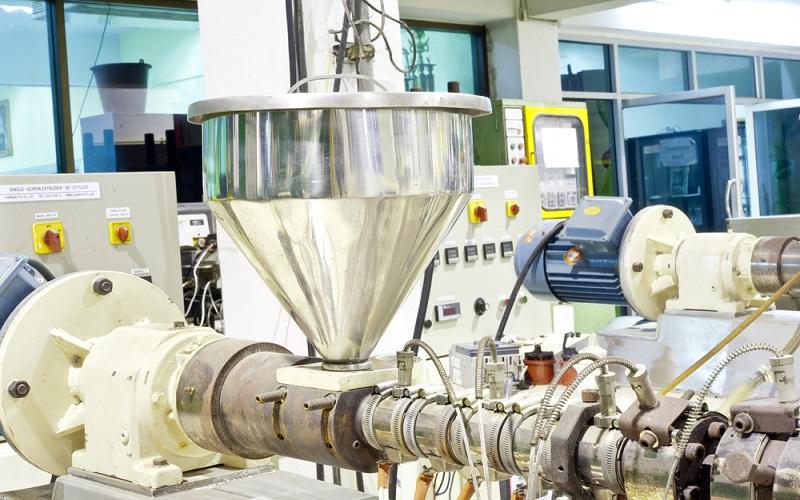
The plastic extrusion process works differently. Plastic resin is fed into an extrusion machine, melted down, and then pushed continuously through a shaped die.
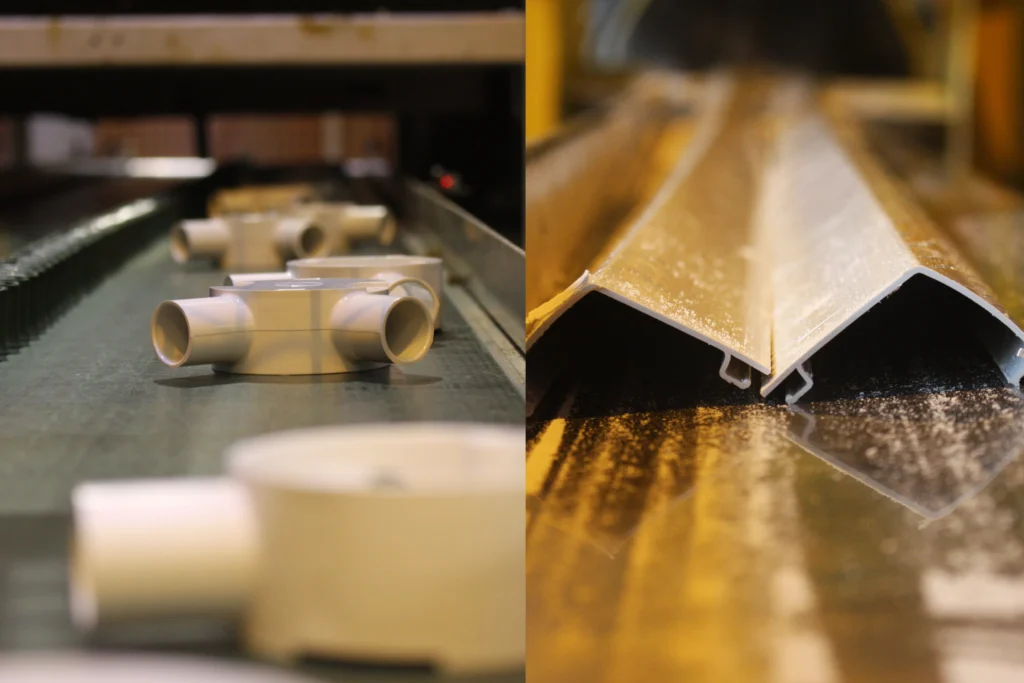
The result is extruded plastic in a consistent cross sectional shape — tubes, sheets, films, window frames, and profiles of all kinds.
Unlike injection molding, extrusion is a continuous production process: material keeps moving through the machine as long as raw materials are being fed in.
Extrusion is commonly used to create continuous lengths of plastic products such as pipes, sheets, and films, which have uniform cross sectional shapes.
Key Differences Between Extrusion and Injection Molding
These two manufacturing processes share the same starting point — plastic pellets and heat — but diverge significantly from there.
Understanding where they differ is the fastest way to figure out which one suits your needs.
Part Complexity and Shape
This is the most fundamental difference between the two. Injection molding supports the production of complex, three-dimensional shapes with intricate details, including internal cavities, thin walls, and complex geometries that extrusion simply cannot achieve.
Extrusion, by contrast, is built for producing parts with uniform cross sectional shapes over continuous lengths.
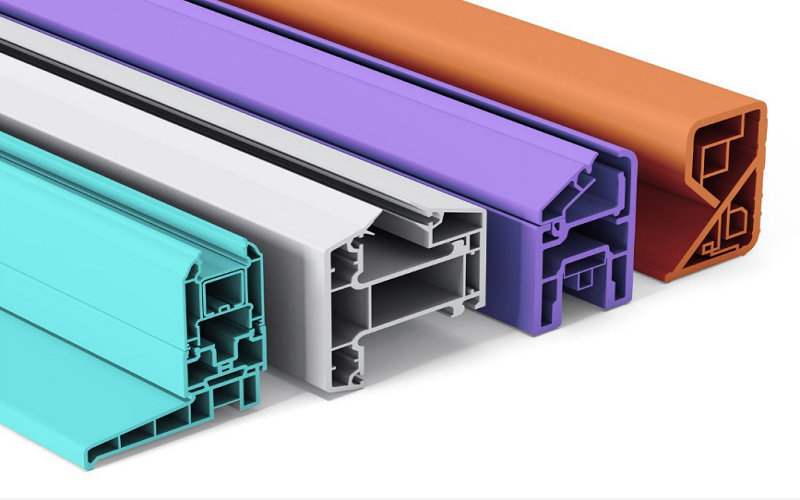
Products made through extrusion can include simple profiles like tubes or cords, as well as more complex cross sections such as door and window seals — but the shape must stay consistent along the entire length.
Injection moulding is not suitable for making long, consistent items like pipes, rods, or hoses, which are far better suited for extrusion.
Tooling Costs and Mold Design
Tooling costs are a major factor in choosing between the two processes.
The tooling costs for extrusion are generally lower than those for injection molding, making extrusion more cost-effective for simpler parts produced in high volumes. Injection molding requires complex molds — often machined from steel or aluminum — and mold creation involves significant investment in both time and money.
Developing the mold for injection moulding can take weeks or months, leading to longer lead times before production starts.
Extrusion dies are simpler and less expensive to produce, which is why extrusion readily scales from small-to-medium production to higher volumes with a lower upfront commitment.
Production Volume and Cycle Times
Both processes can achieve high production volumes, but the efficiency and cost-effectiveness vary significantly based on part complexity.
Injection moulding is cost-effective for high-volume production runs despite high initial tooling costs, because the cost per part drops sharply as volumes increase.
Injection molding can achieve faster cycle times with optimized cooling systems, though this can add to overall project costs.
For high-volume production of simpler parts, extrusion provides a faster return on investment due to its lower production costs and reduced material waste.
The continuous nature of the extrusion process also means there’s very little downtime between parts.
Material Versatility and Waste
Injection molding supports a wider range of engineering plastics and plastic materials, including options that would be difficult to extrude.
It also allows for mold flow analysis during the design phase, which helps anticipate how molten material will behave inside complex molds before tooling is cut.
Extrusion is more limited in material versatility but generates less material waste during normal operation since it’s a continuous process with no runner systems or sprues.
In injection molding, managing material waste from runners and gates is a real consideration, particularly for expensive engineering plastics.
Design Considerations for Each Process
Getting the design right before committing to tooling saves significant time and cost downstream.
For injection moulding, part design must account for draft angles to allow for ejection from the mold.
Without sufficient draft, parts can stick during ejection and cause surface damage or tooling wear.
Injection moulding also enables the design of parts with varying wall thicknesses within the same component — a capability that gives designers real freedom when engineering complex shapes.
Tight tolerances, internal cavities, and smooth surface finishes are all achievable with the right mold design and process control.
For extrusion, the design focus shifts entirely to the cross section. The die determines the profile, and once it’s set, maintaining precise dimensions along the entire length of the extruded plastic is the primary challenge. Material flow through the die must be balanced to avoid warping or inconsistency in the finished product.
Complex cross sections are possible, but every additional feature in the profile adds complexity to die design and increases the difficulty of maintaining consistent quality.
When to Use Injection Moulding vs Extrusion Molding
The right choice depends on what you’re making, how many you need, and what budget you’re working with.
Injection molding is the better option when your part has complex three-dimensional shapes, requires tight tolerances, or needs features like internal cavities and thin walls.
It’s well suited for medical devices, automotive components, consumer electronics, and any application where part accuracy and consistency are critical.
The higher tooling costs are justified when production volumes are large enough to spread that investment across a high number of injection molded parts.
Extrusion makes more sense when you need continuous lengths of a consistent profile — plastic bottles preforms, pipes, window frames, plastic films, and similar products.
It’s also the right call when tooling budget is limited and the part geometry doesn’t require the complexity that injection molding provides. The lower tooling costs and simpler setup make extrusion a practical choice for straightforward parts at volume.
For some applications, both injection molding and extrusion play a role in the same production process.
Extrusion might produce the raw tube or profile, while injection molding creates the fittings, connectors, or housings that attach to it.
Understanding both processes — and where each one excels — gives you more flexibility in how you approach manufacturing methods for complex products.
Variations Worth Knowing: Beyond Standard Plastic Moulding
Plastic injection molding and the plastic extrusion method each have useful variations.
In extrusion, hot extrusion heats the material above its melting point before pushing it through the die — easier to process, good for complex cross sections.
Cold extrusion works at lower temperatures, producing plastic components with better surface finish and tighter dimensions.
Knowing which approach suits your material and profile is part of getting extruding plastic right from the start.
Metal injection molding is worth a quick mention too. It applies the same plastic injection molding process to metal powders mixed with a binder, producing small, precise metal parts that would be difficult to achieve through other manufacturing methods.
For teams that already have injection molding expertise, it’s a natural step into metal component production without switching to an entirely different process.
How These Processes Compare to Other Manufacturing Methods
Extrusion compared to CNC machining is a clear win on cost at volume — CNC machining generates significant material waste and gets expensive quickly at scale.
Injection moulding holds the same advantage over other manufacturing processes once tooling costs are spread across a large run.
CNC machining still makes sense for prototypes or low-volume parts where committing to mold creation isn’t justified yet.
What sets both plastic molding processes apart from other manufacturing methods is repeatability.
Once parameters are set, they consistently hit desired product characteristics across millions of cycles — something that’s hard to replicate with more manual or subtractive approaches.
Injection Moulding and Extrusion Comparison
| Factor | Injection Moulding | Extrusion |
| Part shape | Complex 3D shapes | Uniform cross-sectional profiles |
| Tooling cost | High | Lower |
| Lead time | 12–20+ weeks | Shorter setup |
| Production type | Cyclic (batch) | Continuous |
| Material waste | Runners and gates | Minimal |
| Best for | Complex components | Pipes, sheets, films, profiles |
| Tolerances | Tight | Consistent along length |
| Volume sweet spot | Medium to high | High volume simple shapes |
Conclusion
Injection moulding and extrusion are both essential plastic manufacturing processes — but they’re built for different jobs. Injection molding gives you design freedom, part complexity, and precision.
Extrusion gives you continuous output, lower tooling costs, and efficient high-volume production of consistent profiles.
The decision rarely comes down to one being better than the other in absolute terms.
It comes down to what your part needs, what your volumes look like, and how much upfront investment makes sense for your project. Get that match right, and either process will serve you well.