
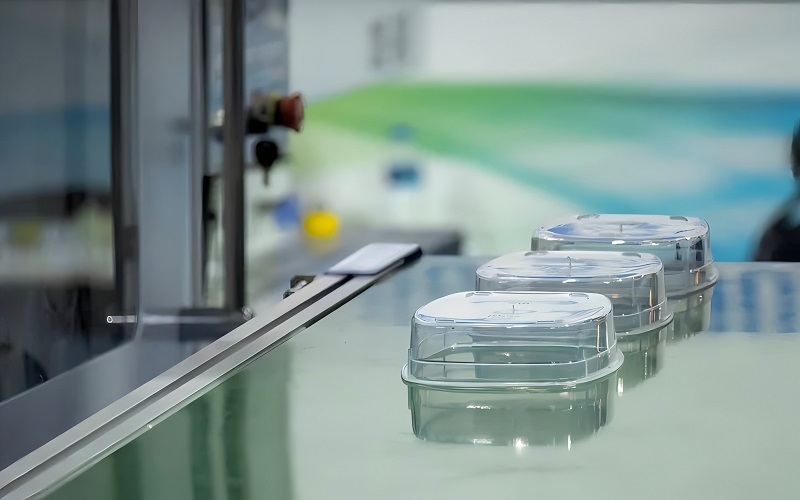
PLA has earned a reputation as the friendly, eco-conscious choice in 3D printing materials — made from corn starch, biodegradable, free from the harsh chemical profile of many other plastics.
But friendly doesn’t automatically mean risk-free, and if you’re printing PLA at home or in a workspace without thinking about air quality, you may be exposing yourself to more than you realize.
So is PLA toxic? The honest answer is nuanced: PLA filament itself is generally considered non-toxic, but the fumes it produces during printing can contain ultrafine particles and volatile organic compounds that may pose health risks — especially in poorly ventilated areas.
What Is PLA and Why Is It Considered a Safer Alternative?
PLA, or polylactic acid, is a biodegradable and bioactive thermoplastic made from renewable resources like corn starch or sugar cane, making it an environmentally friendly alternative to traditional petroleum-based plastics.
Unlike conventional plastics derived from fossil fuels, PLA production starts with plant-based sugars that are fermented into lactic acid and then polymerized into the final material.
That biological origin is a big part of why PLA carries a safer reputation compared to petroleum-based alternatives.
Compared to petroleum-based plastics, PLA is generally safer as it is free from BPA and phthalates — two chemical groups that have attracted significant regulatory scrutiny due to their potential health effects.
PLA is also widely used in the medical field for applications like dissolvable surgical sutures and tissue engineering scaffolds, which speaks to its biocompatibility in controlled, certified applications.
The production and use of PLA are gaining popularity in various industries due to the drive to reduce single-use plastic waste by utilizing compostable materials for food products.
All of that context explains why PLA has become the go-to filament for beginners and professionals alike — but it doesn’t tell the whole story about what happens when you heat it up and print with it.
What Happens When You Print PLA?
The printing process changes the risk profile of any filament material, and PLA is no exception.
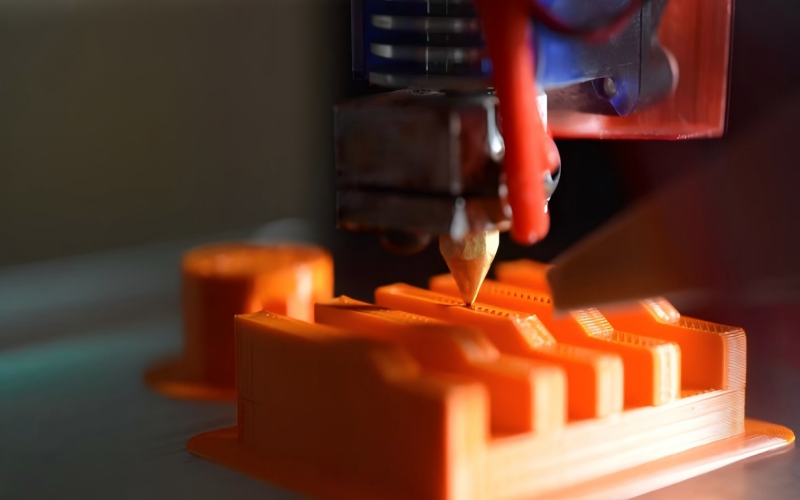
When PLA filament is heated to printing temperatures — typically between 180°C and 220°C — it undergoes thermal degradation that releases fumes into the surrounding air.
While PLA is often viewed as a safer alternative to materials like ABS, it still emits ultrafine particles and VOCs that can irritate the respiratory system, especially in poorly ventilated areas.
The scale of particle release is worth understanding clearly. During the 3D printing process, PLA can release a significant number of nanoparticles, with studies measuring concentrations of up to 66,000 nanoparticles per cm³, with an average of around 15,000 nanoparticles per cm³.
These are not large particles that your body can filter easily — ultrafine particles and toxic particles at the nanoscale penetrate deep into the respiratory system and can reach the lungs and bloodstream.
The fumes released during printing contain a mixture of small particles, micro particles, and VOCs whose long term effects are still being studied.
Inhaling PLA fumes can lead to respiratory irritation and other health issues, particularly for individuals with existing respiratory conditions like asthma or chronic bronchitis.
For most healthy adults in a well ventilated area, brief exposure to PLA fumes during occasional printing is unlikely to cause serious adverse health effects.
But for people who print frequently, work in enclosed spaces, or have pre-existing respiratory conditions, the potential health risks are real enough to take seriously.
Is PLA Truly Non-Toxic? What Emerging Research Shows
The label of non toxic that gets applied to PLA filament needs some unpacking.
PLA filament in its solid form is generally considered non-toxic — you’re not going to experience adverse effects from handling the filament itself. The risk comes from the printing process and what it releases into the air.
Emerging research suggests that PLA microplastics may not be significantly less toxic than traditional plastics, which complicates the narrative that PLA is simply a safe, worry-free material.
The harmful fumes and tiny particles generated during printing are the primary concern, not the material in its finished state.
The fumes released contain VOCs — some of which have known respiratory and neurological effects at sufficient concentrations — alongside ultrafine particles that lodge in lung tissue.
Harmful substances at low concentrations in a large, well-ventilated room are unlikely to cause acute health problems, but the same concentrations in a small, poorly ventilated room accumulate rapidly.
More research is needed to fully characterize the long term effects of regular PLA fume exposure, and that uncertainty itself is a reason to take precautions rather than assume everything is fine.
Health Risks of Inhaling PLA Fumes
Understanding the specific health risks associated with inhaling PLA fumes helps put the precautions in context.
The primary concerns are respiratory in nature. Ultrafine particles that reach the deep lung tissue can trigger inflammation, and repeated exposure over time may contribute to respiratory conditions even in people who don’t have existing respiratory conditions.
For those who already have asthma, allergies, or other respiratory conditions, printing PLA in a poorly ventilated area can trigger flare-ups and worsen existing health issues.
Beyond the respiratory system, some VOCs released during the printing process have broader potential health concerns — headaches, eye irritation, and general well being impacts that are easy to dismiss as unrelated until you notice the pattern.
The health problems associated with poor air quality during 3D printing are generally mild at typical exposure levels, but they’re not zero, and the cumulative effect of regular printing in an unventilated space adds up over time.
Potential health risks from inhaling PLA fumes are lower than those from printing with ABS or resin-based materials, but lower risk is not the same as no risk.
Food Safe PLA: What You Need to Know
One of the most common questions about PLA safety relates to food contact — can you print food safe containers, utensils, and storage items with PLA filament?
The answer requires careful qualification. Use only certified food-grade PLA to ensure safety for food contact applications.
Standard PLA filament often contains additives, colorants, and processing aids that are not food safe, even if the base PLA polymer is.
Beyond material certification, the layered structure of 3D prints creates tiny crevices where bacteria can accumulate, making them difficult to clean.
That surface texture means that even food-grade PLA printed parts can harbor harmful substances in the form of bacteria over time, particularly in high-moisture food applications.
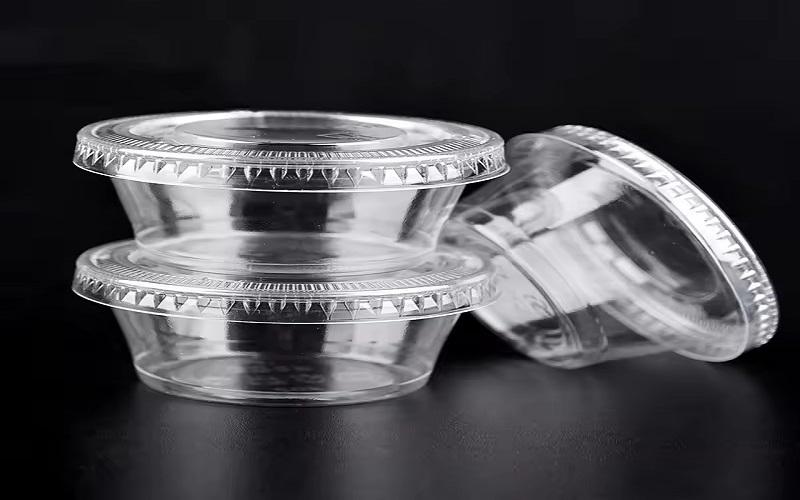
For food packaging and containers intended for repeated use, the combination of material certification and surface finish limitations means that 3D printed PLA parts are generally not recommended for long-term food contact — commercial food packaging made from PLA is a different matter, produced under controlled industrial conditions with certified materials.
Standard PLA also softens at approximately 60°C, which means printed PLA objects are not suitable for hot food or liquid applications.
That thermal limitation is an important part safety consideration alongside the chemical and microbiological ones.
Best Practices for Safe PLA Printing
The good news is that the potential health risks of printing PLA are manageable with the right precautions. None of these measures are expensive or complicated — they’re mostly about awareness and consistent habits.
Ventilation: The Most Important Factor
To minimize exposure to harmful emissions while printing with PLA, it is recommended to operate the printer in a separate room with good ventilation.
Maintaining proper ventilation in the printing area — such as keeping windows open or using air purifiers — is crucial to disperse fumes effectively during PLA printing.
A well ventilated room with open windows and active airflow dramatically reduces the concentration of ultrafine particles and VOCs in the breathing zone. If you can smell the printing process, the ventilation isn’t adequate.
For home setups where a dedicated well ventilated area isn’t possible, positioning the printer near an open window with a fan directing air outward is a practical minimum.
Good ventilation is consistently the single most effective way to reduce air pollution from 3D printing — more effective than any other single measure.
Filtration Systems and Air Purifiers
Using an enclosed printer with a filtration system can help capture and neutralize any byproducts from printing, further reducing exposure to fumes.
Enclosed printers with HEPA filters and activated carbon filtration address both the particle and VOC components of PLA fumes — HEPA filters capture ultrafine particles while activated carbon adsorbs VOCs.
A standalone air purifier with HEPA filters positioned near the printer provides similar benefits for open-frame printer setups.
Air filters rated for VOC removal are significantly more effective than standard particulate-only filters for this application.
If you’re printing regularly in an enclosed space, an air purifier with both HEPA and carbon filtration is a worthwhile investment for protecting air quality over the long term.
Personal Protective Equipment
For people with existing respiratory conditions or those who print for extended periods, personal protective equipment adds another layer of protection.
Wearing a respirator with a filter rated for VOCs provides additional protection against harmful particles and fumes released during PLA printing.
A basic dust mask does not provide meaningful protection against ultrafine particles or VOCs — the respirator needs to be rated specifically for the particle sizes and chemical types involved.
Safety glasses protect against any incidental splatter during filament changes or print removal, and they’re a simple piece of protective gear worth keeping at the workstation.
Choosing Low-Emission Filaments
Choosing low-emission PLA filaments specifically designed to minimize fume generation is an important safety precaution when 3D printing with PLA.
Some manufacturers produce PLA filament formulations with reduced additives and colorants that generate lower emissions during printing.
These filaments typically cost slightly more than standard options, but for anyone printing in less-than-ideal ventilation conditions, the lower emissions are a meaningful practical benefit.
Non allergenic formulations are also available for users with chemical sensitivities.
PLA vs Other 3D Printing Materials: How Does It Compare?
Putting PLA’s safety profile in context requires a brief comparison with other common filament materials.
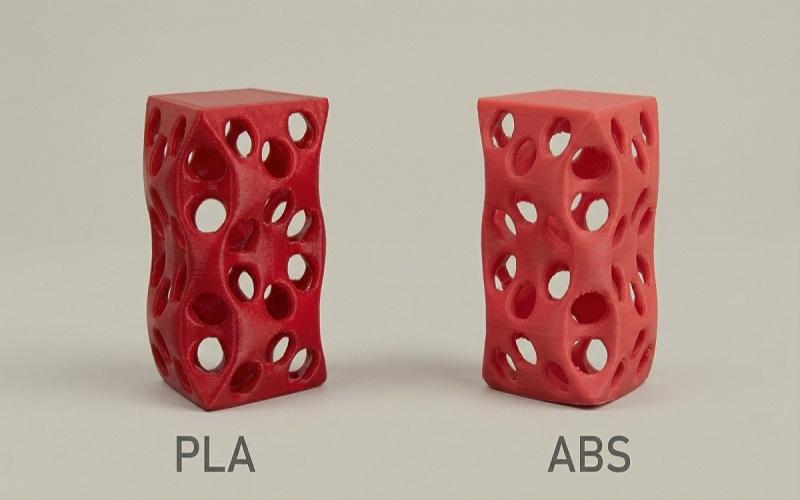
ABS is widely recognized as producing more harmful fumes than PLA — styrene emissions from ABS printing are a known respiratory irritant and potential carcinogen at high concentrations.
Resin-based printing produces some of the highest health risks of any consumer 3D printing process, with uncured resin being directly toxic and requiring rigorous protective gear and ventilation.
PLA sits at the safer end of the filament materials spectrum — it genuinely is a safer alternative compared to ABS, resin, and many other materials.
But safer is not safe without precautions, and the research on ultrafine particle release during printing PLA makes clear that treating it as completely harmless isn’t justified either.
The right approach is to treat any 3D printing process as one that produces air pollution requiring management — good ventilation, appropriate filtration, and sensible protective gear — rather than assuming that because the base material is plant-derived, no precautions are needed.
Conclusion: Is PLA Toxic?
Is PLA toxic? In its solid form, no — PLA filament is generally considered non-toxic and is used safely in medical applications and food packaging under the right certified conditions.
But the printing process is a different story, and inhaling PLA fumes regularly in a poorly ventilated space carries real potential health concerns that shouldn’t be dismissed.
Ultrafine particles, VOCs, and the emerging picture of PLA microplastic effects all point toward the same practical conclusion: print in a well ventilated area, use filtration where possible, and don’t rely on PLA’s eco-friendly reputation as a substitute for good air quality management. Safe printing is straightforward once you know what to manage.