
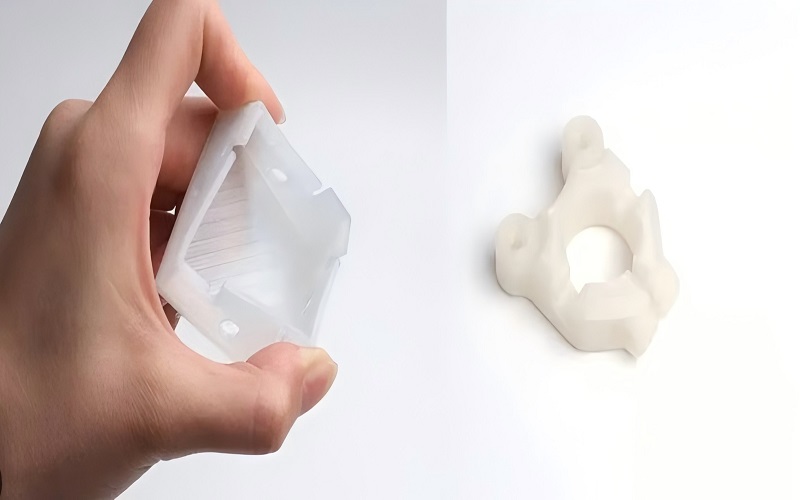
In the rapidly evolving landscape of 3d printing, selecting the right material is the bridge between a failed experiment and a high-performance part.
For many users, the debate often centers on nylon vs pla.
While regular pla has long been the entry point for hobbyists due to its ease of use, nylon—technically a polyamide—stands as the powerhouse of industrial applications.
Understanding the material properties, thermal limits, and mechanical properties of these nylon filaments and polylactic acid options is essential for any engineer looking to produce durable parts that won’t break under stress.
Understanding Polylactic Acid (PLA)
Polylactic acid (PLA) is the most ubiquitous filament in the 3d printing world, primarily because it is a predictable material that yields consistent results with minimal warping.
PLA is a user-friendly thermoplastic that is easy to print and has a low melting temperature, making it the right filament for those prioritizing aesthetics over raw strength.
Unlike other filaments, PLA behaves well on most 3d printer setups without the need for an enclosure or complex hardware requirements.
The Composition and Sustainability of PLA
At first glance, PLA appeals to the eco-conscious side of the manufacturing industry.
In fact, PLA is biodegradable and derived from renewable resources like corn starch. This plant-based origin makes it a suitable choice for indoor environments.
Furthermore, PLA is a rigid, brittle, plant-based plastic with poor heat resistance, best suited for aesthetic prototypes and easy, low-warp 3d printing. While it lacks the toughness of other materials, it excels in dimensional accuracy and surface finish.
Mechanical Limitations and Brittleness
Despite its popularity, PLA has significant drawbacks when compared to nylon filaments.
Specifically, PLA is known for its brittleness, leading to parts with poor durability and impact resistance compared to Nylon.
Because it is a rigid plastic, it is prone to shattering under impact.
In fact, PLA parts can be weaker along the Z-axis due to layer lines, which can lead to structural failure when the printed parts are subjected to mechanical stress.
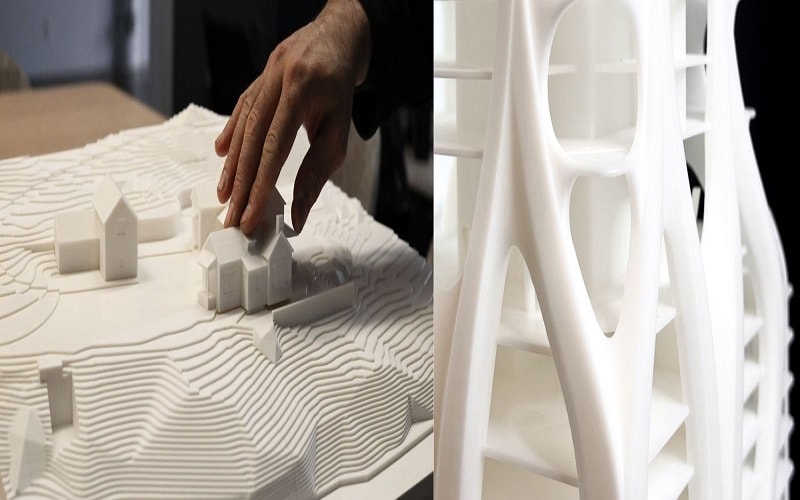
The Power of Nylon: Engineering for Durability
When the project transitions from visual models to functional prototypes, nylon becomes the right material.
Known in the engineering world as polyamide, nylon is a high-strength, flexible engineering material with excellent heat and chemical resistance, ideal for functional, high-friction parts like gears and bushings.
Unlike the brittle nature of PLA, nylon offers a level of durability and toughness that allows it to survive in industrial applications.
Durability and Mechanical Strength
Nylon is known for its superior durability and wear resistance, making it ideal for parts that will undergo significant mechanical stress or exposure to chemicals.
Specifically, nylon is a flexible plastic with an impact resistance ten times that of ABS(acrylonitrile butadiene styrene).
This good strength and high impact strength make it a tough choice for high-stakes environments.
Furthermore, nylon’s flexibility allows it to absorb impact without cracking or breaking, making it suitable for parts that need to bend or flex under pressure.
Wear Resistance and Low Friction
One of the major advantages of printing with nylon is its performance in moving assemblies.
In fact, nylon has a low coefficient of friction, making it somewhat self-lubricating and an outstanding choice for moving parts.
This inherent wear resistance ensures that gears, bushings, and tools maintain their structural integrity over time, unlike polylactic acid, which is generally not suitable for moving parts.
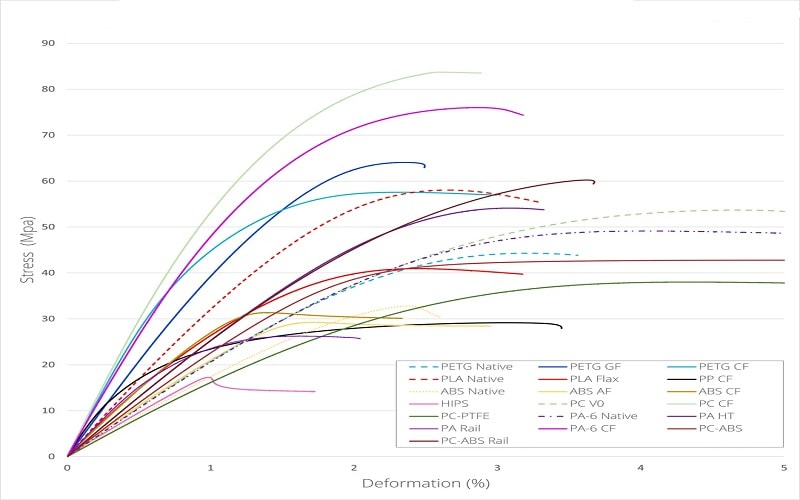
Thermal Performance: Resisting High Temperatures
A critical factor in the nylon vs pla debate is how the material reacts to heat.
Most plastic printed parts will eventually face thermal stress, and this is where the material properties diverge most sharply.
Nylon can maintain its structural integrity at temperatures well above 100 degrees Celsius, making it suitable for high-temperature applications, whereas PLA begins to slowly deform much sooner.
PLA’s Thermal Vulnerability
PLA is notoriously heat resistant—or rather, the lack thereof.
Specifically, Polylactic Acid (PLA) has a low melting point and loses virtually all stiffness and strength at temperatures above 50 degrees Celsius.
This makes it unsuitable for automotive engine bays or any environment with high temperatures.
If you leave a PLA part in a hot car, it will likely warp or melt, whereas nylon remains resistant to such temperatures.
Nylon’s Industrial Heat Resistance
For parts that must endure the heat of an engine or industrial machinery, nylon filaments are the right filament.
In fact, nylon can withstand temperatures up to 170°C due to its high thermal resistance.
This allows for heat treating or annealing processes that can further enhance the mechanical properties of the printed parts.
Consequently, nylon is best for high-stress mechanical components like gears and automotive engine bays.
Hardware Requirements and Printing Difficulties
While nylon offers superior durability, it comes with significant printing difficulties and steep hardware requirements.
Many 3d printer users find that printing with nylon is a complex task compared to the plug-and-play nature of polylactic acid.
Nylon requires higher extrusion temperatures and a heated bed, attempting to print Nylon that has been exposed to ambient air will result in failure.
Therefore, making it more challenging to print compared to PLA.
Extrusion and Bed Temperatures
Success with nylon starts with the printer’s nozzle. Specifically, nylon requires higher extrusion temperatures, typically between 240°C to 270°C, making it more challenging to print than PLA.
Furthermore, to prevent warping, nylon requires a heated bed for printing, typically set between 70°C to 90°C, to help mitigate warping.
Without these temperatures, the layers will not achieve proper layer adhesion, and the part will fail.
Warping and Enclosures
Nylon prints are prone to warping, especially if the ambient temperature varies significantly from the extruded material’s temperature.
To manage this, a heated chamber or a high-quality enclosure is often required for larger parts.
In contrast, PLA is easier to print than Nylon due to its lower melting temperature and minimal warping, making it ideal for beginners.
The Moisture Challenge: Hygroscopic Properties
Perhaps the most frustrating aspect of nylon is its relationship with air and moisture.
Nylon is hygroscopic, meaning it readily absorbs moisture from its surroundings, which can lead to print quality issues if not properly managed.
If you leave a spool of nylon exposed, it will quickly become wet filament, ruining your test results.
Managing Wet Filament
Printing with moist Nylon can result in foggy surfaces, tiny holes, or bubbles on the exterior of the printed parts.
Furthermore, nylon’s mechanical properties can significantly degrade if printed with moist filament, leading to weak and brittle parts.
To combat this, a dry box is essential. In fact, proper storage of Nylon filament is crucial, as it should be kept in an airtight container with desiccants to prevent moisture absorption.
Dimensional Stability and Humidity
On the other hand, PLA is much more stable in varied humidity compared to Nylon.
It does not suffer from the same moisture absorption issues, meaning it remains a predictable material even in less-than-ideal storage conditions.
Specifically, nylon’s tensile strength can be significantly affected by moisture absorption, leading to a decrease in mechanical performance.
Carbon Fiber Nylon and Modified PLA: The Wider Range
The market has introduced a wider range of other materials to bridge the gap between these two.
PLA+ or modified pla offers improved durability while maintaining ease of use.
However, for those needing extremely tough parts, carbon fiber nylon has become a gold standard in the textile industry and industrial applications.
Increased Strength with Carbon Fiber
Carbon fiber reinforced nylon is an engineering marvel. By adding carbon fiber to the polyamide base, manufacturers achieve increased strength and even better abrasion resistance.
However, this requires a hardened steel nozzle, as the carbon fiber is highly abrasive.
In fact, PLA is highly abrasive if filled with fibers and is generally not suitable for moving parts, making carbon fiber nylon the superior choice for functional prototypes.
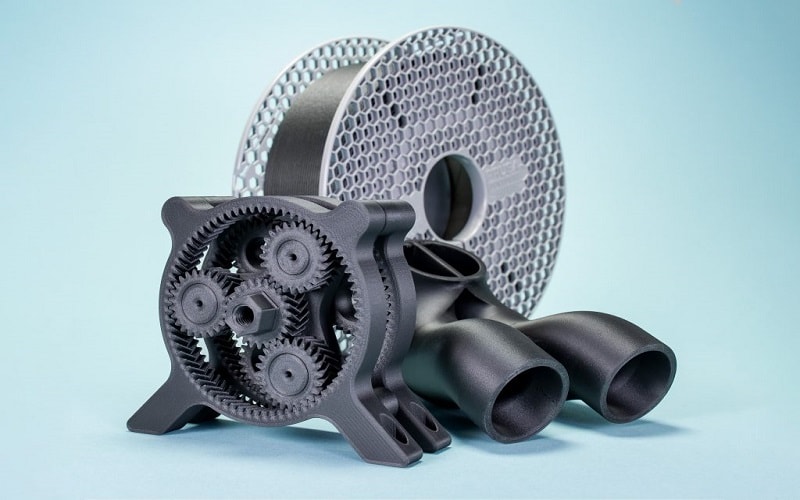
Comparative Analysis: Choosing for Your Application
To decide on the right material, you must weigh durability, impact strength, and cost effectiveness.
While nylon is ideal for high-stress mechanical components like gears and automotive engine bays, PLA remains the king of the 3d printing hobbyist world for its cost effectiveness and visual quality.
| Property | Polylactic Acid (PLA) | Nylon (Polyamide) |
| Impact Resistance | Poor (Brittle) | Excellent (Extremely Tough) |
| Heat Resistance | Low (deforms at 50°C) | High (up to 170°C) |
| Ease of Printing | High (Minimal Warping) | Low (Warping common) |
| Moisture Sensitivity | Low | High (Hygroscopic) |
| Flexibility | Rigid | Flexible |
Conclusion
Mastering 3d printing requires knowing when to use nylon vs pla.
PLA is best for visual models and prototypes where dimensional accuracy and surface finish are priorities.
It is the right filament for many users starting their journey.
However, nylon is more suitable for functional parts, mechanical components, and products that need to endure high wear, impact, or exposure to harsh environments.
Specifically, nylon is ideal for creating mechanical parts, gears, tools, and automotive components that require long-lasting, impact-resistant properties.
Whether you are building functional prototypes or durable parts for an enclosure, the choice depends on your hardware requirements and the mechanical stress the part will face.
By understanding these material properties, you ensure that your printed parts fulfill their industrial applications with high impact strength and improved durability.