
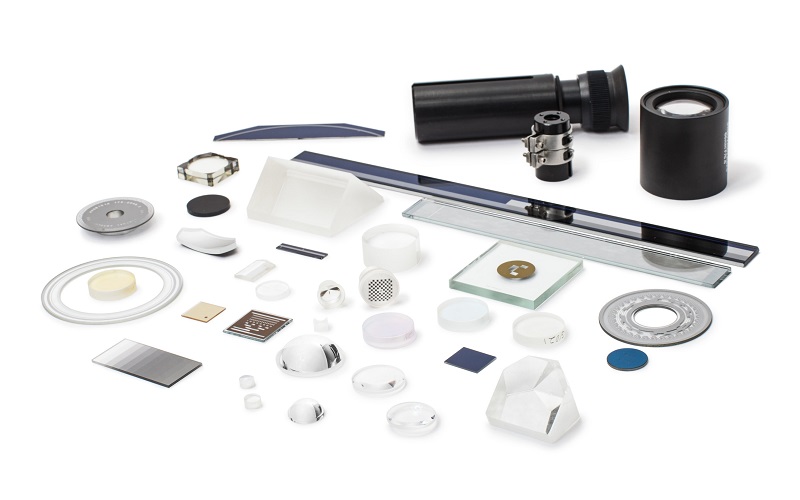
Optical plastics have rapidly emerged as important materials in the field of modern optics due to their excellent performance and wide range of applications.
Compared with traditional optical glass, optical plastics not only offer significant advantages such as lightweight, low cost, and high design freedom, but also enable the rapid manufacturing of complex-shaped optical components through processes like injection molding, including aspheric lenses and freeform optical elements.
This article will introduce the main types of optical plastics, their performance characteristics, and their applications in various optical systems, as well as how to compare and evaluate them with traditional optical glass.
Whether you are a product designer, engineer, or simply curious about the materials shaping modern optical technology, this article will lay a solid foundation for your understanding and application of optical plastics.
What Are Optical Plastics?
Optical plastics, also known as polymer optical components, are a class of plastic materials specifically engineered for optical applications.
These materials are designed to have excellent optical properties such as high transparency, good refractive index, and low light absorption, making them suitable substitutes or complements to traditional optical materials like glass optics.
Unlike traditional optical materials, optical plastics can be molded through cost-effective processes such as injection molding, allowing for the production of complex shapes including spherical lenses, aspheric lenses, freeform surfaces, optical prisms, and microlens arrays.
This molding process also enables high volume production while maintaining good surface quality and surface accuracy.
Plastic optics are widely used in many optical applications ranging from eyeglass lenses and contact lenses to mobile devices, automotive lighting, and optical fibers.
They offer advantages such as lighter weight compared to glass counterparts, which is critical for portable and wearable devices, and better impact resistance, making them safer for everyday use.
Performance Of Optical Polymer Materials
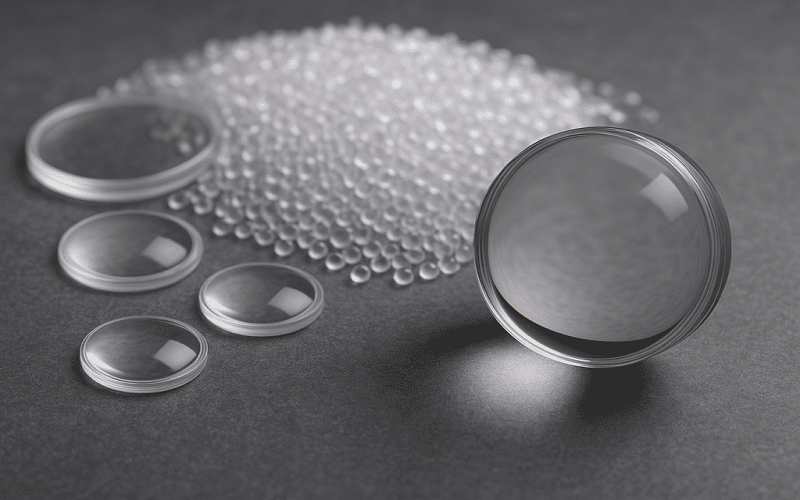
Optical polymer materials possess a range of properties that make them highly suitable for diverse optical applications.
These materials typically exhibit good optical properties such as high transparency and appropriate refractive indices, enabling efficient light transmission through optical lenses and other components.
Light Transmission
These materials are specially engineered transparent polymers designed to transmit light with good optical properties comparable to traditional glass.
Visible light transmittance typically reaches over 90%, with high-quality materials approaching 92%–93%, close to the level of optical glass.
Optical Surfaces And Quality
In terms of optical quality, while plastics generally have lower optical quality than traditional glass optics, advances in polymer materials and manufacturing techniques have greatly improved their performance.
Plastic optics can be formed with high surface quality and dimensional accuracy, often achieved through advanced manufacturing techniques like injection molding and single point diamond turning.
Mechanical and Thermal Properties
Optical plastics are generally impact resistant, with plastic lenses being about 10 times more resistant to impact than glass lenses, enhancing their safety in many applications. They also demonstrate lower density, resulting in components that weigh 2-5 times less than their glass counterparts.
However, the thermal expansion coefficient of optical plastics is typically higher than that of glass and are more sensitive to temperature changes, requiring careful consideration in high-temperature environments.
Water Absorption and Environmental Stability
Many optical polymers, including acrylic glass and cyclic olefin polymers, exhibit low water absorption, contributing to their dimensional stability and durability in various environmental conditions.
Cyclic olefin polymers, in particular, are known for their ultra-low moisture absorption and good optical properties, making them suitable for demanding applications.
Processing Performance
Manufacturing processes such as injection molding enable high-volume production of optical plastics with complex shapes and good dimensional accuracy.
Techniques like single point diamond turning are also used to create high-quality optical surfaces with fine details, especially for prototyping and small series.
These properties make optical plastics a versatile choice for many applications, balancing performance, cost, and manufacturability.
Types Of Optical Plastics
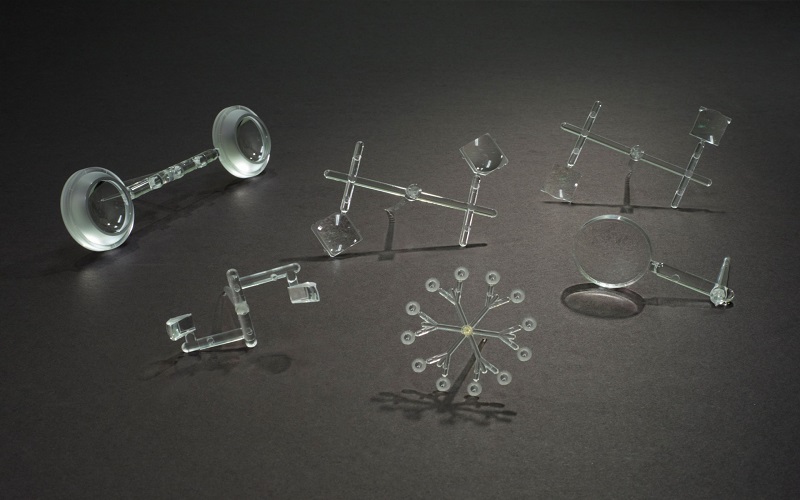
Optical plastics encompass a variety of polymer materials, each with unique properties tailored for specific optical applications.
The most common types include polymethyl methacrylate (PMMA), polycarbonate (PC), polystyrene (PS), allyl diglycol carbonate (ADC or CR-39), polyethylene terephthalate (PET), cyclic olefin copolymers (COC), and polyether ether ketone (PEEK).
Polymethyl Methacrylate (PMMA)
PMMA, also known as acrylic or acrylic glass, is widely used due to its excellent optical clarity, high light transmission (approximately 92% at 3 mm thickness), and good weather resistance.
It is commonly found in applications such as aircraft windows, automobile headlights, and optical lenses. PMMA offers a refractive index of about 1.49 and is known for its ease of processing and molding.
Polycarbonate (PC)
Polycarbonate is valued for its superior impact resistance—about 10 times that of glass—and good optical clarity with around 90% light transmission.
It has a refractive index of approximately 1.59 and is often used for eyeglass lenses, protective eyewear, and optical components requiring high durability. PC also provides excellent dimensional stability and heat resistance compared to other optical plastics.
Polystyrene (PS)
Polystyrene is a clear, hard, and brittle plastic with a refractive index similar to polycarbonate (around 1.59) and a light transmission of about 88%.
It is commonly used in lighting diffusers and light guides, where its surface can be textured to enhance light distribution. PS is also cost-effective and suitable for applications where high optical performance is less critical.
Allyl Diglycol Carbonate (ADC or CR-39)
CR-39 is a thermosetting plastic known for its high optical clarity, scratch resistance, and UV absorption properties. It has a refractive index near 1.498 and is extensively used in eyeglass lenses.
ADC offers superior surface hardness—about 40 times that of PMMA—but is less impact resistant than polycarbonate.
Polyethylene Terephthalate (PET)
PET is a versatile plastic with high crystallinity and excellent optical properties, including over 90% light transmission across the visible spectrum.
It is commonly used as a substrate for touch panels, solar cells, and flexible displays. PET’s good dimensional stability and resistance to moisture make it suitable for various optical and electronic applications.
Cyclic Olefin Copolymers (COC)
COCs are noted for their ultra-low moisture absorption, high optical clarity, and low birefringence. These properties make them ideal for demanding optical applications such as lenses, optical fibers, and medical devices. COCs also exhibit good chemical resistance and thermal stability.
Polyether Ether Ketone (PEEK)
PEEK is a high-performance plastic used in applications requiring high mechanical strength, thermal stability(melt at around 340°C), and chemical resistance.
Although not as transparent as other optical plastics, PEEK is used in specialized optical components, buffer materials in optical fibers, and demanding industrial environments.
Other Optical Plastics
In addition to the above, other optical plastics such as silicones and thermoplastic elastomers provide flexibility and unique optical properties for specialized applications, including flexible lenses and optical adhesives.
Understanding the key properties and typical applications of these various optical plastics helps in selecting the right material to produce optical components that meet specific performance, durability, and cost requirements.
| Optical Plastic Type | Refractive Index | Light Transmission | Impact Resistance | Heat Resistance | Scratch Resistance |
|---|---|---|---|---|---|
| PMMA (Polymethyl Methacrylate) | About 1.49 | About 92% (3mm thickness) | Good | Medium (85-165°C glass transition temperature) | Low |
| PC (Polycarbonate) | About 1.59 | About 90% | High (about 10 times that of glass) | High (up to 130°C) | Medium |
| PS (Polystyrene) | About 1.59 | About 88% | Low | Low | Low |
| CR-39 (ADC) | About 1.498 | About 92% | Medium | High (can withstand above 100°C) | High |
| PET (Polyethylene Terephthalate) | About 1.57 | >90% | Medium | Medium to high | Medium |
| COC (Cyclic Olefin Copolymers) | About 1.53-1.54 | High | Good | Medium to high | High |
| PEEK (Polyether Ether Ketone) | Opaque or low transparency | Low | Very high | Very high (melting point about 340°C) | High |
| Silicone (Silicone Rubber) | About 1.40-1.43 | About 90% | Good | Low to medium | Low |
Note: The data above are typical values; actual performance may vary depending on material formulations and processing techniques.
Benefits Of Using Optical Plastics
Optical plastics offer a range of benefits that make them highly attractive for various optical applications. Their advantages extend beyond just cost and weight savings, encompassing factors such as manufacturing flexibility, safety, and design innovation.
Lightweight
One of the key advantages of optical plastics is their significantly lighter weight; they weigh 2-5 times less than glass for the same volume, making them ideal for portable and lightweight optical devices.
Cost-Effective Manufacturing
Optical plastics are typically cheaper to manufacture than glass optics. This cost advantage arises from lower raw material costs and the ability to produce components rapidly through scalable processes such as injection molding.
The lower processing temperatures required for plastics compared to glass also reduce energy consumption and production expenses, making optical plastics an economical choice for high-volume manufacturing.
Design Freedom and Complexity
Plastic materials allow for greater design freedom, enabling the production of complex shapes and integrated features that are difficult or impossible to achieve with glass.
This includes aspheric lenses, freeform surfaces, and multi-element components molded as a single piece. Such design flexibility can improve optical performance while reducing assembly costs and system complexity.
Impact Resistance and Safety
Optical plastics are approximately 10 times more impact resistant than glass, which significantly enhances their durability and safety in everyday use.
This property makes them ideal for applications where breakage risk is high, such as eyewear, automotive lighting, and protective covers. Unlike glass, plastic parts do not shatter into sharp fragments, reducing the risk of injury.
Lower Scratch Resistance
While plastics are generally less scratch-resistant than glass, coatings can be applied to improve their surface hardness and resistance to abrasion. These coatings help extend the lifespan and maintain the optical clarity of polymer optics in many applications.
In summary, optical plastics provide a compelling combination of lightweight, cost efficiency, safety, and design flexibility, making them a preferred choice for many modern optical systems.
Common Applications Of Molded Optical Components
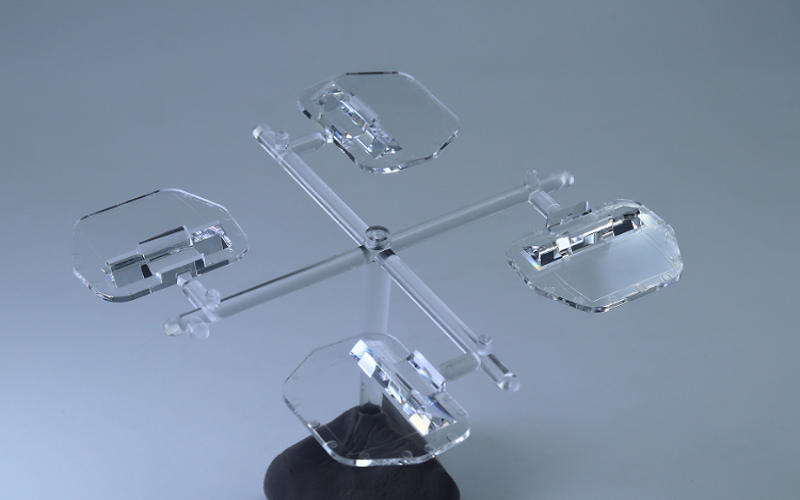
Molded optical components made from optical plastics are widely utilized across various industries due to their versatility, cost-effectiveness, and excellent optical performance.
These components find applications in numerous fields where lightweight, durable, and complex-shaped optics are essential.
- Consumer Electronics:In consumer electronics, molded optical plastics are used extensively in cameras, smartphones, tablets, and wearable devices.
- Automotive Industry:The automotive sector benefits from optical plastics in headlights, taillights, and interior lighting systems. Plastic optics contribute to improved energy efficiency by reducing the weight of lighting assemblies and enabling complex lens geometries that enhance light distribution and contrast.
- Eyewear and Ophthalmic Applications: Optical plastics are the material of choice for eyeglass lenses, including prescription glasses, sunglasses, and protective eyewear. Their lightweight nature and high impact resistance provide comfort and safety for users.
- Medical Devices: In medical optics, molded plastic components are used in endoscopes, surgical instruments, and diagnostic devices. Their ability to be manufactured with high precision and biocompatibility makes them suitable for sensitive applications requiring clear and accurate imaging.
- Optical Fiber and Communication: Plastic optical fibers (POFs) made from polymers like PMMA are easier to install and bend compared to glass fibers, making them suitable for short-distance communication and data transmission within buildings and vehicles.
- Industrial and Scientific Instruments : In industrial sensors, machine vision systems, and scientific instruments, molded optical plastics enable the production of precise lenses and optical components that are lightweight and cost-effective.
- Other Applications: Beyond these primary fields, molded optical plastics are also used in security systems, aerospace optics, and consumer products such as toys and sports equipment. Their combination of optical clarity, mechanical robustness, and lightweight properties opens possibilities for innovative applications across diverse sectors.
Overall, molded optical components made from plastics provide key points of advantage including lightweight, design freedom, cost efficiency, and impact resistance, which drive their widespread adoption across many applications.
Their ability to maintain good contrast and optical performance while offering benefits like easier cooling due to lower thermal mass further enhances their appeal in modern optical system design.
Conclusion
Optical plastics have revolutionized the field of modern optics by offering a versatile, cost-effective, and lightweight alternative to traditional glass optics.
Their excellent optical clarity, high impact resistance, and design flexibility enable the production of complex and innovative optical components suitable for a wide range of applications—from consumer electronics and automotive lighting to medical devices and optical communications.
While optical plastics may have some limitations such as lower scratch resistance and higher thermal sensitivity compared to glass, advances in material science and protective coatings continue to enhance their performance and durability.
The ability to manufacture these materials efficiently through scalable processes like injection molding makes them ideal for high-volume production.
As technology progresses, optical plastics will play an increasingly critical role in enabling advanced optical systems that demand lightweight, safe, and cost-effective solutions, ultimately shaping the future of optical design and applications.