
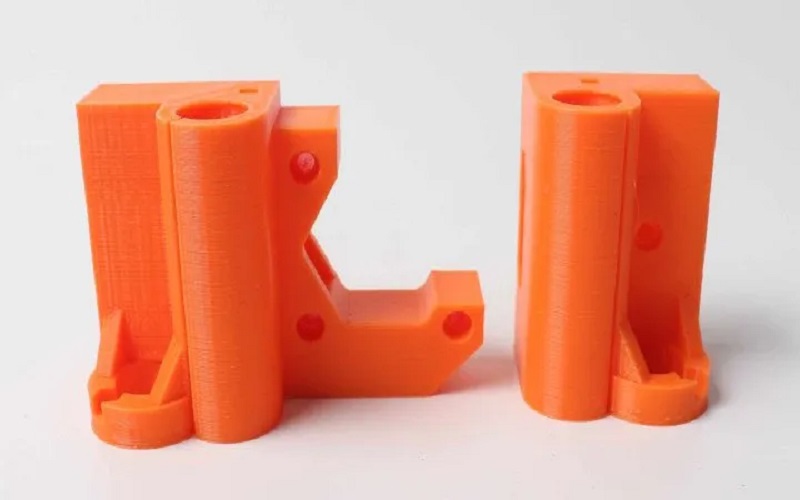
Picking the wrong filament for a project wastes time, material, and money.
PETG and TPU are both popular choices in the 3D printing world, but they’re built for very different jobs. One is rigid and reliable, the other is stretchy and tough — and understanding that difference is the fastest way to make the right call for your next print.
What Are PETG and TPU?
PETG, or polyethylene terephthalate glycol, is a copolymer made from PET and glycol, which enhances its clarity and reduces brittleness compared to standard PET.
The result is a rigid, durable filament that prints cleanly and handles a wide range of applications without fuss.
Compared to other materials like PLA and ABS, both PETG and TPU offer better durability and chemical resistance for demanding applications.
TPU, or thermoplastic polyurethane, is a type of thermoplastic elastomer known for its rubber-like properties, making it ideal for applications requiring flexibility and durability.
It behaves less like a typical plastic and more like a soft rubber — you can compress it, stretch it, and bend it repeatedly without it breaking.
That flexibility is exactly what makes it valuable, and exactly what makes it more challenging to print.
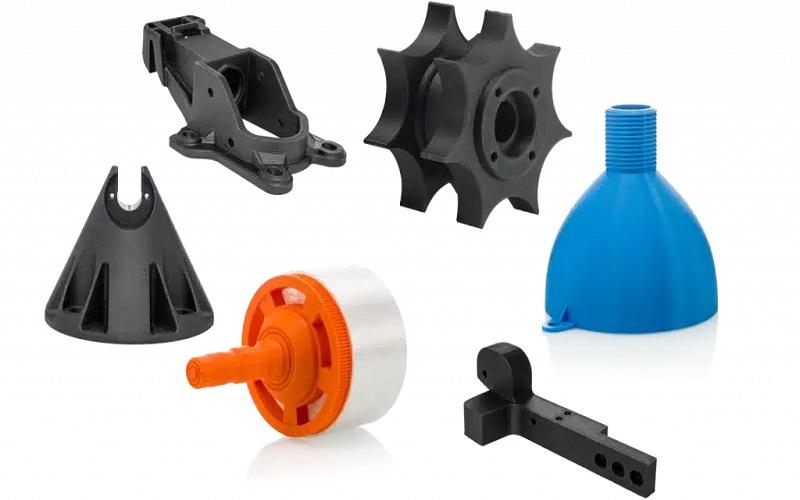
Material Architecture: Rigidity vs. Elasticity
The foundational differences between these materials stem from their distinct chemical structure and polymer design:
PETG (Polyethylene Terephthalate Glycol)
PETG is a copolymer made from polyethylene terephthalate (PET) and glycol, which enhances its clarity and reduces brittleness compared to standard PET.
The addition of glycol prevents the material from crystallizing, making it an affordable, tough, and rigid engineering thermoplastic.
PETG is known for its high impact resistance and durability, making it suitable for functional parts that require strength, while TPU is highly flexible and can absorb impact without breaking.
TPU (Thermoplastic Polyurethane)
TPU, or Thermoplastic Polyurethane, is a type of thermoplastic elastomer known for its rubber-like properties, making it ideal for applications requiring flexibility and durability.
It consists of alternating hard and soft segments, allowing it to behave like a highly flexible, elastic material that easily deforms under stress and snaps back afterward.
If your part needs to flex, compress, or absorb movement — gaskets, seals, phone cases, spool holders — TPU is what you want.
Mechanical Properties and Impact Resistance
When evaluating mechanical performance, the choice between petg vs tpu comes down to whether your structural parts need to withstand static load or dynamic shock.
| Mechanical Property | PETG Filament | TPU Filaments |
| Material Form | Rigid, stiff structural plastic. | Flexible, rubber-like elastomer. |
| Tensile Strength | High; excellent for static structural loads. | Moderate; designed for elongation and elasticity. |
| Impact Profile | High impact resistance, but brittle under extreme stress. | Practically indestructible; absorbs energy without breaking. |
| Flexibility | Low-to-moderate (PETG offers some flexibility while remaining strong). | High flexibility; handles repeated bending, twisting, and compressing. |
PETG is strong and has high tensile strength, making it great for static loads, but it is scratch-sensitive and can crack or shatter under sudden sharp impacts.
It works well for housing brackets, electronics enclosures, and structural components.
Conversely, TPU has excellent tear resistance, impact resistance, and abrasion resistance, making it perfect for shock absorption.
Because it acts as a mechanical dampener, TPU is practically indestructible due to its soft nature, which allows it to absorb energy and bounce back from impacts, making it highly resistant to abrasion.
For pure survival and impact resistance, TPU outperforms PETG, as TPU cannot shatter and is designed to withstand repeated impacts without breaking.
Impact Resistance and Toughness
Both materials are tough, but in different ways.
PETG is strong and has high tensile strength, making it great for static loads, but it is scratch-sensitive and can crack or shatter under sudden sharp impacts.
TPU, on the other hand, is practically indestructible due to its soft nature, which allows it to absorb energy and bounce back from impacts, making it highly resistant to abrasion.
TPU has excellent tear resistance, impact resistance, and abrasion resistance, making it perfect for shock absorption in applications like protective covers and automotive parts.
For pure survival and impact resistance, TPU outperforms PETG — TPU cannot shatter and is designed to withstand repeated impacts without breaking.
PETG holds up well under steady loads and general use, but if your part is going to take hits, drops, or repeated mechanical stress, TPU’s rubber-like properties give it a clear edge.
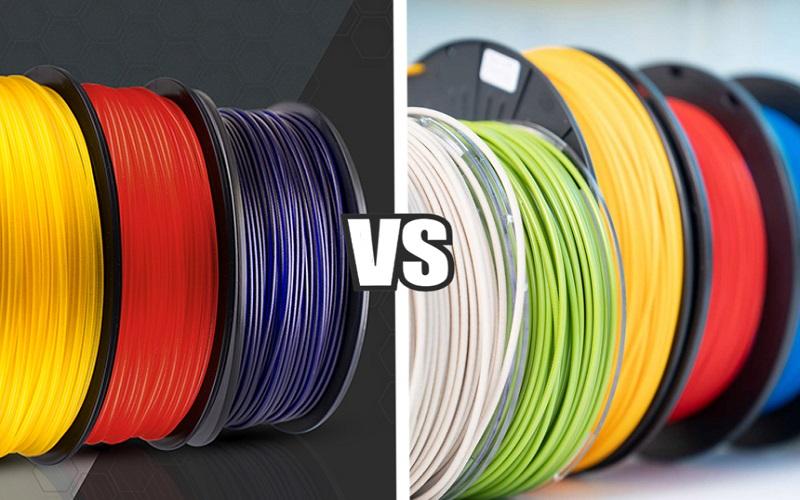
Heat Resistance and High Temperature Environments
Heat resistance is one of PETG’s stronger suits relative to TPU.
PETG handles moderate heat well, making it suitable for outdoor applications and environments where temperatures fluctuate but don’t reach extremes.
It won’t warp on a warm car dashboard the way PLA would, and it holds its shape reasonably well in high temperature environments up to around 70–80°C.
TPU also has decent heat resistance, but its softening point depends heavily on the grade.
Standard TPU filaments can handle similar temperature ranges to PETG, but softer variants begin to deform at lower temperatures.
For applications that need to survive genuinely high temperatures, neither material is the top choice — but between the two, PETG generally holds its shape more reliably under heat stress.
Chemical Resistance
Both materials offer good chemical resistance, which is part of why they’re popular for industrial parts and outdoor use.
PETG has excellent chemical resistance, making it suitable for applications involving acids, alkalis, and water, which is why it is often used for food containers.
TPU is known for its resistance to oils, greases, and solvents, making it ideal for industrial applications such as gaskets and seals in machinery.
Both PETG and TPU are excellent for industrial environments due to their chemical resistance, with PETG standing up well to oils and greases, while TPU resists swelling when exposed to oil better than many rigid plastics.
If your application involves chemical exposure, both are solid choices — the deciding factor is usually whether you need rigidity or flexibility alongside that resistance.
Printing PETG: What to Expect
PETG is largely free from the warping issues that plague ABS, making it a more forgiving filament for open-frame printers.
Nozzle temperature typically runs between 230–250°C, with a heated bed at 70–85°C. Layer adhesion is strong, and the material sticks well to most surfaces — sometimes too well.
A light application of a glue stick on the bed helps with release after printing.
The main challenges with PETG are stringing and oozing, which can be managed through retraction settings. It’s also prone to scratching on the surface, so post processing for aesthetic parts may be needed.
Overall though, PETG prints cleanly at higher temperatures with strong layer adhesion, making it a reliable workhorse for functional prototypes, structural parts, and general-purpose prints.
Printing TPU: What to Expect
TPU is the standard for high-flexibility prints and is genuinely more difficult to print, requiring slow speeds and specific extruder setups.
Its flexibility is what causes the problems — the filament can buckle and compress in the feed path, especially on Bowden-style printers.
Bowden-style setups have too much play in the feed path, limiting consistent extrusion with flexible filaments like TPU.
A direct drive extruder is strongly recommended for printing TPU reliably.
Both PETG and TPU are hygroscopic, meaning they absorb moisture from the air, but TPU absorbs it much faster, making it crucial to dry TPU before printing to avoid print failures.
A well-sealed dry box or spool holder with desiccant is the most practical storage solution for TPU between print sessions.
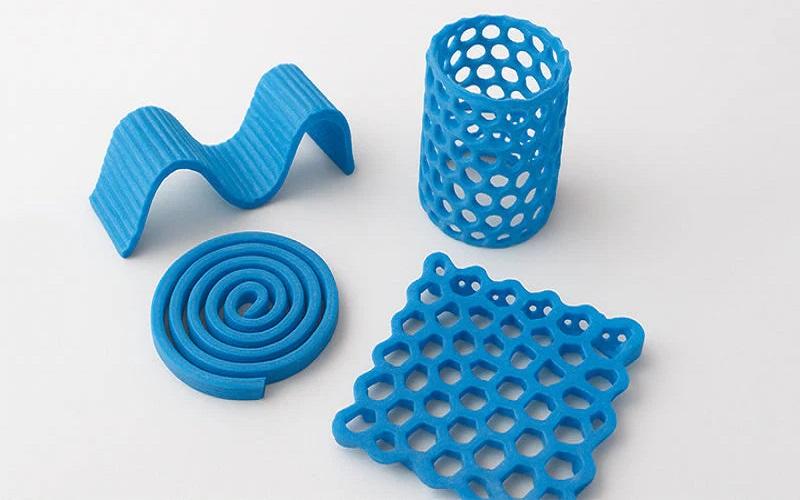
Cost Comparison
Price is a practical factor, especially for longer projects or higher volumes. PETG is generally priced between $20 to $30 per spool, making it a budget-friendly option for 3D printing.
TPU is typically more expensive than PETG, with prices ranging from $30 to $45 per spool due to a more complex manufacturing process. High-performance TPU or ultra-soft variants can cost even more, reflecting the material’s specialized applications.
For projects where either material could technically work, PETG’s lower price point and easier printing make it the more affordable path.
TPU’s higher cost is justified when flexibility or impact absorption are genuine requirements — not just a nice-to-have.
Moisture, Storage, and Environmental Impact
Both PETG and TPU absorb moisture from the air, but TPU absorbs moisture much faster, which can lead to printing issues if not dried properly before use.
Wet filament produces bubbling, inconsistent extrusion, and weak layer bonds.
Drying TPU at 50–60°C for four to six hours before a print session is standard practice. PETG is less sensitive but still benefits from dry storage, particularly in humid environments.
On environmental impact, PETG has a slight edge — it’s recyclable and closely related to PET, one of the most widely recycled plastics globally.
TPU is harder to recycle due to its elastomer chemistry, though some eco friendly grades with bio-based content are available.
Neither material is perfect from a sustainability standpoint, but PETG is the more straightforward option for those factoring environmental impact into their material choices.
PETG vs TPU: Which Should You Choose?
| Factor | PETG | TPU |
|---|---|---|
| Flexibility | Rigid | Highly flexible |
| Impact resistance | Good (static loads) | Excellent (absorbs impact) |
| Heat resistance | Moderate | Moderate |
| Chemical resistance | Excellent | Excellent (especially oils) |
| Print difficulty | Easy | Challenging |
| Moisture sensitivity | Low-moderate | High |
| Price per spool | $20–$30 | $30–$45 |
| Best for | Structural parts, prototypes | Gaskets, seals, flexible parts |
Choose PETG when you need rigid parts, functional prototypes, outdoor applications, or anything that benefits from good chemical resistance and easy printing.
Choose TPU when your part needs to flex, compress, absorb impact, or survive repeated mechanical stress.
For industrial parts and automotive parts that see both chemical exposure and physical stress, the choice comes down to whether rigidity or flexibility is the primary requirement.
If your project sits somewhere in between — needing a balance of rigidity and some flex — PETG is usually the safer starting point.
Conclusion
PETG and TPU are both excellent filaments — they just solve different problems.
PETG is the reliable all-rounder: easy to print, rigid, chemically resistant, and affordable. TPU is the specialist: tough, flexible, and built for jobs that would destroy a rigid material.
Knowing which challenge your project actually faces makes the choice straightforward.