
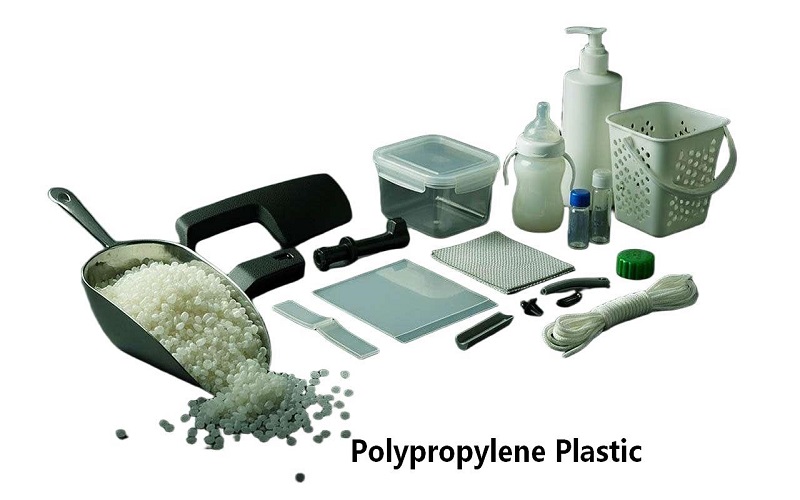
Polypropylene plastic is a versatile thermoplastic polymer widely used across various industries. It is known for being lightweight, high-strength, and having excellent chemical resistance, which makes it extensively used in packaging materials, automotive components, medical devices, and food containers.
This article will provide you with a clear understanding of what polypropylene plastic is, its key properties, main applications, and why it stands out among many plastics, helping readers gain a comprehensive insight into the application value and development prospects of this important plastic material.
What Is Polypropylene (PP)?
Polypropylene, abbreviated as PP, is a thermoplastic polymer made by polymerizing propylene monomers. It belongs to the polyolefin family of plastics and typically appears translucent or white, with a lightweight, hard texture and certain toughness.
Compared to common plastics such as polyethylene (PE) and polyethylene terephthalate (PET), polypropylene has a higher melting point, better heat resistance, and stronger chemical stability. Therefore, it is widely used in both daily life and industrial fields.
It can be processed into rigid injection-molded parts or made into flexible films or fibers, making it one of the most widely used plastic varieties globally.
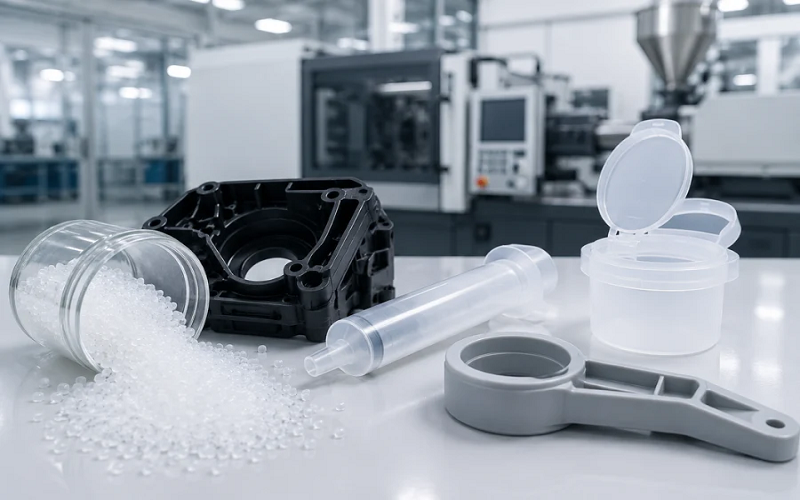
Key Properties Of Polypropylene Plastic
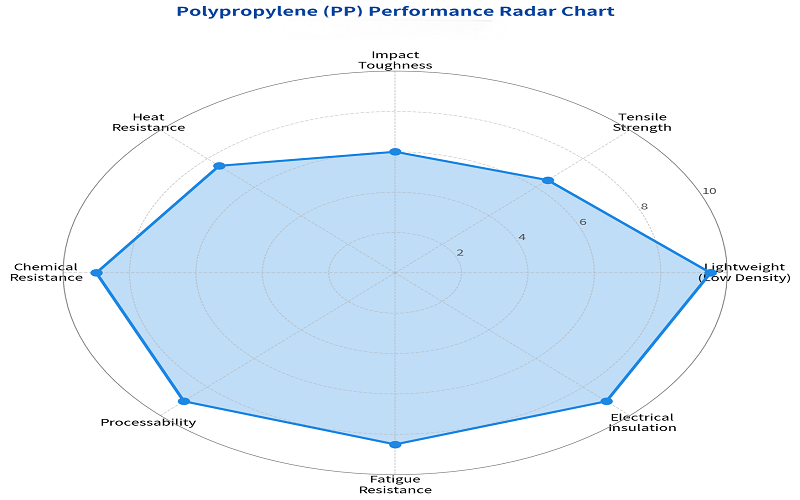
Polypropylene plastic is renowned for its unique combination of properties that make it a versatile material suitable for a wide range of applications.
Low Density And High Strength
Polypropylene has a relatively low density, about 0.90 g/cm³, making it one of the lightest common plastics. At the same time, it possesses high tensile strength and rigidity, enabling weight reduction while maintaining structural integrity.
Heat Resistance
Polypropylene has a high melting point (around 160–170°C) and can be used for extended periods at elevated temperatures without deformation. It is suitable for manufacturing heat-resistant items such as tableware, hot water pipes, and automotive parts.
Chemical Resistance
As a chemical resistant thermoplastic, it can withstand corrosion from various acids, alkalis, and solvents without degradation. This makes it ideal for packaging applications, laboratory equipment, and various chemical containers.
Moisture And Water Resistance
polypropylene maintains its structural integrity even in humid or wet environments. It has strong vapor barrier properties and a very low moisture absorption rate, effectively protecting packaging contents from moisture, which is especially important in food packaging.
Fatigue and Flexural Resistance
PP plastic exhibits good resistance to fatigue, allowing it to endure repeated use and stress without failure. This makes it a perfect material for plastic hinges and integrated hinges.
Environmental Sustainability
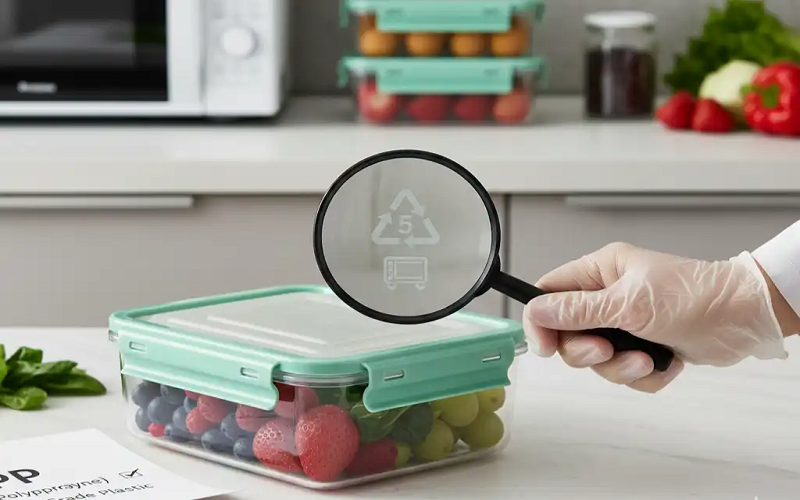
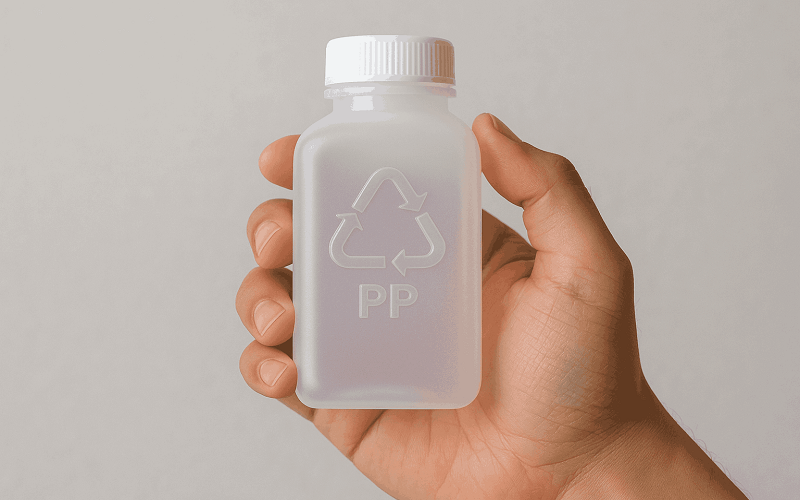
Polypropylene is identified as resin code #5 for recycling purposes. Its thermoplastic nature allows it to be melted and remolded multiple times. However, due to limitations in global sorting systems and contamination issues, the actual recycling rate of PP remains relatively low.
These characteristics collectively determine polypropylene plastic’s wide applicability in packaging, automotive, household appliances, medical, and other industrial applications.
Of course, it also has some limitations, such as brittleness at low temperatures and not UV resistant and may degrade outdoors, but these drawbacks can mostly be mitigated by adding modifiers or blending with other plastics.
Common Uses Of Polypropylene Plastic
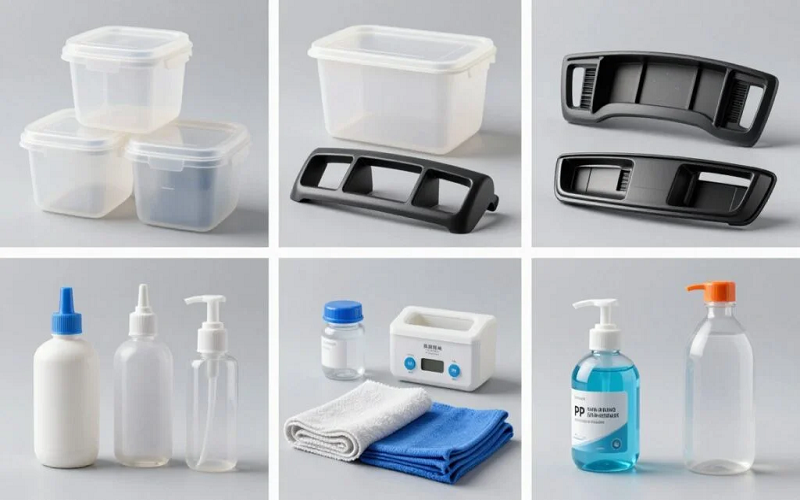
Polypropylene plastic is widely used in daily life and various industrial fields due to its advantages such as being lightweight, durable, chemically resistant, and easy to process. The following are its main categories of applications:
- Packaging: Polypropylene is extensively used in packaging, especially for food containers, beverage bottle, and plastic bags. Its moisture resistance, chemical stability, and cost-effectiveness make it an excellent choice for packaging food and everyday products.
- Consumer and Household Products: Thanks to its durability, chemical resistance, and versatility, polypropylene is a popular material for various consumer goods such as storage containers, toys, kitchenware, garden furniture, and household appliances.
- Automotive Components: In the automotive industry, polypropylene serves as a lightweight yet strong material for manufacturing dashboards, bumpers, and interior door panels. Its high rigidity and impact resistance contribute to vehicle safety and fuel efficiency.
- Medical Applications: Polypropylene’s chemical stability and ease of sterilization make it ideal for medical use. It is commonly found in disposable syringes, petri dishes, surgical gowns, and the melt-blown fabric layers of masks, ensuring hygiene and safety.
- Textile Fibers: Polypropylene can be spun into fibers or formed into non-woven fabrics used in carpets, ropes, and filtration materials. Its abrasion resistance and chemical durability make it highly effective in these applications.
- Construction Industry : Polypropylene plastic is used to produce construction materials such as pipes, roofing sheets, and insulation panels. Polypropylene sheets and pipes are widely used in building structures due to their excellent mechanical properties and chemical resistance, especially suitable for applications requiring durability and lightweight materials.
- Industrial and Pipeline Systems: In industrial settings, polypropylene is widely used for chemical pipelines, storage tanks, valves, and housings for electronic appliances. Its resistance to acids, alkalis, and electrical insulation properties make it a dependable choice for demanding environments.
From everyday packaging to automotive, medical, and industrial applications, polypropylene plastic permeates almost every corner of modern life. It is these extensive uses that make it one of the most produced and widely used plastics globally.
Main Types Of Polypropylene
Polypropylene comes in several different types, each tailored for specific applications based on their molecular structure and properties. Understanding these types helps manufacturers choose the right polypropylene resin for their needs.
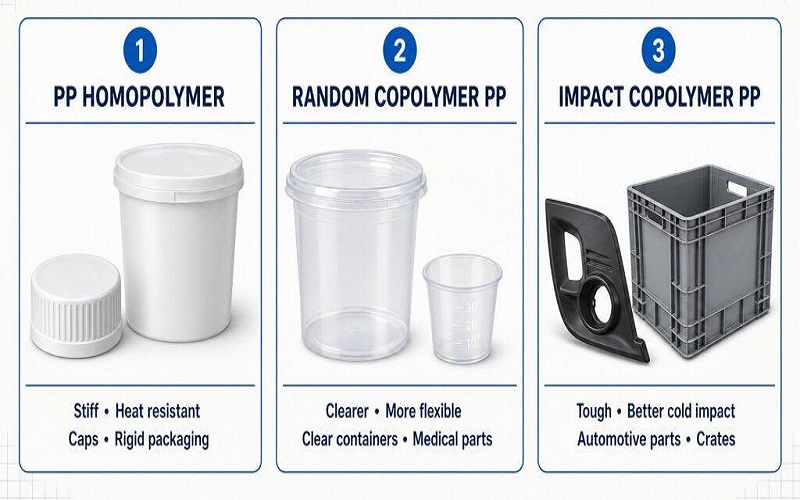
Homopolymer Polypropylene
This is the most common type of polypropylene, made from a single type of propylene monomer. Homopolymer PP offers high tensile strength, stiffness, and good chemical resistance.
It is widely used in injection molding applications such as automotive parts, packaging, and consumer goods. However, it is less flexible compared to copolymer types.
Random Copolymer Polypropylene
Random copolymer PP is produced by polymerizing propylene with a small amount of ethylene. This type has better clarity and flexibility than homopolymer PP, making it suitable for applications requiring transparency and toughness, such as food containers and medical devices. It also has improved impact resistance at low temperatures.
Impact Copolymer Polypropylene
Impact copolymer PP contains a higher percentage of ethylene, which significantly enhances its impact resistance and toughness. This type is ideal for heavy-duty applications like automotive bumpers, industrial containers, and protective gear where durability is critical.
Other Types and Modifications
Beyond these main categories, polypropylene can be modified or blended with other types of plastic resin to enhance specific properties. For example, polypropylene can be combined with additives to improve UV resistance for outdoor use or blended with elastomers to increase flexibility.
Additionally, polypropylene can be produced in various forms such as sheets, rods, films, and fibers, each suited for different manufacturing processes and end uses.
By selecting the appropriate type of polypropylene plastic, manufacturers can optimize performance, cost, and durability for their specific application requirements.
Advantages Of Using PP Plastic
Polypropylene plastic offers numerous advantages that make it a preferred material in many industries.
Excellent Durability And Chemical Stability
Its good chemical resistance ensures that PP can withstand exposure to a wide range of chemicals, acids, and alkalis, making it ideal for packaging and industrial applications.
PP plastic is also impact resistant, providing excellent durability and toughness for mechanical parts and consumer goods alike. Its low density contributes to lightweight products, which is beneficial in automotive and aerospace industries where weight reduction is critical.
Food Safety And Cost Effective
One key benefit is its cost effectiveness, which allows manufacturers to produce durable and high-quality plastic products without incurring excessive expenses.
Additionally, PP is FDA compliant, which means it meets stringent safety standards for food contact applications, making it a popular choice for food containers and medical devices.
Processing Flexibility
PP plastic has good flowability and can be easily processed into complex shapes through various methods such as injection molding, extrusion, blow molding, and thermoforming, meeting different design requirements.
Polypropylene injection molding is a common technique used to manufacture daily necessities, packaging containers, and automotive interior and exterior parts, enabling efficient production of parts with complex shapes and fine details.
Recyclability
Furthermore, polypropylene is recyclable (recycling PP), supporting environmental sustainability by reducing waste and conserving resources. Although it is not biodegradable, recycling PP minimizes its environmental footprint compared to other plastics such as polystyrene or polyvinyl chloride.
In summary, the advantages of polypropylene plastic include its cost effectiveness, good chemical resistance, impact resistance, lightweight nature, FDA compliance, versatile manufacturing process, and recyclability.
These benefits contribute to its widespread use in plastic products ranging from packaging to industrial fibers and outdoor applications.
Environmental Impact Of PP Plastic
Polypropylene plastic, while versatile and widely used, presents several environmental challenges that need to be addressed to promote sustainability.
Non-Biodegradability
Polypropylene is not biodegradable, meaning it does not break down naturally in the environment. It can take hundreds of years to decompose, contributing to long-term pollution, especially in marine and terrestrial ecosystems.
Microplastic Pollution
As polypropylene degrades very slowly, it can fragment into microplastics — tiny plastic particles that persist in the environment. These microplastics pose significant risks to wildlife and ecosystems, entering food chains and potentially affecting human health.
Recycling And Waste Reduction
Despite its environmental persistence, polypropylene is recyclable and is identified by resin code #5. Recycling polypropylene helps reduce plastic waste, conserve natural resources, and lower the demand for virgin plastic production.
Utilizing recycled polypropylene in manufacturing new products also minimizes environmental impacts associated with raw material extraction and processing.
Production Environmental Concerns
The production of polypropylene involves the use of fossil fuels and energy-intensive processes, which contribute to greenhouse gas emissions and environmental degradation.
Efforts to improve production efficiency and incorporate renewable energy sources are essential to reduce the carbon footprint of polypropylene manufacturing.
Sustainable Practices
Encouraging the use of recycled polypropylene and improving recycling infrastructure are critical steps towards mitigating the environmental impact of polypropylene plastic.
Additionally, innovations in biodegradable additives and alternative bio-based polypropylene materials are being explored to address the issues of persistence and pollution.
In conclusion, while polypropylene plastic offers many functional benefits, its environmental impact, especially related to non-biodegradability and microplastic pollution, necessitates responsible use, enhanced recycling efforts, and ongoing development of sustainable alternatives.
How Does Polypropylene Plastic Differ From Other Plastics?
Polypropylene plastic stands out from other plastics due to its unique combination of properties and applications.
Compared to common plastics like polyethylene (both low density polyethylene and high density polyethylene) and polyvinyl chloride (PVC), polypropylene offers a distinct balance of strength, flexibility, and chemical resistance.
One of the key differences is polypropylene’s higher melting point, which allows it to perform well in applications requiring heat resistance, such as food containers that need to be food safe and automotive parts exposed to elevated temperatures.
While low density polyethylene (LDPE) is known for its flexibility and high density polyethylene (HDPE) for its strength and chemical resistance, polypropylene offers a superior stiffness and fatigue resistance, making it suitable for products that undergo repeated stress.
Additionally, polypropylene’s low moisture absorption and excellent dimensional stability set it apart from many plastics, contributing to its widespread use in packaging and medical devices where maintaining shape and hygiene is critical.
In terms of environmental impact, polypropylene is recyclable and identified by resin code #5, similar to polyethylene types, but it is not biodegradable. Its recyclability helps reduce waste and supports sustainability efforts, though challenges remain in recycling infrastructure and contamination.
Overall, polypropylene’s combination of lightweight, durability, chemical resistance, heat tolerance, and food-safe certification make it a preferred choice in many industries compared to other plastics .
Conclusion
Polypropylene plastic, with its lightweight nature, excellent chemical resistance, good processability, and outstanding cost performance, has become an indispensable member of modern materials.
From everyday food packaging and household goods to automotive components, medical supplies, and industrial pipelines, it profoundly impacts our daily life and production with its reliable performance and wide applicability.
If you are looking for reliable PP injection molding solutions, Otivic is your excellent choice! We have mature injection molding technology and rich project experience, providing you with one-stop services from material selection and mold design to mass production. Feel free to contact us anytime to jointly create high-quality, cost-effective PP plastic products.