

In the injection molding process, the accurate calculation and proper selection of shot size are crucial for ensuring product quality and production efficiency.
Shot size not only affects the dimensional accuracy and surface quality of molded parts but also directly relates to the performance of injection molding machines and the service life of molds.
This article will comprehensively introduce the definition of shot size in injection molding, calculation methods, and its relationship with machine capacity, helping engineers and purchasing personnel make scientific selections to ensure stable production and quality control.
What Is Shot Size In Injection Molding?
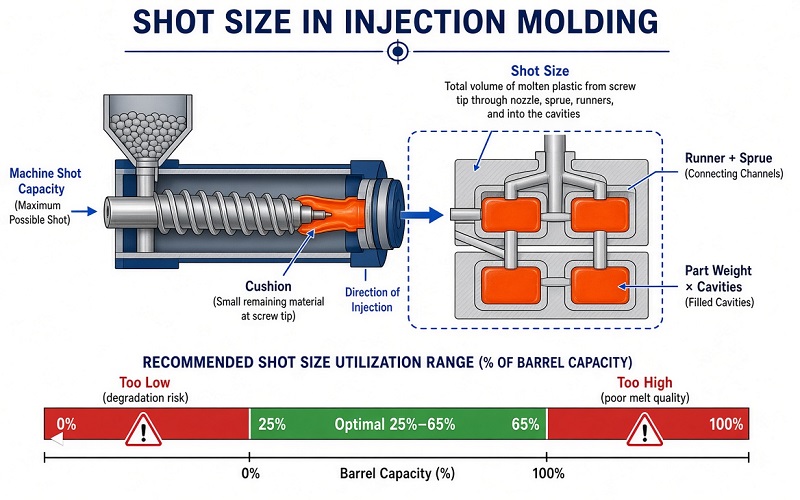
Shot size refers to the volume or weight of polymer material that the injection unit injects into the mold. This includes not only the molded parts but also the material in the runner, sprue, and cushion.
It is typically measured in grams or cubic centimeters (cm³), depending on whether the focus is on weight or volume. Accurate calculation of shot size is essential to match the part weight, the number of cavities in the mold, and the runner system design.
Understanding shot size is vital as it directly impacts the quality of molded parts and the efficiency of the injection molding process.
Why Injection Molding Shot Size Matters?
Injection molding shot size is a critical parameter in the manufacturing process that directly affects both product quality and operational efficiency.
Part Quality
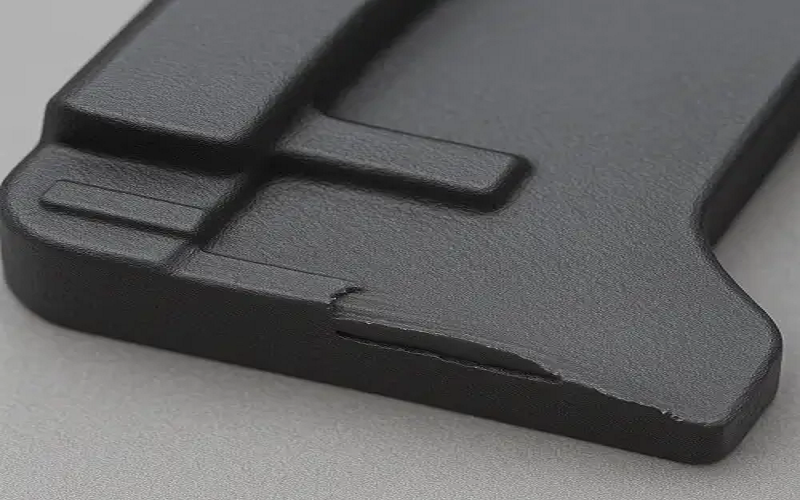
An undersized shot results in short shots, where the molten plastic does not fully fill the mold cavity, leading to incomplete or weak parts.
Conversely, an oversized shot can cause flash, where excess material leaks out of the mold, damaging the part and potentially harming the mold itself due to excessive pressure. This balance is essential to maintain consistency in production runs and to reduce material waste.
Production Efficiency
Furthermore, shot size influences the machine’s cycle time and overall productivity. Using an optimal shot size helps minimize the residence time of the plastic in the barrel, reducing the risk of thermal degradation and ensuring the material’s properties are preserved.
It also prevents unnecessary wear on the screw and barrel, extending the lifespan of the injection molding machine.
Cost Control
In addition, shot size selection impacts energy consumption and operational costs. Machines operating within their ideal shot size range (typically 20% to 80% of maximum capacity) consume energy more efficiently, reducing production costs and environmental impact.
Screw Diameter & Mold Design
The choice of shot size must also consider the screw diameter and mold design, as these factors affect the injection pressure required and the quality of the molded parts.
A well-matched shot size and screw diameter combination promotes consistent melt flow and packing pressure, which are vital for achieving dimensional accuracy and surface finish.
In summary, maintaining the right shot size is an important rule of thumb in injection molding that ensures consistency, quality, and efficiency.
It is a value that must be validated during the design and production phases, often in consultation with the supplier and process engineers, to address any potential problems and optimize the run.
Note that large or complex molds may require adjustments to shot size and cycle time to accommodate their specific mold design and production demands. Post-production inspection and process monitoring are also important to comment on and validate shot size effectiveness throughout the production run.
Calculating Shot Size For Injection Molding
Calculating shot size in injection molding ensures that the injection unit delivers the appropriate amount of molten plastic to fill the mold steadily. This calculation depends on the part weight, number of cavities, runner weight, and material density.
Total Shot Weight
- Shot Weight = (Part Weight × Number of Cavities) + Runner Weight
This formula covers the total weight of all parts produced in one molding cycle, as well as the weight of the runner and sprue system, which guides the molten plastic into the cavities.
Adding Cushion
Additionally, a safety margin (also called a cushion) is a small amount of material left in front of the screw after injection. A cushion of 5% to 15% of the shot weight is generally recommended.
At the same time, the machine’s shot capacity must be considered to ensure that the calculated shot weight falls within the optimal operating range of the injection molding machine (typically between 20% and 80% of the machine’s maximum shot capacity).
Operating within this range helps maintain process stability, reduce the risk of short shots or flash, and prolong machine service life.
Shot Volume
- Shot Volume = Total Shot Weight ÷ Melt Density
For example, if the total shot weight is 100 grams and the melt density is 1.15 g/cm³, the shot volume is approximately 87 cm³. Melt density varies with the type of plastic and affects the volume occupied by the molten plastic in the barrel and mold.
Complete Calculation Example
For example, if the part weight is 50 grams, the mold has 4 cavities, and the runner weight is 20 grams, the total shot weight is:
- Shot Weight = (50 g × 4) + 20 g = 220 g
If the plastic’s melt density is 1.0 g/cm³, the shot volume is:
- Shot Volume = 220 g ÷ 1.0 g/cm³ = 220 cm³
Adding a 10% safety cushion:
- Required Shot Weight = 220 g × 1.10 = 242 g
This calculation helps select a machine with the appropriate shot capacity and accurately set injection parameters.
Accurately calculating shot size is critical to avoiding common quality issues such as short shots (incomplete filling), flash (burrs), and inconsistent part dimensions, thereby ensuring efficient and stable injection molding production.
Using a shot size calculator tool can simplify this process by automatically computing shot weight, shot volume, and recommended machine capacity based on input parameters such as part weight, cavity count, runner weight, cushion percentage, and material density.
The Relationship Between Shot Size And Molding Machine Selection
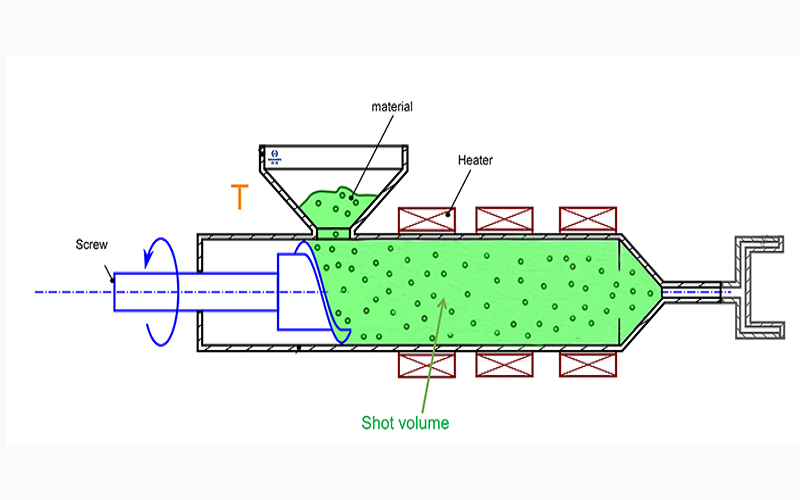
Selecting the right injection molding machine is closely tied to the calculated shot size of the parts to be produced. The shot size determines the required shot capacity of the machine’s injection unit, which is critical for stable and efficient production.
Machine Capacity
Injection molding machines are rated by their maximum shot capacity, typically expressed in grams or cubic centimeters of general purpose polystyrene (GPPS) equivalent.
This rating indicates the maximum volume or weight of molten plastic the machine can inject in one cycle. It is essential to choose a machine with a shot capacity that comfortably accommodates the calculated shot size plus the cushion.
Optimal Machine Utilization Range
To ensure stable processing and avoid issues such as short shots or flash, the shot weight should ideally be between 25% and 65% of the machine’s maximum shot capacity.
Operating below 25% can lead to increased residence time, causing thermal degradation of sensitive polymers like general purpose polystyrene, while exceeding 65% may reduce shot consistency and increase the risk of incomplete fills.
Calculating Machine Size Range
Using the formula:
- Minimum machine capacity = Shot weight ÷ 0.65
- Maximum machine capacity = Shot weight ÷ 0.25
This range helps in selecting a machine that balances material residence time and shot consistency. For example, a shot weight of 186 grams would require a machine with a capacity between approximately 286 grams and 744 grams.
Tonnage Considerations
Alongside shot size, machine tonnage—the clamping force measured in tons—is a crucial factor. The tonnage must be sufficient to keep the mold closed against the pressure generated during injection.
Selecting a machine with appropriate tonnage ensures the prevention of flash and protects the mold from damage.
In summary, the relationship between shot size and molding machine selection is fundamental to achieving efficient, high-quality injection molding production.
By calculating the correct shot size and selecting a machine with suitable shot capacity and tonnage, manufacturers can ensure stable processing, minimize defects, and extend equipment life.
Conclusion
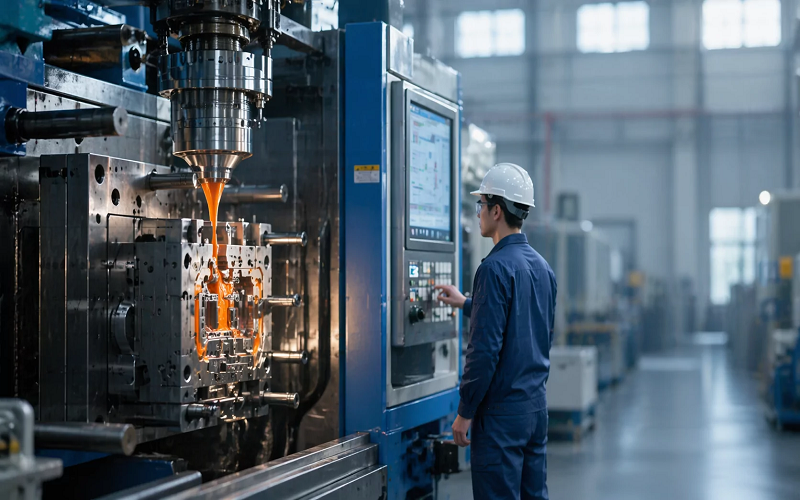
In injection molding, accurately calculating and selecting the appropriate shot size is essential for ensuring product quality, production efficiency, and machine longevity.
The shot size must account for part weight, cavity count, runner system, and material density, with an added cushion for stable processing.
Matching the shot size to the injection molding machine’s capacity—ideally between 25% and 65% of the machine’s maximum shot capacity—helps prevent common defects like short shots and flash, while optimizing energy use and minimizing material waste.
Additionally, considering machine tonnage alongside shot size ensures mold protection and consistent part quality. By understanding and applying these principles, injection molding manufacturers can achieve stable, cost-effective, and high-quality production.