
If you’ve ever held a plastic car part, a medical device, or even a bottle cap, chances are it was made through thermoplastics injection molding.
It’s one of the most widely used manufacturing processes in the world — and for good reason. When done right, it produces high quality plastic parts at incredible speed and scale.
But getting it right takes more than just melting plastic and pressing a button.
This guide walks you through the best practices that actually make a difference, from choosing the right thermoplastic materials to fine-tuning your injection molding machine settings.
Why Thermoplastics Dominate the Plastics Industry?
Thermoplastics represent roughly 90% of all plastics used worldwide, and that number tells you everything.
Unlike thermoset and thermoplastic materials, which behave very differently under heat, thermoplastics soften when heated and harden when cooled — meaning they can be melted, reshaped, and recycled repeatedly.
That flexibility alone makes them the go-to choice across the automotive, medical, packaging, and construction industry.
Advantages of thermosetting materials
The injection molding process for thermosets involves injecting cold material into a hot mold, which permanently cures the part.
Thermoplastics work in reverse — molten plastic enters a cooled mold and solidifies into the desired shape.
This means thermoplastic molding process is generally faster, more cost-effective, and far more compatible with high volume production.
Thermoset molding has its place, particularly where parts need to withstand high temperatures, but for mass production of complex molded parts, thermoplastics win hands down.
Recyclability and Material Efficiency
One major advantage of thermoplastic injection molding is how it handles material waste.
Runners, sprues, and rejected parts can be reground and reused — something thermoset molding simply can’t offer.
In a high volume production environment, reducing material waste translates directly into lower costs and a smaller environmental footprint.
Choosing the Appropriate Material for Your Application
Material selection is a critical first step in the thermoplastic injection molding process, and it’s one that’s often given insufficient time and attention.
The choice of material impacts the part’s functionality, aesthetics, and longevity.
Getting it wrong can mean parts that warp, crack, or fail under stress.
Understanding Thermoplastic Polymers and Their Properties
Commonly used thermoplastic polymers are selected based on their mechanical properties, heat resistance, and suitability for the intended application. Here’s a quick breakdown of the most important ones:
Acrylonitrile Butadiene Styrene (ABS) is known for its good impact strength and heat resistance, making it a popular choice for automotive components, consumer electronics housings, and electrical components.
High Density Polyethylene (HDPE) offers excellent chemical resistance and structural integrity, widely used in the packaging industry and construction industry for pipes and fittings.
Low Density Polyethylene (LDPE) has a relatively low melting point and is commonly used for plastic bags and flexible packaging.
Polypropylene stands out for its high chemical resistance and is a staple in medical devices and food-safe applications.
Polycarbonate is a strong thermoplastic that’s essentially bulletproof glass in sheet form — tough, shatterproof, and used in medical implants and safety equipment.
Polyamide (Nylon) combines strength with good chemical resistance, making it suitable for under hood components in the automotive industry and parts that need to withstand high temperatures.
Matching Material Properties to Application Requirements
Selecting the right thermoplastic resin requires a deep understanding of both the material properties and the requirements of the final product.
Consider the operating environment first — will the part face extreme heat, exposure to chemicals, or significant mechanical stress?
Parts in the medical devices sector must meet strict compliance standards, which often points toward polycarbonate, polypropylene, or polyethylene.
Electrical components require materials with good electrical properties and electrical insulation capability.
Automotive components demand high temperature tolerance and dimensional stability.
The upper limit for ductile materials is the yield strength of the material, while for brittle materials it is the stress at break. Understanding these limits helps you avoid costly failures down the line.
Setting Up Your Injection Molding Machine for Success
Even the best thermoplastic materials can produce poor results if your injection molding machine isn’t properly configured. Understanding and controlling key injection molding parameters is crucial for achieving optimal results.
The Injection Unit and Heated Barrel
The injection unit is where the plastic material is melted and injected into the mold cavity.
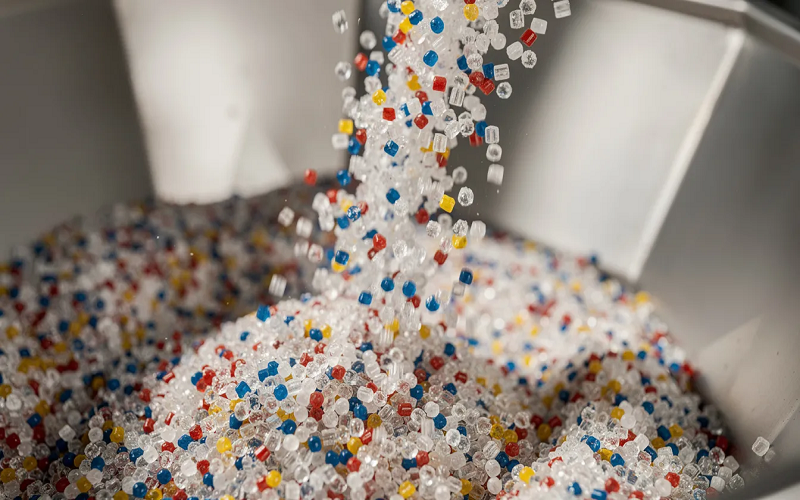
Raw plastic pellets are fed into a heated barrel, where the screw rotation and heat transform them into molten plastic.
Melt temperature is critical — it directly affects the viscosity of the molten plastic, impacting the ease of filling the mold cavity and the quality of the surface finish.
Too hot, and you risk degrading the material. Too cool, and the plastic injected won’t flow properly.
Clamping Force and Mold Halves
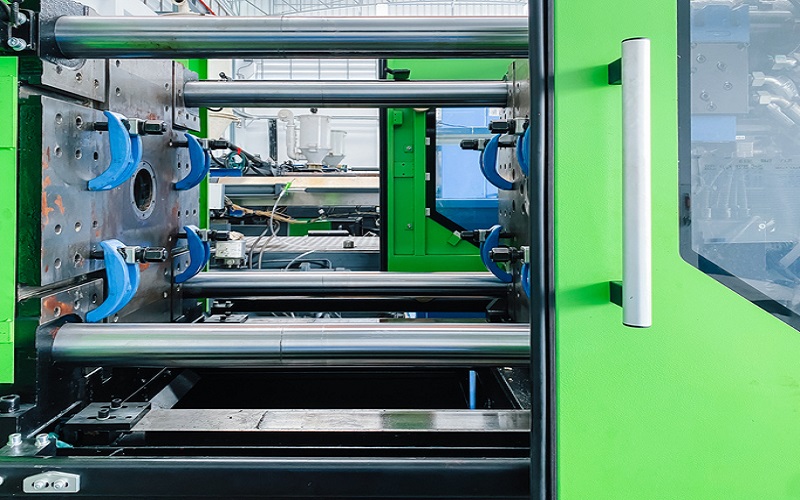
The clamping unit holds the mold halves firmly together during the injection process.
Clamp force must be sufficient to resist the injection pressure pushing outward on the mold, and it typically ranges from a few tons to several thousand tons depending on part size.
If your clamp force is too low, you’ll see flash — thin plastic fins along the parting line of the mold.
Injection Pressure and Injection Speed
Injection pressure is essential for pushing the molten plastic into every part of the mold cavity and is necessary for replicating intricate details.
Pair this with the right injection speed, which influences the filling pattern and the final appearance of the part.
Slow fills can cause weld lines and incomplete filling; too fast, and you risk jetting or surface defects.
Holding Pressure and Cooling Time
After injection, holding pressure is applied to compensate for material shrinkage as the plastic cools.
This stage relies on high pressure being maintained long enough to pack the mold cavity fully — getting this right prevents sink marks on the surface of your molded plastic parts.
Cooling time then becomes critical for determining the cycle time and the dimensional stability of the finished component.
Proper mold temperature ensures faster cycle times and reduces defects like warping or shrinkage in the final part.
Mold Design Best Practices
The mold tool defines the shape, surface texture, and size of the final product. A poorly designed mold will cause problems no amount of machine tuning can fix.
Wall Thickness and Structural Integrity
Uniform wall thickness is one of the most important principles in mold design.
Inconsistent wall thickness causes uneven cooling, which leads to warping and sink marks.
As a general rule, keep walls as thin and uniform as possible while still maintaining the structural integrity the part requires.
Choosing Between Cold Runner Molds and Multi Cavity Molds
Cold runner molds keep the runner system separate from the heated barrel, meaning the runner solidifies with each shot.
They’re cost-effective to build but generate more material waste per cycle. Multi cavity molds allow you to produce multiple parts in the same mold per shot, dramatically reducing cycle time and cost per part — ideal for mass production runs.
Unscrewing Molds for Complex Geometries
For parts with internal threads or complex undercuts, unscrewing molds are the solution.
They use mechanical or hydraulic rotation to release threaded features without damaging the part.
These are more expensive to build but essential when the design calls for it.
Insert Molding for Enhanced Functionality
Insert molding is a process where pre-formed components — often metal — are placed into the mold before injection, allowing the plastic to form around them.
This is widely used in medical devices, electrical components, and automotive applications where a combination of materials is needed in a single part.
It reduces assembly steps and improves bond strength between the insert and the surrounding plastic.
Optimizing the Injection Molding Process for High Volume Production
Once your material is selected and your mold is designed, the focus shifts to running the plastic injection process as efficiently as possible at scale.
Material Preparation: Drying Plastic Pellets
Material preparation is often overlooked but critically important. Many thermoplastic polymers are hygroscopic — they absorb moisture from the air.
Feeding wet plastic pellets into a heated barrel creates steam, which causes surface defects, voids, and reduced mechanical properties.
Always dry your material according to the resin supplier’s specifications before processing.
Dialing In Cycle Time
The cycle time for thermoplastic injection molding can often be as short as a few seconds to two minutes per part.
To minimize cycle time without sacrificing quality, focus on three areas: optimizing cooling time (the longest phase), fine-tuning injection speed, and ensuring the ejection speed and force are calibrated to prevent distortion or damage to the molded parts during removal.
Back Pressure and Screw Speed
Back pressure is applied to the molten plastic in the barrel to improve color dispersion and remove air from the material.
Combined with the right screw speed, this ensures a consistent, homogeneous melt shot after shot.
Inconsistent melt quality is one of the most common causes of variation in high volume production.
Common Defects and How to Prevent Them
Even experienced teams run into issues. Knowing what causes common defects makes it much easier to fix them fast.
| Defect | Common Cause | Fix |
| Sink marks | Insufficient holding pressure | Increase hold pressure / time |
| Warping | Uneven cooling or wall thickness | Optimize cooling channels, uniform walls |
| Short shots | Low injection pressure or speed | Increase pressure / check melt temp |
| Flash | Clamp force too low | Increase clamp force, check mold seal |
| Surface defects | Moisture in plastic pellets | Dry material properly |
Industries That Rely on Thermoplastic Injection Molding
The broad range of thermoplastic materials available means the injection molding process serves an equally broad range of industries.
Automotive and Aerospace
Thermoplastic injection molding is widely used in the automotive industry for producing components such as dashboards, door panels, and under hood components that demand high temperature tolerance.
The aerospace industry also benefits from lightweight, durable thermoplastic parts that reduce manufacturing costs without compromising performance.
Medical and Healthcare
The medical industry utilizes thermoplastic injection molding for manufacturing medical devices and components that require high precision and compliance with stringent regulations.
Polyethylene, polycarbonate, and polypropylene are common choices here, valued for their chemical resistance, dimensional stability, and compatibility with sterilization processes.
Packaging and Consumer Products
The packaging industry relies on thermoplastic injection molding for creating containers and closures that are lightweight and cost-effective.
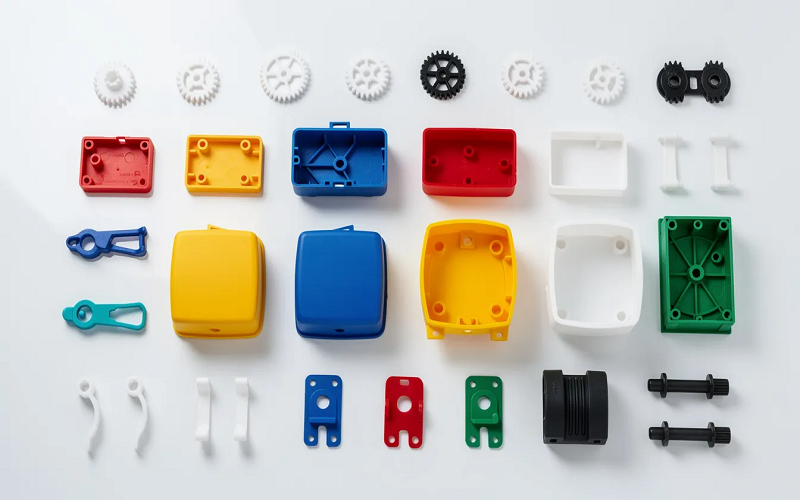
The process is equally at home producing consumer goods, toys, and household products — anywhere that complex shapes and consistent quality matter in a production process.
Summary
Efficient thermoplastics injection molding isn’t about any single trick — it’s about getting every stage right, from material selection through mold design to machine setup and process optimization.
Thermoplastics give you remarkable versatility: high chemical resistance, strong mechanical properties, recyclability, and the ability to produce high quality plastic parts at scale.
Whether you’re serving the automotive, medical, packaging, or construction industry, mastering the thermoplastic injection molding process gives you a serious edge in the plastics industry.