
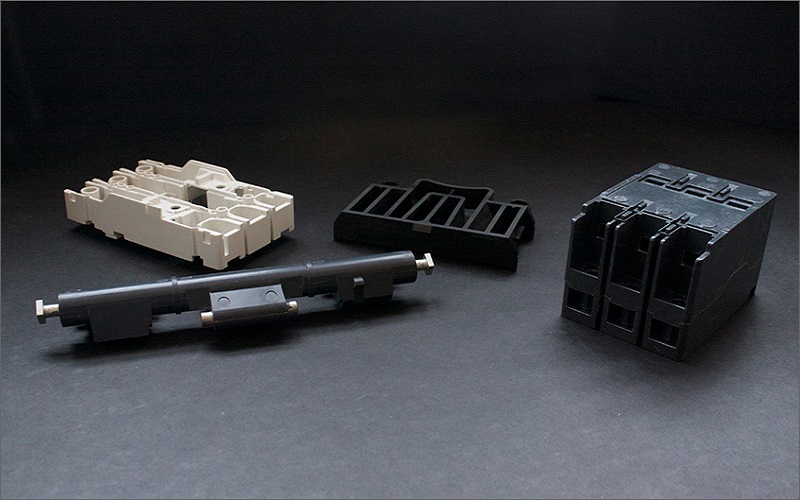
In applications that require high-temperature performance, high pressure resistance, or strong electrical insulation, ordinary thermoplastics often struggle to meet long-term performance requirements. Thermoset injection molding is a manufacturing process designed to address these challenges.
It involves injecting uncured resin or rubber into a heated mold, where a curing reaction gives the material a permanent shape.
The resulting parts offer excellent heat resistance, dimensional stability, and mechanical strength, making them widely used in automotive engine components, electrical insulators, and industrial structural parts.
This guide explains the thermoset injection molding process, common materials, key benefits, and the main differences from thermoplastic injection molding to help engineers and procurement professionals choose the right manufacturing process.
What Is Thermoset Injection Molding?
Thermoset injection molding is a manufacturing process in which uncured thermoset material is injected into a heated mold and undergoes an irreversible chemical reaction under heat and pressure. The material cures inside the mold and takes its final shape.
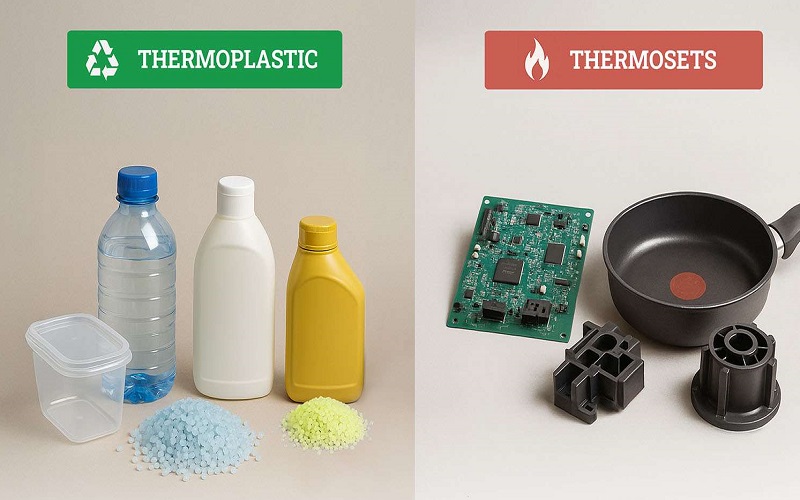
Unlike thermoset molding, thermoplastic injection molding heats plastic until it softens, then solidifies it as it cools; the material can be melted and reused multiple times.
By contrast,thermoset polymers form a cross-linked structure during heat curing and remain permanently cured, so they cannot be remelted.
This irreversible molding process is therefore well suited to parts that require stable performance and high-volume production.
How The Thermoset Injection Molding Process Works?
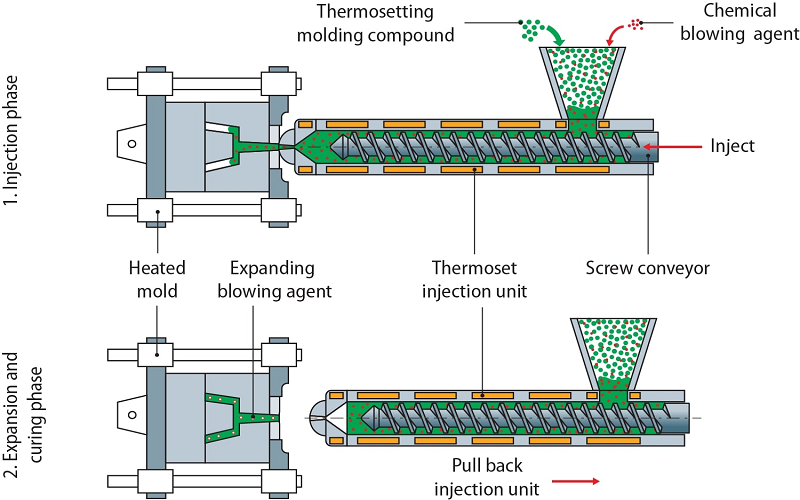
Thermoset injection molding typically includes material preparation, plasticizing and metering, injection, curing, mold opening, and demolding. Specific parameters vary depending on the resin type, part design, and equipment configuration.
However, the core process is to feed uncured thermoset material into a heated mold, where it undergoes an irreversible cross-linking reaction to form a stable thermoset part.
Material Preparation
Materials are typically supplied as powders, granules, pastes, or premixed compounds, and may contain fillers such as glass fiber or mineral fillers, along with curing agents.
The cold or room-temperature material is fed into the barrel or injection unit, which is usually kept at a controlled, relatively low temperature (around 90°C) to prevent premature curing.
Feeding And Plasticizing
After the material is prepared and fed into the injection molding machine, it is plasticized without being fully cured. The equipment keeps the material in a state suitable for injection while preventing it from curing too early, before it enters the mold.
For two-component materials such as liquid silicone rubber, the components must also be mixed in the specified ratio to ensure a uniform curing reaction.
Injection Into The Mold
The injection unit pushes a measured amount of material through the runners and into the closed mold cavity. The mold is typically maintained at a set temperature to initiate curing. The mold temperature is typically controlled at 150–200°C, which is essential for initiating the curing reaction.
Curing In The Mold
The material is heated in the cavity and cross-links, gradually changing from a flowable state into a solid. Curing time depends on the material, part thickness, mold temperature, and part geometry.
Heat accelerates curing, making the process suitable for high-volume production. Once cured, the material takes a permanent shape and cannot be remelted like thermoplastic plastic.
Mold Opening And Demolding
Once the required degree of curing has been reached, the mold opens and the molded part is removed from the cavity. The finished part should retain its designed shape and structural integrity.
Controlling the part temperature and the forces applied during demolding helps prevent deformation, cracking, or surface damage.
Inspection And Post-processing
After demolding, manufacturers inspect dimensions, appearance, and key performance characteristics. If needed, they may also deflash, trim, post-bake, or perform other secondary operations.
For thermoset parts that must withstand high temperatures, pressure, oils, or harsh chemicals, quality inspections may also evaluate performance under the actual conditions of use.
Common Thermoset Materials Used In Thermoset Molding
Common thermoset plastics options include phenolic, epoxy, polyurethane, and silicone; thermoset composites may also combine a resin matrix with glass, mineral, or other reinforcing fillers.
Phenolic
Phenolic resin offers strength, dimensional stability, electrical insulation, and heat and chemical resistance. It is commonly used for electrical components, appliance parts, brakes, and control panels. Fillers can adjust its properties for different part shapes and uses.
Epoxy
Epoxy resin is a commonly used thermoset material.It provides strong adhesion, electrical insulation, and chemical resistance. Its low shrinkage supports dimensional accuracy, while its strength suits structural and electrical parts. Some formulations are brittle, so consider impact loads when selecting a grade.
Polyurethane
Thermoset polyurethane ranges from flexible elastomers to hard, load-bearing materials. Its abrasion and impact resistance make it useful for seals, rollers, bushings, and parts exposed to water or oils. Choose a grade based on hardness, temperature, and chemical exposure.
Liquid Silicone Rubber (LSR)
Liquid silicone rubber offers flexibility, heat resistance, and stable performance. It is used for seals, gaskets, insulation, and some medical components.
Certain grades tolerate continuous temperatures up to about 316°C. Confirm material approvals for medical use, as not all grades are suitable for patient contact or implantation.
When selecting a process and material, consider the part’s mechanical loads, heat exposure, chemical contact, production volume, and manufacturing costs.
If the material needs to be recycled after curing, assess this in advance, since thermosets generally cannot be remelted and reused like thermoplastics such as polypropylene or polycarbonate.
Applications Of Thermoset Injection Molding
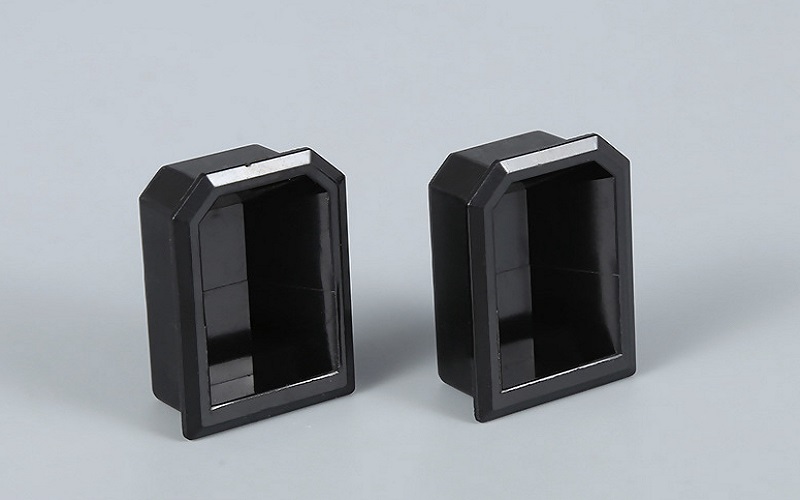
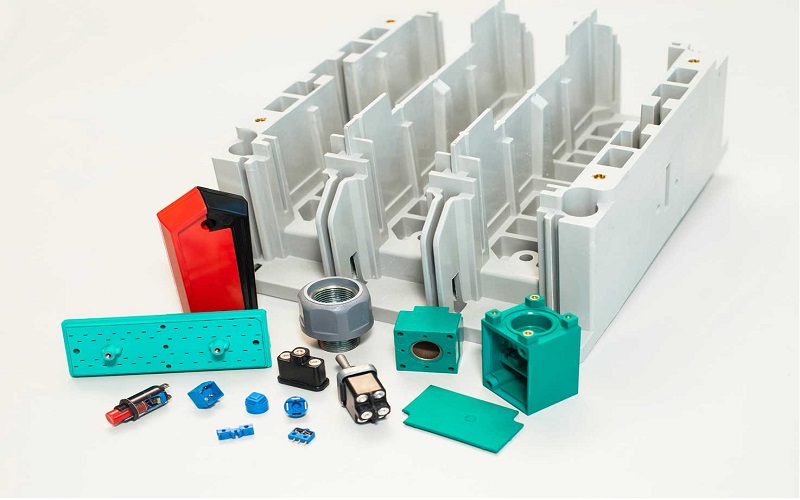
Thermoset molded parts are commonly used in automotive components, electrical insulators, home appliance parts, control panels, and industrial components.
They maintain their performance in high-temperature, high-pressure, oil-exposed, and other harsh chemical environments, and are also used in specific applications in the medical industry.
- Automotive Industry: Thermoset injection molding produces electrical connectors, ignition components, and engine parts that must withstand high temperatures, vibration, oils, and other demanding conditions. Its heat resistance and dimensional stability help maintain reliable product performance over time.
- Electrical and Electronics: Thermoset materials provide strong electrical and thermal insulation, making them suitable for connectors, switchgear components, circuit-breaker parts, and insulating housings. Their resistance to heat and electrical stress supports reliable operation in many applications.
- Home Appliances: Appliance manufacturers use thermoset molded parts in components such as oven and range parts, handles, knobs, and motor housings. These parts can retain their shape and strength when exposed to heat during regular use.
- Industrial & Mechanical Components: Thermoset injection molding is used to create durable housings, gears, seals, pump components, and other parts exposed to load, chemicals, or fluctuating temperatures. Depending on the material and design, molded components can offer high strength, chemical resistance, and dimensional stability.
Thermoset injection molding is especially valuable when thermoplastic materials would soften, creep, or lose electrical properties under continuous heat or load.
Benefits Of Thermoset Injection Molding
Thermoset injection molding offers a combination of heat resistance, dimensional stability, and efficient production. It is especially useful when a component must retain its shape and function under heat, pressure, electrical stress, or exposure to chemicals.
Heat And Chemical Resistance
Once cured, thermoset materials do not soften and flow again when reheated. Some thermoset plastics can withstand temperatures up to 370 degrees Celsius, although the practical limit depends on the material grade and duration of exposure.
They can also be resistant to harsh chemicals, oils, and solvents, making them suitable for parts used in demanding operating environments. Engineers should verify performance against the specific temperatures and substances the part will encounter.
Strength And Dimensional Stability
The cross-linked structure formed during curing helps thermoset parts maintain their shape under heat and mechanical load. Many thermoset compounds provide strong load-bearing capacity in compression, along with good electrical and thermal insulation.
With a suitable material and mold design, the process can produce complex geometries with high precision and maintain tighter tolerances across production runs.
Efficient Production At Scale
Compared with thermoset compression molding, injection molding offers shorter cycle times and greater automation, making it suitable for high-volume production of complex parts.
Thermoset injection molding is therefore well suited to large-scale manufacturing, especially for components with fine details or strict dimensional consistency requirements.
Injection press clamping forces typically range from 25 to 500 tons, allowing manufacturers to select equipment suited to different part sizes and production requirements.
Design And Application Flexibility
Thermoset materials and reinforced compounds can be molded into various shapes for product end markets such as automotive, electrical, appliance, and industrial manufacturing.
For example, a heat-resistant thermoset component may be used near an engine, while an insulating part may be designed for electrical equipment.
Some silicone compounds can also be formulated for medical applications, including implantable items, when the grade and required approvals are appropriate.
Thermoset molding is not the only option for every design. Depending on the part and volume, manufacturers may also consider compression molding or transfer molding.
Comparing these methods helps identify the right balance of tooling, cycle time, material use, and part requirements. In some projects, suppliers provide integrated manufacturing solutions that combine material selection, tooling, molding, and secondary operations.
Key Limitations of Thermoset Injection Molding
Although thermoset injection molding offers heat resistance, dimensional stability, and efficient high-volume production, it is not suitable for every part or manufacturing requirement.
Before choosing the process, designers and procurement teams should assess the irreversible nature of curing, tooling and equipment requirements, part design, and production costs.
Cannot Be Remelted After Curing
Thermoset materials permanently cure through chemical cross-linking in the mold. Unlike thermoplastics, they cannot be reheated, melted, and reshaped. This property helps parts retain their shape in high-temperature environments, but it limits rework and material recycling.
Parts with dimensional deviations or cosmetic defects generally cannot be repaired by remelting; they must be scrapped or undergo limited secondary processing.
Requires Precise Control of Materials and Processing Conditions
Thermoset injection molding requires the material to remain flowable during injection while the heated mold initiates curing. Barrel temperature, mold temperature, injection pressure, curing time, and material proportions must all be matched to the specific resin.
Poor process control can cause premature curing, incomplete cavity filling, bubbles, flash, or insufficient curing, which may affect part strength and dimensional stability.
High Initial Mold Costs
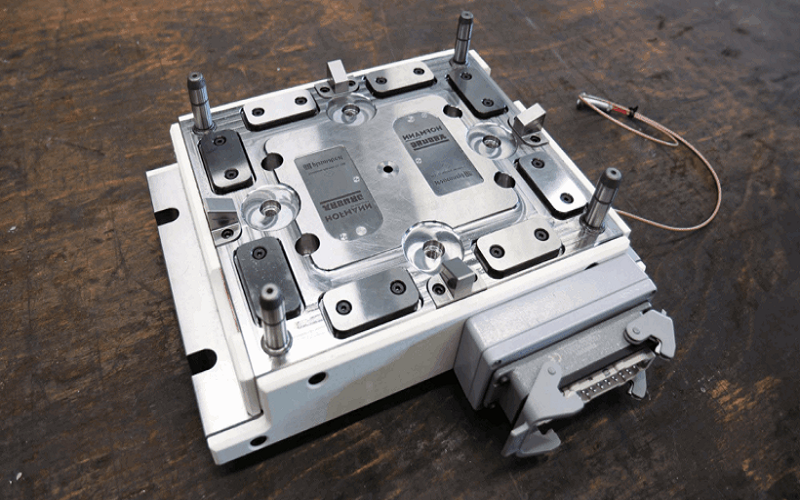
Injection molds, specialized feeding systems, and temperature-control equipment require an initial investment.
For complex parts, the mold must also be carefully designed with appropriate gates, runners, vents, and ejection features to ensure the material fills the cavity and the cured part can be removed successfully.
If production volumes are low, tooling and process-validation costs may be difficult to amortize; compression molding or another process may be more suitable for low-volume projects.
Overall, thermoset injection molding is best suited to projects with clearly defined material requirements, part designs, and production volumes.
If a product needs to be recycled repeatedly, modified quickly, manufactured in low volumes at low cost, or made with high impact toughness, compare thermoplastic injection molding, compression molding, and other options during the design stage.
Thermoset Injection Molding vs Thermoplastic Injection Molding
The most fundamental difference between thermoset and thermoplastic injection molding is that one cures irreversibly, while the other can be melted and remolded repeatedly. First, compare how the two materials differ in molecular structure and behavior when heated:
One key process difference is that mold temperatures work in opposite ways: thermoplastics solidify as they cool in a cold mold, while thermosets rely on a heated mold to accelerate cross-linking.
The table below summarizes the differences in processing and product properties:
| Dimension | Thermoplastic Injection Molding | Thermoset Injection Molding |
|---|---|---|
| Molding mechanism | Physical melting and cooling; reversible | Chemical cross-linking and curing; irreversible |
| Typical materials | PP, ABS, PA, PC, POM, PEI | Phenolic (PF), epoxy (EP), BMC, DMI, LFT-TS |
| Barrel temperature | 180–280°C (above the melting point) | 60–120°C (plasticized without cross-linking; premature curing must be prevented) |
| Mold temperature | Cool mold: 40–100°C | Heated mold: 150–200°C |
| Cycle time | Depends on cooling; usually shorter | Depends on curing; usually longer |
| Gates and runners | Runner material can be ground and reused; hot runners reduce waste | Once cured, runner material is scrap, so material usage must be carefully controlled |
| Temperature resistance | Generally below 150°C (specialty engineering plastics can exceed 250°C) | Generally above 150°C, with good long-term heat resistance |
| Strength and rigidity | Moderate; can be reinforced with fibers | Cross-linked structure provides high rigidity and low creep |
| Equipment differences | Standard injection molding machine | Requires a specialized barrel and screw (low compression ratio and nonstick design) and a mold-heating system |
How To Choose?
- Choose thermoplastic injection molding for production efficiency, recyclability, and cosmetic parts. Consumer electronics housings, automotive interiors, and everyday products are predominantly made from thermoplastics because of their short cycle times and reusable runners and scrap.
- Choose thermoset injection molding for stability at high temperatures, high rigidity, and excellent electrical insulation. Typical applications include motor and appliance parts (such as phenolic terminal blocks), electric vehicle motor encapsulation and connectors (BMC/DMI), brake components, and heat-resistant kitchenware.
Conclusion
Thermoset injection molding is a strong choice for high-volume parts that must withstand heat, chemicals, electrical stress, or demanding mechanical loads.
Its heated-mold curing process creates permanently cross-linked components with precise dimensions, complex geometries, and reliable performance in automotive, electrical, appliance, and industrial applications.
However, cured thermosets cannot be remelted, so material selection, part design, production volume, and end-of-life requirements should be considered before choosing the process.