
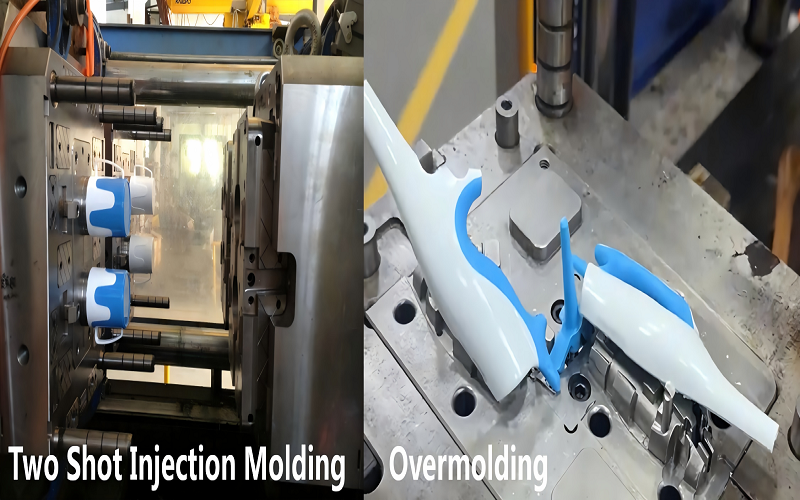
In modern manufacturing, multi-material injection molding technology has become a key process for enhancing product competitiveness.
By combining plastic materials with different properties—such as rigid substrates and soft materials—into a single component, this technology significantly improves product functionality, aesthetics, and durability.
Among these, Two-Shot Injection Molding and Overmolding are two of the most representative multi-material injection molding processes.
Both achieve integrated molding of multiple materials, but they differ significantly in actual operation, applicable scenarios, and cost-effectiveness, often causing confusion among engineers and designers.
This article provides a systematic comparison of Two-Shot Injection Molding vs Overmolding from the perspectives of process flow, advantages and disadvantages, typical applications, and cost factors, to help readers make more informed process decisions based on project requirements.
What Is Two Shot Injection Molding?
Two shot injection molding, also known as two color injection molding or double shot molding, is an advanced plastic injection molding techniques.
It involves injecting two different plastic materials into different cavities of the same tool, achieving one-step molding of multi-material or multiple colors parts.
Two-shot injection molding is suitable for manufacturing products with complex geometries that combine different material properties (such as rigid plastics and flexible material). It is widely used in automotive interior parts, consumer electronics, medical devices, and other fields.
In general, two-shot injection molding is best for creating complex parts with contrasting colors, textures, and material properties. However, it requires high initial mold design and equipment investment, making it suitable for large-volume production.
What Is Overmolding?
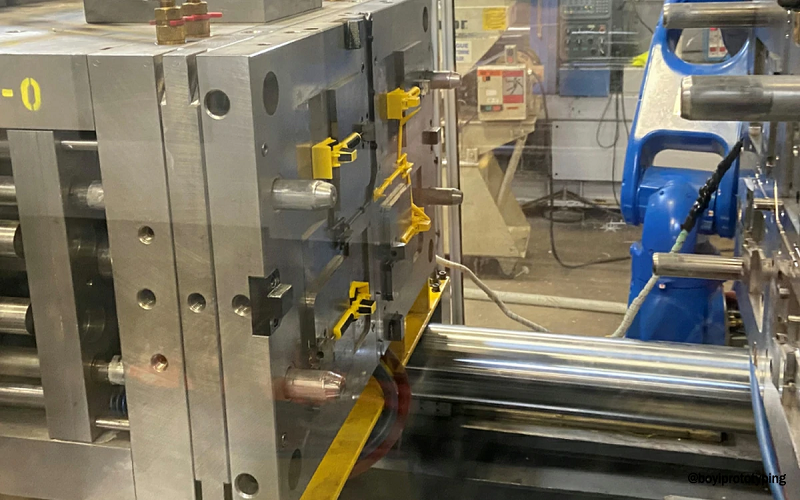
Overmolding,also known as dual shot or multi shot injection molding , is a injection molding process that combines two or more materials—usually a hard base and a soft touch materials—into one part.
It involves two steps: first molding the base, then placing it into another mold where the second material is added and bonded to the base.
Similar to two-shot molding, overmolding requires compatible materials to ensure good bonding. Common soft materials include thermoplastic elastomers (TPE) and liquid silicone rubber (LSR), which provide a soft and comfortable feel.
This process is used to make products with soft grips, electronic housings, medical tools, and more, improving durability and user comfort.
Overmolding offers relatively flexible production processes and is suitable for low volume production runs. Due to its simpler mold design compared to two-shot injection molding, the initial costs is lower, making it a preferred choice for many small to medium-sized enterprises and custom product manufacturing.
With proper mold design and material choice, overmolding can create multi-colored and textured parts that meet both functional and aesthetic needs.
In summary, overmolding combines the advantages of multiple materials to enhance product functionality and appearance, making it an indispensable and important process in modern manufacturing.
Process Comparison Between Two-Shot Molding And Overmolding
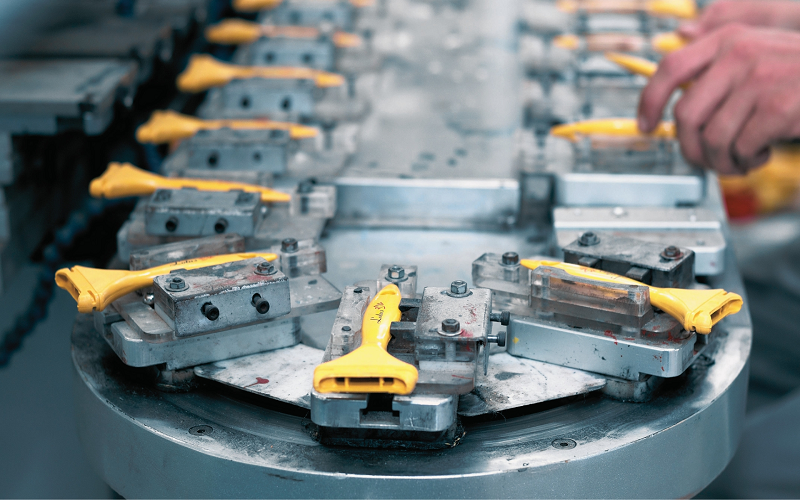
Both two shot injection molding and overmolding can produce multi-material products, they differ significantly in mold complexity, automation level, production cycle, and equipment requirements.
Two-Shot Injection Molding Process
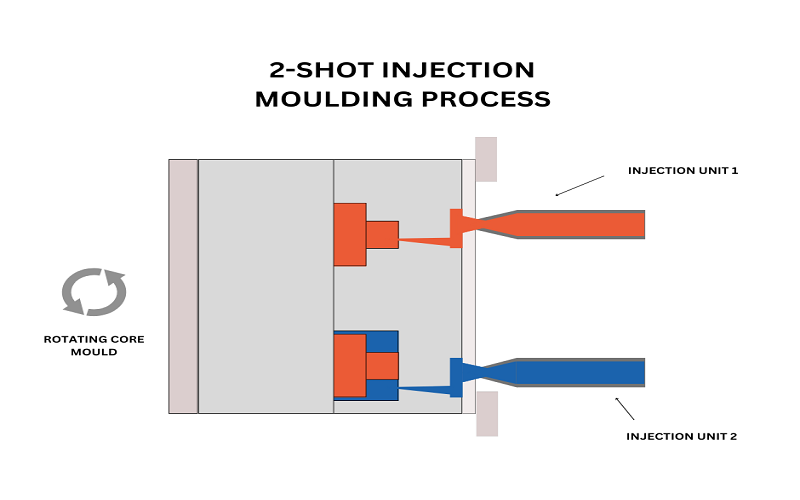
The two-shot molding process involves two injection stages, both completed within the same injection molding machine and mold.
First , initial plastic resins is injected into the mold cavity to form the substrate, which then cools and solidifies in the cavity. Next, the mold or rigid substrate is transferred to the second injection position by a robotic arm or rotary plane.
The second material i is injected through the injection molding nozzle, covering or encapsulating the substrate surface to achieve molecular bonding or mechanical interlocking between the two materials, ultimately forming a complex multi-material part in a single molding cycle.
This process is generally completed within the same injection molding machine and a single mold, resulting in high production efficiency and no need for subsequent assembly.
Overmolding Process
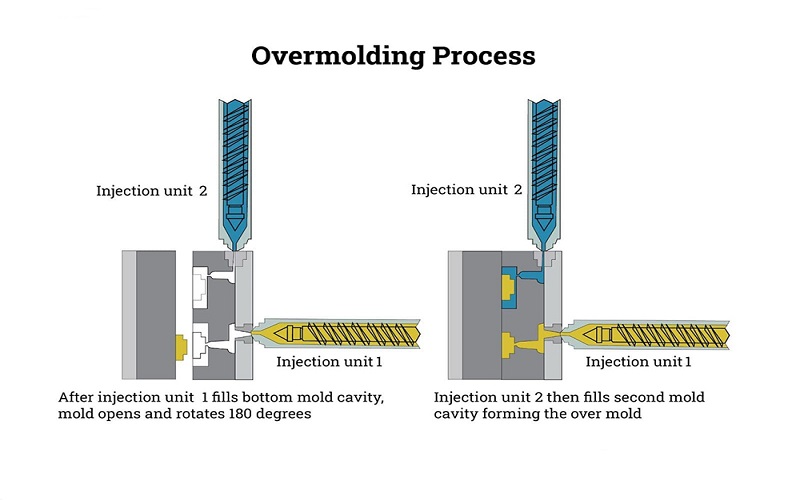
In contrast, overmolding typically involves two separate processes: first, the rigid substrate is molded, then it is placed into another mold where a second, softer or differently performing material is injected onto its surface, achieving mechanical or chemical bonding between the materials.
In the second phase, a soft or functional overmold material is injected onto the substrate surface. After cooling, the two materials bond mechanically or chemically to form the final product.
Because overmolding requires two distinct processes and different molds, its production cycle is longer, but the mold design is relatively simpler, making it suitable for diversified production at lower volumes.
Mold Design
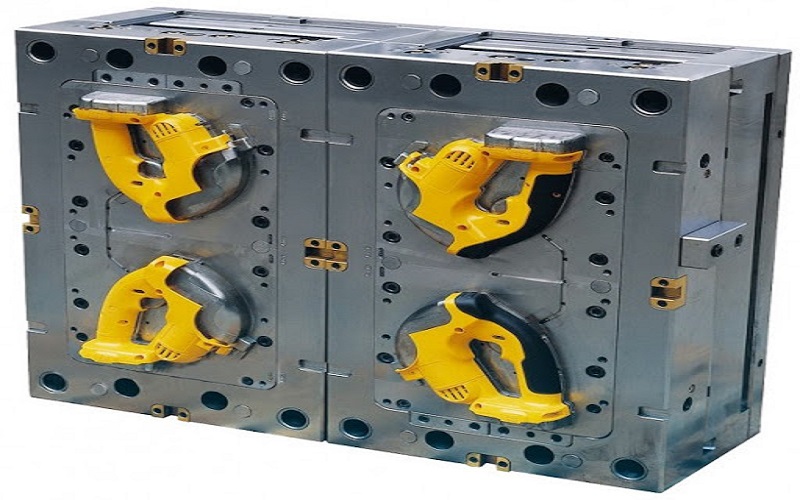
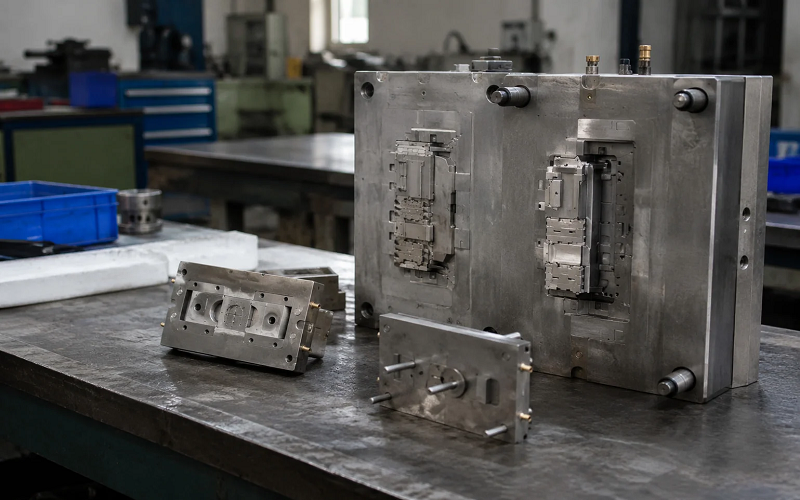
Additionally, two-shot molding typically employs complex mold designs, including rotary or multi-cavity structures to enable multi-material injection within the same mold; whereas overmolding generally uses standard injection molds, completing the two-stage injection with separate molds.
Two-shot molding demands high material compatibility to ensure good bonding under injection pressure and temperature conditions, while overmolding is more flexible, especially suitable for mechanical bonding between different materials or covering metal substrates.
In summary, the main difference between these two processes lies in that two-shot molding is an integrated two-phase injection process completed within a single machining cycle, while overmolding involves multiple secondary operations conducted in separate molds.
| Item | Two-Shot Injection Molding | Overmolding |
|---|---|---|
| Number of Molds | Usually 1 specialized mold | Possibly 2 or more molds |
| Operation Steps | Single automated cycle | Multiple steps (requires substrate transfer) |
| Automation Level | High | Medium (can be semi-automated) |
| Production Efficiency | High | Relatively low |
| Equipment Requirements | Specialized two-shot machine | Standard injection molding machine suffices |
Two Shot Injection Molding vs Overmolding : Pros and Cons
Both two-shot injection molding and overmolding offer unique advantages and disadvantages that influence their suitability for different manufacturing needs.
Both two-shot injection molding and overmolding offer unique advantages and disadvantages that influence their suitability for different manufacturing needs.
Key Advantages of Two-Shot Injection Molding
- High Production Efficiency: Since the entire molding process occurs in a single automated cycle within one machine, two-shot molding significantly reduces production time and labor costs, making it highly cost efficient for high volume production.
- Superior Part Quality: The process enables strong molecular bonding between materials, resulting in durable, integrated molded parts with excellent mechanical strength and reduced risk of delamination.
- Design Flexibility: Two-shot molding supports complex geometries, multi-color designs, and the combination of materials with different properties, such as rigid plastics and softer plastics, allowing for innovative product designs like soft touch grips and multi-material casings.
- Reduced Assembly Costs: By producing finished multi-material parts in one cycle, two-shot molding eliminates the need for secondary assembly, lowering overall assembly costs and potential for assembly errors.
Disadvantages of Two-Shot Injection Molding
- High Initial Tooling Costs: The specialized molds and machinery required for two-shot molding involve significant upfront investment, which may not be justified for low to medium production volumes.
- Material Compatibility Requirements: To ensure proper adhesion and avoid defects, materials used in two-shot molding must be chemically compatible and able to bond under the process conditions, limiting material choices.
- Complex Mold Design: The mold chamber and tooling designs are more complex, requiring precise alignment and sophisticated mechanisms for substrate transfer, increasing design and manufacturing complexity.
Key Advantages of Overmolding
- Lower Initial Costs: Overmolding typically uses standard injection molding machines and simpler molds, reducing initial tooling and equipment expenses, making it more accessible for smaller production runs.
- Material Versatility: Overmolding can combine a wider range of materials, including bonding plastics to metal substrates, increasing design possibilities and functional performance such as chemical resistance and improved grip.
- Flexible Production Volumes: The two-phase process allows easier adjustments for low to medium volume production, providing manufacturers with greater flexibility to meet varied demand.
- Enhanced Product Functionality: Overmolding is ideal for adding soft, ergonomic features like soft touch grips or protective layers, improving user comfort and product appeal.
Disadvantages of Overmolding
- Longer Production Cycle: Because overmolding involves separate molding steps and substrate transfers, the overall production time per part is longer, reducing throughput compared to two-shot molding.
- Potential for Inferior Tolerances: Overmolded parts may exhibit less precise tolerances and dimensional consistency due to the multiple processing steps and handling between molds.
- Bonding Challenges: Achieving proper adhesion between substrate and overmold materials can be challenging, especially if the materials are not chemically compatible, potentially requiring mechanical interlocks or surface treatments.
- Higher Labor and Assembly Costs: The multi-step nature of overmolding may involve additional handling or secondary operations, increasing labor and assembly costs relative to two-shot molding.
In conclusion, the choice between two-shot injection molding and overmolding largely depends on production volume, cost considerations, material compatibility, and the desired product features.
Two-shot molding excels in high-volume, complex, multi-material parts with high-quality requirements, while overmolding offers cost-effective flexibility and material versatility for lower volume or specialized applications.
Applications Of Two-Shot Molding And Overmolding
Two-shot molding and overmolding are widely used across various industries to meet the demands for multi-material, multi-color, and functional products.
Typical Applications of Two-Shot Molding
Due to its highly efficient automated production and superior product quality, two-shot molding is commonly used for large-volume manufacturing of complex multi-material parts. Its main applications include:
- Automotive Industry: Manufacturing automotive interior components such as multi-colored dashboard buttons and soft-touch armrests, enhancing aesthetics and tactile feel.
- Consumer Electronics: Multi-material housings and buttons that combine rigid and soft plastics to achieve excellent durability and visual appeal.
- Medical Devices: Multi-material medical instrument components that balance functionality and comfort.
- Home Appliances: Complex multi-colored parts that improve product design and user experience.
Typical Applications of Overmolding
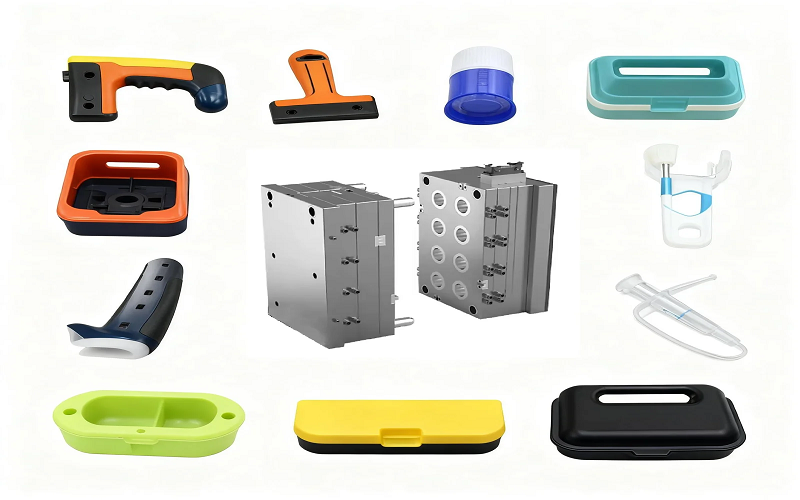
The overmolding process allows the use of metal inserts or circuit boards with molded plastic parts, suitable for medium to low volume production and products with higher functional requirements. Common applications include:
- Handheld Tools: Soft-grip overmolds that enhance comfort and anti-slip performance.
- Personal Care Products: Soft overmold layers on toothbrushes and razors to improve user experience.
- Electronic Device Housings: Overmolding provides shock resistance, insulation, and aesthetic enhancement.
- Medical Instruments: Soft overmolds improve the comfort and safety of surgical tools.
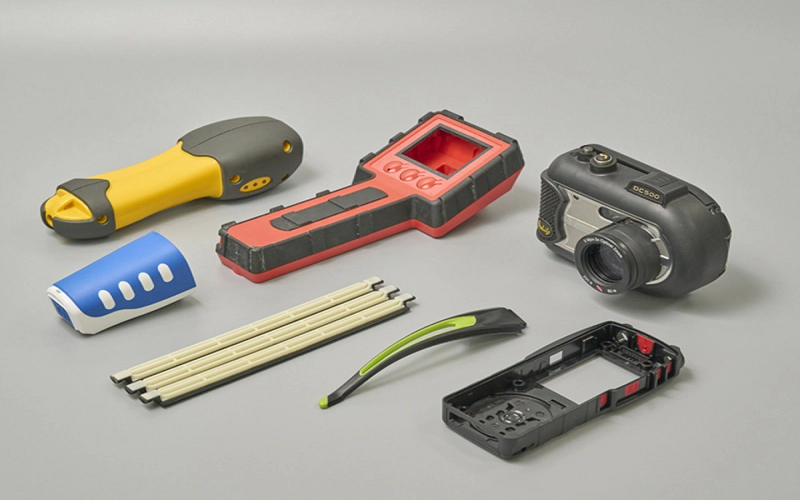
When selecting the appropriate process, it is recommended to collaborate with an experienced manufacturing partner to comprehensively consider product design, material compatibility, production scale, and cost budget, ensuring the final product meets functional requirements while maintaining competitiveness.
Conclusion
In summary, Two-shot molding offers high production efficiency, superior part quality, and is ideal for large-volume runs with complex designs, though it requires higher initial investment and precise material compatibility.
Overmolding provides greater flexibility with lower upfront costs, accommodating a wider range of materials and smaller production volumes, making it suitable for ergonomic and functional enhancements.
Two-shot molding and overmolding are both extensions of the injection molding process. Compared with traditional injection molding, they offer significant improvements in material utilization, design freedom, and product functionality. At the same time, these processes also help reduce material waste and improve production efficiency.