
In the field of plastic product manufacturing, advances in printing and decoration technologies have continuously enhanced product appearance and functionality.
In-mold labeling (IML), an innovative manufacturing process, embeds pre-printed labels directly into the plastic container during molding, achieving seamless integration between the label and the plastic product.
Compared to traditional labeling methods, IML not only improves production efficiency and reduces total cost but also enhances label durability and environmental performance.
This article will provide an in-depth introduction to the in-mold labeling process and its multifaceted benefits, helping industry professionals gain a thorough understanding of its practical application value and efficiency potential, while offering clear and systematic guidance for newcomers to the plastic molding field.
What Is In-Mold Labeling (IML)?
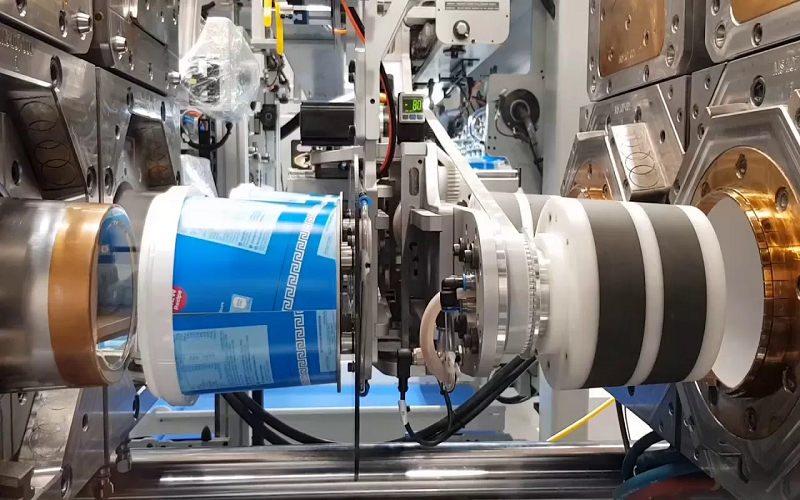
In-mold labeling (IML) is a modern manufacturing technique that integrates pre-printed labels directly into plastic products during the molding process. This method involves placing a label made from a compatible label substrate inside the mold prior to the injection or blow molding of molten plastic.
As the plastic is injected or blown into the mold, it conforms to the label and mold surface, creating a single product where the label is permanently fused with the plastic container.
Label Materials And Their Properties
The label material, often a film or paper-based substrate, is carefully die cut and positioned within the mold using electrostatic or vacuum methods to ensure precise placement and surface consistency.
IML labels are known for their durability and resistance to harsh conditions such as moisture, temperature fluctuations, and abrasion. The label remains intact throughout the product’s life, providing a high-quality, tamper-proof appearance.
Additionally, since the label and container are made from compatible materials, the finished products are often fully recyclable and environment friendly, supporting sustainable packaging initiatives.
Process Characteristics
IML is commonly used in injection molding and blow molding processes, which are the predominant molding processes for producing consumer goods such as shampoo bottles, ice cream tubs, and food packaging containers.
This process eliminates the need for secondary labeling operations, such as applying pressure sensitive labels after molding, which can add cost and time to production.
By combining the labeling and molding processes into a single step, IML offers significant efficiency improvements, reduces floor space requirements, and minimizes inventory of adhesives and separate labels.
Overall, in-mold labeling offers design flexibility, high volume production capabilities, and cost-effective solutions for a wide range of packaging and consumer product applications, making it a popular choice in markets demanding high-quality, durable, and eco-friendly labeling solutions.
Types Of In-Mold Labeling Process
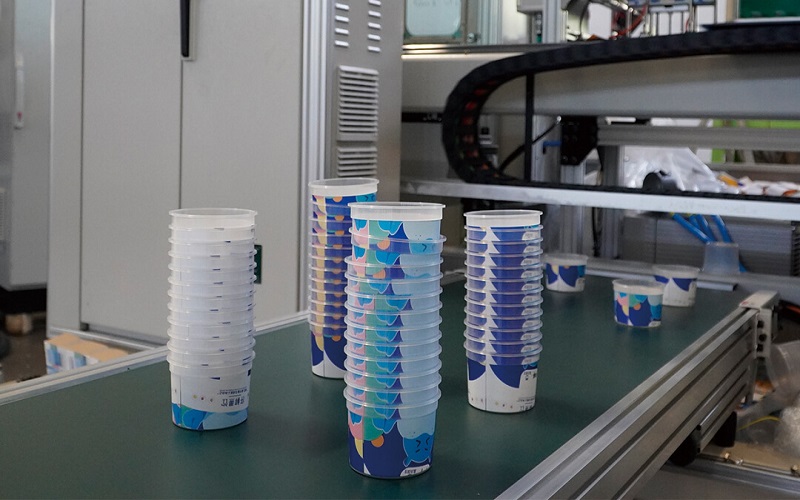
In-mold labeling is typically carried out using three main molding processes: injection molding, blow molding, and thermoforming. Each process has unique characteristics that influence the integration of the label into the plastic product.
Injection Molding
Injection molding is the most widely used in-mold labeling process. In this method, molten plastic is injected into a mold cavity where the pre-printed label has been precisely positioned. The plastic conforms to the label and mold shape under high pressure, embedding the label permanently into the container surface.
This process offers excellent design flexibility and is suitable for producing complex shapes with high precision. Injection molding process is commonly used for manufacturing plastic containers such as butter tubs, cosmetic jars, and electronic housings.
Blow Molding
Blow molding is another prevalent IML technique, especially for hollow plastic products like bottles and containers.
In this process, a heated plastic parison (a tube-like piece of plastic) is placed into a mold containing the label. Air is then blown into the parison, causing it to expand and conform to the mold and label surface.
Blow molding is ideal for producing lightweight containers with integrated labels, commonly used in personal care, food, and household product packaging.
Thermoforming
Thermoforming involves heating a plastic sheet until it becomes pliable and then forming it over a mold. Pre-printed labels are inserted into the mold before the plastic sheet is formed, allowing the label to bond with the plastic as it cools and hardens. This process is typically used for packaging trays, lids, and other thin-walled products.
Each of these processes requires careful design considerations and precise control of production parameters to ensure the label adheres correctly and the final product meets container requirements such as shape and surface quality.
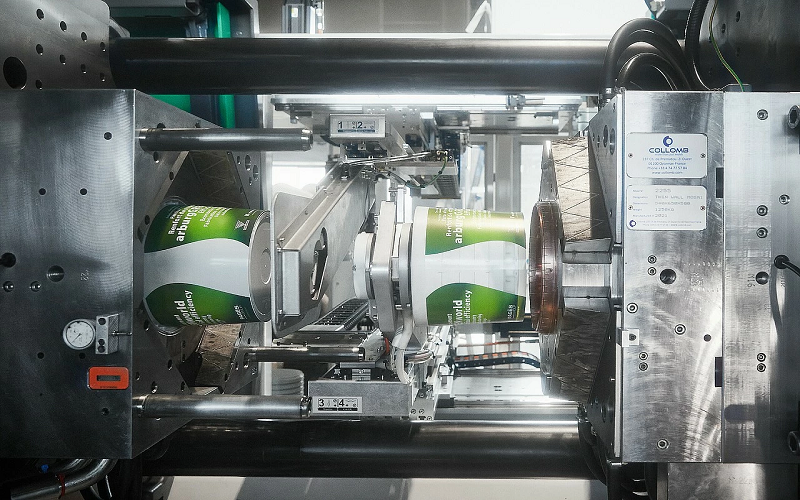
Automation plays a crucial role in label handling and placement, often using robotic arms to insert labels accurately into the mold. The production process also involves managing static charge to keep labels in place before molding.
Key Benefits Of In-Mold Labeling
In-mold labeling (IML) offers numerous advantages that make it a preferred choice for manufacturers seeking to enhance product quality, streamline production, and support sustainability. These benefits span aesthetics, durability, environmental impact, and cost-effectiveness.
Enhanced Product Aesthetics
IML enhances product aesthetics with high-resolution, full-color printing directly on the container surface, creating visually appealing products with vibrant and sharp graphics,
Unlike traditional labeling, IML can simulate a wide range of textures such as woodgrain, marble, or metallic finishes, providing unique design possibilities that improve shelf appeal.
Superior Durability
The label fused during the molding process forms a strong, permanent bond with the plastic container. This bond ensures excellent resistance to moisture, scratching, temperature fluctuations, and chemicals, making IML products suitable for harsh environments and extended use.
The durability of IML labels helps maintain product branding and information clarity throughout the product’s lifecycle.
Environment Friendly
IML contributes to sustainability by using label and container materials that are compatible and fully recyclable together, reducing waste and facilitating recycling processes. The elimination of adhesives and secondary operations further minimizes environmental impact.
IML containers can be designed to qualify as post-consumer recycled (PCR) products, supporting circular economy initiatives and reducing carbon footprints.
Cost Effective
In-mold labeling is generally more cost-effective than post-mold labeling. Although the initial mold and setup costs are higher, especially for small batch production, the simplified production process and reduced inventory requirements for labels and adhesives typically result in higher minimum order quantities for in-mold labeling, effectively lowering the production cost per container.
In conclusion, in-mold labeling offers a comprehensive package of benefits that improve product quality, manufacturing efficiency, and environmental sustainability, making it a valuable technology in modern plastic product manufacturing.
Design Considerations For Using In-Mold Labeling
When implementing in-mold labeling, several critical design considerations must be addressed to ensure the success and efficiency of the process. These considerations impact the quality of the final product, production speed, and overall cost-effectiveness.
Label Thickness and Material Compatibility
Labels used in IML typically range from 15 to 40 micrometers thick. This thickness is essential to balance durability and flexibility, allowing the label to conform precisely to the mold surface without wrinkling or tearing.
The label material must also be compatible with the plastic resin used in the molding process to ensure proper bonding and recyclability.
Label Placement and Positioning
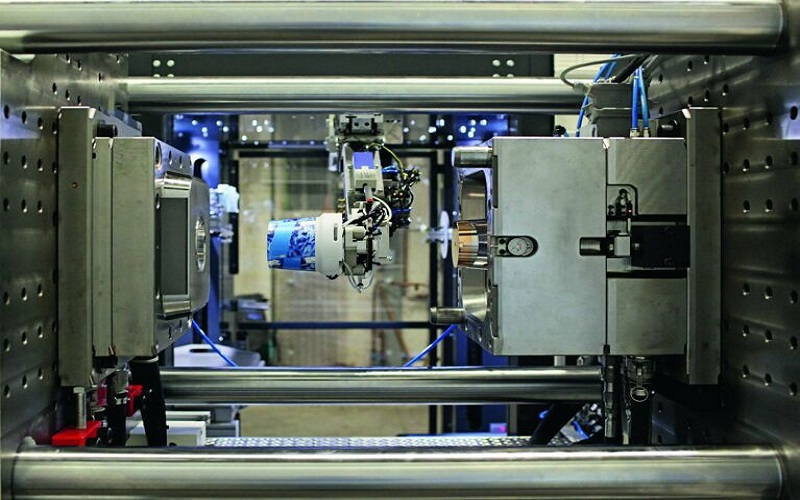
Accurate label placement is vital to avoid defects such as misalignment or wrinkles. Electrostatic or vacuum methods are commonly employed to hold the label firmly against the mold surface during the molding cycle.
The mold design must accommodate these systems to maintain consistent label positioning throughout production.
Mold Design and Construction
The mold must be specially designed or modified to support in-mold labeling. This includes features to hold the label securely in place and allow for smooth plastic flow around the label without causing displacement or damage. Additionally, the mold should facilitate easy label insertion and part ejection to maintain production efficiency.
Automation and Label Handling
Automation plays a key role in handling and inserting labels into molds, especially for high-volume production. Robotic arms or shuttle machines are often used to pick labels from magazines and place them accurately into the mold cavities. This automation reduces labor costs and improves cycle times.
Surface Texture and Finish
The mold surface texture directly affects the final appearance of the labeled product. Designers can choose from glossy, matte, or textured finishes to enhance product aesthetics. In-mold labeling also allows the simulation of various textures such as woodgrain or marble, which can be integrated into the mold design.
By carefully addressing these design considerations, manufacturers can maximize the benefits of in-mold labeling, producing high-quality, durable, and visually appealing products efficiently and cost-effectively.
Conclusion
In-mold labeling is a transformative technology in plastic product manufacturing that integrates pre-printed labels directly into the molding process. This integration enhances product aesthetics with vibrant, durable, and high-resolution graphics while providing superior resistance to environmental challenges.
IML streamlines production by eliminating secondary labeling operations, reducing costs, and improving efficiency. Moreover, its use of compatible materials supports recycling and sustainability efforts, making it an eco-friendly choice.
With careful design considerations and automation, IML offers manufacturers a cost-effective, high-quality, and environmentally responsible labeling solution that meets the demands of modern consumer markets.