
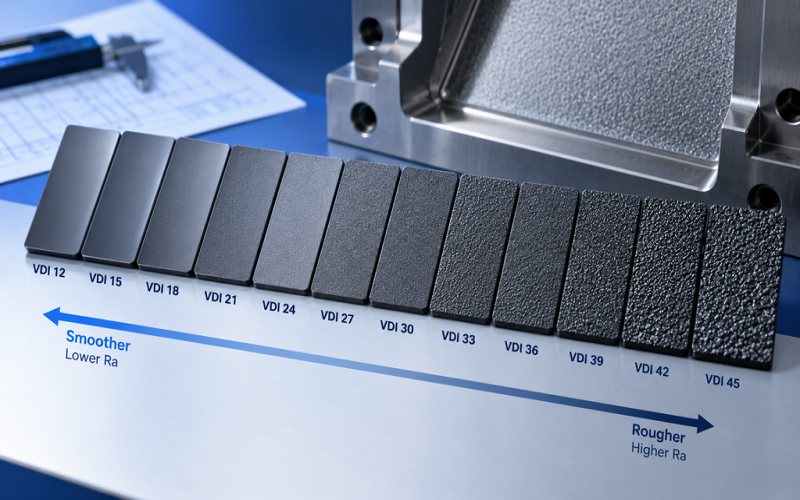
Injection molding surface finishes are a crucial part of the plastics manufacturing process. Surface finishes options not only affect the visual appeal of the product but also directly relate to the product’s functional performance and production efficiency.
The smoothness and texture of the mold surface are directly “copied” onto the plastic part, becoming the most intuitive “face” of the product.
Through fine processing of the mold surface, such as polishing and texturing, injection molded plastic parts can achieve different surface effects to meet various application requirements.
This article will explore in depth the standards and types of injection molding surface finishes and their impact on the performance and visual effects of plastic products, helping designers and manufacturers select the most suitable surface finish solutions to enhance product quality and market competitiveness.
What Are Injection Molding Surface Finishes?
Injection molding surface finishes refer to the specific textures and smoothness levels applied to the mold cavity’s interior surfaces. These finishes are critical because they directly influence the final appearance and tactile qualities of the injection molded parts produced.
During the injection molding process, molten plastic is injected into the mold cavity, and the surface details of the mold are precisely transferred to the molded part’s exterior.
The surface finish of the mold can range from highly polished, mirror-like surfaces to rough, textured finishes. This variety allows manufacturers to tailor the appearance, feel, and functional characteristics of the molded parts according to the product’s intended use and aesthetic requirements.
For example, a glossy, polished finish is often chosen for optical components or consumer electronics where clarity and shine are essential.
Conversely, a textured finish may be preferred for parts requiring improved grip or to mask surface imperfections such as sink marks, flow lines, or knit lines that are common in the injection molding process.
Injection molding surface finishes also play a significant role in the plastics industry beyond aesthetics. They impact paint adhesion, wear resistance, and even the ease of part ejection from the mold.
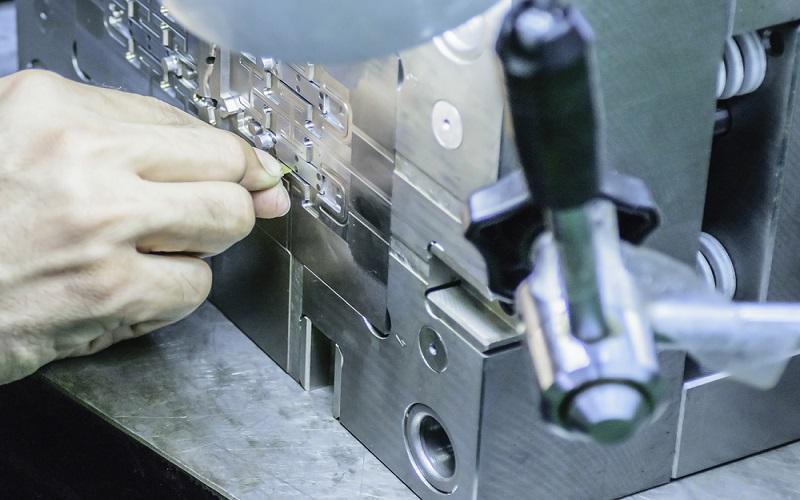
Surface imperfections like tool marks, machining marks, or visible scratches on the mold cavity can transfer directly to the molded part, affecting product quality and performance.
Therefore, selecting the right surface finish is an important design consideration for product designers and part designers aiming to optimize both appearance and functionality.
Injection Molding Surface Finish Standards
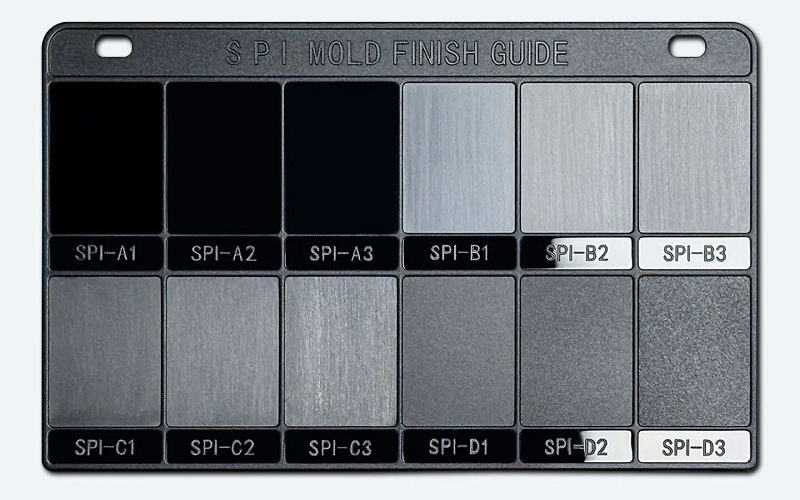
Injection molding surface finishes are categorized using SPI and VDI standards.These standards define specific grades and types of surface finishes that can be applied to mold cavities, which directly influence the appearance and texture of the final molded parts.
SPI Standards (Society of the Plastics Industry)
One of the most widely recognized standards is provided by the Society of the Plastics Industry (SPI). The SPI surface finish standards classify mold finishes into twelve distinct types, each identified by an alphanumeric code beginning with a letter (A, B, C, or D) followed by a number (1 to 4).
These codes correspond to different finishing methods and surface roughness levels, measured in micrometers (µm) of surface roughness average (RA).
The SPI standards are grouped into four main grades based on the finish characteristics:
- A-Series (Glossy Finish): This grade includes highly polished surfaces achieved through diamond buffing. Ranges from A-1 (highest mirror polish) to A-3 (semi-high gloss). It is typically used for premium products such as optical lenses, medical housings, and cosmetic parts .
- B-Series (Semi-Glossy Finish): These finishes offer a medium level of shine and are accomplished using fine grit sanding or polishing methods. They are commonly used for consumer products that require a balance between aesthetics and manufacturing cost. Semi-glossy finishes provide a pleasing appearance without the high cost of a full polish.
- C-Series (Matte Finish): Matte finishes are created using stone polishing techniques, resulting in a dull, non-reflective surface. This grade is ideal for structural parts or components where reduced light reflection and the concealment of fingerprints and surface imperfections are desired. Matte finishes improve the tactile feel and help mask minor defects.
- D-Series (Textured Finish): Textured finishes are achieved through dry blast glass bead or other media blasting methods. These finishes produce a rougher surface texture that enhances grip, hides visible machining marks, and conceals molding defects such as flow lines or sink marks. Textured mold finishes are often used for products like steering wheels, handheld tools, and rugged enclosures.
Each series includes several grades (e.g., A-1, B-2, C-3, D-4) that represent a progression in surface roughness and finishing method intensity.
For example, within the A-Series, an A-1 finish is a slightly finer, higher gloss polish compared to an A-4 finish which may have more imperfections and a higher surface roughness.
VDI 3400 Standard
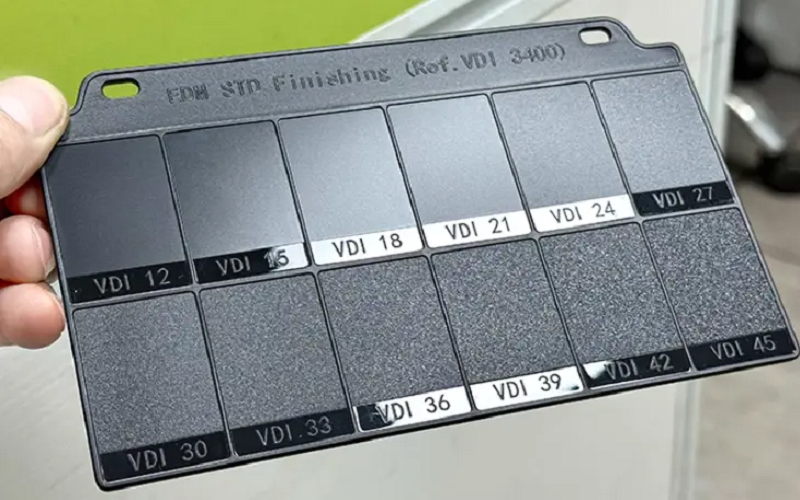
Besides the SPI standards, other surface finish standards exist, such as the VDI 3400 standard set by the Verein Deutscher Ingenieure (VDI), which is commonly used in Europe and focuses on surface roughness levels achieved primarily through electrical discharge machining (EDM).
VDI finishes create a uniform micro-texture that improves ergonomic grip, making them especially useful for applications where handling comfort and secure grip are important.
Mold-Tech (MT) Standard
Commercial texture libraries provide a large number of specific patterns such as leather textures, geometric patterns, wood grains, etc., designated by numbers (e.g., the MT-11000 series). These are suitable for products requiring specific decorative effects.
Understanding and selecting the appropriate SPI mold finish grade is crucial because the mold finish directly affects the injection molded plastic part’s surface roughness, gloss level, and overall aesthetic and functional performance.
Additionally, the finishing method chosen—whether mold polishing, grit stone polishing, dry blast, or diamond buffing—impacts the mold’s cost, production time, and durability.
| SPI Grade | Finish Type | Typical Surface Roughness (RA, µm) | Finishing Method | Common Applications |
|---|---|---|---|---|
| A-1 | High Gloss | 0.025 – 0.05 | Diamond buffing (fine polish) | Optical lenses, medical housings, cosmetics |
| A-2 | High Gloss | 0.05 – 0.1 | Diamond buffing | Premium consumer products |
| A-3 | Semi-High Gloss | 0.1 – 0.2 | Diamond buffing | Clear cases, decorative parts |
| A-4 | Glossy | 0.2 – 0.4 | Diamond buffing | Less critical glossy surfaces |
| B-1 | Semi-Gloss | 0.4 – 0.8 | Fine grit sanding/polishing | Consumer products with moderate shine |
| B-2 | Semi-Gloss | 0.8 – 1.6 | Fine grit sanding/polishing | Clips, housings with balanced aesthetics |
| B-3 | Semi-Gloss | 1.6 – 3.2 | Fine grit sanding/polishing | Functional parts with some gloss |
| B-4 | Semi-Gloss | 3.2 – 6.3 | Fine grit sanding/polishing | Less critical semi-gloss surfaces |
| C-1 | Matte | 0.8 – 1.6 | Stone polishing (600 grit stone/paper) | Structural parts, keyboards, laptop frames |
| C-2 | Matte | 1.6 – 3.2 | Stone polishing | Parts needing reduced reflection |
| C-3 | Matte | 3.2 – 6.3 | Stone polishing | Parts with low gloss requirements |
| C-4 | Matte | 6.3 – 12.5 | Stone polishing | Less critical matte finishes |
| D-1 | Textured | 3.2 – 6.3 | Dry blast glass bead or media blasting | Steering wheels, handheld tools, rugged enclosures |
| D-2 | Textured | 6.3 – 12.5 | Dry blast | Products requiring grip and defect masking |
| D-3 | Textured | 12.5 – 25 | Dry blast | Heavy textured surfaces |
| D-4 | Textured | > 25 | Dry blast | Coarse textured finishes |
Note: The surface roughness values (RA) are approximate and may vary based on specific finishing processes and mold materials.
How To Choose The Right Surface Finish For Plastic Injection Molding?
Choosing the right surface finish for plastic injection molding involves evaluating multiple factors that influence both the aesthetics and functionality of the final product.
Designers must consider the intended use of the part, the visual appeal desired, manufacturing costs, and the specific performance requirements.
Functional Requirements and Application
The surface finish should align with the part’s functional needs. For example, parts requiring enhanced grip, such as handheld tools or automotive components, benefit from textured finishes like SPI D-Series.
Conversely, parts designed for visual appeal, such as consumer electronics or medical devices, often require high-gloss finishes from the SPI A-Series to achieve a premium look.
Aesthetic Considerations
The choice between glossy, semi-glossy, matte, and textured finishes affects the product’s visual impact.
High-gloss finishes reflect light and highlight surface details, suitable for luxury products but may show scratches more easily. Matte finishes reduce glare and hide fingerprints, ideal for frequently handled items. Semi-gloss finishes provide a balance between the two, offering moderate shine without the sensitivity of high gloss.
Manufacturing and Cost Implications
Higher-grade finishes, especially those in the A-Series, require more intensive polishing and manual labor, increasing mold production time and costs.
Textured finishes, while sometimes less costly in polishing, may involve additional steps like media blasting. Designers need to balance the desired finish quality with budget constraints.
Material Selection Considerations
Material selection also affects the achievable surface finish and the final appearance of the product. Different polymers interact uniquely with mold surface finishes, influencing glossiness, surface roughness, and the visibility of surface defects.
For example, high-gloss SPI finishes such as SPI A2 are well suited for acrylic materials used in optical applications, while matte finishes like SPI C1 are suitable for parts that require reduced reflection and lower visibility of fingerprints.
Draft Angle and Mold Release
Rougher or textured surfaces can increase friction during part ejection, necessitating larger draft angles to prevent scuffing or damage. Designers should incorporate appropriate draft angles based on the selected surface finish to facilitate smooth mold release and maintain part quality.
Secondary Processing Considerations
Surface finish affects downstream processes such as painting, coating, or labeling. Glossy surfaces may require special primers for paint adhesion, while highly textured surfaces could complicate printing or application of decals. Painted or coated finishes allow broad color choices and improve wear resistance.
Environmental and Durability Factors
Some finishes offer better resistance to wear, chemicals, or environmental exposure. Textured finishes can hide wear and surface defects over time, extending the product’s aesthetic life.
Additionally, environmental awareness is growing in manufacturing, prompting the use of finishes and processes that minimize ecological impact.
By carefully assessing these factors in conjunction with SPI and other surface finish standards, designers can select the most appropriate injection molding surface finish to meet different requirements, optimize product performance, and control manufacturing costs.
Conclusion
Injection molding surface finishes are a vital aspect of plastic part manufacturing, influencing not only the aesthetic appeal but also the functional performance and production efficiency of the final product.
By understanding and applying recognized standards , designers and manufacturers can select from a range of finishes—glossy, semi-glossy, matte, and textured—that best meet the specific requirements of their application.
Careful consideration of factors such as material compatibility, draft angles, manufacturing costs, and secondary processing ensures an optimal balance between appearance, durability, and cost-effectiveness.
Ultimately, a well-chosen surface finish enhances product quality, user experience, and market competitiveness, making it a key decision in the injection molding process.
Injection molding surface finishes enhance both the appearance and functionality of plastic parts by applying specific textures and smoothness to molds, impacting product quality and performance.