
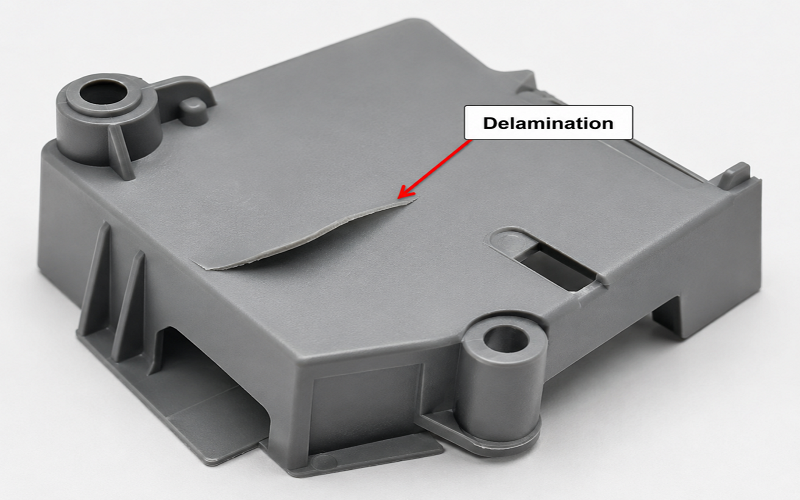
Injection molding is a widely used manufacturing process for producing plastic parts. However, defects frequently occur during production, among which delamination is a common and significant issue affecting product quality.
Delamination refers to the separation or peeling occurring inside or on the part surface, leading to reduced part strength and compromised appearance.
This defect poses significant challenges for manufacturing engineers, quality control specialists, and production managers seeking to optimize process reliability and product durability.
This article is tailored for professionals involved in injection molding operations and quality assurance. It delves into the causes of injection molding delamination and explores effective solutions to help manufacturers refine their processes, minimize defects, and enhance the quality and consistency of their plastic parts.
What Is Injection Molding Delamination?
Injection molding delamination is a common injection molding defect characterized by the separation or peeling of material layers inside or on the surface of the molded part.
Specifically, during the injection molding process, the plastic material fails to fully fuse, resulting in insufficient adhesion between polymer layers and forming a delaminated structure.
This defect not only affects the appearance of the molded part but also significantly reduces its mechanical strength, potentially causing the part to crack or fail during use.
In production, it leads to increased scrap rates, higher rework costs, and delivery delays, directly impacting profitability and customer satisfaction.
In the following sections, we will explore the common causes of delamination, discuss how to identify this injection molding defect during production, and provide practical solutions and preventive strategies to ensure the manufacture of high-quality injection molded parts.
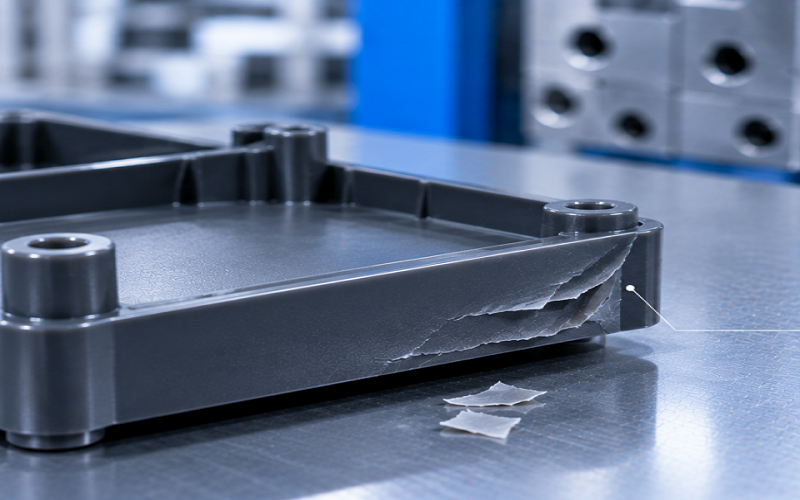
Typical Characteristics Of Delamination In Injection Molding
Injection molding delamination typically manifests in several recognizable ways that can help manufacturers and quality inspectors identify the defect early in the production process.
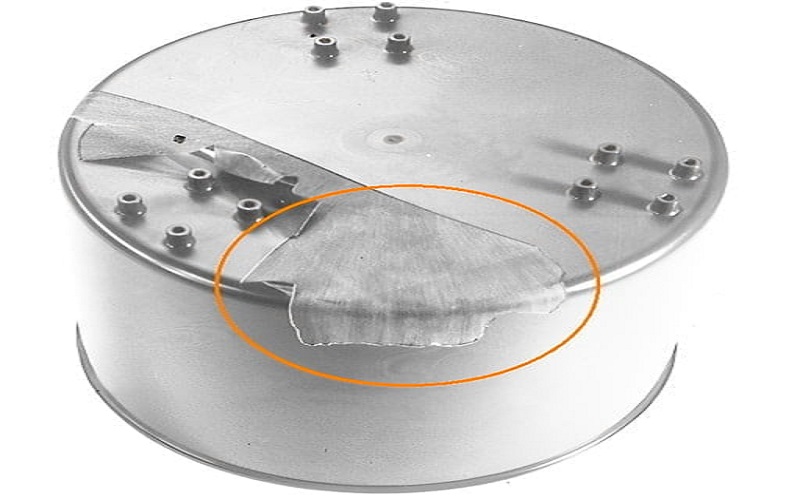
- Surface peeling and flaking: Delamination typically appears as visible peeling or flaking on the plastic surface, ranging from small localized spots to large-area layer separation. This peeling affects both the appearance and functionality of the part.
- Internal interlayer separation: Sometimes delamination is not easily visible on the surface, but internal layer separation weakens the part’s structure, making it prone to cracking or breaking. Such hidden delamination can be detected using ultrasound or X-ray inspection.
- Reduced mechanical strength: Delaminated parts exhibit poor interlayer bonding, resulting in decreased mechanical strength and a higher likelihood of premature failure during use, especially for load-bearing components.
- Surface discoloration and marbling: Delamination is sometimes accompanied by surface discoloration or marbling patterns caused by uneven mixing of resin or additives, indicating poor material bonding.
- Appearance of flow lines and weld lines: Flow lines and weld lines are often found in delaminated areas; these are marks where molten plastic flow fronts meet but fail to fully fuse, commonly occurring near holes or thin walls.
- Sink marks and surface indentations: Uneven cooling causes differential shrinkage of material layers, producing sink marks that not only affect appearance but may also induce internal stresses that promote delamination.
By recognizing these typical features of injection molding delamination, manufacturers can implement targeted inspection protocols and quality control measures to detect and address the defect promptly, ensuring consistent production of high-quality plastic components.
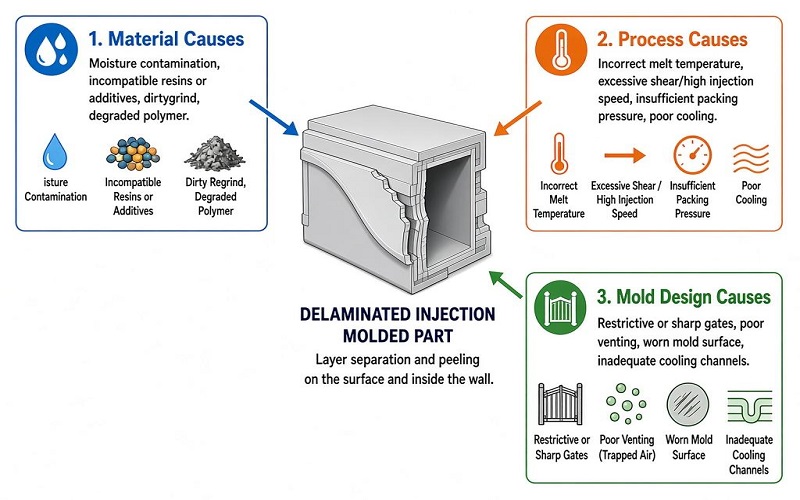
Common Cause Of Delamination In Injection Molding Process
Delamination in injection molding is commonly caused by several factors related to the materials, mold design, and processing parameters. The primary triggering factors can be categorized into the following four major dimensions:
Material-Related Causes
- Moisture Contamination: One of the primary causes of delamination is moisture present in the resin pellets. Moisture turns into steam during the injection process, creating pockets that prevent proper bonding between layers. Pre drying resin pellets is essential to reduce moisture content and prevent delamination.
- Contaminated or Mixed Resins: Using resin that has been contaminated or mixing two plastics or two materials improperly can lead to resin separation and poor fusion, resulting in delamination.
- Excess Release Agents and Coating: Excess release agents coating the mold cavity can interfere with the adhesion of molten plastic to the mold surface, causing flaking surface layers and delamination.
Mold Design Factors
- Mold Cavity and Parting Line Issues: Poor mold design, including improper mold cavity dimensions or worn parting lines, can cause flash and delamination by allowing molten plastic to flow incorrectly or escape.
- Ejector Pins and Runner System: Incorrect placement or malfunction of ejector pins can damage the surface of a molded part during part ejection, contributing to delamination. Similarly, a poorly designed runner system can affect material flow and cause defects.
Injection Process Parameters
- Injection Speed and Filling Speed: Excessive injection speed or filling speed can create high shear stress, leading to delamination. Conversely, too low injection speed may cause short shots and incomplete fusion.
- Melt Temperature and Barrel Temperature: Low melt temperature prevents the molten plastic from properly bonding, while excessively high temperatures can degrade the resin and cause burn marks or discoloration.
- Mold Temperature: Insufficient mold temperature can cause premature cooling of the molten plastic, hindering proper fusion and increasing delamination risk.
- Pressure and Holding Time: Inadequate injection pressure or holding time can result in incomplete filling or poor layer adhesion.
Other Contributing Factors
- Trapped Air and Venting: Trapped air inside the mold cavity can cause burn marks and delamination by creating voids or steam pockets within the part.
- Material Handling and Contamination: Improper material handling leading to contamination or mixing of incompatible materials can cause resin separation and delamination.
- Additives and Flame Retardants: Improperly mixed additives can cause marbling in molded parts. Furthermore, unsuitable flame retardants can interfere with the polymer matrix, causing defects like delamination or unwanted color.
By carefully controlling these factors — from selecting quality resin pellets and pre drying, optimizing mold design and temperature, to fine-tuning injection speed and pressure — manufacturers can significantly reduce the occurrence of delamination and improve the quality of finished parts.
Practical Solutions for Injection Molding Delamination
Addressing injection molding delamination is crucial to ensure product quality and production efficiency. Here are some practical strategies to resolve this issue:
Material Handling and Selection
- Pre-drying Resin Pellets: Use specialized drying equipment to remove moisture from resin pellets beforehand, preventing steam bubbles during injection molding and reducing delamination risks.
- Choosing Quality Raw Materials: Collaborate with reliable material suppliers to ensure the resin used is pure and meets specifications, avoiding delamination caused by cross-contamination or inferior materials.
- Using Virgin Material: Avoid recycled or mixed materials as they may contain impurities or different types of plastics, increasing the likelihood of delamination.
Mold Design Optimization
- Optimizing Gate Design: Properly design gate location and size to ensure uniform flow of molten plastic into the mold cavity, minimizing delamination caused by uneven flow.
- Improving Venting Systems: Enhance mold venting to prevent blistering in molded parts, thereby reducing delamination defects.
- Maintaining Mold Surface: Keep mold surfaces clean and smooth to avoid excessive accumulation of mold release agents, ensuring good adhesion between plastic and mold.
Injection Molding Process Adjustments
- Controlling Injection Speed: Appropriately reduce injection speed to lower shear stress and avoid delamination caused by excessively fast flow.
- Adjusting Melt and Mold Temperatures: Maintain melt and mold temperatures within recommended ranges to ensure thorough melting and even cooling of plastic, promoting interlayer bonding.
- Extending Holding Time: Properly extend holding time to ensure the plastic in the mold cavity is compacted, reducing voids and delamination.
Production Process Monitoring
- Using Purging Compounds: Regularly clean injection molding machines and screws to prevent residual material buildup that can cause color contamination and delamination.
- Monitoring Key Parameters: Continuously monitor injection pressure, temperature, and speed to promptly adjust any abnormalities and prevent delamination.
- Training Operators: Enhance operators’ ability to identify and handle delamination defects, ensuring timely responses during production.
By implementing these multi-dimensional solutions, manufacturers can effectively prevent injection molding delamination defects, improve the mechanical properties and surface quality of components, and meet customer demands for high-quality plastic products.
Conclusion
Injection molding delamination is caused by many factors like poor material quality, mold design, and processing settings. Key causes include moisture in resin, inadequate mold venting, and incorrect injection speeds.
Prevent delamination by pre-drying resin pellets, optimizing gate and vent designs, and controlling melt and mold temperatures precisely. Monitoring production and training operators to spot early defects also helps maintain quality.
Delamination often comes with defects like knit lines and flow marks, which affect appearance and strength. Controlling temperature prevents discoloration and gate freezes, improving product quality.
In short, preventing delamination requires careful control of materials, mold, and process, along with ongoing troubleshooting. With the right approach, manufacturers can produce high-quality, reliable injection molded parts.