
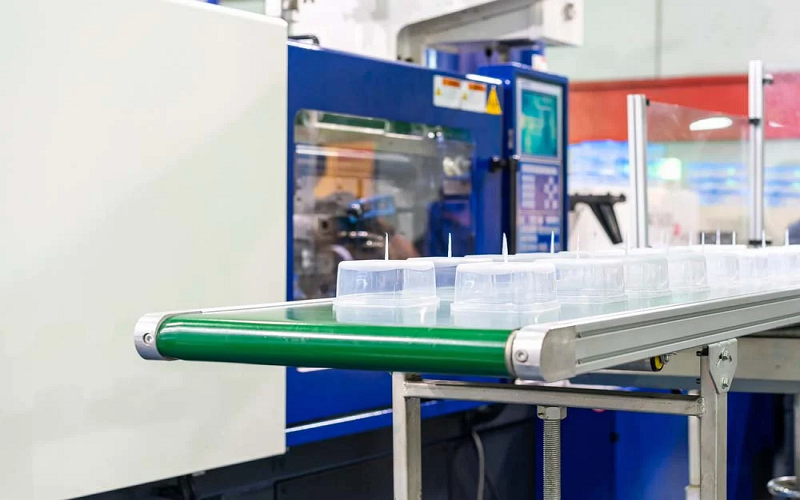
In modern manufacturing, high-transparency plastic products are widely used in consumer electronics, medical devices, automotive parts, and high-end packaging.
Clear and transparent plastic injection molded parts not only require extremely high optical performance but also excellent mechanical strength and surface quality. Clear plastic injection molding, as a specialized injection molding process, can produce transparent parts that are crystal-clear and flawless.
This article will provide a detailed introduction to material selection, process control, common defects, and their solutions in transparent plastic injection molding, helping readers gain a comprehensive understanding of the key points and practical value of this manufacturing process.
What Is Clear Plastic Injection Molding?
Clear plastic injection molding refers to the technology of using highly transparent thermoplastic materials to manufacture optical-grade or highly transparent parts through the injection molding process.
Compared to standard injection molding, clear plastic injection molding demands much higher optical performance, surface finish, and stringent control of flow marks and bubbles.
It requires materials with excellent light transmittance and low haze, alongside precise mold design, injection parameters, and post-processing to ensure superior clarity and visual quality.
Common materials include polycarbonate (PC), polymethyl methacrylate (PMMA), and polystyrene (PS), which are widely selected for their excellent transparency and suitability for transparent injection molding. Compared to glass, transparent plastics are not only lighter in weight but also have better impact resistance.
Moreover, transparent injection molding typically requires molds with high-polish surface finishes and strict drying processes to prevent defects caused by moisture absorption in the materials.
Due to these technical requirements, clear injection molding is more complex than ordinary plastic injection molding, but it can produce high-quality products that meet the stringent demands for transparent components in consumer electronics, medical devices, the automotive industry, and more.
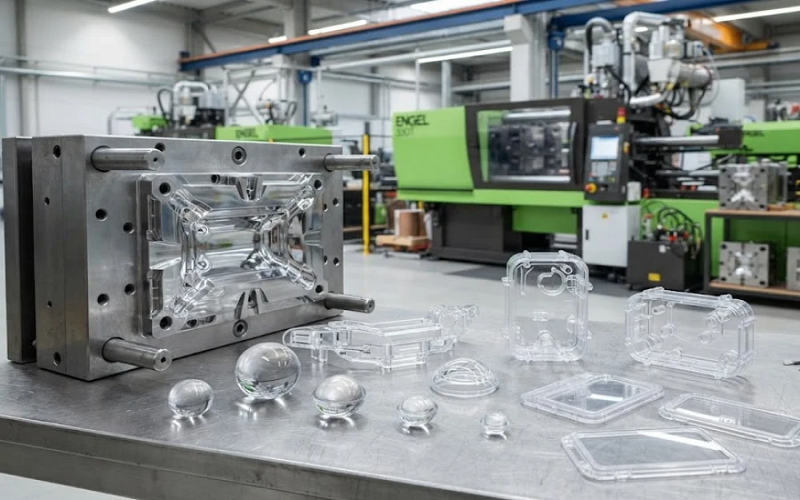
What Materials Are Used For Clear Injection Molding?
Clear plastic injection molding relies on selecting the right materials that offer excellent transparency, mechanical strength, and durability.
Different materials have a significant impact on the optical clarity, UV resistance, chemical resistance, and temperature tolerance of the final product.
Below are the most commonly used transparent plastics in clear injection molding, along with their key properties and typical applications:
Polycarbonate (PC)
Polycarbonate plastic is a popular choice due to its high impact resistance, good optical clarity, and UV resistance. It can withstand extreme temperatures and offers good chemical resistance, making it an ideal choice for safety goggles, automotive light fixtures, and electronic device covers.
Polycarbonate shares UV resistance with acrylic but is stronger.However, PC tends to yellow over time and requires thorough drying before molding to avoid defects caused by moisture absorption.
Polymethyl Methacrylate (PMMA or Acrylic)
Acrylic offer greater clarity and excellent UV resistance, making it ideal for outdoor equipment, lenses, and light fixtures. It is hard and scratch-resistant but more brittle than polycarbonate.
Although injection-molded acrylic has high tensile strength, it is prone to stress cracking under heavy loads. In addition, acrylic absorbs moisture easily and must be thoroughly dried before processing to ensure its transparency and avoid defects.
Polyethylene Terephthalate (PET/PETG)
PET and its glycol-modified variant PETG offer good transparency, toughness, and chemical resistance. These materials are food-grade, non-toxic, and commonly used for packaging and medical device components. PETG has better impact resistance and is easier to process than PET.
Cyclic Olefin Polymer (COP) and Cyclic Olefin Copolymer (COC)
COP and COC are high-purity materials with low birefringence and excellent optical properties. They exhibit high heat resistance and chemical resistance, making them suitable for medical and optical applications requiring optimal clarity and dimensional stability.
High-Density Polyethylene (HDPE)
Though less transparent than other materials, HDPE plastic offers good UV resistance, chemical resistance, and toughness. HDPE is cheaper and less brittle than acrylic,it is often used for containers, bottles, and non-loadbearing parts where translucency is sufficient.
Polypropylene (PP)
Polypropylene is valued for its high flexibility, chemical resistance, and high electrical resistance. While it is not fully transparent, its translucent grades are used in applications like medical containers and packaging for corrosive materials.
Other Materials
Transparent grades of ABS, PS, SAN, TPU, and thermoplastic elastomers are also used depending on the application requirements. Liquid silicone rubber (LSR) is employed in liquid injection molding for optical parts exposed to high thermal loads, such as LED headlights.
Selecting the right material depends on the intended application, required optical properties, mechanical demands, regulatory compliance (e.g., FDA, USP Class VI), and cost considerations.
Understanding the thermoplastic properties and behavior under injection molding conditions is essential for achieving high-quality clear molded parts.
| Material | Clear Grades | Refractive Index | Heat Resistance (HDT) | Impact Strength | Cost | Processing Difficulty | Main Advantages | Main Disadvantages |
|---|---|---|---|---|---|---|---|---|
| PC | 88-90% | 1.58 | High | Excellent | Medium | Medium | High impact strength, good overall performance | Prone to yellowing |
| PMMA | 92-93% | 1.49 | Medium | Poor | Medium | Low | Best optical performance, high hardness | High brittleness |
| PET/PETG | 88-90% | 1.57 | Low | Good | Medium-Low | Medium | Food-grade, good toughness | Average heat resistance |
| COP/COC | 91-92% | 1.53 | Medium-High | Medium | High | High | High purity, low birefringence | High cost, narrow processing window |
| Transparent ABS | 80-85% | 1.54 | Medium | Good | Low | Low | Low cost, easy to process | Average transparency |
Clear Plastic Injection Molding Process
Clear plastic injection molding is a highly specialized manufacturing technique that requires meticulous control over every stage of the process to achieve the desired optical clarity and mechanical performance.
Material Pretreatment
The process begins with the careful selection and preparation of raw materials, which must be of high purity and thoroughly dried to eliminate moisture that could cause defects such as bubbles or haze.
Injection Process
During injection, the molten plastic is injected into the mold cavity under high injection pressure and controlled injection speed. High production speed makes it ideal for mass production of transparent parts.
Temperature sensors monitor the melt and mold temperatures closely, as precise temperature control is vital to prevent defects and ensure uniform solidification.
Cooling and Solidification
After the cavity is filled, the part undergoes a carefully timed cooling phase to solidify the plastic while minimizing residual stresses that could lead to warping or cracking. The cooling time must be balanced to avoid time-consuming delays yet achieve dimensional stability and clarity.
Part Ejection and Post-Processing
Once cooled, the mold opens, and the part is ejected carefully to prevent damage. Post-processing steps may include stress-relieving annealing, surface treatments to enhance gloss or scratch resistance, and assembly with other components.
This injection molding process supports a wide range of various applications, from consumer electronics and medical devices to automotive components and aerospace engine parts.
The ability to produce complex geometries with tight tolerances and good fatigue resistance makes clear plastic injection molding an indispensable technique in engineering high-performance transparent components.
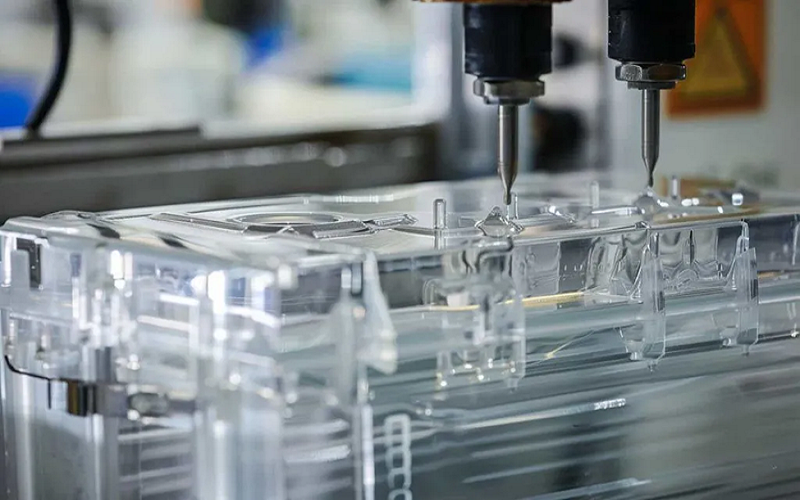
Common Challenges In Transparent Plastic Injection Molding
Transparent plastic injection molding presents unique challenges that require precise control and expertise to overcome.
Optical Defects
One of the primary issues is the formation of defects such as bubbles, flow marks, silver streaks, and haze, which can severely impair the optical quality of the part. These defects often arise from improper drying of materials, inadequate mold design, or suboptimal processing parameters.
Material Moisture Absorption
Moisture absorption is a significant concern for many transparent plastics like PC and PMMA. If the resin is not thoroughly dried before processing, trapped moisture can vaporize during injection, creating bubbles and voids within the molded part. This not only compromises clarity but also weakens the mechanical properties.
Residual Stress And Warpage
Another common challenge is managing residual stresses and warpage, which can cause parts to crack or distort after molding.
These stresses often result from uneven cooling rates or improper injection speeds. Sharp corners and thick sections in the mold design exacerbate these issues by causing differential shrinkage and stress concentration.
Injection Pressure and Shear Heating
High pressure, while necessary to fill intricate mold features and sharp corners, can lead to shear heating and degradation of the polymer, resulting in discoloration or reduced transparency. Balancing injection pressure and speed is critical to maintain material integrity and optical performance.
Temperature Control Challenges
Temperature control throughout the process is also vital. Applying high heat must be carefully managed to prevent thermal degradation or yellowing of the plastic. Precise mold temperature control ensures uniform cooling, reducing internal stresses and improving surface finish.
Difficulties With Thicker Sections
Additionally, achieving consistent optical performance in thicker parts is challenging because increased thickness can amplify imperfections like bubbles and haze. Manufacturers often need to optimize the part geometry and processing conditions to minimize these effects.
Influence Of Ambient Temperature
Environmental factors such as low temperatures in the production facility can affect material flow and cooling behavior, leading to inconsistent quality. Implementing controlled environments and monitoring systems helps maintain stability in the injection molding process.
UV Degradation And Material Selection
Lastly, selecting UV-resistant materials is crucial for applications exposed to sunlight, as UV degradation can cause discoloration and brittleness over time. Incorporating UV stabilizers or choosing inherently UV-resistant polymers like acrylic or polyetherimide (PEI) enhances product durability.
In summary, although clear injection molding involves high technical demands and complex processes, effective avoidance of common defects and production of high-quality transparent parts can be achieved through proper material selection, precise process control, and rigorous quality inspection.
Especially when striving for consistent and superior optical performance, repeated process development and strict quality management are often necessary to ensure the final product meets the expected transparency and stability.
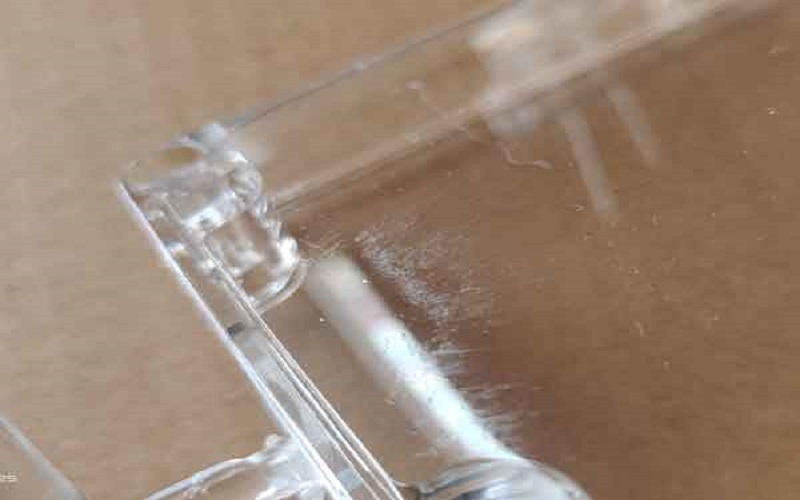
Applications Of Clear Plastic Injection Molded Parts
Clear Plastic Injection Molding, with its excellent optical performance, precise molding capability, and advantages in mass production, has been widely applied across multiple industries that demand high transparency and aesthetic quality. Below are some of the most representative application fields:
1. Optical Components
Transparent injection molding is used to make optical parts like lenses, light guides, and prisms. These require high light transmission, low haze, and minimal distortion. Materials such as PMMA or COP/COC with precise molds ensure clear, glass-like quality.
2. Medical Devices
In medical applications, clear molded parts include syringes, infusion sets, blood collection tubes, and device housings. These parts need to be pure, biocompatible, and sterilizable. Common materials are PETG, COP, and PC, allowing clear visibility of fluids for safety.
3. Consumer Electronics
Transparent parts like phone cases, screen covers, camera lenses, headphones, and smartwatch covers are widely used. They require high clarity, impact resistance, and durability. PC and PMMA are the main materials.
4. Automotive
Clear molded parts in cars include headlamp covers, instrument panel covers, light guides, and sensor covers. These must have good optical quality, weather and heat resistance, and impact strength. PC is commonly used for headlamps, while PMMA is favored for light guides.
5. Packaging and Consumer Goods
High-end packaging like cosmetic and perfume bottles, food containers, and display boxes use clear injection molding for a glass-like look. PET, PETG, and transparent ABS are typical materials, offering good transparency and cost-effectiveness.
6.Aerospace Components
In aerospace, clear injection molding is used to produce components like cockpit instrument covers, cabin lighting lenses, and specialized parts such as aerospace engine components and heat shields. Polyetherimide is selected to withstand extreme operating conditions while maintaining optical clarity.
From precision optical components to everyday consumer products, Clear Plastic Injection Molding continues to expand its application boundaries with its unique performance advantages.
Different industries emphasize various material properties and process precision, so targeted material selection and process optimization are necessary based on specific project requirements.
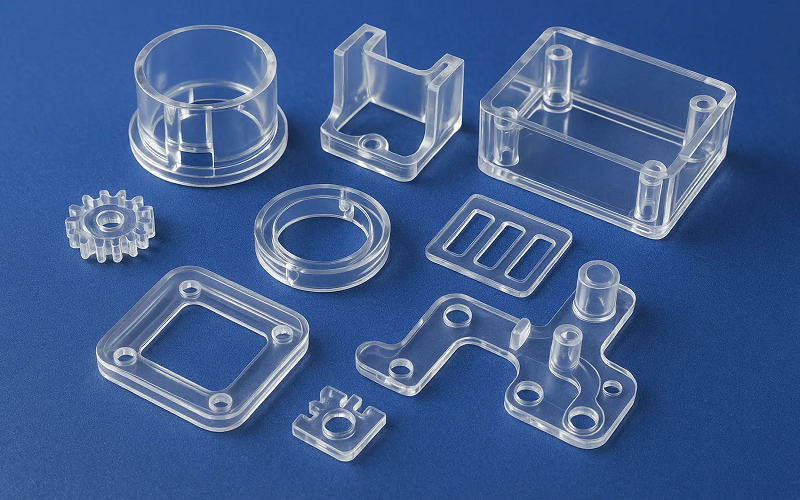
Quality Control Measures Of Clear Injection Molded Parts
When evaluating the quality of clear injection molded parts, several key optical concepts are commonly used:
- Optical Clarity: Refers to the transparency of the material itself and the molded part, determining whether light can pass through without distortion, ensuring a crystal-clear appearance.
- Light Transmission: Indicates the percentage of light passing through the part; high-quality clear molded parts usually require a light transmission rate above 90%, which is critical for applications demanding excellent visibility.
- Haze: A measure of the degree of light scattering within the material; the lower the haze value, the clearer and more free of milky or foggy appearance the part looks, directly impacting the visual quality.
- Yellowness Index: Assesses the degree to which the material undergoes yellowing over time or due to processing; a lower yellowness index indicates better color stability and long-term aesthetic performance.
In addition to these optical parameters, physical and mechanical properties such as surface gloss, dimensional accuracy, and absence of defects like bubbles or flow marks are also crucial for assessing the overall quality of clear injection molded parts.
Advanced quality control methods include the use of haze meters, spectrophotometers, and polarized light inspection to detect internal stresses and ensure consistent optical performance.
Conclusion
Clear Plastic Injection Molding, as a high-precision and demanding molding technology, relies fundamentally on the correct selection of materials, precise mold design, strict control of process parameters, and systematic prevention of defects.
From optical components to medical devices, from consumer electronics to automotive and high-end packaging, transparent injection molding continues to meet the market’s demand for high-quality clear products with outstanding transparency and reliable performance.
Only by deeply understanding material properties, precisely controlling every process step, and establishing a comprehensive quality inspection system can stable and efficient transparent injection molding production be truly achieved, bringing core competitiveness to products that combine both aesthetics and functionality.