
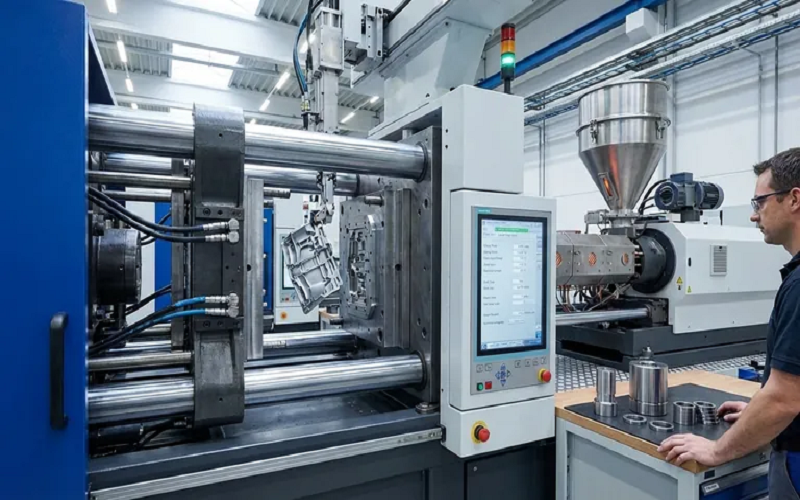
Injection molding is an important and widely used technology in modern manufacturing, favored for its efficiency, precision, and ability to accommodate complex geometries, making it the preferred method for producing plastic products.
The parameter settings during the injection molding process have a decisive impact on product quality and production efficiency.
Proper adjustment of key process parameters such as injection pressure, melt temperature, mold temperature, and cooling time can effectively reduce product defects like shrinkage, warpage, and surface imperfections, while also enhancing the mechanical properties and dimensional stability of injection molded parts.
This article will systematically explore the core elements of injection molding process parameters and their optimization methods, aiming to provide theoretical support and practical guidance for injection molding manufacturers to produce high-quality plastic injection molded products.
What Are Injection Molding Parameters?
Injection molding parameters refer to the various settings and conditions that control the plastic injection molding process. They are not fixed values but dynamic parameters that need to be optimized and adjusted according to material properties, part structure, mold design, and equipment capabilities.
These parameters are used to precisely control the flow behavior of the plastic melt, the filling process, the packing degree, and the cooling and solidification process.
Proper management of these parameters is crucial for obtaining injection molded parts with the desired shape, surface finish, dimensional accuracy, and structural integrity.
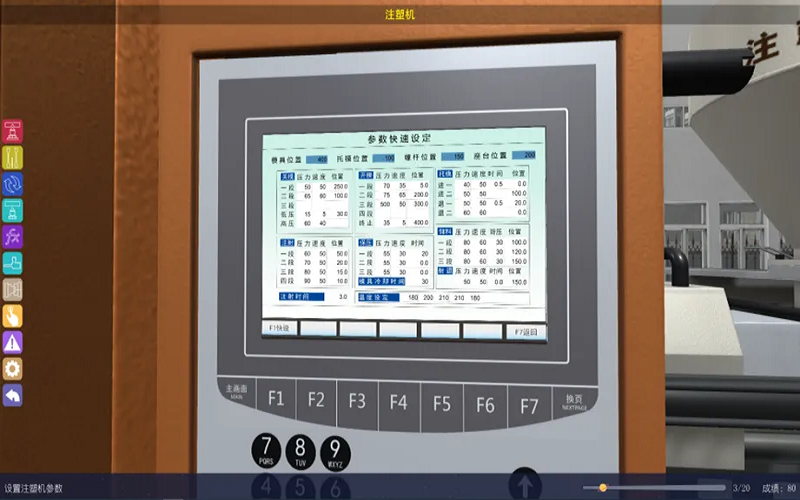
Key Parameters Of Injection Molding Process
The injection molding process parameters can be broadly categorized into core parameters related to temperature, pressure, speed, and time.
These include melt temperature, mold temperature, injection pressure, packing pressure, holding pressure, injection speed, screw speed, cooling time, and cycle time. Each parameter affects specific aspects of the molding process and the quality of the final product.
Temperature Parameters
Temperature parameters are crucial in the injection molding process, directly affecting melt flow, cooling rate, and final product quality. The main temperature parameters include:
- Melt Temperature: The temperature at which the plastic is melted before injection. It must be controlled within an appropriate range to ensure complete mold filling. For example, ABS plastic typically melts between 210°C and 270°C. Increasing the melt temperature reduces the polymer’s viscosity. Too low a temperature can cause incomplete filling, while too high a temperature may damage the material.
- Mold Temperature: The temperature of the mold cavity surface, which influences cooling rate, shrinkage, and warpage. For polycarbonate , the mold temperature generally ranges from 80°C to 120°C. Maintaining a stable mold temperature helps reduce internal stresses and improve dimensional accuracy.
- Nozzle Temperature: Controls the temperature of the molten plastic flowing into the mold and should be close to the melt temperature to prevent premature cooling or material degradation.
- Barrel Temperature: The temperature of the barrel where the plastic melts and mixes, usually controlled in zones to ensure uniform melting and mixing.
Well-calibrated temperature control systems and proper mixing are key to maintaining stable injection temperatures and preventing defects.
Pressure Parameters
Injection pressure is the force applied by the injection molding machine to push molten plastic into the mold cavity. This pressure must be high enough to fill intricate mold details and counteract the resistance caused by the mold design and material viscosity.
- Injection Pressure:This is the main driving force during the filling stage. The typical injection pressure ranges from 500 to 1500 bar, depending on the plastic material and the complexity of the part.Low injection pressure may lead to incomplete filling, while excessive pressure can cause flashing issues.
- Holding / Packing Pressure: After filling is complete, continue applying pressure to compensate for cooling and shrinkage.Holding pressure is usually 50% to 65% of the injection pressure.
- Back Pressure: The resistance encountered during screw retraction in the plasticizing stage, affecting melt uniformity and density. Back pressure in injection molding is typically set at 5-20 bar.
- Clamping Force: Clamping force is used to tightly clamp the two halves of the mold together to resist the injection pressure, preventing mold opening or flash formation.
Injection Speed
Injection speed controls the rate at which molten plastic is injected into the mold cavity. This parameter affects the filling time, flow pattern, and shear rate of the molten plastic. Optimizing injection speed helps prevent defects such as jetting, burn marks, or weld lines.
A speed that is too slow may cause premature solidification and incomplete filling, while a speed that is too fast can lead to turbulence and internal stress. Injection speed must be adjusted based on the plastic material’s flow characteristics and the complexity of the mold.
Time Parameters
Time-related parameters include injection time, holding time, packing time, and cooling time.
- Injection time : Injection time refers to the duration of the molten plastic injection phase, which typically lasts less than 10 seconds for most parts.
- Holding / Packing Time : Holding time or packing phase is the period during which pressure is maintained to compensate for material shrinkage and solidify the part, preventing sink marks and internal voids.
- Cooling Time : Cooling time is the period allowed for the molten plastic to solidify within the mold before ejection, which depends on part thickness and mold temperature and typically ranges from 10 to 30 seconds for thin-walled parts.
- Cycle Time: Cycle time refers to the total duration required to complete one full injection molding cycle, including injection, holding, cooling, and mold opening phases. It is a critical parameter for production efficiency, as shorter cycle times lead to higher throughput.
Proper timing ensures dimensional stability and minimizes warpage and internal stress.
Additional Parameters
Other important parameters include back pressure, which affects the plastic melt quality and mixing during screw retraction; screw speed, which influences the melting and homogenization of the raw material; and clamping force, which holds the mold halves together to resist the injection pressure and prevent mold opening or flash.
Understanding and controlling injection molding parameters is essential for minimizing warpage, volumetric shrinkage, uneven cooling, and surface defects while maximizing dimensional accuracy and structural integrity.
This optimization process leads to improved product performance, reduced waste, and cost-effective manufacturing in plastic injection molding.
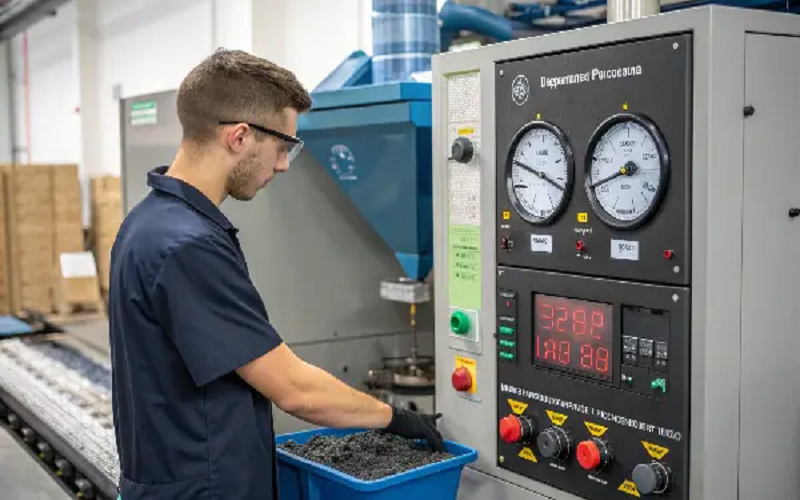
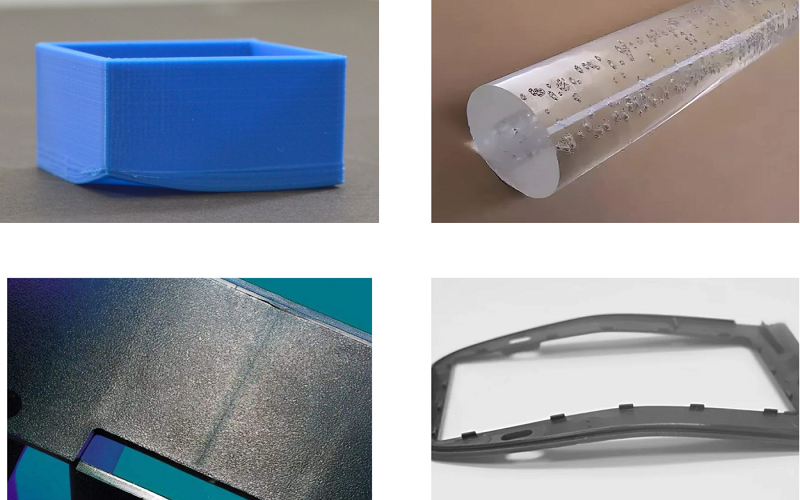
Common Defects Caused by Incorrect Injection Molding Process Parameters
Injection molding process parameters must be precisely controlled to avoid a range of common defects that compromise the quality and functionality of the final plastic parts. Improper settings can lead to issues such as:
Shrinkage
Volumetric shrinkage occurs as the molten plastic cools and solidifies, causing the part to contract. Excessive or uneven shrinkage can result in dimensional inaccuracies and poor fit. Shrinkage values can reach up to 5.6% if not properly managed, which can significantly affect part quality.
Warpage
This defect involves the deformation or bending of the molded part, often caused by uneven cooling, residual stresses, or improper packing pressure. Warpage can be reduced by up to 61.2% through optimized process parameters. Warpage prediction and optimization are critical to ensuring dimensional stability.
Sink Marks
These are depressions or dimples on the surface of the part caused by insufficient packing pressure or inadequate holding time, leading to localized shrinkage.
Flash
Flashing occurs when excessive injection pressure or clamping force causes molten plastic to seep out of the mold cavity, creating unwanted thin layers on the part edges.
Short Shots
When the injection pressure or injection speed is too low, the mold cavity may not fill completely, resulting in incomplete parts.
Burn Marks
These are discolorations or dark spots caused by trapped air or overheating of the plastic melt.
Excessive Shrinkage
Occurs when holding pressure or packing pressure is insufficient, leading to larger than acceptable shrinkage and dimensional instability.
Addressing these injection molding defects requires careful machine calibration and adjusting parameters such as injection pressure, packing pressure, melt temperature, mold temperature, cooling time, and injection speed.
Advanced monitoring and control systems, including neural network models, can assist in warpage prediction and warpage reduction by dynamically adjusting injection molding process based on real-time data.
Advanced Techniques For Injection Molding Process Optimization
Modern injection molding process optimization often involves advanced techniques such as response surface methodology, artificial neural networks, genetic algorithms, and multi-objective optimization design.
These methods enable manufacturers to systematically analyze and improve the complex interactions between various process parameters.
Response Surface Methodology (RSM)
It is a statistical technique that models and analyzes problems in which a response of interest is influenced by several variables. It helps in identifying the optimal levels of injection molding parameters to achieve desired quality characteristics while minimizing defects.
Artificial Neural Networks (ANNs)
Artificial neural networks mimic the human brain’s neural structure to model nonlinear relationships between injection molding parameters and product quality outcomes. ANNs can predict defects like warpage and shrinkage based on input parameters, allowing for proactive adjustments.
Genetic Algorithms (GAs)
Genetic algorithms are inspired by natural selection and genetics, used to search for the best combination of process parameters by iteratively selecting, combining, and mutating parameter sets.
This approach is effective for solving multi-objective optimization problems where trade-offs between conflicting goals, such as minimizing shrinkage and surface roughness, must be balanced.
Multi-Objective Optimization Design
Multi-objective optimization design techniques enable simultaneous optimization of multiple conflicting objectives.
For example, manufacturers can optimize injection pressure and cooling time to reduce warpage while maintaining surface quality. These designs often use Pareto fronts to present a range of optimal solutions, giving decision-makers flexibility in parameter selection.
Incorporating these advanced optimization techniques into the injection process enhances the precision and efficiency of the injection unit, improves the cooling process through better mold temperature control and innovative cooling channel designs like conformal cooling channels, and achieves higher injection pressures with minimized defects.
This leads to improved surface quality, warpage optimization, and overall energy efficiency in the injection molding process.
Conclusion
Mastering and systematically optimizing the injection molding process parameters is the core to improving product quality, shortening production cycles, and reducing defect rates.
Since parameters influence each other, only through scientific settings and continuous optimization from a holistic perspective can stable production with high quality and high efficiency truly be achieved.
It is recommended to implement the following steps:
- Start with the material datasheet — Refer to the recommended process window provided by the raw material supplier to determine the basic ranges for temperature, pressure, and other parameters.
- Perform initial setup — Complete machine parameter settings in the order of “temperature → pressure → speed → time.”
- Conduct single-factor validation — Adjust only one parameter at a time, observe changes in part weight, dimensions, and appearance to identify key influencing factors.
- Establish continuous monitoring mechanisms — Use real-time monitoring of process data, cushion volume, pressure curves, etc., combined with adaptive control or regular inspections to maintain process stability.
True optimization has no “one-size-fits-all” standard answer. Please combine the structural characteristics of your own product, mold design, and material properties to continuously verify and adjust during actual production.
Only by turning theoretical knowledge into targeted practice can higher quality and better benefits be continuously achieved.