
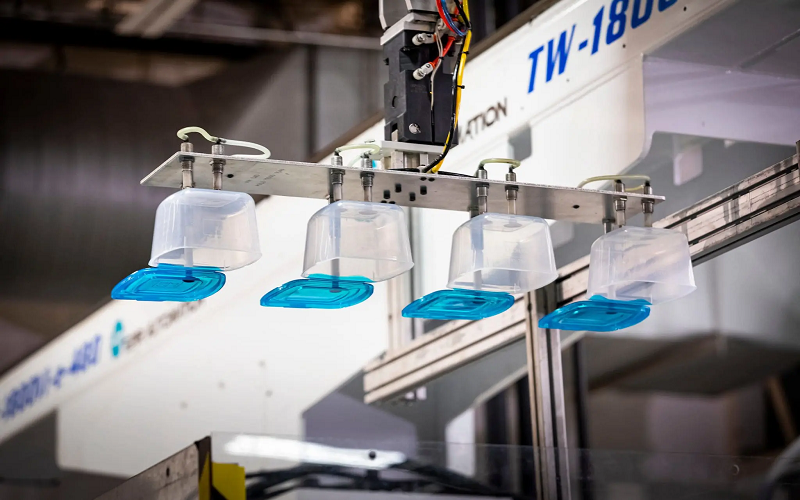
In today’s competitive manufacturing landscape, product complexity continues to rise while cost and assembly time remain under constant pressure.
Traditional single-shot injection molding often falls short when products demand multiple materials, colors, or soft-hard combinations in a single component.
This is where multi-shot injection molding has emerged as a powerful solution. By injecting two or more materials sequentially into the same mold, manufacturers can create sophisticated parts with superior functionality, aesthetics, and structural integrity—without the need for secondary assembly.
This article will provide a detailed introduction to the process flow, advantages, and applications of multi-shot injection molding across various industries.
Whether you are an engineer evaluating new manufacturing processes or a decision-maker seeking to improve product quality and reduce costs, this article will offer clear and practical guidance for understanding and applying this advanced molding technology.
What Is Multi-Shot Injection Molding?
Multi-shot injection molding, also known as multi-shot molding or multi-material molding, is an advanced injection molding process that allows the production of plastic parts from two or more different plastic materials or colors in a single manufacturing cycle.
Unlike traditional injection molding, which uses one injection molding machine and one mold cavity to form a part from a single material, multi-shot injection molding uses specialized injection molding machines equipped with multiple injection units. They provide tested reliability and consistent output over time.
These machines sequentially inject different plastic materials into the same mold, which typically contains multiple cavities and cores designed to accommodate the complex layering or combining of materials.
Multi-shot injection molding offers the ability to produce complex geometries and multi material plastic parts that would be difficult or impossible to achieve with traditional single-shot molding or post-molding assembly.
For example, manufacturers can combine rigid and soft touch grips in one component, integrate different colors seamlessly, or create multi-layered parts with varying material properties in one mold.
This process is widely used in automotive interiors, consumer electronics, medical devices, and household appliance buttons, significantly reducing secondary assembly or bonding steps, thereby lowering manufacturing costs and shortening production cycles.
How Multi-Shot Injection Molding Works?
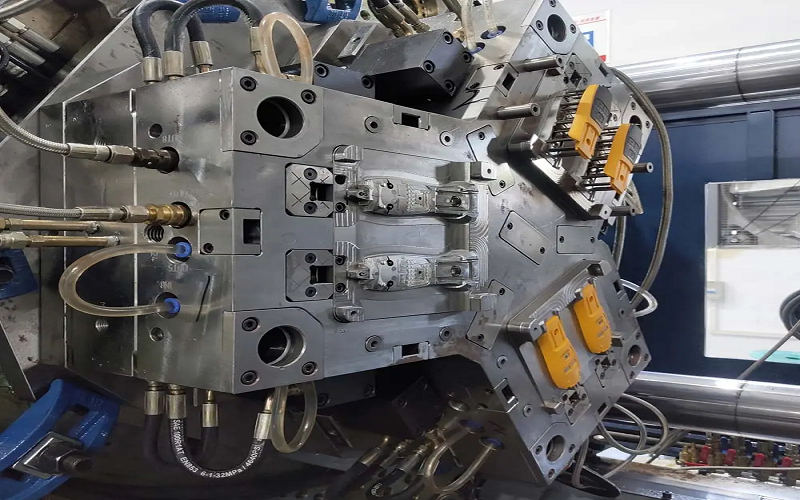
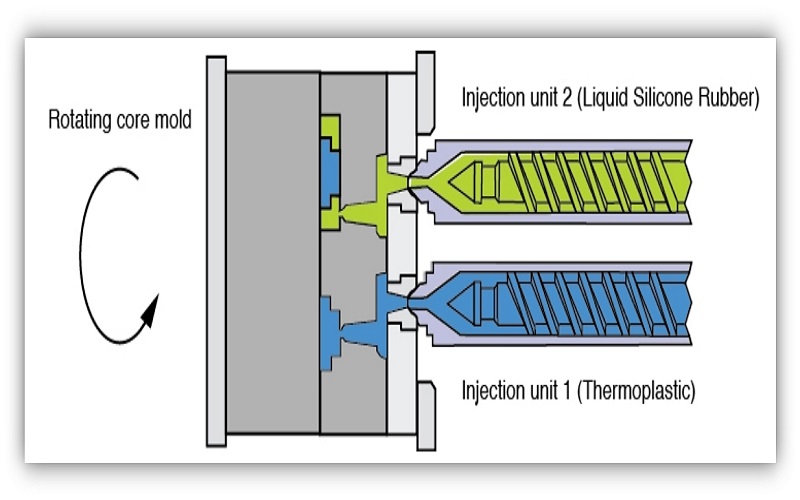
The multi-shot injection molding process begins with the injection of the first material, often referred to as the first material or substrate, into a mold cavity. This initial injection forms the base or core of the part. The mold opens or rotates within the machine to reposition the part for the subsequent injection.
Next, the second material, which can be a different material or color from the first, is injected into the mold to cover, surround, or bond with the first material.
This second material injection is sometimes called the second shot. The two materials fuse together while still hot, creating a strong molecular bond that enhances the durability and precision of the final multi material parts.
Throughout the process, the mold is carefully cooled and heated to optimize the solidification and bonding characteristics of each material. Computer-controlled injection molding machines regulate the speed, pressure, and temperature to ensure consistent quality and efficiency.
This integration of two or more materials in a single molding cycle eliminates the need for secondary assembly or bonding steps, significantly improving manufacturing efficiency and speed.
The resulting single part combines the benefits and features of the different materials, such as rigid strength from one material and soft-touch surface from another, enhancing both functionality and aesthetics.
Types Of Multi Shot Molding
Multi-shot injection molding can be categorized based on the number of materials injected, the mold design, and the specific molding techniques used. Understanding these types helps manufacturers select the best approach for their product requirements.
Two-Shot Injection Molding (Double Shot Injection Molding)
This technique also known as double shot molding or two shot molding, is the most common form of multi-shot molding, in which two different materials or colors are sequentially injected into the mold during one cycle.
The process involves first injecting one material to form a substrate or base part, followed by a second injection of a different material that bonds to the first.
Both materials fuse at high temperature to form a strong molecular bond. It is suitable for producing products that combine rigid and soft parts, such as components with soft-touch grips.
Two shot injection molding is widely used to create parts with varying characteristics, such as combining a rigid plastic substrate with a soft-touch overmold for enhanced grip and comfort.
Overmolding
This is a related process often considered a subset of multi-color injection molding. It involves injecting a second material onto an existing single part to form soft grips, seals, or decorative layers. Overmolding can be completed using multi-color injection molding machines or done in separate steps.
Co-Injection Molding
This technology injects two different materials simultaneously or sequentially to produce a single part with a multi-layer structure.
Typically, a core material (such as low-cost or recycled plastic) is injected first, followed by an outer layer material (such as high-quality or aesthetic plastic), achieving an optimized combination of material properties.
These three multi-color injection molding processes each have their characteristics and are suitable for different product design requirements. All can enhance product functionality, aesthetics, and manufacturing efficiency.
With continuous advancements in multi-color injection molding technology, modern multi-shot molding equipment is equipped with multiple injection units and intelligent control systems, enabling more complex designs and higher production efficiency.
Advantages Of Multi-Shot Injection Molding
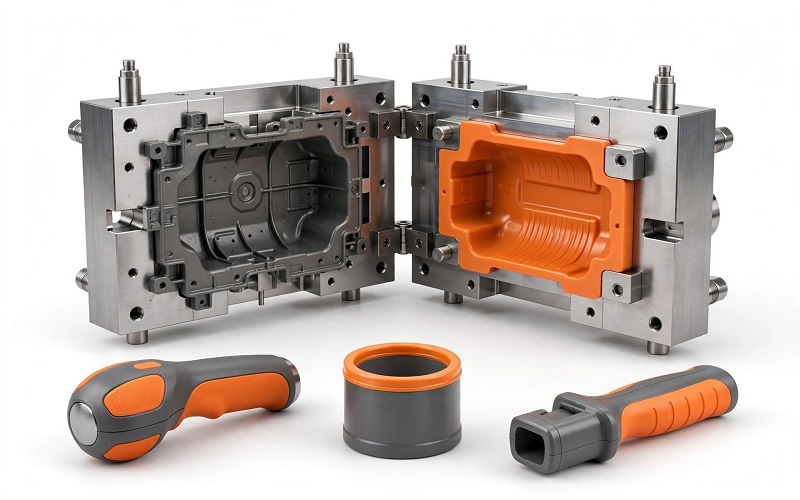
Multi-shot injection molding offers numerous advantages that make it an attractive choice for manufacturers looking to improve product quality, reduce costs, and streamline production. Here are some of the key benefits:
Enhanced Product Design Flexibility
The ability to combine two parts or more with different materials, colors, or textures in a single molding cycle opens up vast design possibilities.
Manufacturers can create complex, multi-functional parts with integrated features such as soft-touch grips, rigid structural components, or decorative elements. This flexibility enables innovation and differentiation in product design.
Strong Molecular Bonding
Unlike secondary assembly methods that rely on adhesives or mechanical fasteners, multi-shot injection molding produces a solid molecular bond between the materials.
This bond is formed while materials are still hot, resulting in superior adhesion and enhanced product durability. This strong bond reduces the risk of delamination or separation during use.
Reduced Production Cycle Time
By integrating multiple material injections into a single mold and cycle, multi-shot injection molding eliminates the need for separate molding, assembly, and bonding steps.
This consolidation significantly reduces production cycle times and increases throughput, enabling faster time-to-market for complex products.
Cost Savings
Combining multiple processes into one reduces labor, assembly, and material handling costs. Additionally, the process minimizes waste by precisely injecting only the required amount of each material.
This efficiency lowers raw material consumption and overall manufacturing expenses. Used multi-shot machines offer advanced features at lower costs.
Improved Aesthetics and Functionality
Multi-shot injection molding allows seamless integration of colors and textures, enhancing the visual appeal of products without additional finishing. It also enables the combination of rigid and flexible materials in one part, improving ergonomics and user experience.
Overall, multi-shot injection molding is a highly efficient and precise method that enhances product design flexibility, improves materials bond strength, reduces waste, and saves money by combining two processes into one machine and mold setup.
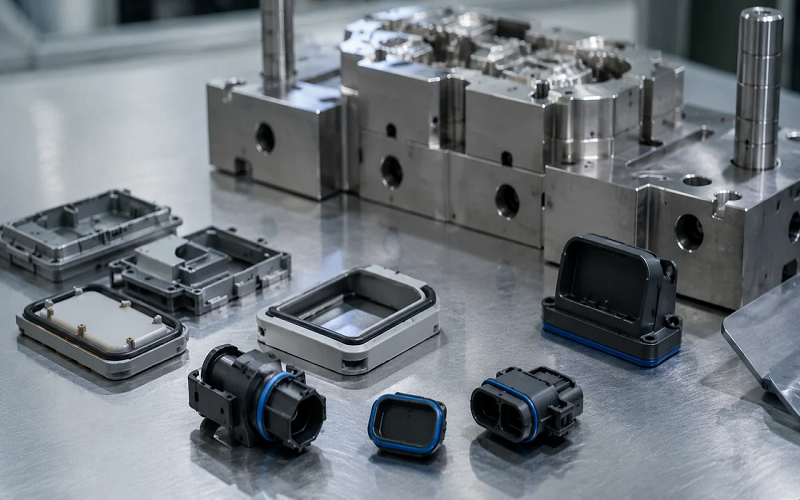
Applications of Multi-Shot Injection Molding
Multi-shot injection molding is widely used across various industries due to its ability to produce complex parts with multiple materials and colors in a single manufacturing cycle. This process is especially valuable in applications where enhanced functionality, aesthetics, and durability are critical.
- Automotive Industry: In automotive manufacturing, multi-material injection molding is commonly used to produce interior components such as dashboard buttons, soft-touch grips, and decorative trim. This process enables the combination of rigid and flexible materials, enhancing ergonomic performance and durability.
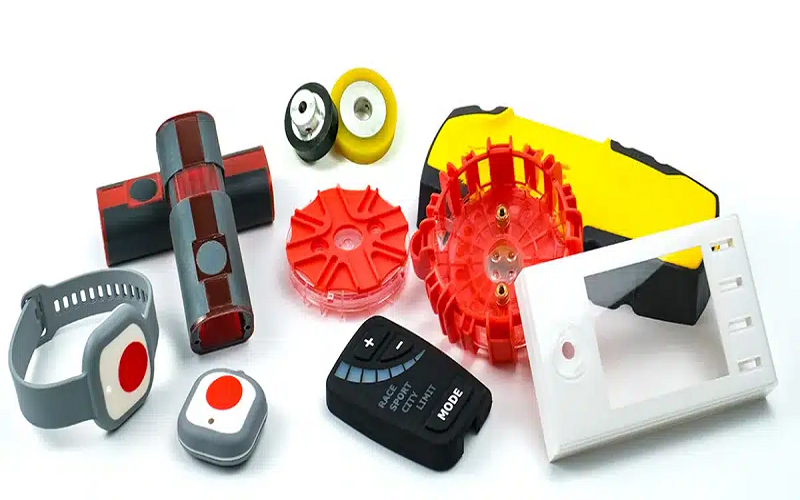
- Consumer Electronics: Devices like smartphones, remote controls, and headphones often require the integration of soft grips or flexible seals with rigid structural parts. Multi-shot molding achieves seamless integration of buttons, housings, and touch interfaces in different colors and textures.
- Medical Devices: Used to manufacture ergonomic grips for surgical tools, integrated seals, and multi-material components, ensuring sterility and durability. For example, surgical instrument handles combine a rigid plastic core with a non-slip soft outer layer to enhance safety during use.
- Household Appliances: Multi-material components in kitchen tools, power tool handles, and toothbrushes improve comfort and functionality. Multi-shot molding combines hard plastics with soft rubber materials to create ergonomic grips and seals.
- Other Applications:Additional applications include automotive lighting components, sporting goods, and toys where multi-material integration improves performance and aesthetics.
Overall, the versatility and efficiency of multi-shot injection molding make it an ideal choice for manufacturers aiming to produce high-quality, multi-material parts with reduced costs and faster production times.
Conclusion
Overall, multi-shot injection molding is a highly efficient and precise method that enhances product design flexibility, improves materials bond strength, reduces waste, and saves money by combining two processes into one machine and mold setup.
Additionally, multi-shot molding lowers production cycle times, minimizes waste, and cuts overall manufacturing costs, especially when using used multi-shot machines with advanced features at lower prices. Its broad applications across automotive, consumer electronics, medical devices, and household appliances underscore its versatility and value.
Manufacturers seeking to improve product aesthetics, performance, and cost-efficiency will find multi-shot injection molding an indispensable technology for modern plastic part production.