
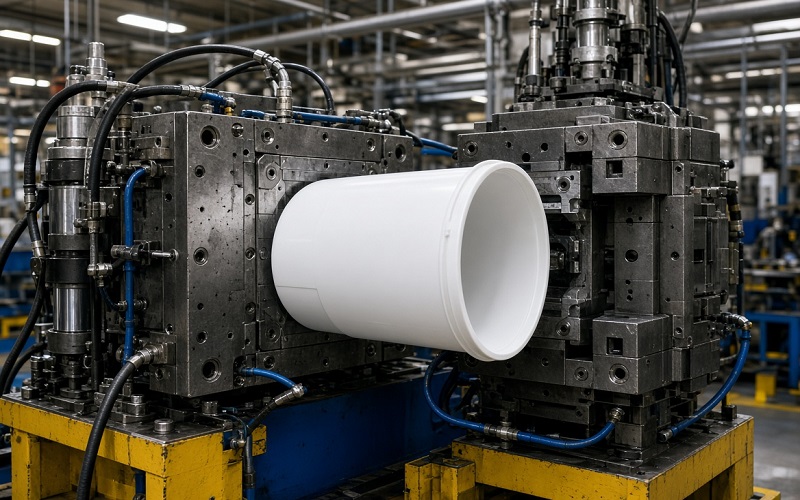
Plastic buckets, as indispensable containers in daily life and industrial production, are widely used in various industries such as food, chemicals, paints, and agriculture.
They offer advantages like lightweight, corrosion resistance, low cost, and strong durability, making them the mainstream choice to replace traditional metal and glass containers.
With continuous advancements in manufacturing technology, the production processes and material selection for plastic buckets have become increasingly diverse and specialized.
This article will delve into the main manufacturing processes and materials used of plastic buckets, helping readers gain a comprehensive understanding of the key technologies from raw materials to finished products, and providing references for actual production and process optimization.
What Is Plastic Bucket?
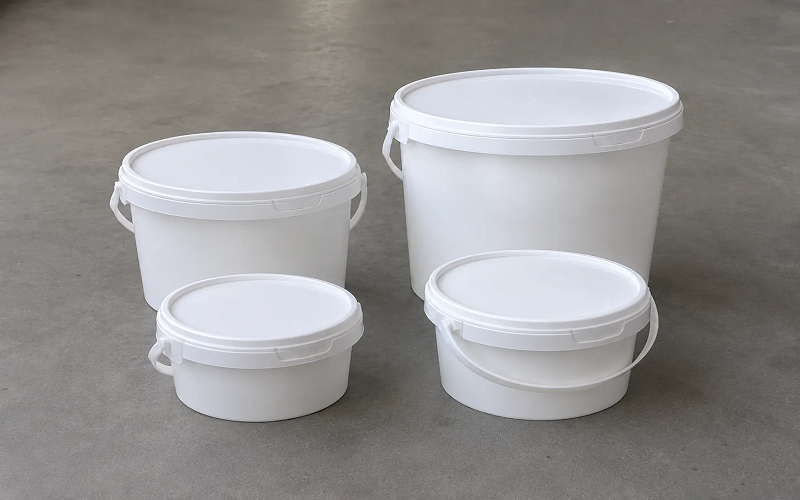
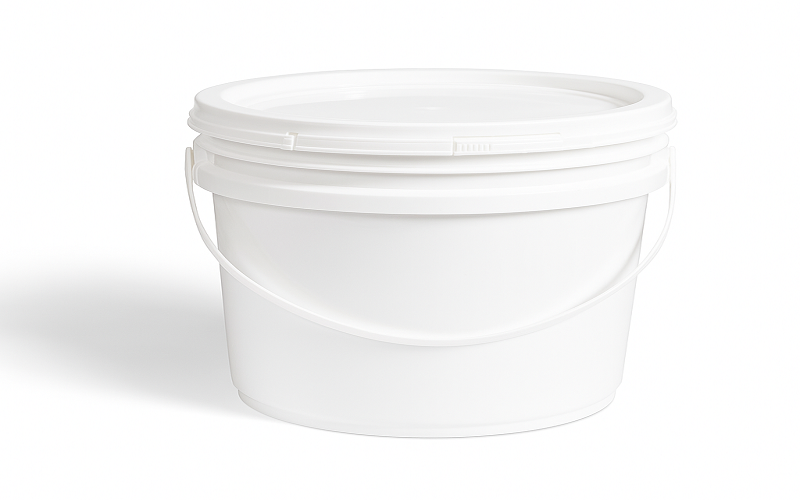
Plastic bucket (plastic pail) is mainly made of thermoplastic materials and processed using blow molding, injection molding, or rotational molding techniques. They come in various sizes and configurations and can be custom-engineered according to different specifications.
These buckets can be used as disposable packaging containers or are suitable for reuse, widely applied in modern packaging and material handling fields, making them one of the most common plastic products.
According to industry research reports, the global plastic bucket market size is expected to reach approximately 6.8 billion USD by 2025, with a steady compound annual growth rate of 4% to 6% in the coming years. It is anticipated that the market size will surpass 10 billion USD by the mid-2030s.
In response to the rapidly expanding market demand, plastic bucket manufacturers not only focus on product quality but also emphasize energy saving and cost-effectiveness during the production process.
By optimizing mold design and production line configuration, they achieve efficient mass production to meet the diverse needs of customers across various industries.
Many plastic bucket manufacturers offer customization services, including specialized lid designs, custom logo printing, and a variety of accessories, widely used in the food industry, chemical industry, paint manufacturing, agriculture, and other fields.
Types Of Manufacturing Technologies For Plastic Bucket
The types of manufacturing technologies for plastic buckets encompass various advanced processes, mainly including injection molding, blow molding, and rotational molding.
Each technology has its unique advantages and applicable scope, meeting the production demands for plastic buckets of different specifications and uses.
Injection Molding
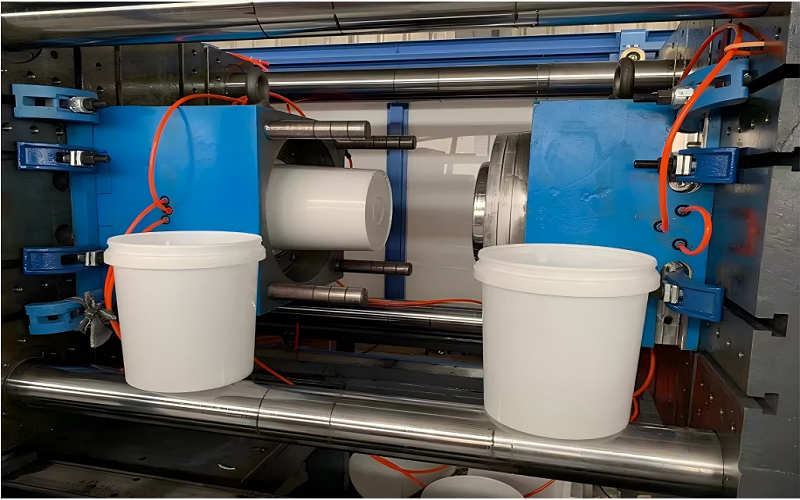
Injection molding is one of the most commonly used processes in plastic bucket manufacturing. This technology involves heating and melting plastic raw materials, then injecting them under high pressure into metal molds to cool and form.
It can efficiently produce plastic pails with complex structures and precise dimensions. Injection molding is suitable for mass production, especially in industries like food and chemicals where high product quality and dimensional accuracy are required.
Injection molding machines are divided into hydraulic and electric types. Hydraulic machines are suitable for producing buckets with thicker walls, providing strong clamping force; electric machines can more precisely control injection parameters, reduce energy consumption, and improve production efficiency and product consistency.
Blow Molding
Blow molding is mainly used to manufacture hollow plastic products, including larger plastic buckets and lids. The blow molding process first melts and extrudes plastic into a tubular preform (called a parison), then places it into a mold.
Compressed air is used to inflate the plastic parison, causing it to closely fit the inner wall of the mold and solidify into shape.
Blow molding processes include extrusion blow molding, injection blow molding, and stretch blow molding, among which extrusion blow molding is the mainstream method for plastic bucket manufacturing.
It is suitable for producing buckets with uniform wall thickness and high strength. Blow molding equipment has a relatively simple structure and lower mold costs, making it suitable for medium-volume production.
Rotational Molding
Rotational molding involves placing plastic powder or granules into a hollow mold, heating them until melted, and allowing the material to evenly coat the mold surface during rotation.
This process is suitable for producing large plastic buckets with thicker walls, seamless structure, good sealing, and durability. Rotational molding has a longer production cycle and is suitable for small-batch or customized production.
Other Auxiliary Technologies
Modern plastic bucket manufacturing also integrates automation equipment such as automatic trimming machines, robotic arms, and online inspection systems to improve production efficiency and product quality.
Meanwhile, cooling channel designs are incorporated in molds to optimize temperature control and prevent deformation and defects.
Compressed air plays a key role in the blow molding process, ensuring the plastic parison expands evenly to form the ideal bucket structure. Additionally, many manufacturers adopt advanced technologies and equipment like those from Encore Plastics to enhance production stability and sustainability.
In summary, the diversification and continuous advancement of plastic bucket manufacturing technologies make the production process more efficient and the product quality higher, capable of meeting market demands for plastic buckets of various specifications, performance, and appearances.
The Complete Manufacturing Process Of Plastic Bucket
Taking injection molded plastic buckets as an example, the complete manufacturing process is divided into the following steps:
- Mold Design and Manufacturing: Use 3D models to create hardened steel molds (such as P20 or H13 steel). Mold design is critical to prevent defects like uneven wall thickness and leakage. Injection molded buckets require heavy-duty molds typically machined from steel or aluminum., with cooling channels inside the mold to control molding temperature.
- Melting and Injection : Melt plastic raw material pellets and use injection molding machines to inject the molten plastic into steel molds under high pressure. Advanced factories may use in-mold labeling (IML) technology at this stage to fuse brand labels directly onto the bucket body.
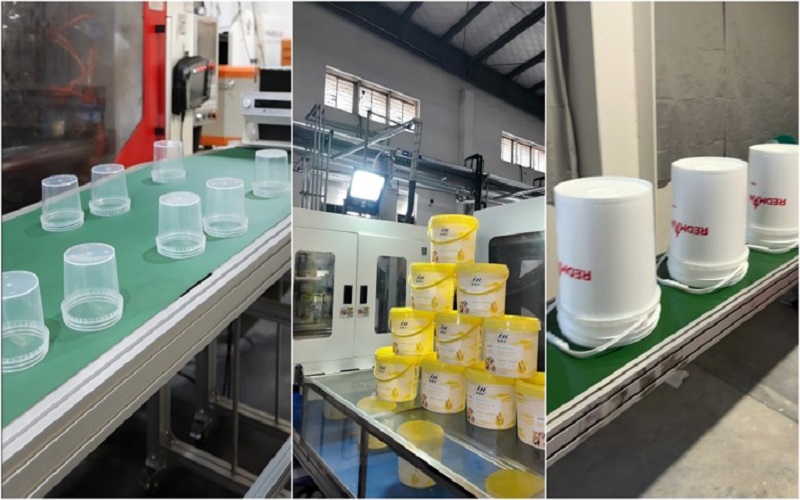
- Cooling and Demolding: Cooling water circulates inside the mold to quickly solidify the plastic, then the bucket body is ejected. The design of cooling channels helps prevent product deformation and ensures dimensional accuracy. The demolding process must ensure the bucket surface is not damaged.
- Finishing: Post-processing includes trimming excess plastic, installing handles, and labeling. Trimming of excess plastic edges is usually done manually or by robotic arms. Handle installation can use metal wire or plastic materials to ensure load-bearing performance. Labeling can be automated to improve efficiency.
- Quality Inspection: Quality control checks for the bucket body include leak tests, drop tests, and dimensional accuracy inspections. These tests ensure the product meets usage standards and customer requirements.
In addition, the cycle time for plastic bucket production can be quantified and optimized for efficiency based on the bucket’s capacity, structural complexity, and customer requirements.
Small-capacity, high-precision products may adopt the injection blow molding process, while large-capacity, thick-walled products are more suitable for rotational molding.
Common Materials Used In Plastic Pails Manufacturing
Plastic buckets are primarily manufactured from thermoplastic polymers, chosen for their durability, chemical resistance, and suitability for various applications.
The most commonly used materials include high density polyethylene (HDPE), polypropylene (PP), and sometimes other specialty plastics depending on the bucket’s intended use.
High Density Polyethylene (HDPE)
HDPE is the most popular material for buckets and pails manufacturing due to its excellent chemical resistance, high strength, and durability. HDPE melts at 110-130℃ and has a density of 0.918-0.965g/cm³ , which contributes to its robust nature.
HDPE buckets are ideal for storing liquids and chemicals because they provide excellent barrier properties and are resistant to corrosion and impact, even at low temperatures.
Additionally, HDPE is non-toxic, odorless, and waterproof, making it suitable for packaging food ingredients and beverages safely. Its low moisture absorption and resistance to many solvents make it a preferred choice for industrial and food-grade containers.
Polypropylene (PP)
Polypropylene is another widely used material in plastic bucket manufacturing. It is a lightweight, semi-crystalline thermoplastic known for its excellent fatigue resistance and chemical stability.
PP buckets are often used for applications requiring high temperature resistance and good clarity. They are also suitable for food-grade applications and often used in the packaging of sauces, powders, and other food ingredients.
Other Materials
- Low-Density Polyethylene (LDPE): It has good flexibility but lacks strength and rigidity, usually used only for soft, small-capacity containers or liners, and is rarely used alone for standard plastic buckets.
- Polyethylene Terephthalate (PET): It has good transparency and high strength, but the processing technology and cost are relatively high. It is mainly used for special packaging that requires transparency rather than traditional plastic buckets.
- Recycled Materials: The usage proportion is gradually increasing in non-food and non-high-demand industrial scenarios, which can effectively reduce costs and comply with environmental protection trends. However, the performance of recycled materials varies greatly, usually requiring mixing with virgin materials and strict quality control.
Some manufacturers may incorporate other plastics or blends to enhance specific properties such as increased chemical resistance, improved impact strength, or better UV stability.
For example, certain buckets designed for industrial chemical storage might use additives or specialty polymers to meet stringent regulatory requirements.
Material Selection Considerations
Choosing the right plastic material involves balancing factors like density polyethylene content, chemical resistance, production efficiency, and end-use requirements.
Food-grade plastic compliance is critical for buckets intended for food and beverage storage, ensuring safety and regulatory adherence.
Additionally, the shape and size of the bucket—whether gallon buckets, bulk orders, or custom shapes—impact material selection and manufacturing methods.
Overall, the choice of materials in plastic bucket manufacturing directly affects the product’s performance, durability, and suitability for specific industries, making it a crucial decision in the production process.
Customization Services For Plastic Buckets
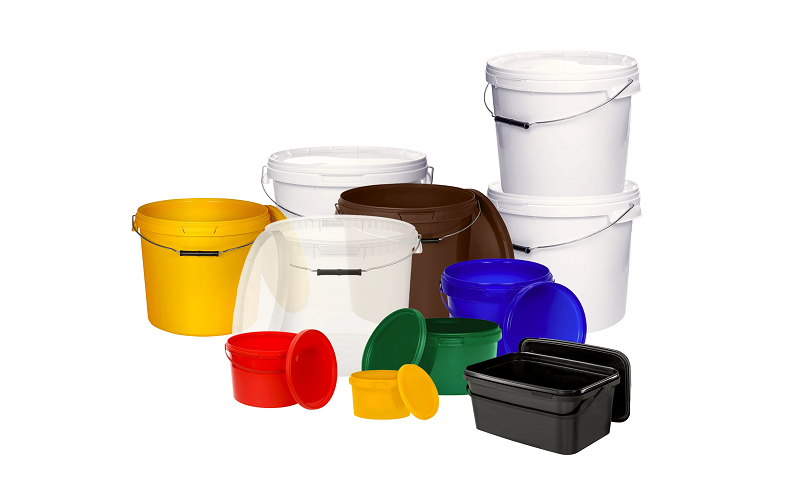
Manufacturers’ customization capabilities cover custom shapes, sizes, printing, and other accessories to meet the diverse needs of different customers.
Custom Shapes and Sizes
Plastic buckets can be customized into various shapes such as round plastic containers, square plastic buckets, and rectangular buckets. This variety helps businesses choose the most suitable bucket shape to suit their storage, stacking, and transportation needs.
Manufacturers often offer many sizes to accommodate different volume requirements, from small 1-liter food containers to large industrial pails. For example, food factories frequently use thin-wall buckets ranging from 1 liter to 20 liters, which are ideal for packaging sauces, powders, and other food ingredients.
Printing and Branding
Screen printing and other printing techniques enable companies to add custom logos, labels, and branding directly onto the plastic container.
This customization not only improves brand recognition but also helps in product differentiation in competitive markets. Some suppliers provide in-mold labeling (IML) and embossed logos as additional options to enhance the visual appeal and durability of branding.
Lid and Handle Options
Plastic bucket manufacturers can provide a wide range of lid and handle designs, such as reinforced handles, tamper-proof lids, and stackable lids, to enhance ease of use and safety.
Additionally, special accessories like spouts, screw caps, or sealing rings can be added according to customer requirements to achieve more complete packaging solutions.
Material and Color Customization
Manufacturers often provide options for custom color matching to align with brand identity or industry standards.
Additionally, clients may request specific material blends or additives to enhance properties such as UV resistance, chemical resistance, or impact strength, ensuring the bucket suits its intended environment and use.
Through these comprehensive customization capabilities, plastic bucket manufacturers can not only meet the personalized needs of customers but also help businesses optimize packaging design, reduce material waste, improve transportation and storage efficiency, and ultimately achieve cost savings and enhanced market competitiveness.
Challenges In Plastic Bucket Manufacturing
The plastic bucket manufacturing industry faces several significant challenges that impact production efficiency, cost management, and sustainability.
Fluctuating Manufacturing Costs
The volatility of raw material prices makes manufacturing costs unpredictable, which in turn affects pricing strategies and profit margins.
Environmental Regulation Pressure
Plastic manufacturers must comply with stringent regulations regarding the use of recycled materials, emission controls, and waste management. This often requires investment in new technologies and processes to reduce environmental impact while maintaining product quality.
Increasing Logistics and Transportation Costs
Logistics and transportation factors are also crucial to the cost-effectiveness of plastic bucket manufacturing.
Efficient packaging, optimized stacking methods, and stable palletizing are essential to reduce damage during transit and lower shipping expenses, especially when handling bulk orders and international shipments.
Additionally, maintaining a balance between operational efficiency and sustainability remains an ongoing challenge. Manufacturers need to optimize production cycles, energy consumption, and material usage while ensuring that products meet all performance and safety standards.
Addressing these challenges requires continuous innovation, investment in advanced equipment, and close collaboration with suppliers and customers to accurately forecast demand and optimize stock levels.
Conclusion
In summary, plastic bucket manufacturing is a complex and efficient process that relies on advanced technologies such as injection molding, blow molding, and rotational molding to produce plastic buckets suitable for a wide range of applications, from food packaging to industrial chemical storage.
Overall, successful plastic bucket manufacturing requires a combination of precise craftsmanship, material selection, process optimization, and customer customization to deliver high-quality, cost-effective, and environmentally friendly products that meet the diverse needs of the global market.
If you are looking for a reliable plastic bucket manufacturer, Otivic will be a trusted partner! With advanced production technology, strict quality control, and extensive customization capabilities, we can provide customers with high-quality and diverse plastic bucket products. Contact us for more info.