
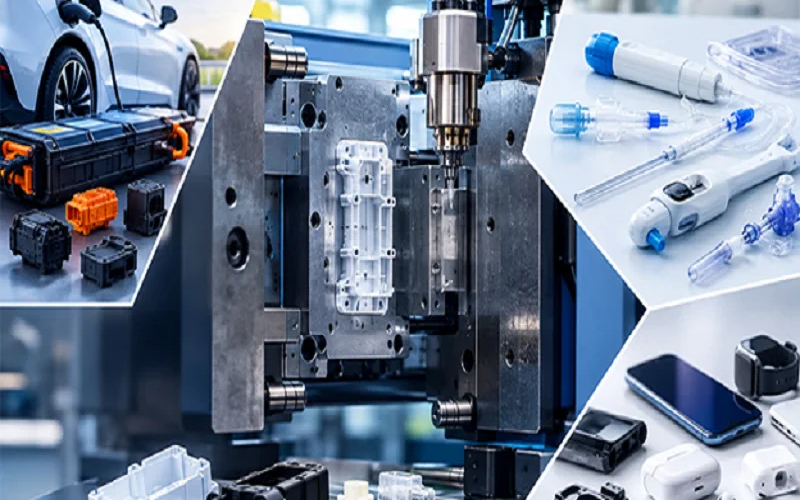
Precision injection molding, as a key technology in modern manufacturing, is increasingly valued across various industries due to its outstanding capability in producing high-precision, complex-structured plastic parts.
As industries demand tighter tolerances, more complex geometries, and superior reliability, this advanced process stands out as a critical solution for meeting modern production requirements.
Precision injection molding enables manufacturers to achieve micron-level dimensional control and excellent repeatability, making it ideal for intricate parts used in demanding applications.
This article will delve into the precision injection molding process and its extensive applications in fields , helping readers gain a comprehensive understanding of the core value and practical potential of this advanced manufacturing technology.
What Is Precision Injection Molding?
Precision injection molding is an advanced injection molding technology capable of achieving dimensional accuracy at the 0.001 mm level. It is specifically designed for manufacturing complex, finely detailed parts that demand extremely high dimensional accuracy and consistent quality.
Mold accuracy depends not only on the engineer’s expertise but also on high-precision mold manufacturing equipment.
The use of precision molds, often fabricated with CNC machining and strict heat treatment, ensures the mold cavity is dimensionally stable and capable of producing thousands to millions of consistent parts.
By integrating high-quality molds, advanced equipment, and precise process control, precision injection molding maintains stable mold temperature, injection speed, and high-pressure injection conditions throughout production.
This approach significantly reduces defects and material waste while enhancing the durability and functionality of the final product.
The manufacturing process is particularly well-suited for producing high-precision plastic components used in medical devices, automotive parts, electronics, consumer products, and aerospace applications.
Leveraging advanced technology and scientific molding principles, manufacturers can ensure consistent product quality and dimensional accuracy, optimize cycle times, lower production costs, and achieve efficient large-scale manufacturing.
Therefore, precision injection molding not only enables the production of plastic components with precise dimensions and excellent performance but also ensures consistent product quality during high-volume production, making it an ideal choice for manufacturing plastic parts and complex mechanical parts.
Key Equipments Of The Precision Injection Molding Process
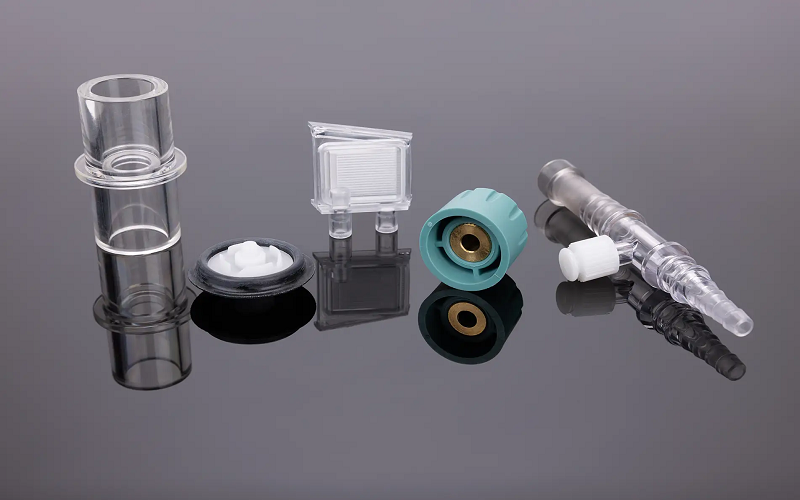
Precision injection molding relies on a combination of advanced equipment and tightly integrated control systems to achieve micron-level accuracy and consistent quality. The following are key pieces of equipment used in precision injection molding:
High-Precision Injection Molding Machine
General-purpose injection molding machines typically have a weight repeatability error of about 1%, with better machines achieving around 0.8%. Precision machines have errors below 0.5%, and ultra-precision machines achieve less than 0.3%.
The precise controls system must employ multi-level feedback controls, including precise regulation of position, speed, holding pressure, and back pressure, to ensure the stability and repeatability of the injection molding process.
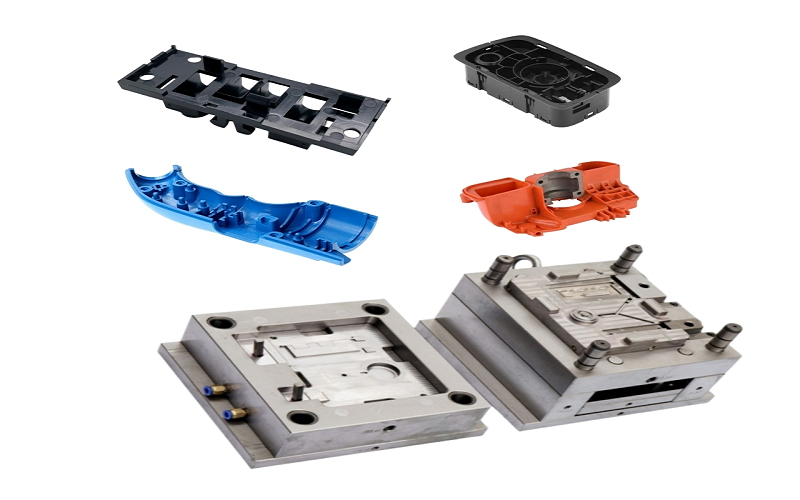
Precision Injection Molds
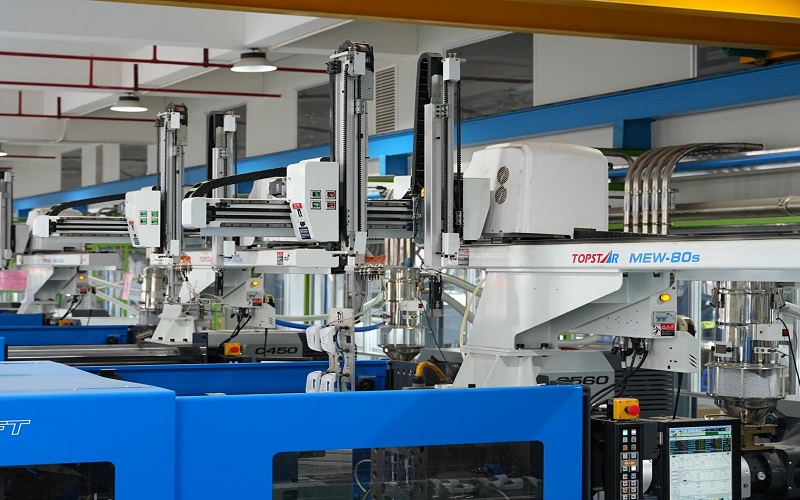
Precision molds are usually made from high-quality steels or beryllium copper, such as alloy steels with around HRC52 hardness or LKM 2344 mold steel.
High-precision equipment like 5-axis machining centers and precision EDM machines are used during manufacturing, with mold tolerances controlled within one-third of the product dimensional tolerance.
Strict heat treatment ensures mold hardness and wear resistance, prolonging mold life and maintaining dimensional stability.
High-quality mold design and manufacturing form the foundation of precision injection molding, directly affecting product performance and appearance.
Cooling system design is uniform and may use series, parallel, or 3D-printed water channels to shorten cooling time and improve efficiency. Gate type and location are chosen based on product shape; film gates can reduce warpage.
Multi-cavity molds must ensure balanced runners and gates to maintain consistent product quality. Mold design also considers deformation prevention, draft angles, and ejection mechanisms to ensure complete and deformation-free part ejection.
Key Injection Molding Parameters
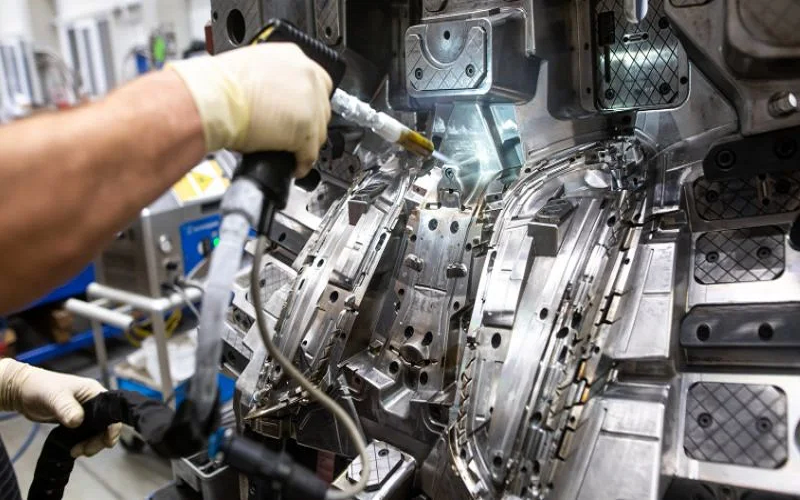
This technology requires injection pressures exceeding 25 MPa, injection speeds ≥ 300 mm/s, mold temperature fluctuations controlled within ±1°C, balanced tie bar forces under 1%, and specialized equipment with displacement sensor accuracy of 0.1 mm and temperature control precision of ±0.5°C.
These high-precision parameters guarantee uniform injection of the molten plastic and precise mold closure during molding, greatly enhancing product dimensional consistency and surface quality.
By integrating these high-precision machines, advanced molds, and intelligent control systems, manufacturers can consistently produce complex parts with exceptional dimensional accuracy, surface quality, and functional performance.
Material Selection In Precision Injection Molding
Precision injection molding imposes strict requirements on materials, necessitating the use of engineering plastics that offer high mechanical properties, dimensional stability, excellent creep resistance, and resistance to environmental stress cracking.
Common plastic materials used in precision injection molding include engineering plastics such as PC, POM, PBT, PA, PEEK, and various high-performance or filled compounds.
These materials are selected not only for their mechanical strength but also for their ability to withstand high heat resistance and maintain precise dimensions under varying thermal conditions.
In addition to standard engineering plastics, custom resins are often employed to meet specific application needs. These custom resins can be tailored to provide enhanced strength, chemical resistance, or other specialized properties required by the end product.
Material preparation is an important factor in precision injection molding. Proper drying and handling of materials are critical to prevent defects such as voids, sink marks, or surface blemishes.
For example, acrylonitrile butadiene styrene (ABS) are commonly used for their balance of toughness and ease of molding, but they require strict moisture control before processing.
Furthermore, the use of filled compounds, such as glass fiber-reinforced plastics, can improve mechanical properties and dimensional stability, making them suitable for producing precise plastic parts that replace traditional metal components in high-performance applications.
Overall, the selection of suitable materials combined with precise process controls ensures the production of high-quality plastic products that meet stringent industry standards and application demands.
Benifits Of Precision Injection Molding Services
Precision injection molding offers numerous benefits that make it an essential manufacturing process for producing high-quality plastic parts with complex designs and tight tolerances. These benefits include:
Exceptional Dimensional Accuracy and Consistency
Precision injection molding achieves dimensional tolerances as tight as ±0.01 mm or better, ensuring that every part produced meets exact specifications. This high level of accuracy reduces the need for secondary machining or adjustments, saving time and cost.
Ability to Produce Complex and Intricate Parts
With advanced mold design and precise process control, manufacturers can create plastic parts featuring complex geometries, thin walls, and micro-features that are difficult or impossible to achieve with traditional methods.
Material Efficiency and Waste Reduction
Precision injection molding optimizes material usage by reducing scrap and rework rates. The controlled process parameters and consistent mold filling decrease material waste by up to 30%, contributing to cost savings and sustainability.
High Production Efficiency and Scalability
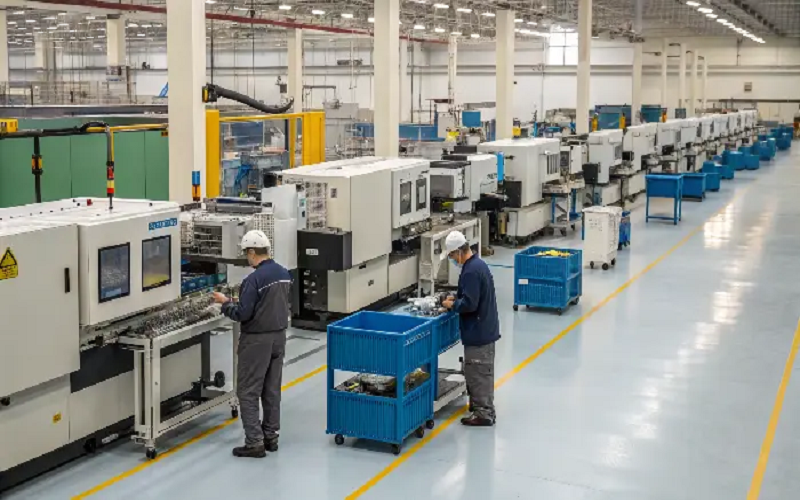
The use of high-precision machinery and molds enables faster cycle times and stable production runs, making it suitable for both prototyping and high-volume manufacturing. Automation integration further enhances throughput and reduces labor costs.
Long-Term Cost Effectiveness
Although the initial investment in precision molds and equipment is higher, the improved product quality, reduced defect rates, and longer mold life lead to significant cost savings over the product lifecycle.
In summary, precision injection molding services provide manufacturers with the tools and capabilities to create high-quality, reliable, and cost-effective plastic parts that meet the exacting demands of modern applications.
Key Differences Between Precision Injection Molding And Standard Injection Molding
Precision injection molding and standard injection molding share the fundamental principle of injecting molten plastic flows into a mold cavity to produce parts. However, they differ significantly in terms of accuracy, process control, equipment, and applications.
Tolerance and Dimensional Accuracy
The most notable difference lies in the tolerance levels. Precision injection molding achieves extremely tight tolerances, often within ±0.01 mm or better, whereas standard injection molding typically maintains tolerances around ±0.1 mm or higher.
This high degree of accuracy in precision molding is essential for parts requiring exact fits and complex geometries.
Mold Design and Materials
Precision molds are manufactured with higher quality materials, such as hardened steel or beryllium copper, and undergo strict heat treatment to ensure dimensional stability and wear resistance.
In contrast, standard molds may use less expensive materials like aluminum or pre-hardened steel, suitable for lower volume or less demanding applications.
Additionally, precision mold designs incorporate advanced cooling channels and optimized gate locations to ensure uniform cooling and reduce warpage, which are critical design considerations not always prioritized in standard molds.
Process Control and Equipment
Precision injection molding utilizes advanced machines equipped with precise control systems for temperature, pressure, injection speed, and clamp force.
These machines often feature closed-loop feedback systems and real-time monitoring to maintain process stability and repeatability. Standard plastic injection molding machines have less stringent controls and are more prone to variability.
Key equipment differences include the use of reciprocating screws and heated barrels designed for consistent melting and flow of molten plastic in precision molding, ensuring uniformity in the injected material.
Applications and Production Volume
Precision injection molding is typically employed for producing high-value, complex parts in industries such as medical devices, aerospace, automotive, and electronics, where quality and precision are paramount. It supports both low-volume prototyping and high-volume manufacturing with consistent quality.
Standard injection molding is widely used for mass-producing less complex parts where lower precision is acceptable, such as packaging, consumer goods, and automotive interior components.
Cost Considerations
Due to the higher quality molds, advanced equipment, and tighter process controls, precision injection molding involves higher upfront costs. However, it offers long-term cost benefits through reduced waste, lower defect rates, and longer mold life.
Standard injection molding generally has lower initial tooling costs but may incur higher costs due to rework and less consistent quality.
By combining advanced equipment, high-quality molds, and rigorous process control, precision injection molding delivers reliable results that conventional methods cannot consistently match.
| Aspect | Traditional Injection Molding | Precision Injection Molding |
|---|---|---|
| Dimensional Accuracy | Typically ±0.1 mm or greater | Capable of ±0.01 mm or even 0.001 mm level |
| Equipment Precision | Standard machines (weight repeatability around 1%) | High-precision or ultra-precision machines (≤0.5%, often ≤0.3%) |
| Mold Quality | Conventional molds with standard machining | High-precision molds produced via CNC and strict heat treatment |
| Process Control | Basic parameter setting | Closed-loop control of temperature, pressure, speed, and cooling |
| Material Handling | Standard drying and feeding | Strict moisture control, contamination prevention, and precise dosing |
| Consistency & Repeatability | Acceptable variation between shots | Extremely high shot-to-shot consistency |
| Part Complexity | Suitable for relatively simple geometries | Ideal for complex shapes, thin walls, and fine details |
| Typical Applications | Consumer products, general industrial parts | Medical devices, automotive sensors, electronics, optics, aerospace |
| Cost Focus | Lower initial investment | Higher upfront cost, but reduced defects and better long-term value |
Conclusion
Precision injection molding stands as a cornerstone technology in modern manufacturing, offering unparalleled dimensional accuracy, consistency, and the ability to produce highly complex plastic components.
Through the integration of advanced machinery, high-quality precision molds, and stringent process controls, this method effectively meets the demanding requirements of industries such as medical, automotive, electronics, and aerospace.
Its benefits—ranging from material efficiency and reduced waste to scalability and long-term cost savings—make it an indispensable solution for producing intricate, high-performance plastic parts.
As product design continues to evolve and industries push for greater precision and quality, precision injection molding will remain a critical enabler of innovation and manufacturing excellence.