
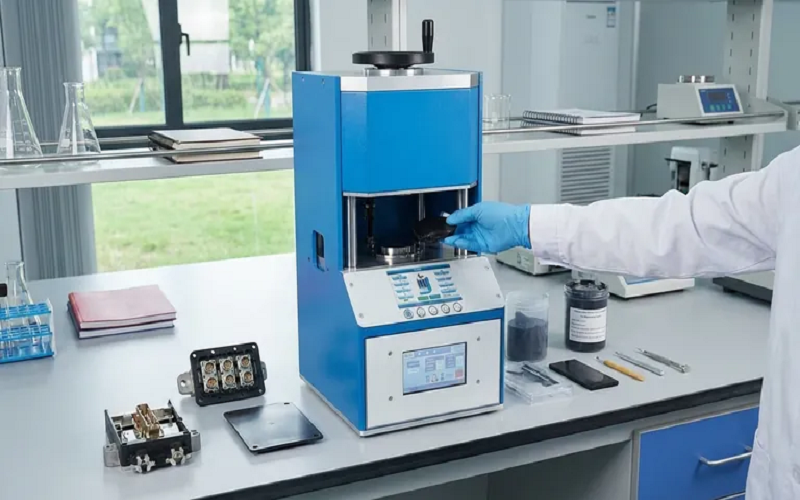
Transfer molding is an important widely used process in the manufacturing of plastic and rubber products, especially suitable for molding thermosetting materials.
It combines the characteristics of injection molding and compression molding, enabling efficient production of complex shapes and precision parts with metal inserts.
This article will provide a detailed introduction to the transfer molding process, its advantages and limitations, helping readers gain a comprehensive understanding of this advanced molding technology and its application value in industries such as electronics, automotive, and natural gas.
What Is Transfer Molding ?
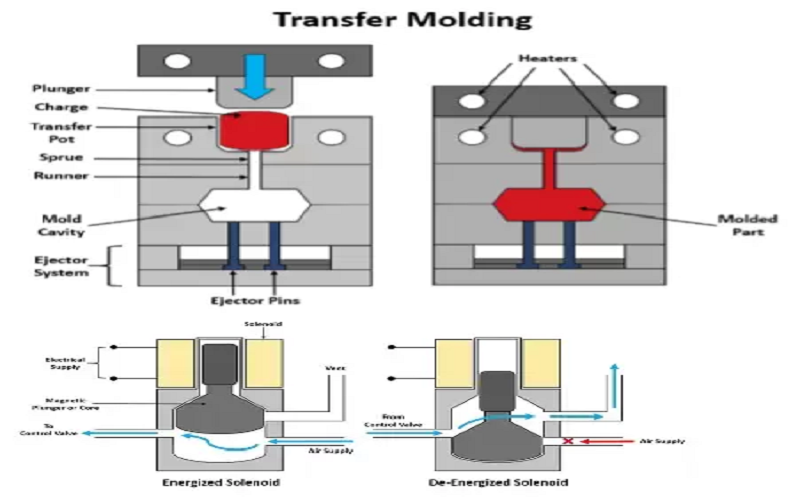
Transfer molding is a plastic molding technique in which a preheated molding material, typically a thermosetting polymer, is placed in a holding chamber called the transfer pot.
From there, the material is forced by a plunger or ram under high pressure into a closed heated mold cavity where it flows to fill the mold and undergoes a curing process to solidify into the desired shape.
This molding technique combines features of both injection molding and compression molding, allowing for precise control over the molding material and the final part geometry.
The Transfer Molding Process
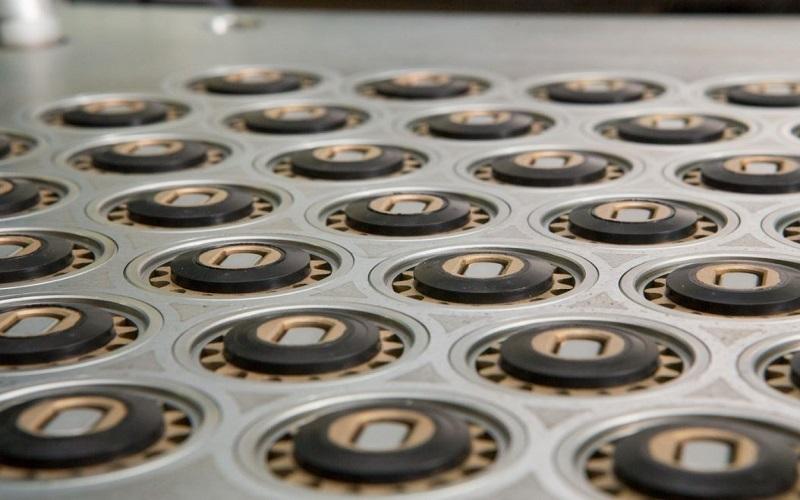
Transfer molding involves several key steps to ensure the production of high-quality parts.
Step 1: Preparing The Preheated Molding Material
Initially, the molding material, commonly a thermosetting resin such as epoxy or polyurethane, is preheated in the transfer pot to a temperature that lowers its viscosity for easier flow. This preheating step is crucial as it reduces the high injection pressure required to transfer the material into the mold.
Step 2: Closing The Mold Cavity
Once preheated, the material is pushed by a plunger mechanism through sprues and runners into the closed mold cavity.
The mold is designed with precise mold design features, including vents to allow air to escape and overflow grooves to manage excess material, ensuring complete filling without air holes or voids.
Step 3: Curing The Material Inside The Mold
After the resin fills the mold cavity, curing begins at a controlled mold temperature, generally around 175°C, which solidifies the plastic material into the final shape.
Step 4: Ejecting The Transfer Molded Parts
Following curing, the mold is opened, and ejector pins push out the transfer molded parts. The process typically produces flash free parts and minimizes sink marks due to the uniform pressure distribution during molding.
Overall, the transfer molding technique is an advanced technique in molding methods, effectively producing complex, high cavity count parts with intricate shapes and high-quality finishes, making it a valuable manufacturing process in various industrial sectors.
Common Materials Used In Transfer Molding Process
Transfer molding primarily uses thermosetting materials due to their excellent curing and mechanical properties. Common thermosetting resins used include epoxy, phenolic, and polyurethane, which provide strong chemical resistance, heat stability, and durability.
In addition to thermosets, some thermoplastic materials can also be processed using transfer molding techniques, although this is less common. Silicone rubber is a notable example of a compatible material, valued for its flexibility, thermal stability, and electrical insulation properties.
Resin transfer molding, a variant of transfer molding, utilizes low-viscosity thermosetting resins to impregnate fiber preforms, creating composite parts with enhanced strength and lightweight characteristics. This process is widely used in automotive and aerospace applications.
The choice of material depends on the application requirements, including mechanical strength, thermal resistance, electrical insulation, and chemical compatibility.
Materials requiring precise flow characteristics and curing behavior are preferred to ensure uniform resin flow and minimize molding defects such as voids or non uniform pressure distribution.
Transfer Molding Equipment And Mold Design
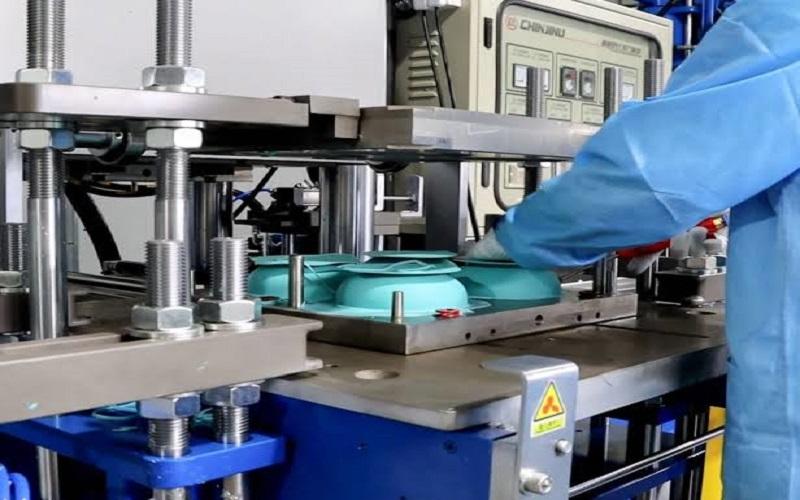
The success of the transfer molding process largely depends on the reasonable matching of equipment and molds. Compared with injection molding, transfer molding has its unique characteristics in equipment structure and mold design.
Transfer Molding Equipment
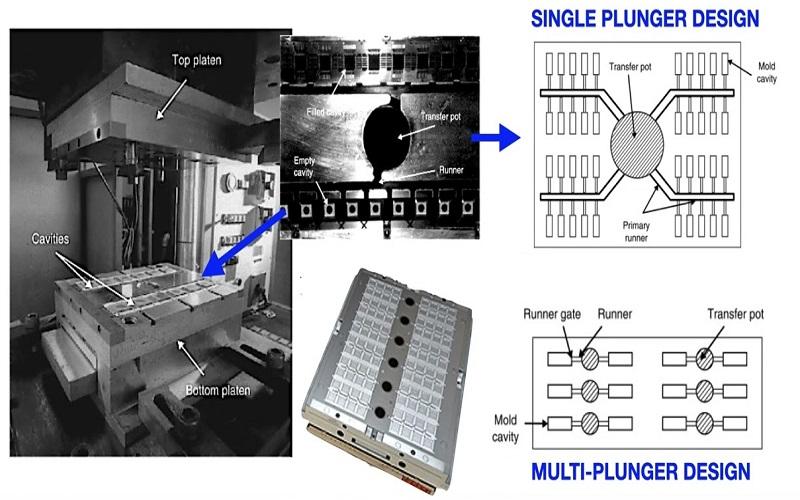
Transfer molding machines are designed with a vertical orientation, featuring a plunger mechanism and transfer pot above the mold cavity. This setup differs from injection molding machines, which usually have a horizontal configuration with a screw injector.
Transfer molding machines are simpler and generally have lower maintenance costs compared to injection molding machines.
Transfer Mold Design
The mold itself is typically a closed mold made of steel or cast iron, capable of withstanding the pressure forces applied during the process. The clamping pressure keeps the mold halves tightly closed to avoid flash and maintain sharp corners and sharper edges in the molded parts.
The mold cavity used in transfer molding is typically a closed cavity designed to accommodate intricate parts, inserts, and metal components.
The heated mold ensures rapid curing of the thermosetting polymer, often at mold temperatures around 175°C, which helps achieve rapid curing and high production speed.
Overall, the combination of a vertical press and a sturdy closed mold makes transfer molding superior to compression molding in terms of dimensional accuracy and insert encapsulation, while being more economical and easier to maintain than injection molding systems for medium-volume thermoset applications.
Applications Of Transfer Molding Techniques
Transfer molding is widely used across various industries due to its versatility and ability to produce high-quality parts with complex geometries and inserts. It is particularly favored for applications requiring precise encapsulation and robust material properties.
Electronic Components
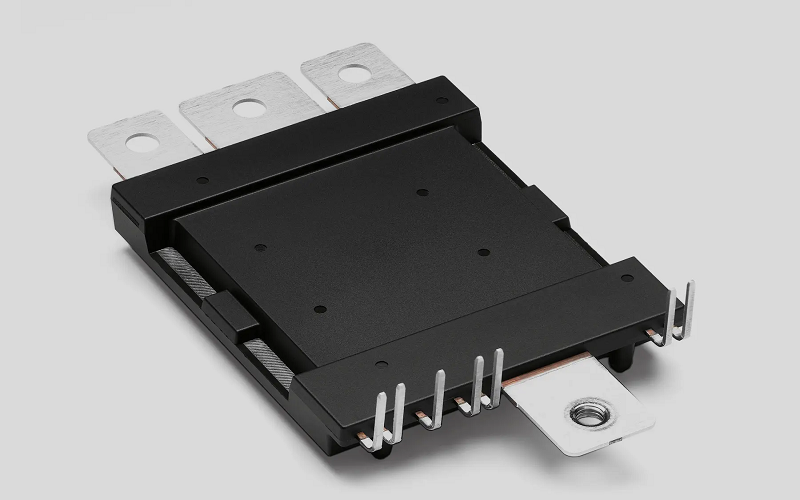
Transfer molding is extensively used in the electronics industry to encapsulate and protect electronic components such as integrated circuits, sensors, and connectors.
The process allows for the secure placement of metal inserts and leads within the mold, providing excellent protection against environmental factors and mechanical stress. This makes it ideal for producing mold connector seals and other electronic device housings.
Automotive Industry
In automotive manufacturing, transfer molding is employed to produce durable rubber parts such as spark plug wires, seals, and gaskets. The ability to mold complex shapes with rounded corners and intricate details ensures that parts meet stringent performance and safety standards.
The process also supports the production of components used in the hydraulic industry, including seals and connectors, benefiting from the high precision and material properties achievable through transfer molding.
Natural Gas Industry
The natural gas industry relies on transfer molding to produce high-quality seals and gaskets used in gas valves and related equipment.
The process’s capability to produce parts with excellent chemical resistance and dimensional stability under high pressure and temperature conditions is critical for ensuring safety and reliability in this sector.
Composite Manufacturing
Resin transfer molding process is a key method in fabricating composite parts, especially in aerospace and industrial equipment. By impregnating fiber preforms with thermosetting resins under controlled pressure, it produces lightweight, high-strength components suitable for demanding applications.
Other Industrial Applications
Transfer molding is also used to produce pins, studs, and other small hardware components that require high durability and precision. Its ability to mold inserts and complex shapes makes it suitable for specialized applications across various manufacturing sectors.
Overall, transfer molding typically produces parts that combine excellent material properties with complex designs, making it a preferred choice for industries requiring reliable and high-performance molded components.
Advantages Of Using Transfer Molding
Transfer molding offers several significant advantages that make it a preferred choice for manufacturing complex plastic and rubber parts, especially when working with thermosetting materials.
Better Dimensional Control
Compared to compression molding, transfer molding provides superior dimensional accuracy and consistency. The use of a closed mold and controlled material flow ensures that parts meet tight tolerances, which is critical for applications in electronics and automotive industries.
Reduced Flash and Finishing Costs
Transfer molding produces parts with minimal flash due to the precise mold clamping and material transfer under pressure. This results in lower finishing costs as less trimming and cleanup are required post-molding.
Efficient Multi-Cavity Production
The transfer molding process supports the use of multi-cavity molds, enabling the simultaneous production of multiple parts. It is particularly effective for multi-cavity production, improving throughput and reducing cycle times, making it suitable for medium to high volume production runs.
Lower Tool and Maintenance Costs
The equipment and molds used in transfer molding generally have lower initial setup costs compared to injection molding systems, resulting in reduced initial investment and ongoing maintenance expenses.
However, it is important to note that injection molding typically involves high setup costs due to the complexity of its machinery and mold design.
Superior Insert Encapsulation
Transfer molding excels at encapsulating metal inserts and components within molded parts, providing strong mechanical bonding and protection. This is particularly important in electronic packaging and automotive parts.
Overall, transfer molding strikes a good balance between precision, insert compatibility, and production efficiency.
It is especially suitable for thermosetting plastic and rubber parts that require precise encapsulation, complex structures, or medium production volumes, making it a common process choice in electronics, automotive, medical, and industrial sealing applications.
Limitations Of Transfer Molding
Despite its many advantages, transfer molding also has several limitations that can impact its suitability for certain applications and production requirements.
Higher Material Waste
One notable limitation of transfer molding is the generation of more waste material compared to other molding methods such as injection molding.
This waste arises primarily from the larger sprue channels, overflow grooves, and the material left in the transfer pot and runners, which cannot be reused once cured. This leads to increased material costs and environmental concerns, especially when working with expensive or thermosetting materials.
Longer Production Cycle
The production cycle of transfer molding is generally longer than that of injection molding. This is due to the additional steps involved, such as preheating the molding compound in the transfer pot and the slower transfer of material into the mold cavity.
While transfer molding offers a relatively short production cycle compared to compression molding, it is less efficient than injection molding for high-volume production.
Complexity In Mold Design
The mold design for transfer molding can be more complex than for other molding methods due to the need to accommodate inserts, runners, and vents.
Achieving uniform pressure distribution and preventing defects such as voids or air entrapment requires careful engineering. This complexity can increase lead times and costs associated with mold development.
Overall, while transfer molding is a powerful and versatile process, these limitations should be carefully considered when selecting a molding method to ensure the best fit for production volume, part complexity, material choice, and cost efficiency.
Injection Molding vs Compression Molding vs Transfer Molding : Key Differences
Injection molding, compression molding, and transfer molding are three widely used plastic molding techniques, each with distinct processes, equipment, and applications. Understanding their key differences helps manufacturers select the most suitable method for their specific production needs.
Injection Molding
Injection molding involves feeding thermoplastic or thermosetting pellets into a heated barrel where they are melted and mixed. The molten material is then injected under high pressure through a screw mechanism directly into a closed mold cavity.
Injection molding process is highly automated and can produce complex and precise parts rapidly, with cycle times ranging from 2 seconds to 2 minutes depending on part size and complexity.
Injection molding is ideal for high-volume production of small to large parts, including thin walled parts, with excellent surface finish and dimensional accuracy. It can create parts up to 80 square feet in size.
It supports multi-cavity molds to increase throughput and is widely used in automotive, consumer electronics, medical devices, and packaging industries.
Compression Molding
Compression molding is a simpler, older technique primarily used for thermosetting materials. A preheated charge or slug of molding compound is placed directly into an open, heated mold cavity. The mold is then closed, and pressure is applied to shape and cure the material.
This method is well suited for large, relatively simple parts such as automotive panels, electrical insulators, and industrial components.
Compression molding has longer cycle times compared to injection molding and transfer molding but offers lower tooling costs. It is less precise for intricate shapes and often requires secondary finishing.
Transfer Molding
Transfer molding combines elements of both injection and compression molding. The molding compound, usually a thermoset, is preheated in a separate chamber called the transfer pot. A plunger forces the material under pressure through sprues and runners into a closed mold cavity where it cures.
This process allows for better dimensional control and the ability to mold intricate parts with metal inserts or complex geometries.
Transfer molding produces parts with less flash than compression molding and supports multi-cavity molds for improved productivity. It is commonly used for electronic component encapsulation, automotive seals, and composite parts.
| Feature | Injection Molding | Compression Molding | Transfer Molding |
|---|---|---|---|
| Material | Thermoplastics, some thermosets | Thermosetting materials | Primarily thermosets, some thermoplastics |
| Process | Melted material injected under high pressure | Preheated charge compressed in mold | Preheated material transferred under pressure into mold |
| Equipment Orientation | Horizontal | Vertical | Vertical |
| Cycle Time | 2 sec to 2 min | Longer | Moderate (longer than injection) |
| Part Complexity | High | Low to moderate | Moderate to high |
| Dimensional Accuracy | High | Moderate | High |
| Flash | Minimal | More | Minimal |
| Inserts | Difficult | Difficult | Easy |
| Production Volume | High | Low to moderate | Moderate |
| Typical Applications | Consumer goods, automotive parts, packaging | Large industrial parts, electrical components | Electronics, automotive seals, composite parts |
Choosing the right molding process depends on factors such as part design complexity, production volume, material type, cost considerations, and required precision.
Injection molding excels for high-volume, detailed thermoplastic parts, compression molding suits large, simpler thermoset parts, and transfer molding offers a balance for complex thermoset parts with inserts requiring good dimensional control.
Conclusion
Transfer molding is a versatile and efficient molding process that bridges the gap between compression molding and injection molding. It excels in producing complex parts with precise dimensional control, especially for thermosetting materials and parts requiring metal inserts.
While it has some limitations such as higher material waste and longer cycle times compared to injection molding, its advantages in multi-cavity production, reduced flash, and lower tooling costs make it ideal for medium-volume manufacturing in industries like electronics, automotive, and natural gas.
Understanding the process, materials, and equipment involved allows manufacturers to leverage transfer molding effectively for high-quality, durable, and intricate components.