
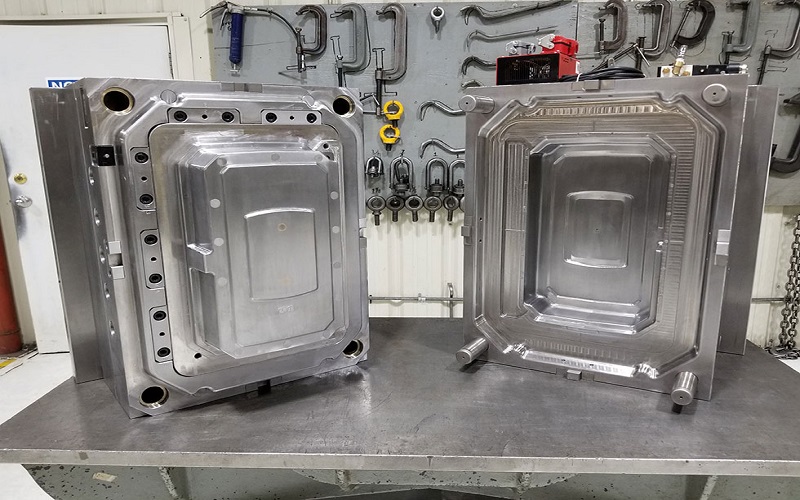
Injection molds, as critical tools in the manufacturing industry, are widely used in the production process of plastic products. The quality of mold design directly affects the final quality of injection molded parts, production efficiency, and manufacturing costs.
Among the various components of molds, the mold cavity serves as the core area for forming plastic parts, bearing the crucial responsibility of determining the shape, dimensions, and surface quality of the molded parts.
This article will comprehensively analyze the definition, functions, and design essentials of the mold cavity, deeply exploring its key role in injection mold design, helping engineers and mold practitioners better understand and optimize this critical element, thereby enhancing the overall performance of injection molds and the quality of products.
What Is A Mold Cavity ?
The mold cavity is a fundamental component in the injection molding process. It refers to the hollow space within the mold where molten plastic is injected and shaped to form the final product. This cavity essentially defines the external shape and surface details of the molded plastic part.
The mold cavity is designed with high precision to ensure dimensional accuracy and a smooth surface finish, which directly impacts the quality of the molded plastic.
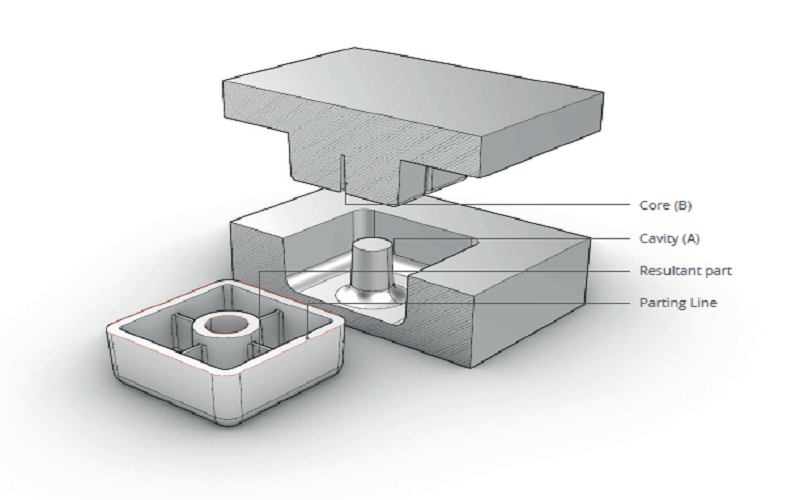
It also incorporates important design elements such as the parting line, which is the interface where the two mold halves meet, and features like cooling channels and vents to facilitate efficient cooling and air escape during molding.
Ultimately, the mold cavity plays a pivotal role in the injection molding process by shaping the molten material into the desired shape with high dimensional accuracy and surface quality, while also influencing cycle time, material waste, and overall mold cost.
Core Elements Of Mold Cavity Design
Designing an effective mold cavity requires careful consideration of several core elements that directly impact the quality of the molded parts and the efficiency of the manufacturing process.
These elements include material selection, structural design, cooling and venting systems, surface treatment, and machining precision.
Material Selection
The choice of material for the mold cavity is critical because it must withstand high injection pressures, thermal contraction, and wear over many production cycles.
Common materials include hardened steel, tool steel, and stainless steel. Each material offers a balance between hardness, toughness, corrosion resistance, and machinability.
For example, P20 is widely used for its excellent toughness and polishability, making it suitable for molds requiring high-quality surface finishes. Hardened steels like H13 provide superior wear resistance for long production runs, especially when molding abrasive materials.
Structural Design
The structural design of the mold cavity is a core aspect of injection mold design, directly affecting product molding quality, production efficiency, and mold cost.
Injection molds can have single, double, or multiple chambers.Draft angles are essential to facilitate the smooth ejection of parts from the mold without damaging the outside surface, typically ranging from 0.5° to 1° for smooth surfaces and 1° to 3° for textured surfaces.
The internal walls of the cavity dictate the texture of the final part.The cavity walls must be thick enough to resist deformation under clamping force and injection pressure but optimized to ensure efficient cooling and minimal cycle time.
Additionally, the mold cavity is generally designed to be slightly larger than the final product dimensions to compensate for the thermal shrinkage of the plastic during the cooling process.
Different plastic materials have differential shrinkage rates, so it is essential to accurately calculate and allow for this shrinkage based on the material properties to ensure that the molded part dimensions meet the drawing specifications.
Cavity Plate
The cavity plate, which houses the mold cavity, must be robust enough to withstand the injection pressures and thermal stresses during production. Its external surfaces are often designed to facilitate mounting and integration with the mold base and other mold components.
Cooling System
Advanced cooling designs, such as conformal cooling channels created by CNC machining or additive manufacturing, can follow the inner shape of the cavity closely, enhancing cooling efficiency and part quality.
Venting System
Venting slots or small vent holes are incorporated into the cavity design, particularly near gate positions and complex features where air entrapment is most likely. The size and placement of vents must be carefully balanced to avoid flash while allowing adequate air escape.
Surface Treatment and Machining Precision
Techniques such as mirror polishing or texturing are applied depending on the desired appearance. Mold polishing improves surface quality and meets roughness requirements.
The cavity surface must also accommodate ejection pins and other mechanical features without compromising the mold’s structural integrity.
For new mold designs, considerations such as production volume, material shrinkage, cooling speed, and the complexity of internal features are critical. Advanced mold designs may incorporate collapsible cores to create internal geometries that would otherwise be impossible to mold with standard fixed cores.
By carefully balancing these core design elements, engineers can create mold cavities that produce high-quality parts consistently, reduce manufacturing costs, and support mass production with efficient operation and minimal downtime.
Types Of Injection Mold Cavity
Regarding the selection of cavity quantity, single-cavity molds, multi-cavity molds, and family molds are the three main mold types, each suitable for different production needs and product complexities.
Single Cavity Mold
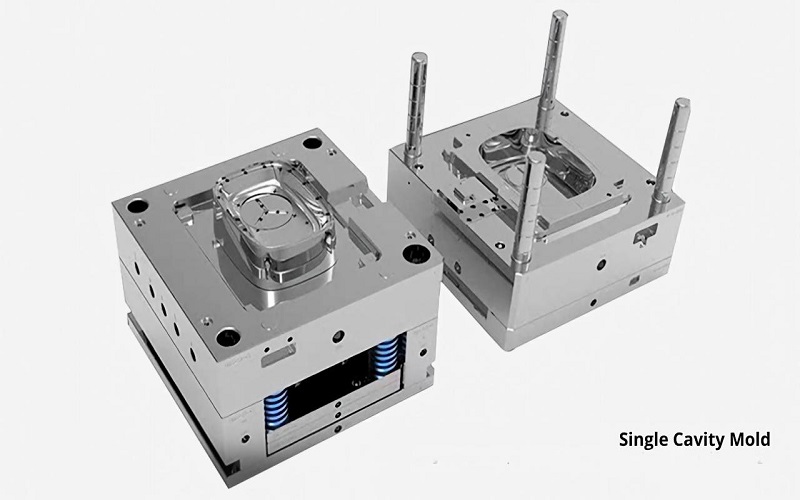
Single-cavity molds produce one plastic part per injection cycle. They are typically used for parts with complex shapes or high precision requirements, as well as for low to medium volume production.
With only one cavity, single-cavity molds are relatively simple in design and manufacturing, have lower production costs, and are easier to debug and maintain, but they have lower production efficiency and higher unit costs.
Multi-Cavity Mold
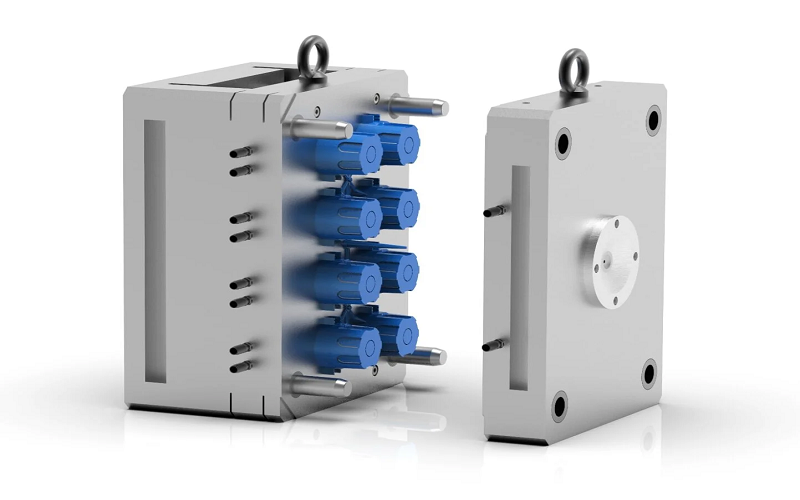
Multi-cavity molds contain multiple identical cavities, allowing the simultaneous production of multiple identical parts in one injection cycle, suitable for large-volume production and significantly improving production efficiency.
Although multi-cavity molds have higher manufacturing costs than single-cavity molds, economies of scale reduce the overall production cost. However, their mold structures are more complex, manufacturing cycles are longer, and maintenance costs are higher.
Family Molds
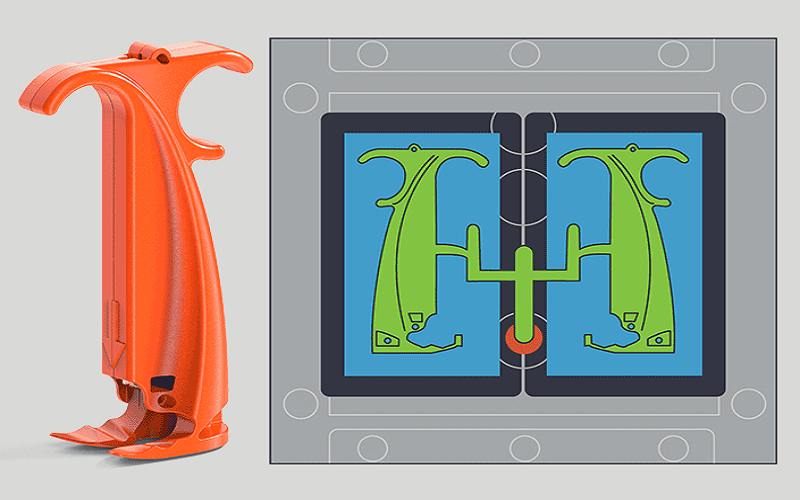
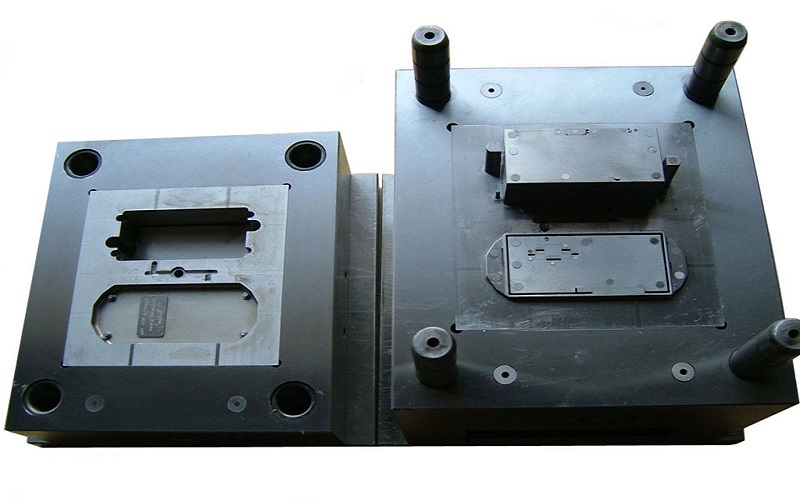
Family molds contain multiple cavities of different shapes and sizes, capable of producing a set of related parts in one injection cycle, commonly used for the simultaneous production of assembly components.
The design challenge for family molds lies in ensuring balanced filling and uniform cooling among different cavities, avoiding quality issues caused by differences in part shapes and sizes. Family molds can save production time and costs but require higher demands on mold design and process control.
Other Special Cavity Designs
Besides the above three common cavity types, modern injection mold design also includes some special cavity designs, such as complex cavities with built-in slides used to form internal recessed structures or internal undercuts; multi-layer stack molds used to increase the number of cavities without increasing the mold footprint; and molds using hot runner systems to reduce waste and improve production efficiency.
These special designs further enrich the application range of injection molds, meeting the demands of complex parts and efficient production.
By reasonably selecting and designing cavity types combined with product characteristics and production requirements, mold performance can be maximized, improving the quality and production efficiency of injection molded parts.
What Is The Difference Between The Core And Cavity Of An Injection Mold?
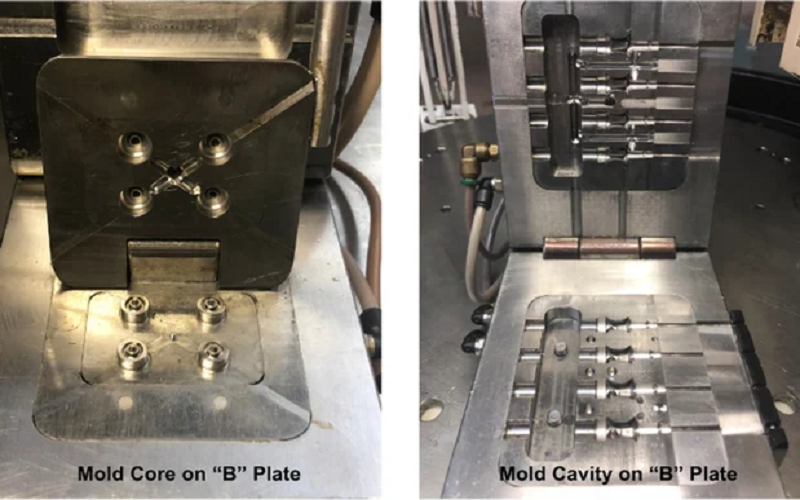
In injection molding, the mold consists of two main halves: the mold core and the mold cavity. The mold cavity forms the exterior shape of the part, while the mold core forms the internal features such as holes or recesses.
Together, the core and cavity fit precisely to create the complete mold structure that shapes the molten plastic during the molding process.
Core And Cavity Placement
In a typical injection molding machine, the mold cavity is usually located on the fixed side of the mold (stationary half), responsible for forming the external surface of the plastic part. The mold core is located on the moving side (moving half), responsible for creating internal features of the component.
The closed space formed between the two when they fit together is the complete molding area. The parting line is the boundary between the cavity and the core.
As the mold opens, the moving mold half retracts, and the molded part usually shrinks onto the core due to cooling contraction. Therefore, the ejection system is mostly designed on the core side.
Material Considerations For Core and Cavity
Due to their different functions and exposure to stresses, the core and cavity are often made from different materials:
The cavity generally requires more wear-resistant and harder materials, such as hardened tool steel or alloy steel, to withstand the high injection pressures and abrasive effects of molten plastic.
The core may use materials like aluminum alloys or softer steels, which provide good thermal conductivity for cooling and ease of machining.
Design Differences Between Core and Cavity
In injection molds, the design of the core and cavity requires focus on the following key aspects:
- 1. Cooling System : Both the core and cavity typically have cooling channels to precisely control mold temperature. Cooling on the core side is especially important as it effectively shortens the injection cycle and prevents core deflection under high temperature and pressure.
- 2. Multi-Cavity Balance Design: To improve production efficiency, molds often use a multi-cavity structure. Multi-cavity molds must have precisely balanced flow paths for all the cavities to ensure uniform filling of molten plastic. Uneven filling can easily cause defects such as sink marks, warpage, or short shots, affecting product consistency.
- 3. Fit Accuracy and Alignment: The mating surfaces between the core and cavity must be precisely machined and strictly aligned to prevent flash and ensure dimensional accuracy of the molded parts. Proper use of dowel pins and reliable fastening methods can maintain accurate alignment over repeated mold opening and closing cycles.
- 4. Ejection System : The ejector plate and ejector pins is generally set on the core side, serving to safely eject the molded parts without damaging the exterior surface. The design must comprehensively consider part geometry, draft angles, and internal features created by sliders or collapsible cores to ensure smooth and reliable ejection.
Overall, the integration of the mold cavity, core, cooling system, ejector system, and mold assembly components must be optimized to achieve high-quality parts, efficient production cycles, and long mold life.
Conclusion
The mold cavity, as the core part of injection mold design, directly determines the shape, dimensions, and surface quality of the injection molded parts.
A reasonable cavity design not only enhances the precision and appearance of the product but also effectively shortens the injection cycle, improves production efficiency, and reduces manufacturing costs.
Through the scientific selection of cavity materials, optimization of structural design, reasonable layout of cooling and venting systems, and meticulous surface treatment, the mold’s service life and the overall performance of the injection molded parts can be significantly improved.
Moreover, choosing the appropriate type of cavity—single-cavity, multi-cavity, or family mold—according to different production needs helps achieve the best balance between production efficiency and cost.
In the future, with continuous advancements in manufacturing technology, cavity design will focus more on refinement and intelligence, bringing higher quality assurance and economic benefits to the injection molding industry.