
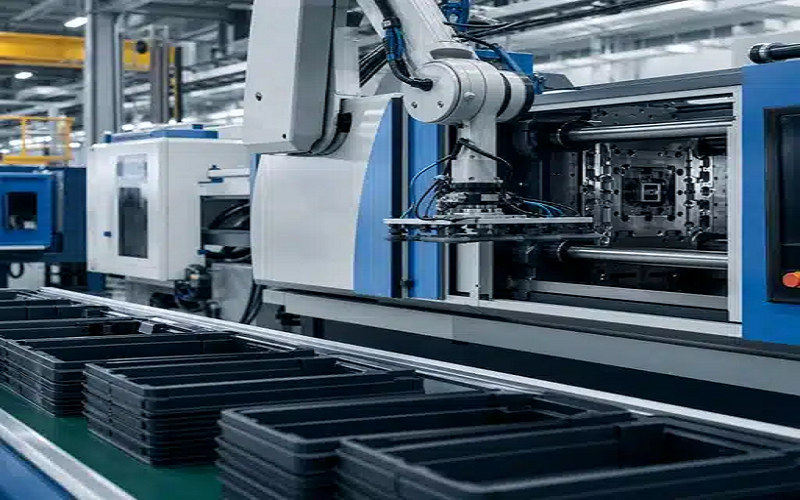
High volume injection molding is an efficient and cost-effective manufacturing method specifically designed to produce parts in large-scale plastic production.
As project requirements grow more complex, more and more companies are choosing high volume injection molding technology to achieve scalable production and stable quality.
This article will delve into the advantages, process flow, and applicable projects of high volume injection molding across various industries, helping readers gain a comprehensive understanding of how this manufacturing method assists businesses in cost control and product consistency.
What Is High Volume Injection Molding?
High Volume Injection Molding is a manufacturing process specifically designed for the mass production of plastic parts.
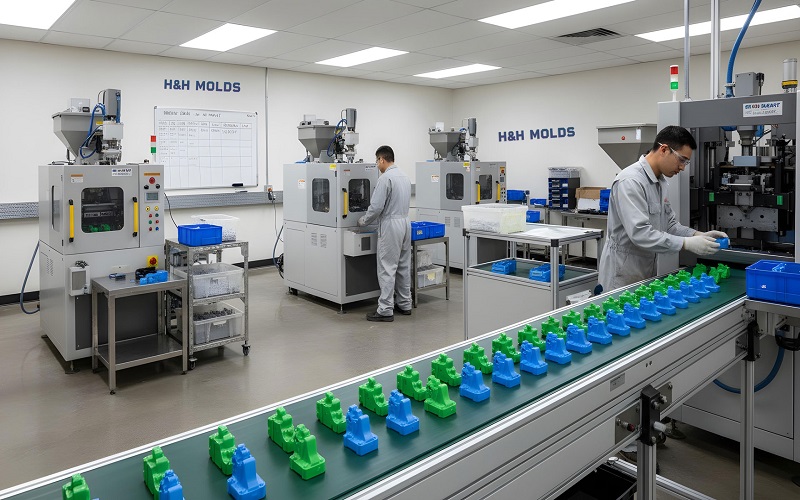
It uses multi-cavity molds, high-speed injection molding machines, and highly automated production lines to stably produce tens of thousands to millions of plastic products with precise dimensions and consistent quality in a short period of time.
Throughout the injection molding process, molten plastic is injected into the mold cavity through gate and runner systems. After cooling and solidification, the molded parts are ejected by ejector pins.
Compared to traditional injection molding, high volume injection molding not only improves production efficiency but also significantly reduces costs, thereby achieving the economic benefits of mass production.
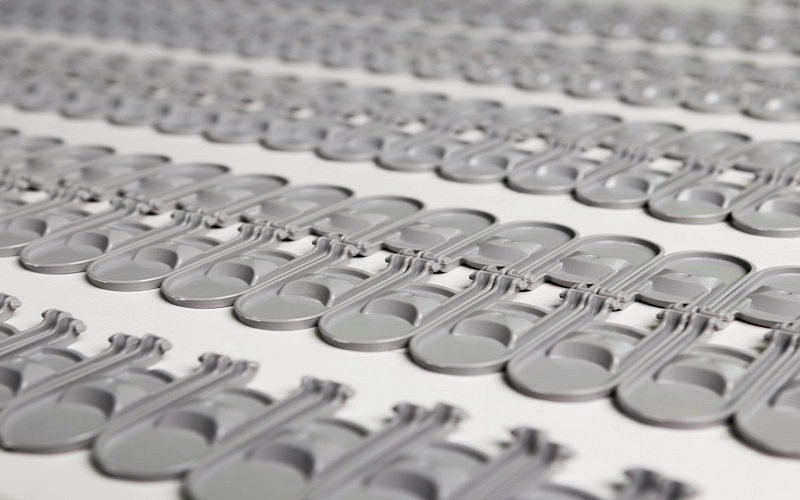
Tooling And Equipment Used In High Volume Injection Molding Process
High volume injection molding relies on robust and durable molds and advanced equipment to ensure quality stability in large-scale production. Key equipment includes hardened steel molds, high-precision electric or hybrid injection molding machines, and intelligent automated control systems.
Hardened Steel Molds
Hardened steel molds can withstand millions of cycles, ensuring dimensional accuracy and repeatability, suitable for high volume production demands.
The molds are manufactured through CNC machining and Electrical Discharge Machining (EDM), enabling fine processing of complex structures and sharp internal corners.
Well-designed gate and runner systems ensure uniform filling of molten material into the mold cavity, reducing defects and maintaining consistent part quality.
Electric Or Hybrid Injection Molding Machines
Electric and hybrid injection molding machines provide higher precision and energy efficiency, with clamping forces generally ranging from 50 to 240 tons, accommodating different sizes and production volumes.
Electric presses are widely used in high volume molding due to their high precision and energy-saving characteristics, enabling rapid cycles and minimal downtime, thus enhancing production capacity and cost efficiency.
Automated Production Lines
Automated production lines are equipped with advanced process control systems that continuously monitor temperature, pressure, and injection speed to ensure production stability and product consistency.
Automation also includes robotic part handling and online quality inspection, reducing human error and improving production efficiency and competitive pricing.
By applying scientific molding methods to optimize material selection and process parameters, the best performance of high volume production tooling is achieved.
Using these specialized equipment and dedicated tools to meet the demands of high volume production helps businesses shorten lead time and reduce production costs, while ensuring each part meets precise specifications and strict quality standards.
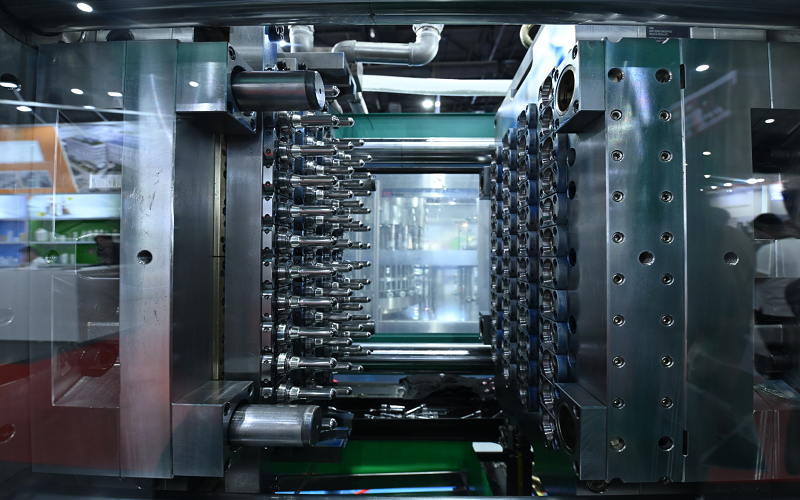
Key Benefits Of High Volume Injection Molding
High volume injection molding offers numerous advantages that make it the preferred manufacturing method for companies seeking to produce large quantities of quality parts efficiently and lower cost.
Cost Effectiveness
One of the most significant benefits is the reduction in per-unit cost as production volumes increase. High volume injection molding leverages economies of scale to spread the initial investment in mold manufacturing and equipment over a large production run, thereby reducing the cost per part.
Additionally, the process can produce complex geometries economically in a single step, further enhancing manufacturing efficiency and design flexibility.
Consistent Product Quality
High volume injection molding ensures the production of identical parts with exacting tolerances. The use of hardened steel molds and advanced injection molding machines helps maintain tight tolerances and consistent wall thickness throughout the production run.
High volume injection molding projects typically require a rigorous quality assurance system and continuous article inspection to maintain quality and meet strict performance standards.
Material And Design Versatility
High volume injection molding supports a wide range of thermoplastics and elastomers, including both commodity plastics and specialized engineering resins. This versatility allows companies to select the best plastic pellets for their applications, balancing performance, durability, and cost considerations.
Mold design flexibility, combined with advanced tooling such as master unit dies (MUD), facilitates efficient production runs and quick mold changes, further enhancing adaptability to various product requirements.
Supply Chain Optimization
By producing large quantities on demand and supporting pilot production and rapid prototyping phases, high volume injection molding helps streamline the supply chain. Manufacturers can better manage inventory, reduce warehousing costs, and respond swiftly to market demands.
Environmental And Sustainable Practices
Advanced high volume injection molding processes minimize material waste through precise shot control and recycling of scrap material. This contributes to more sustainable manufacturing practices and aligns with corporate responsibility goals.
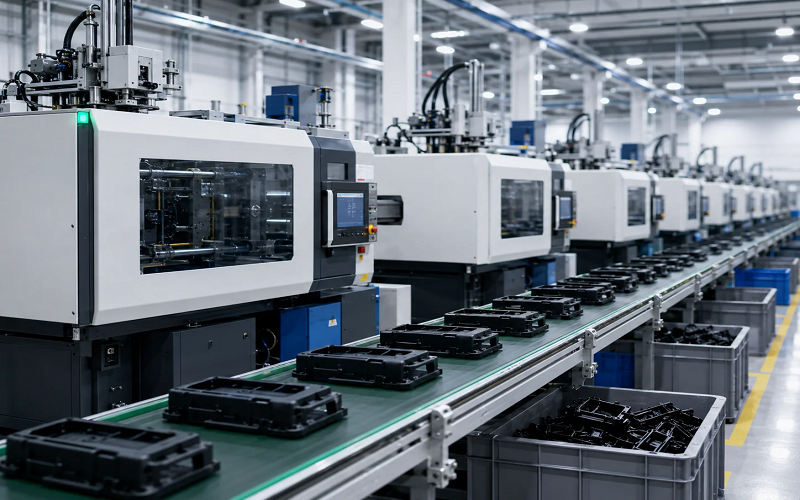
Critical Applications Of High Volume Molding
High volume injection molding is widely used in multiple industries such as automotive, consumer products, medical devices, home appliances, and packaging, meeting the efficient production needs for plastic components across different sectors.
Automotive Industry
In the automotive industry, high volume injection molding is used to manufacture various durable plastic components such as dashboards, bumpers, interior parts, and engine components.
These parts require not only high precision but also excellent thermal resistance to adapt to complex working environments, ensuring vehicle safety and performance stability.
Consumer Products
The consumer products sector relies on high volume injection molding to produce packaging materials, electronic product housings, and other everyday plastic goods, ensuring consistent product quality and appearance while meeting large-scale market demands. High volume injection molding supports rapid production cycles, helping brands achieve quick market response.
Medical Devices
The medical device industry utilizes high volume injection molding to manufacture disposable medical equipment parts and precision plastic components. These products must comply with strict quality standards and regulatory requirements to ensure patient safety and meet the industry’s high reliability demands.
Electronics Industry
High volume injection molding is used in the electronics industry to produce high-precision plastic components such as connectors, housings, and internal structural parts, ensuring stable performance and durability of electronic products.
Packaging Industry
The packaging industry leverages high volume injection molding for efficient production, reducing manufacturing costs while ensuring the strength, thermal resistance, and aesthetic quality of packaging materials. This meets the packaging needs of food, consumer goods, and other sectors.
Additionally, high volume injection molding is also widely applied in agricultural and industrial fields, producing durable plastic components with excellent thermal resistance to meet the requirements of various complex environments.
Low Volume Injection Molding vs High Volume Injection Molding
In plastic injection molding, significant differences exist between projects of varying production volumes. The scale of production directly influences mold selection, equipment configuration, unit cost, lead time, and overall process strategy.
Understanding the distinctions between low-volume and high-volume injection molding helps companies choose the most suitable manufacturing approach based on product stage, market demand, and budget.
Low volume injection molding typically involves smaller production runs, usually ranging from a few hundred to a few thousand parts.
Compared to high volume injection molding, the fixed costs associated with mold manufacturing and setup are relatively lower, making it more cost-effective for low volume production or prototyping. However, due to the smaller scale and less optimized production efficiency, the per-unit cost is higher.
In contrast, high volume injection molding is designed for large-scale production, typically producing tens of thousands to millions of parts annually.
Although the initial tooling and setup costs are significantly higher, economies of scale and optimized automated processes greatly reduce the per-unit cost as production volume increases.
Low volume injection molding is well-suited for prototype development, bridge tooling, and low volume production, especially in cases where design flexibility and rapid iteration are critical. It enables companies to test and improve product designs before committing to high volume production.
High volume injection molding is ideal for mature product designs requiring large-scale production with stable quality, such as automotive components, consumer electronics, medical devices, and packaging materials.
In summary, understanding the differences and respective advantages of low volume and high volume injection molding helps companies choose the most appropriate molding solution based on their product lifecycle and market demands, maximizing cost efficiency and optimizing product quality.
| Feature | Low Volume Injection Molding | High Volume Injection Molding |
|---|---|---|
| Production Scale | Typically a few hundred to a few thousand parts | Typically tens of thousands to millions of parts |
| Mold Cost | Lower, suitable for rapid iteration and prototyping | Higher, suitable for long-term large-scale production |
| Equipment Size | Smaller equipment, faster mold changeover | Larger equipment, higher automation level |
| Unit Cost | Higher due to smaller production batches | Lower due to significant economies of scale |
| Production Cycle | Shorter, suitable for quick small-batch production | Longer, but higher output per unit time |
| Quality Consistency | Moderate, possible larger batch-to-batch variation | High, with highly consistent part dimensions and performance |
| Applicable Scenarios | Prototype development, short-term production, small-batch customization | Large-scale production of mature products such as automotive, electronics, medical, etc. |
| Material Selection | Mostly conventional plastics, some limitations on special materials | Supports a wide range of thermoplastics and elastomers |
| Automation Level | Low to medium, more manual involvement | Highly automated, widespread use of robots and online inspection |
| Mold Material | Aluminum or soft steel molds with shorter lifespan | Hardened steel molds capable of withstanding millions of cycles |
| Process Complexity | Suitable for simple to moderately complex parts | Capable of handling complex geometries and precision parts |
| Cost Recovery Cycle | Short, suitable for rapid design validation and market testing | Long, suitable for sustained large-scale production |
Conclusion
High volume injection molding is a vital manufacturing process for companies seeking efficient, cost-effective, and consistent production of large quantities of plastic parts.
By leveraging advanced tooling, automated equipment, and rigorous quality control, this method ensures precise, repeatable results while significantly reducing per-unit costs. Its versatility across industries such as automotive, medical, electronics, and packaging demonstrates its broad applicability and value.
Understanding the distinctions between low and high volume injection molding enables businesses to select the optimal approach for their production needs, balancing cost, quality, and scalability.
Ultimately, high volume injection molding supports sustainable, scalable manufacturing solutions that drive innovation and competitive advantage in today’s dynamic market.