
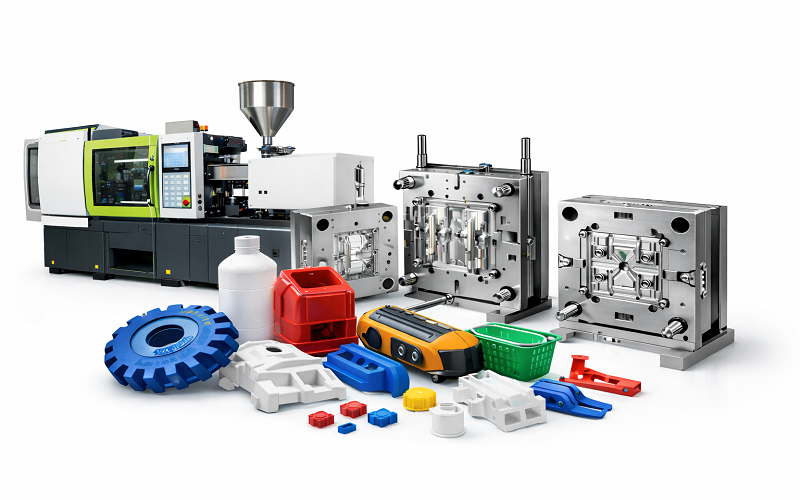
Plastic toys dominate the global toy market—from building blocks and action figures to bath toys and educational playsets, the variety is extensive. Plastic injection molding is a crucial manufacturing process for plastic toys, widely used to produce various high-quality, durable, and safe plastic toys.
With continuous advancements in plastic materials and injection molding equipment, toy injection molding technology has not only improved production efficiency but also ensured product precision and consistent quality.
This article will delve into the injection molding process for toys, material selection, mold design, and industry safety standards, helping readers gain a comprehensive understanding of this key manufacturing technology and its advantages in the modern toy industry.
What Is Toy Injection Molding?
Toy injection molding is a specialized manufacturing process used to create plastic toys by injecting molten plastic into precisely engineered molds.
This process is essential for producing plastic parts that constitute most toys found in the market today. It involves the use of an injection moulding machine, which melts plastic resin pellets until they become molten plastic.
This molten plastic is then injected under high pressure into a mold cavity, where it cools and solidifies into the desired shape.
This technique allows for the mass production of identical, highly detailed components with excellent dimensional accuracy—critical for toys that require interlocking parts, moving joints, or intricate surface textures.
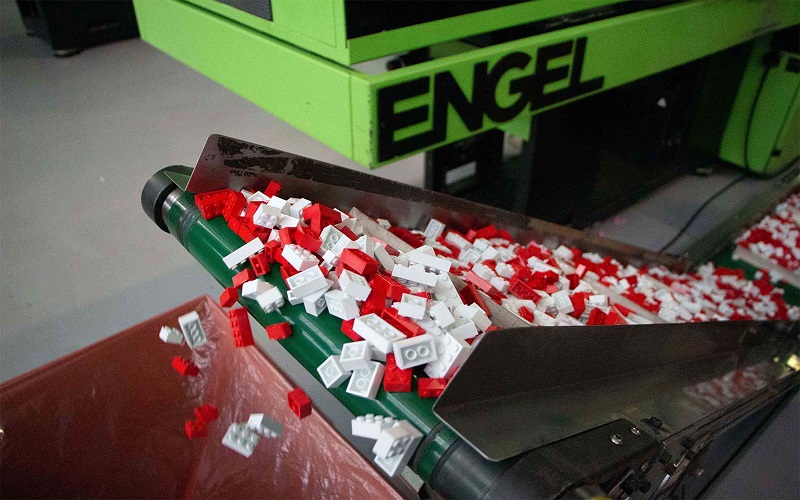
Why Use Plastic Injection Molding For Toy Manufacturing ?
Plastic injection molding is the preferred manufacturing method for producing plastic toys due to its numerous advantages.
High Precision and Complexity
Injection molding can inject molten plastic at high pressure into precise molds, perfectly replicating complex shapes, fine textures, and intricate structures (such as building block clasps, doll joints, and toy car details). Traditional methods struggle to achieve such consistency and fineness.
Product Consistency And Quality Stability
Injection molding machines used for toy manufacturing typically have a clamping force between 50 tons and 300 tons, ensuring the mold remains tightly closed during the injection process.
This is crucial for precise mold release and maintaining the integrity of multiple parts produced simultaneously.
Molds can produce over one million parts during their service life.Using metal molds, typically made of P20 and S136, ensures the durability of the molds and a high-quality surface finish of the products, which is crucial for the toy’s visual appeal.
Cost Efficiency For High Volume Production
This method is highly suitable for mass production, minimizing waste material by grinding excess plastic and reusing it in the production process, while maximizing efficiency through single-cycle operation.
It also lowers unit costs and spreads the initial mold investment, making it a cost-effective production solution for toy manufacturers.
Material Diversity and Safety
Manufacturers commonly select materials such as acrylonitrile butadiene styrene (ABS), polypropylene (PP), and polystyrene (PS); these materials not only have excellent physical properties and high surface finish but are also BPA-free, ensuring safety for children.
Sustainability
Modern injection molding machines, especially fully electric types, reduce energy consumption and achieve more precise process control, promoting more sustainable production.
Additionally, the process can use recycled plastic (with recycled content up to 30%) and low-waste manufacturing techniques, making it an environmentally friendly approach that aligns with the current trends in the plastic toy industry.
In summary, plastic injection molding offers toy manufacturers a precise, efficient, and economical solution capable of producing high-quality, safe, and visually appealing plastic toys that meet stringent industry standards.
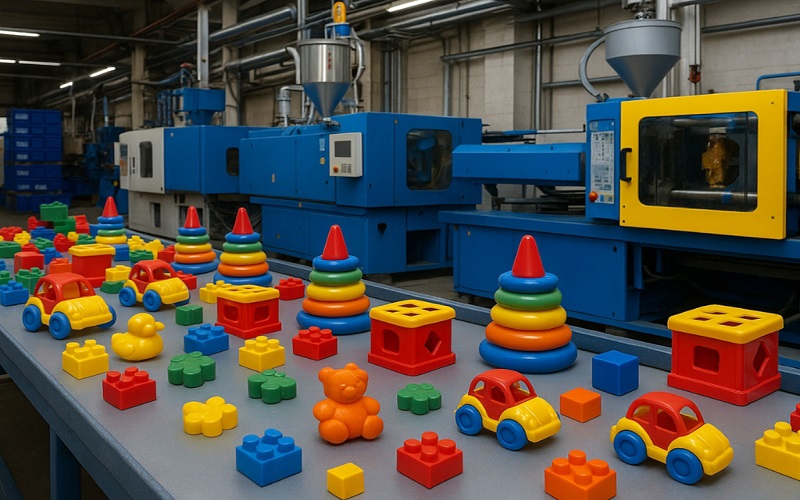
Common Plastic Materials Used In Toy Injection Molding
Plastic is lightweight, durable, and easily colorable, making it ideal for toy manufacturing.Thermoplastics are the most commonly used materials due to their ability to be melted and reshaped multiple times, making them well suited for injection molding processes.
Popular thermoplastics include acrylonitrile butadiene styrene (ABS), polypropylene (PP), polystyrene (PS), nylon, and polyethylene. These materials offer a balance of mechanical properties, such as impact resistance and flexibility, which are essential for withstanding the stresses toys endure during play.
- Acrylonitrile Butadiene Styrene (ABS):ABS plastic is favored for its toughness and glossy finish, making it ideal for toys requiring bright colors and smooth surfaces.
- Polypropylene (PP):Polypropylene material offers excellent chemical resistance and fatigue strength, suitable for toys that need to endure repetitive motion.
- Polystyrene (PS):Polystyrene is inexpensive and easy to mold, commonly used for simple toy parts.
Manufacturers often incorporate additives to enhance characteristics like UV resistance, color stability, and flame retardancy, further improving the toy’s durability and safety.
In summary, the choice of plastic materials and mold construction directly influences the mechanical properties, appearance, and safety of the plastic products, making material selection a critical step in toy injection molding.
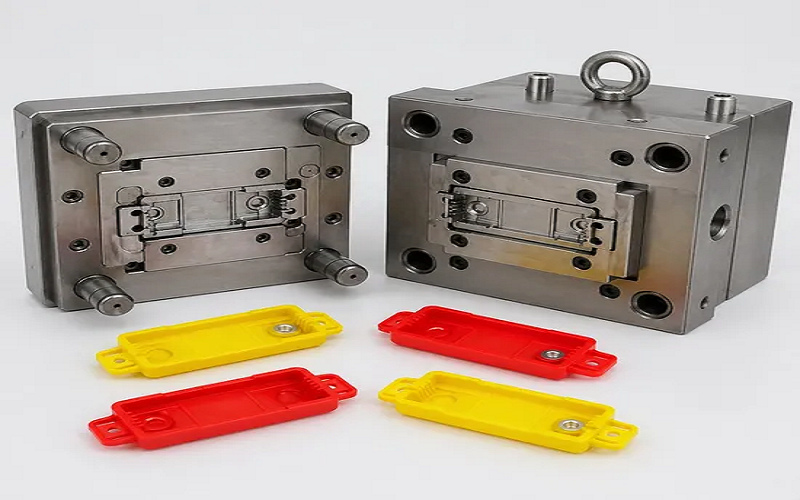
Key Considerations For Successful Toy Injection Molding
Successful toy injection molding requires careful attention to several critical factors that influence the final product’s quality, safety, and manufacturability. These considerations span from mold design and machine parameters to material handling and environmental controls.
Mold Design and Material
The mold is the heart of the injection molding process. For toy manufacturing, molds are typically made from hardened steel or aluminium.
While steel molds offer superior durability and can withstand the high pressures and temperatures of mass production, aluminium molds provide cost-effective solutions for lower volume runs.
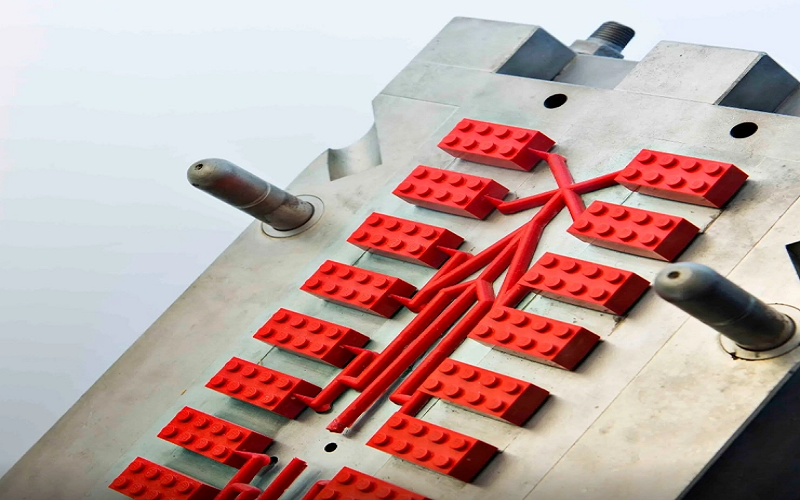
Mold design must include cooling channels to ensure uniform cooling and prevent warping and deformation of toy parts. Using family mold design not only reduces mold manufacturing costs but also significantly improves production efficiency and output.
Additionally, molds should include well-designed air vents that allow trapped air and gases to escape during injection, preventing defects such as voids or burn marks.
The mold’s cavity and core surfaces require precision machining to achieve the desired surface finish and dimensional accuracy. Features such as holes, walls, and intricate details must be designed with sufficient draft angles to facilitate easy ejection of the final product without damage.
Injection Unit and Machine Parameters
The injection unit plays a vital role in melting and injecting the plastic material into the mold. Key injection parameters such as injection speed, injection pressure, and melt temperature must be optimized to ensure complete filling of the mold without defects.
Maintaining an appropriate injection speed is crucial to avoid issues like jetting or flow marks, which can compromise the toy’s quality.
Clamping force, typically ranging from 50 tons to 300 tons for toy production, must be sufficient to keep the mold closed tightly during injection, preventing flash and ensuring dimensional consistency.
Environmental Controls
Maintaining a clean and controlled environment is essential to prevent contamination of the plastic parts. Dust, moisture, and particles in the air can cause surface imperfections or weaken the toy’s structural integrity. Proper ventilation and humidity control help maintain optimal conditions for molding.
Quality Control and Safety Standards
Consistent monitoring of process parameters and regular mold maintenance ensure that the toy’s quality meets stringent industry standards. Toys must comply with safety regulations that protect children from harmful substances and mechanical hazards.
Quality checks include dimensional inspections, surface finish evaluation, and mechanical testing to verify durability.
Packaging Considerations
After molding, toys require suitable packaging to protect them from dust, moisture, and damage during transportation and storage. Packaging design should complement the toy’s product design and maintain the product’s integrity until it reaches the consumer.
In conclusion, successful toy injection molding hinges on a combination of precise mold design, optimized machine settings, strict environmental control, and rigorous quality assurance to produce safe, high-quality plastic toys that meet consumer expectations.
Safety Standards Of Injection Molded Toys
Safety is a paramount concern in the manufacturing of injection molded toys. Plastic toys must comply with rigorous global safety standards designed to protect children from potential hazards.
These standards cover various aspects including the materials used, mechanical properties, and chemical safety.
Material Safety and Compliance
The plastics used in toy injection molding must be free from harmful substances such as BPA, phthalates, lead, and other heavy metals.
Manufacturers often select BPA-free plastics like ABS, polypropylene, and polystyrene to ensure the toys are safe for children, especially those who tend to put toys in their mouths.
Compliance with regulations such as the European Union’s REACH and the U.S. Consumer Product Safety Improvement Act (CPSIA) is mandatory.
International Safety Standards
Different countries have their own safety regulations for toys. For example, the European Union enforces the EN 71 standard, which covers mechanical, physical, and chemical safety.
The United States follows ASTM F963, a comprehensive standard for toy safety. Manufacturers producing toys for global markets must ensure compliance with all relevant standards.
In summary, the safety standards for injection molded toys are comprehensive and essential to ensure that plastic toys are safe, durable, and free from harmful substances.
Manufacturers must stay informed about evolving regulations and continuously adopt innovations to maintain compliance and protect consumers.
Conclusion
In conclusion, toy injection molding stands as a vital and sophisticated manufacturing process that enables the production of high-quality, safe, and visually appealing plastic toys at scale.
By leveraging advanced materials, precise mold design, and optimized machine parameters, manufacturers can achieve exceptional product consistency, intricate detailing, and cost-effective mass production.
Adherence to stringent global safety standards ensures that molded toys are safe for children and environmentally responsible.
As technology continues to evolve, innovations such as energy-efficient machines and sustainable materials will further enhance the efficiency and safety of toy injection molding, securing its essential role in the future of toy manufacturing.