
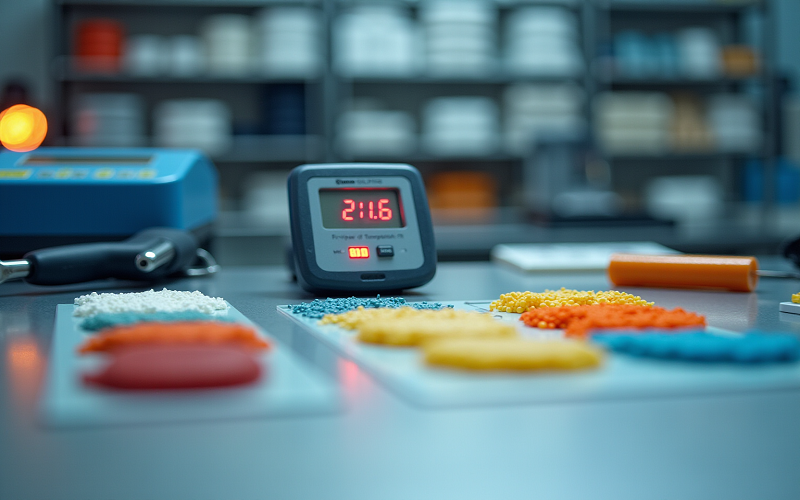
Plastic is an indispensable material in modern manufacturing, widely used in packaging, automotive, electronics, medical, and many other fields. Understanding the melting point of plastics and their thermal properties is crucial for material selection, process control, and product performance optimization.
Different types of plastics exhibit varying softening and melting behaviors during heating, which not only affect their processing temperature ranges but also determine their thermal stability and mechanical properties in final applications.
This guide will delve into the concept of plastic melting point, influencing factors, and its practical significance in production, helping engineers and manufacturers better grasp the thermal performance of plastics for efficient and reliable product design and manufacturing.
What Is The Melting Point Of Plastic?
The melting point of plastic is the temperature at which a plastic material transitions from a solid state into a molten or flowable state, allowing it to be reshaped.
This temperature is a critical thermal threshold that influences how plastics material behave during manufacturing processes such as injection molding, extrusion, and thermoforming.
Unlike metals, plastics do not always have a single, sharply defined melting point. Instead, their melting behavior depends heavily on their molecular structure and classification.
Types Of Plastics By Thermal Behavior
Plastics are broadly categorized into thermoplastics and thermosetting plastics, each with distinct thermal responses:
- Thermoplastics: Soften or melt when heated and can be reshaped multiple times. Most common thermoplastics have melting temperatures between 170°C and 260°C.
- Thermosetting Materials: Including epoxy resins and phenolic resins, undergo irreversible curing during heating. They do not melt but decompose at high temperatures.
Semi-Crystalline Plastics vs Amorphous Plastics
Among thermoplastics, based on molecular structure, they can be further divided into semi-crystalline plastics and amorphous plastics.
Semi-Crystalline Plastics
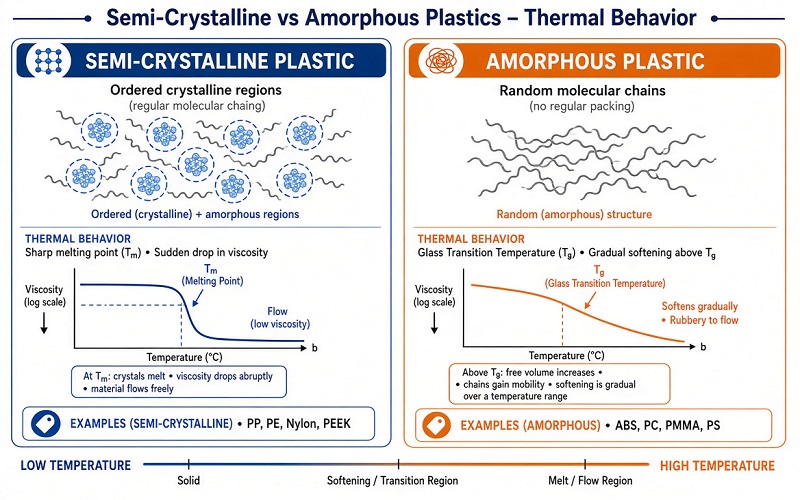
A semi-crystalline plastic exhibits both Tg and Tm due to the presence of amorphous and crystalline regions within its structure.
These plastics have a narrow melting range and exhibit a sharp melting point, which is crucial for precise temperature control during processing. Examples include polypropylene, polyethylene, nylon, and polyether ether ketone (PEEK).
Amorphous Plastics
In contrast, amorphous polymers lack an ordered structure and therefore do not have a distinct melting point, but gradually soften over a certain temperature range.
Their thermal behavior is characterized by the glass transition temperature (Tg)—at this temperature, polymer chains gain mobility, causing the material to transition from a rigid state to a rubbery state.
Amorphous plastics such as ABS, polycarbonate, and polystyrene do not have a true melting point but exhibit a softening and melting temperature range.
What Factors Affect Plastic Melting Point?
Several internal and external factors influence the melting point of plastics, determining how they respond to heat and how they can be processed and used effectively.
Internal Factors
- Polymer Structure and Molecular Weight: The structure of the polymer affects its melting behavior. Longer polymer chain length and higher molecular weight create stronger bonds, leading to a higher melting point. Shorter chains and lower molecular weight lower the melting point.
- Crystallinity and Amorphous Regions: Plastics with more crystalline (ordered) regions have a sharper and higher melting point. Semi-crystalline plastics have both crystalline and amorphous parts; the crystalline parts melt sharply, while amorphous parts soften gradually. Amorphous plastics soften over a wider temperature range without a clear melting point.
- Additives and Plasticizers: Additives like plasticizers can lower the softening and melting point. Fillers can raise or lower the melting point depending on their interaction with the plastic.
- Copolymerization and Chain Branching: Copolymers, made from different monomers, usually have lower melting points because their structure is less regular. Branching in polymer chains also reduces crystallinity and lowers the melting point compared to straight chains.
External Factors
- Thermal History and Cooling Rate: The rate at which a plastic is cooled after melting affects its crystallinity and thus its melting behavior. Rapid cooling (quenching) can reduce crystallinity, lowering the effective melting point during subsequent heating.
- Moisture Content: Some plastics, especially hygroscopic ones like nylon, absorb moisture which acts as a plasticizer, lowering the melting point and affecting mechanical properties.
- Processing Conditions: The melt temperature, mold temperature, and cooling circuits during manufacturing influence the crystallization process, dimensional stability, and heat resistance of the final part.Rapid cooling often leads to reduced crystallinity, thereby lowering the actual melting point of the plastic; mold temperature control directly influences the dimensional stability and mechanical properties of the product.
- Mechanical Load and Thermal Cycling: Exposure to mechanical stress and repeated thermal cycling can affect the polymer’s molecular structure, potentially lowering the melting point or causing thermal degradation.
In summary, the melting point of plastic is not fixed but varies depending on molecular weight, crystallinity, polymer structure, additives, moisture content, and processing conditions.
Higher molecular weight and longer polymer chains generally increase melting points because they result in stronger intermolecular forces, leading to an increased melting point.
Higher crystallinity usually corresponds to a higher and more distinct melting point, while additives such as plasticizers lower the melting point by enhancing the mobility of polymer chains.
Melting Points Of Common Plastics
Understanding the melting points of various plastic materials is essential for selecting the right material for specific applications and ensuring proper processing conditions.
Below is an expanded overview of the melting points and thermal characteristics of some common plastics, highlighting their practical uses and important considerations:
Low Density Polyethylene (LDPE)
LDPE is widely used for plastic bags, packaging films, and flexible containers due to its flexibility and relatively low melting point, which typically ranges from approximately 105°C to 115°C. Its lower melting temperature allows for easy processing but limits its use in high-temperature applications.
LDPE exhibits good chemical resistance and is often chosen for products where flexibility and toughness are required.
High Density Polyethylene (HDPE)
HDPE melts at a higher temperature than LDPE, generally between 120°C and 135°C. This higher melting point is due to its more linear polymer chain structure, which increases crystallinity.
HDPE is commonly used for rigid containers, pipes, and automotive components where higher strength and thermal resistance are necessary.
Polypropylene (PP)
Polypropylene typically has a melting point in the range of 160°C to 170°C, making it suitable for applications requiring higher thermal resistance and ability to withstand elevated temperatures such as automotive parts, food containers, and textiles.
PP’s semi-crystalline nature gives it a sharp melting point and good chemical resistance. It is widely used in injection molding and extrusion processes.
Polyvinyl Chloride (PVC)
Polyvinyl chloride is used for pipes and has a melting point range that varies widely from approximately 160°C to 210°C depending on formulation and additives.
Rigid PVC is commonly used in piping, window profiles, and electrical insulation, benefiting from its flame retardant properties and chemical resistance.
Flexible PVC, which contains plasticizers, softens at lower temperatures (around 80°C glass transition temperature) and is used in cables, hoses, and medical tubing.
Polystyrene (PS)
Polystyrene is an amorphous plastic that softens gradually rather than melting sharply. Its glass transition temperature is around 90°C to 110°C.
PS is often used in disposable cutlery, packaging, and insulation materials. Its relatively low softening temperature limits its use in high-temperature environments.
Nylon (Polyamide)
Nylon is a semi-crystalline plastic with a melting point near 220°C. It offers excellent mechanical strength, abrasion resistance, and chemical resistance, making it ideal for engineering applications such as gears, bearings, and automotive components. Nylon’s high melting point requires specialized processing equipment and drying before molding.
Polyether Ether Ketone (PEEK)
PEEK is a high-performance semi-crystalline plastic with a melting point around 343°C. It is known for exceptional chemical resistance, mechanical strength, and thermal stability. Processing PEEK requires specialized high-temperature machinery and molds.
Polycarbonate (PC)
Polycarbonate is an amorphous plastic with a glass transition temperature around 145°C to 150°C. It softens gradually rather than melting sharply and is used in applications requiring impact resistance and transparency, such as safety glasses and electronic housings. PC processing involves melt temperatures typically between 280°C and 320°C.
Polytetrafluoroethylene (PTFE)
Polytetrafluoroethylene has a high melting point of about 327°C and offers excellent chemical resistance and thermal stability. It is commonly used in non-stick coatings, seals, and gaskets for high-temperature applications.
To assist in material selection and processing, “plastic melting point charts” are commonly used. These charts list the melting points or glass transition temperatures of various common plastics, providing engineers and manufacturers with a convenient reference.
| Plastic | Melting Point /Tg(°C) | Melt Temperature Range (°C) |
|---|---|---|
| LDPE | 105–115°C | 180–240°C |
| HDPE | 125–135°C | 190–280°C |
| PP | 160–170°C | 200–280°C |
| POM | 165–175°C | 180–230°C |
| ABS | Tg ≈ 105°C | 220–260°C |
| PA6(Nylon6) | 215–225°C | 230–290°C |
| PA66(Nylon66) | 255–265°C | 270–300°C |
| PC | Tg ≈ 147°C | 280–320°C |
| PET | 245–260°C | 270–300°C |
| PEEK | ≈ 343°C | 360–400°C |
Why Melting Point Matters In Manufacturing Processes?
The melting point of plastic is a fundamental parameter in manufacturing processes because it directly affects how the material behaves under heat and determines the conditions needed for shaping, molding, or forming.
Ensuring Proper Plastic Flow
During processes like injection molding, extrusion, or thermoforming, the plastic must reach a temperature above its melting point to become sufficiently fluid.
This allows the plastic to flow into molds or through dies accurately, filling all cavities and replicating fine details. If the temperature is too low, the plastic remains too viscous, leading to incomplete filling, weak weld lines, or surface defects.
Maintaining Dimensional Accuracy
Processing plastics at or above their melting temperature but within a controlled range helps maintain dimensional accuracy.
Excessive heat can cause thermal degradation, warping, or shrinkage, while insufficient heat can result in poor flow and incomplete mold filling. Proper temperature control ensures the final parts meet tight tolerances and functional requirements.
Avoiding Thermal Degradation
Excessive heat beyond the plastic’s decomposition temperature can break down polymer chains, releasing gases and causing discoloration, brittleness, or loss of mechanical properties.
Knowing the melting point and related thermal limits helps manufacturers avoid these issues by setting appropriate processing temperatures.
Optimizing Energy Consumption And Cycle Time
Processing plastics at the optimal melting temperature reduces cycle times by enabling faster melting and cooling. This improves production efficiency and lowers energy consumption, which is especially important in high-volume manufacturing.
Impact On Mold And Equipment Design
High melting point plastics require specialized equipment such as high-capacity heaters, temperature-resistant molds, and precise thermal controls.
Understanding the melting temperature helps engineers design injection molds and select machinery that can handle the thermal demands without premature wear or failure.
Relation To Other Thermal Properties
While melting point defines when plastic melts, other properties like heat deflection temperature (HDT), Vicat softening temperature, and glass transition temperature (Tg) indicate when plastics begin to soften or deform under mechanical stress or heat.
These properties are critical for ensuring parts maintain their shape and mechanical performance under specified mechanical load and temperature rises during use.
In summary, the plastic melting point is a critical factor in manufacturing that influences processing parameters, equipment design, product quality, and material selection.
Proper understanding and control of melting temperatures help maintain dimensional accuracy, prevent degradation, optimize manufacturing efficiency, and ensure the reliability of plastic products in their intended applications.
Practical Applications Of Plastic Melting Points
Understanding the melting point of plastics is essential across various industries and manufacturing processes.
It not only dictates how plastics can be shaped and formed but also impacts the performance and durability of the final products. Here are some key practical applications where knowledge of plastic melting points plays a critical role:
Injection Molding
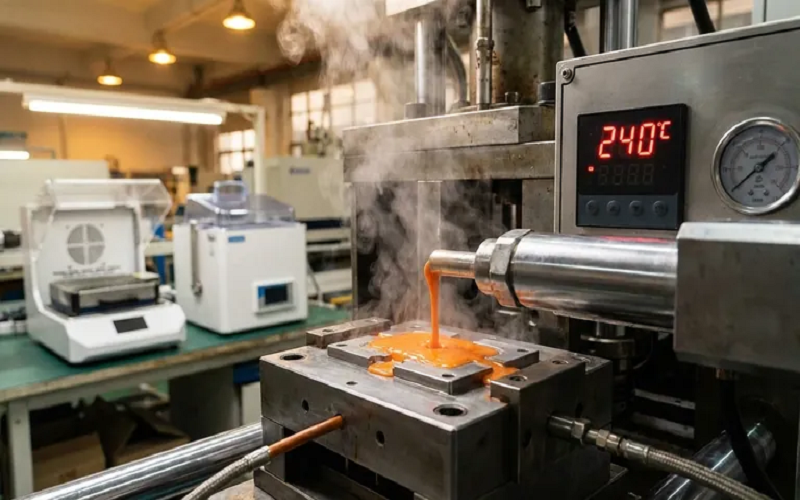
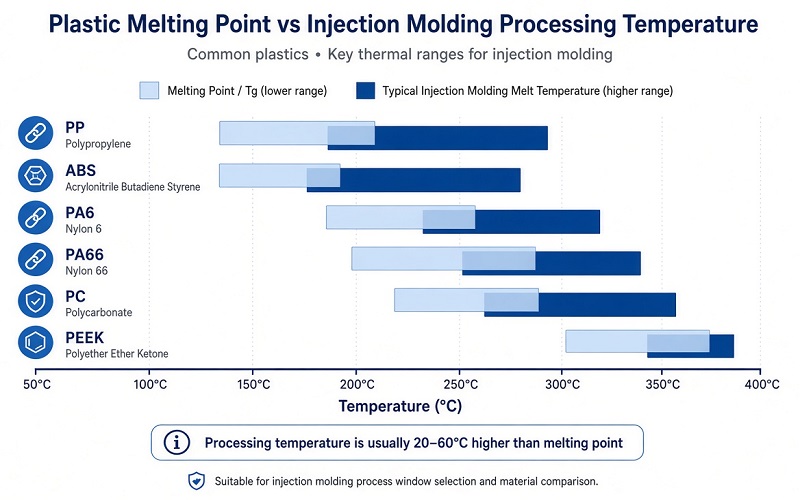
Injection molding is one of the most common and important processes in plastic manufacturing. The melting point of plastic directly affects the temperature settings during injection molding, mold design, and the quality of the final product.
During the injection molding process, the plastic must be heated above its melting point to fully melt and flow, filling the mold completely.
Different plastics have different melting points, so the heating temperature of the injection molding machine needs to be adjusted according to the material to avoid incomplete filling caused by too low temperature or material damage caused by too high temperature.
3D Printing
In additive manufacturing, especially fused deposition modeling (FDM), the plastic filament must reach its melting temperature to extrude smoothly through the printer nozzle.
Bed temperature and flow temperature must be carefully controlled to ensure proper layer adhesion and minimize warping. Understanding the plastic material melt behavior helps in selecting the right printing parameters for materials .
Thermoforming and Blow Molding
Thermoforming involves heating plastic sheets to their flow temperature, just above the melting point, to make them pliable for shaping over molds.
Similarly, blow molding requires the plastic to be melted and formed into hollow objects like bottles. Accurate temperature control prevents material degradation and ensures uniform thickness and strength.
Material Selection for High-Temperature Applications
Many industrial applications demand plastics that can withstand elevated temperatures without deforming or losing mechanical integrity.
Knowing the plastic melting temperature helps engineers select high temperature materials such as PEEK or PTFE for components exposed to high thermal energy, ensuring long-term reliability.
Recycling and Reprocessing
Recycling processes rely on melting plastics to reform them into new products. Different melting points among plastic polymers require sorting and tailored processing conditions to avoid contamination and degradation.
Understanding the flow temperature and thermal energy needed to melt plastic ensures efficient recycling workflows.
In conclusion, the melting point of plastics is a foundational parameter that affects virtually every stage of plastic product development, from material selection and processing to end-use performance and recycling.
Mastery of this thermal property enables manufacturers to optimize production, enhance product quality, and innovate with advanced plastic materials.
Conclusion
In summary, the melting point of plastic is an important parameter that affects processing performance and the quality of the final product. Different types of plastics have varying melting points and processing temperature ranges due to differences in molecular structure and crystallinity.
The melting point determines when the plastic becomes flowable, facilitating molding and processing, and also influences the thermal stability and mechanical properties of the product during use.
When selecting materials, the melting point should be considered together with other performance indicators such as glass transition temperature and heat deflection temperature to ensure that the material meets requirements during both processing and use.
Understanding the melting point of plastics and its influencing factors helps optimize processing parameters, improve production efficiency, extend product lifespan, and promote the application of new materials.