
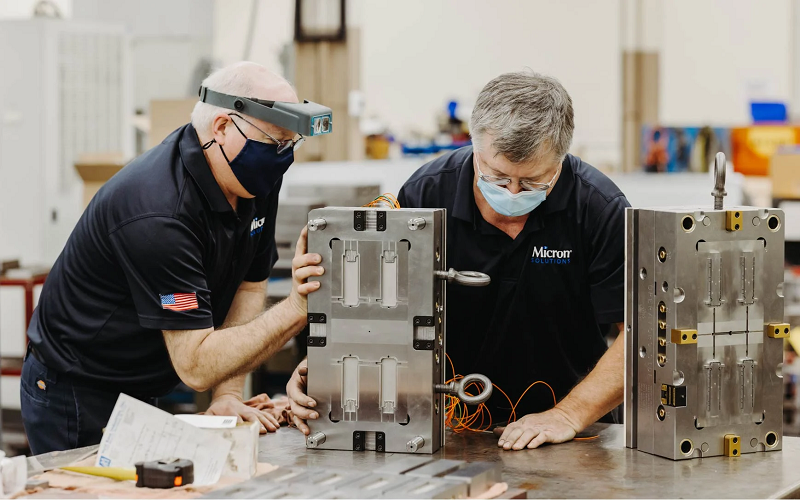
Injection mold making is a crucial part of the plastic injection molding process, directly affecting the quality of the final product and production efficiency. A single mold can produce thousands to millions of identical parts.
With the growing demand in the manufacturing industry for high precision, high efficiency, and mass production, the design and manufacturing technology of injection molds continue to advance.
This article will provide a detailed introduction to the steps and key points of injection mold making, helping readers gain an in-depth understanding of this complex and precise manufacturing process, offering valuable reference for professionals and enthusiasts in related industries.
What Is Injection Mold Making?
Injection mold making is the process of designing and fabricating metal molds used in the injection molding process to produce plastic parts.
It involves creating precise cavities and cores that define the shape, surface texture, and features of the final plastic product. The molds are typically made from steel or aluminum and must withstand high injection pressures and repeated thermal cycling during production.
This process is essential because the quality of the mold directly impacts the product quality, cycle time, and overall manufacturing cost.
Injection mold making requires a combination of engineering knowledge, precision machining skills, and an understanding of the injection process parameters such as injection pressure, temperature, and cycle time.
The tooling cost can be significant but is amortized over high volume production, making it a cost-effective method for manufacturing plastic products in industries ranging from consumer goods to medical devices and automotive components.
Steps Of Injection Mold Making Process
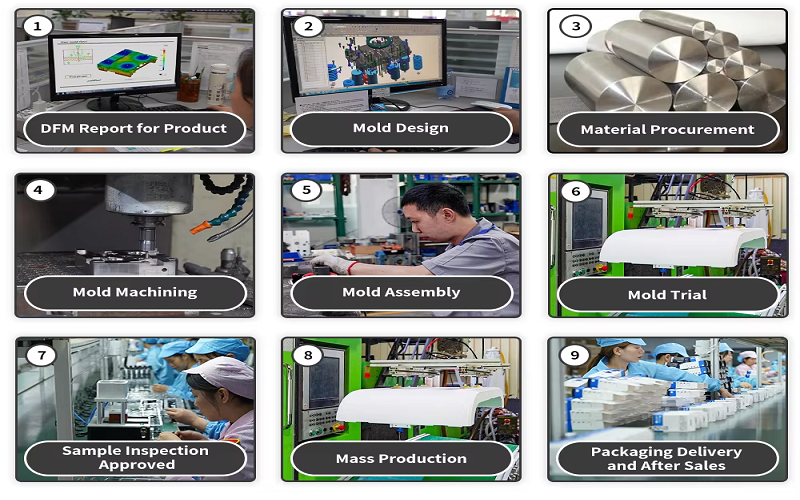
The injection mold making process involves several precise steps, each critical to ensuring the mold functions correctly and produces high-quality injection molded parts. Below is a detailed breakdown of the key stages involved:
Step 1: Mold Design
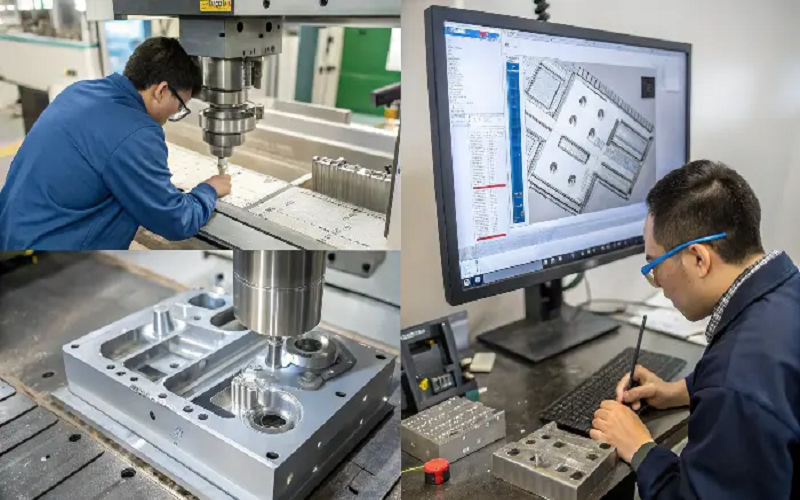
The process begins with mold design, where engineers use CAD software to create detailed 3D models of the mold based on the part design.
This stage includes the number of mold cavities (single mold or multi cavity mold), designing the mold surface finish, and planning cooling channels to optimize the production process and reduce cycle time.
Gate location and design significantly influence the filling process and the aesthetic quality of the part. Draft angles typically range from 1° to 2° to facilitate smooth part ejection. Proper venting is essential to prevent air entrapment, ensuring the production of high-quality injection molded parts.
Proper mold design also considers wall thickness uniformity to avoid defects and ensures the mold can withstand the injection molding machine’s pressure.
Step 2: Material Selection & Preparation
Material selection is a critical step in injection mold making, as it directly affects the mold’s durability, cost efficiency, and the quality of the finished product.
Typically, mold materials include various grades of steel and aluminum, chosen based on factors such as production volume, plastic material compatibility, heat resistance, and cost reduction goals.
Steel molds are preferred for high production volumes due to their superior strength and wear resistance, making them ideal for manufacturing methods that involve multiple cavities and extended cycle times.
Aluminum molds, while less durable, are often used for prototyping or low-volume production because they are easier and faster to machine and less expensive.
Proper material preparation and selection ensure that the mold and injection process are optimized for the entire process, leading to consistent, high-quality production and efficient use of resources.
Step 3: Machining and Fabrication
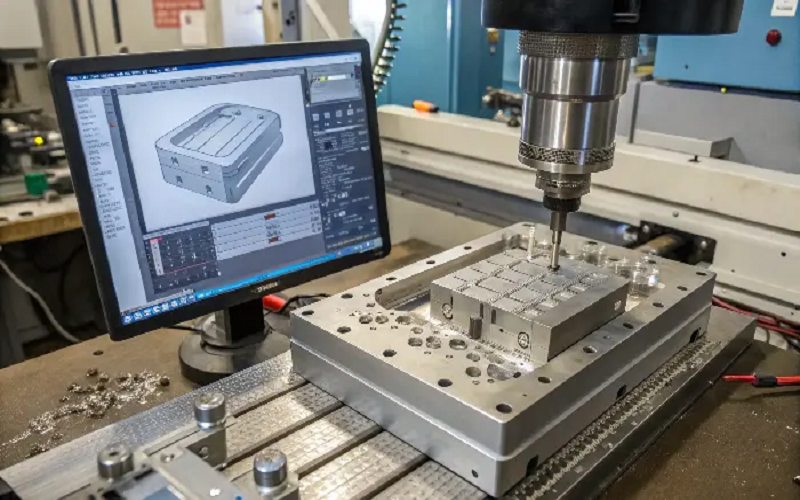
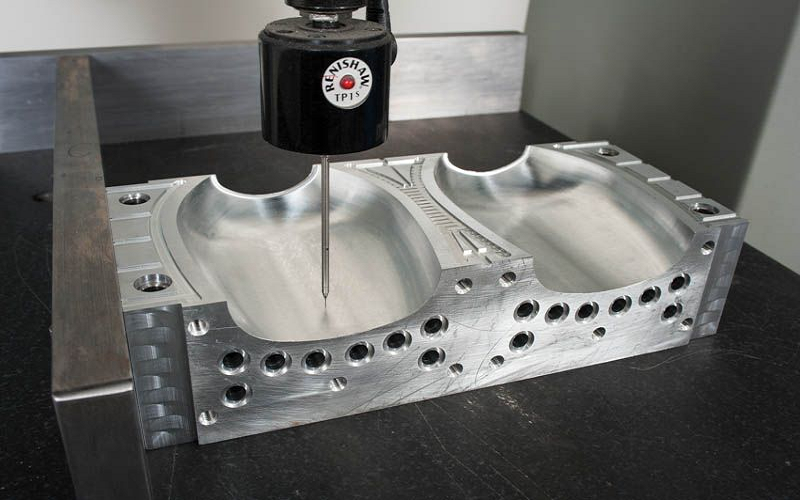
Using CNC machining, the mold cavities and cores are cut with high precision. This step also involves creating the mold’s cooling channels, ejector pin holes, and runner systems.
The mold surface is polished or textured according to the desired finish of the final product. 3D printing may be used for prototyping or creating complex mold components.
Step 4: Mold Assembly
Mold assembly involves precisely assembling the finely machined cavities, cores, sliders, ejector pins, sleeves, cooling channels, and other components into the mold base according to design requirements.
It includes checking the mold closing clearance, guide pillar fit, ejection stroke, and slider movement accuracy. Subsequently, the entire mold opening/closing and ejection system are debugged to ensure smooth operation, no interference, and no leakage, laying a reliable foundation for subsequent mold trials.
Step 5: Mold Trial
Mold trial is a crucial phase where the assembled mold is tested to verify its functionality and performance within the injection molding machine.
This validation process involves closely monitoring key parameters such as temperature, pressure, and injection speed. Injection pressures typically range from 5,000 to 30,000 psi. Cycle times vary between 2 to 60 seconds, with cooling accounting for 50-70% of the total cycle time.
Adjustments are made to optimize gate location, injection pressure, temperature, and cooling time to ensure the highest part quality.
Multiple trial runs may be required to fine-tune both the mold and process parameters, guaranteeing consistent production of identical parts. This phase also validates the mold’s durability under production conditions and ensures the ejection mechanisms operate smoothly without damaging the parts.
Each step in the injection mold making process is interconnected, and attention to detail at every stage ensures the production of high-strength, smooth, and defect-free injection molded parts suitable for various applications.
Injection Mold Manufacturing Methods
Injection mold manufacturing involves several advanced techniques to create precise and durable molds capable of producing high-quality plastic parts.
The choice of manufacturing method depends on factors such as mold complexity, production volume, material requirements, and cost considerations. Here are some common injection mold manufacturing methods:
CNC Machining
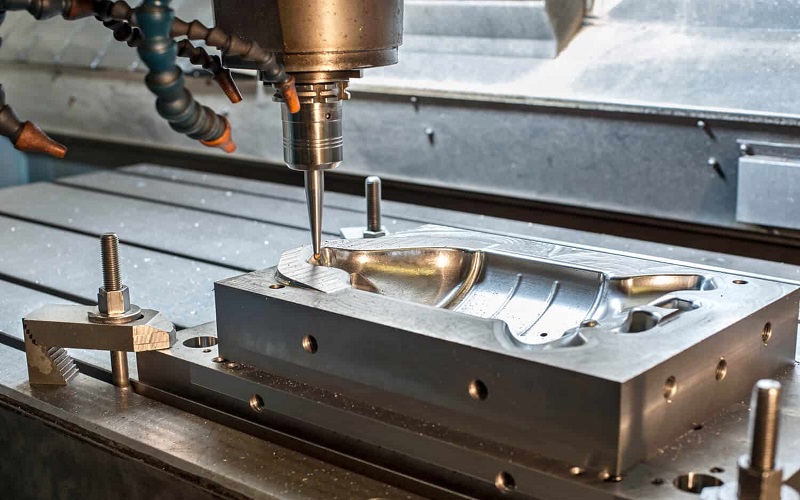
CNC (Computer Numerical Control) machining is one of the most widely used methods for fabricating injection molds.
It involves using computer-controlled cutting tools to precisely machine the mold cavities and cores from metal blocks, typically steel or aluminum.
CNC machining offers high accuracy, repeatability, and the ability to produce complex geometries. It is often combined with other processes like EDM to achieve fine details.
Electrical Discharge Machining (EDM)
EDM is a non-traditional machining process that uses electrical discharges (sparks) to erode metal from the mold components.
It is particularly useful for creating intricate shapes, sharp corners, and deep cavities that are difficult to machine with conventional tools.
EDM complements CNC machining by enabling the production of complex mold features such as undercuts, thin walls, and fine surface textures.
3D Printing and Additive Manufacturing
3D printing technologies, including selective laser sintering (SLS) and direct metal laser sintering (DMLS), are increasingly used in mold manufacturing for rapid prototyping and producing complex mold inserts.
While not yet a replacement for traditional machining in high-volume production, additive manufacturing allows for faster design iterations and the creation of conformal cooling channels that improve cycle times and part quality.
Polishing and Mold Surface Treatment
After machining, molds often undergo polishing and surface treatments to enhance the mold surface finish.
Polishing reduces surface roughness, which improves the aesthetic quality of the molded parts and facilitates easier part ejection. Surface treatments such as nitriding or coating increase mold hardness and wear resistance, extending the mold’s service life.
By selecting the appropriate manufacturing method and maintaining strict quality standards, injection mold makers can produce molds that optimize production efficiency, part quality, and cost-effectiveness for a wide range of industries and applications.
Composition Of Injection Mold Making Costs
Injection mold making costs comprise several components that collectively determine the total investment required to produce a mold.
Understanding these cost elements helps manufacturers and clients plan budgets effectively and make informed decisions about mold design, materials, and production strategies.
Design Fees
Design fees typically account for 10% to 15% of the total mold cost. This includes the engineering work involved in creating detailed CAD models, performing design for manufacturability (DFM) reviews, and optimizing mold features such as gate location, cooling channels, and ejection systems.
A well-executed design phase can prevent costly modifications later and improve mold performance.
Material Costs
The choice of mold material significantly impacts the overall cost. High-grade steel molds, preferred for high-volume production, are more expensive than aluminum molds used for prototypes or low-volume runs.
Material costs also include consumables used during machining and surface treatments like nitriding or coating for corrosion resistance and wear protection.
Machining and Fabrication Costs
Precision machining using CNC and EDM processes contributes a substantial portion of the cost. Complex molds with intricate geometries, multiple cavities, or special features such as sliders and lifters require longer machining times and specialized equipment, increasing fabrication expenses.
Assembly and Finishing Costs
After machining, molds undergo assembly, polishing, and surface treatment. Polishing improves surface finish quality, reducing defects and easing part ejection, while treatments extend mold life. These processes add to labor and material costs.
Mold Trial and Testing
Initial mold trials involve running the mold on injection molding machines to validate design and process parameters. Multiple trial runs may be necessary to fine-tune the mold and ensure consistent part quality, incurring additional operational costs.
Operational and Maintenance Costs
Ongoing costs include mold maintenance, cleaning, and repairs to sustain performance over the production lifecycle. Preventive maintenance reduces downtime and extends mold life but adds to the total cost of ownership.
Cost Amortization
While upfront tooling costs can range from $3,000 for simple molds to over $100,000 for complex, multi-cavity production molds, these expenses are amortized over the production volume. Material and machine time dominate costs after tooling amortization.
Injection molding becomes cost-effective at high volumes, often exceeding 1,000 parts, where per-part costs decrease significantly.
By analyzing and managing these cost components, manufacturers can optimize injection mold making expenses to balance quality, production efficiency, and budget constraints.
Key Factors That Affect Injection Mold Making Quality & Cost
Several key factors influence the quality and cost of injection mold making, impacting both the initial tooling investment and the efficiency of the production process. Understanding these factors can help manufacturers optimize their molds for better performance and cost-effectiveness.
Mold Size & Material
The size of the mold and the materials used have a significant impact on the cost and quality of injection mold making. Larger molds require more raw materials and longer processing times, leading to increased costs and longer production cycles.
The choice of mold materials, such as steel or aluminum, affects the mold’s durability and cost. Steel molds are suitable for high-volume production, while aluminum molds are ideal for low-volume runs and new mold development.
Additionally, the type of plastic pellets used in production (such as acrylonitrile butadiene styrene or recycled materials) also influences mold design and process parameters.
Precision and Tolerances
Higher precision molds require advanced machining techniques and tighter tolerances, which raise tooling costs. However, precise molds ensure consistent production of parts with minimal defects, reducing waste and secondary operations.
Cooling System Efficiency
Efficient cooling is crucial as cooling typically consumes 50-70% of the injection molding cycle time. Properly designed cooling channels, including conformal cooling, help maintain uniform temperature distribution, reduce cycle time, and improve dimensional stability.
Production Volume
The expected production volume influences mold material selection and design. High-volume production justifies investment in durable steel molds with multi-cavity designs, while low-volume projects may benefit from aluminum molds or alternative manufacturing methods.
Mold Maintenance and Lifecycle
Regular maintenance extends mold life and ensures consistent part quality. Factors such as wear resistance of mold materials, ease of cleaning, and corrosion protection (e.g., nitriding or coating) impact long-term costs.
Injection Parameters and Machine Compatibility
Injection pressure, temperature, and cycle time affect mold stress and wear. Molds must be designed to withstand these conditions, including the use of appropriate nozzle designs to ensure proper molten plastic injection without defects.
Environmental and Regulatory Considerations
Use of recycled materials and compliance with environmental regulations can influence material selection and mold design, balancing sustainability goals with production efficiency.
By carefully balancing these factors, manufacturers can optimize injection mold making for both quality and cost, ensuring efficient production of high-quality plastic parts across diverse industries.
Which Industries Use Injection Molds?
Injection molding is a versatile manufacturing process utilized across a wide range of industries due to its ability to produce high-precision, complex, and durable plastic parts at scale. The industries that rely heavily on injection molding include:
Automotive Industry
Injection molding is essential in the automotive industry for making both structural and cosmetic parts like connectors, battery cases, dashboards, and trims. It ensures high precision and durability to meet safety standards.
Medical Devices
Used to produce items like syringes, IV connectors, diagnostic housings, and surgical handles.
Consumer Electronics
Injection molding creates phone cases, laptop shells, keyboard frames, and internal brackets. It supports high-quality finishes and tight tolerances.
Packaging Industry
Produces billions of closures, caps, and thin-wall containers annually with fast cycle times using materials like polypropylene.
HVAC and Industrial Components
Makes vents, housings, and connectors for HVAC systems and parts for cleaning equipment, machinery, and security devices.
Optical and Lighting
Used for optical lenses and lighting parts needing clarity and precision, often using PMMA and polycarbonate.
Aerospace and Defense
Produces lightweight, strong parts from advanced resins for demanding conditions.
Injection mold making is widely used across industries due to its efficiency, precision, and ability to produce high-quality parts at scale.
Conclusion
Injection mold making is a vital process in the manufacturing of plastic parts, involving precise design, material selection, machining, assembly, and testing. The quality and efficiency of the mold directly affect the final product’s performance, production speed, and cost.
By understanding the key steps and factors in injection mold making, manufacturers can optimize their processes to produce high-quality, consistent parts suitable for a wide range of industries.
Proper investment in mold design, materials, and maintenance ensures cost-effective mass production with excellent precision and durability.