
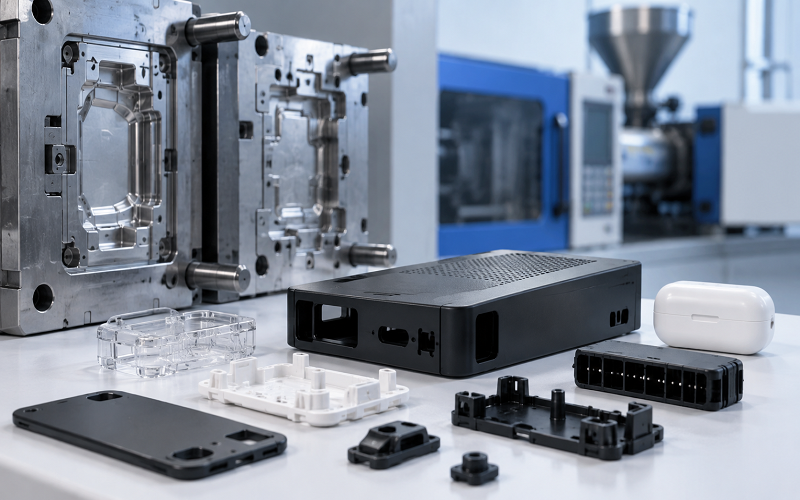
Injection molding electronics technology, as a vital part of modern manufacturing, is driving a revolution in the design and production of electronic products.
Through the injection molding process, electronic components can be formed with high precision and efficiency, meeting the demands of industries such as consumer electronics and automotive applications for complex structures and tight tolerances.
This article will delve into the core technologies, material selection, and extensive applications of injection molding electronics in the electronics industry, helping readers gain a comprehensive understanding of the benefits and challenges of this manufacturing process.
What Are Injection Molding Electronics?
Injection molding electronics is a specialized manufacturing process that combines traditional plastic injection molding techniques with the integration of electronic components and circuitry.
This process enables the production of complex, high-precision parts that incorporate both structural and electrical functionalities in a single molded plastic piece.
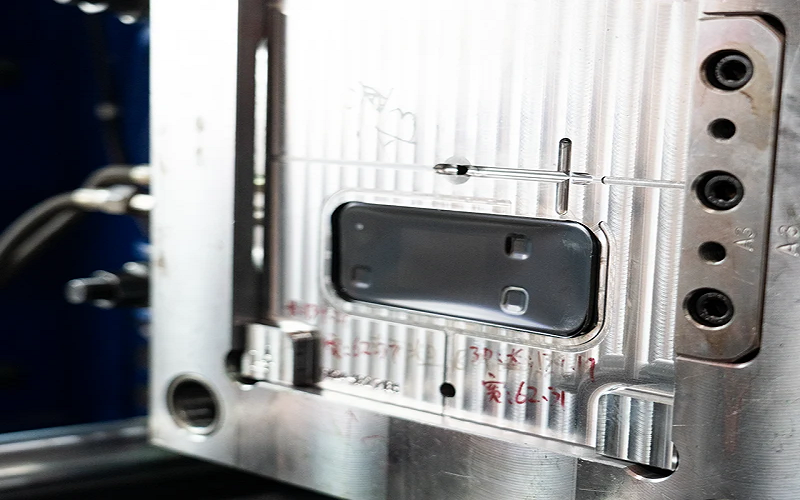
Injection molding for electronic products utilizes an injection molding machine to melt thermoplastic or thermosetting plastics, which are then injected under high pressure into precision molds. After cooling and solidification, various plastic parts required for electronic products are formed.
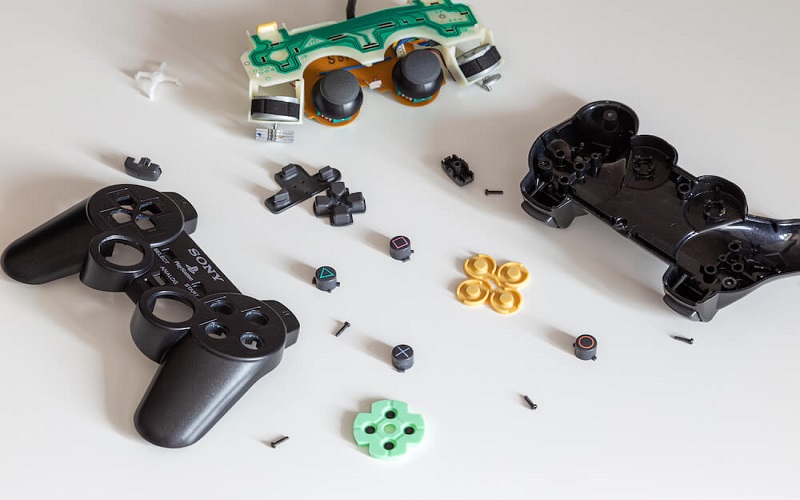
This process is widely used for core components such as electronic product housings, structural components, connectors, insulators, buttons, and brackets.
Why Use Injection Molding To Manufacture Electronic Components?
Injection molding is a preferred manufacturing method for electronic components due to its ability to produce high volumes of parts with consistent quality and precision. This process offers many benefits that are critical for modern electronics manufacturing, including:
- High Precision and Repeatability: Complex mold designs require advanced CAD software for accuracy.Injection molding machines provide tight tolerances and consistent part dimensions, essential for electronic components where precision affects performance and assembly.
- Complex Geometries: Injection molding enables the creation of intricate shapes and fine details that would be difficult or impossible with other manufacturing methods. This capability supports advanced product designs with integrated features such as snap-fits, conduits, and mounting points.
- Cost Efficiency for High Volumes: Although initial tooling costs can be high, injection molding becomes highly cost-effective for large production runs. The ability to produce thousands of parts quickly reduces per-unit costs significantly.
- Material Versatility: A wide range of engineering plastics with specific electrical, thermal, and mechanical properties can be used, allowing manufacturers to tailor parts to application requirements.
- Integration of Electronic Features: Techniques such as insert molding and in-mold electronics allow for the direct integration of metal inserts, circuit boards, and printed electronics within the molded parts. This reduces assembly steps and improves product reliability.
- Secondary Operations Compatibility: Injection molded parts are compatible with secondary operations like pad printing, screen printing, and assembly, enabling branding, labeling, and functional enhancements.
- Improved Thermal Management: Injection molding can produce components with integrated heat sinks or dielectric layers that help dissipate heat and protect sensitive electronics.
- Design Optimization: The process supports design optimization strategies that reduce material usage and weight while maintaining strength and functionality, contributing to more sustainable manufacturing.
- Reduced Waste: Compared to subtractive manufacturing, injection molding produces less scrap material, contributing to cost savings and environmental benefits.
Given these many benefits, injection molding is a foundational technology for manufacturing electronic components that meet the demands of today’s fast-paced, high-volume electronics industry.
Partnering with an experienced manufacturing partner ensures optimal material selection, mold design, and process control to achieve the best results in production and product performance.
Common Materials Used In Electronics Injection Molding
Material selection is critical to ensure the final product meets electrical properties, heat resistance, and mechanical strength requirements.
Common plastics include acrylonitrile butadiene styrene (ABS), polybutylene terephthalate (PBT), polycarbonate (PC), and polyamide (nylon). These materials provide high impact resistance, electrical insulation, and durability, making them ideal for housing delicate electronics and structural components.
Acrylonitrile Butadiene Styrene (ABS)
ABS plastic is a widely used thermoplastic known for its high impact resistance, good electrical insulation, and ease of molding into complex shapes with thin walls.
It is commonly used for electronic housings, keyboards, and consumer products. Its combination of strength and heat resistance makes it suitable for many electronic applications.
Polybutylene Terephthalate (PBT)
PBT is a durable engineering plastic with excellent heat resistance and electrical properties. It is often used for electrical connectors, switch plates, and other components requiring high impact resistance and dimensional stability.
Polycarbonate (PC)
Known for its high strength, transparency, and good electrical insulation, polycarbonate is used in applications where durability and heat resistance are critical. It is suitable for electronic parts like protective housings and display covers.
Polyamide (Nylon)
Polyamide offers excellent abrasion resistance, mechanical strength, and electrical insulation. It is frequently used for connectors, cable ties, and other components that require durability and flexibility.
Acrylic (PMMA)
Acrylic provides excellent UV resistance and clarity, making it ideal for display covers and light guides in electronic devices.
Thermoplastic Polyurethane (TPU)
TPU is valued for its flexibility, scratch resistance, and durability, often used in flexible electronic components and protective covers.
Other Materials
In addition to the base materials, Specialized engineering plastics are used in injection molding for specific requirements.
injection molding electronics often involves the use of conductive inks and printed electronics technologies to create conductive traces and printed circuits directly on molded parts.
These technologies enable the production of injection molded structural electronics and in mold electronics, where electrical components are integrated seamlessly into the plastic parts.
Collaboration between industrial designers, electrical engineers, and manufacturers is essential to optimize mold designs and material choices to achieve high quality and cost-effective production with on time delivery.
| Material Name | Characteristics | Typical Applications |
|---|---|---|
| Acrylonitrile Butadiene Styrene (ABS) | High impact resistance, good electrical insulation, easy to mold | Electronic housings, keyboards, consumer electronics |
| Polybutylene Terephthalate (PBT) | Excellent heat resistance and electrical properties, high impact resistance, dimensional stability | Electrical connectors, switch plates, high-strength components |
| Polycarbonate (PC) | High strength, good transparency, good electrical insulation | Protective housings, display covers |
| Polyamide (Nylon) | Excellent abrasion resistance, mechanical strength, and electrical insulation | Connectors, cable ties, durable and flexible components |
| Acrylic (PMMA) | Excellent UV resistance and clarity | Display covers, light guides |
| Thermoplastic Polyurethane (TPU) | Flexibility, scratch resistance, durability | Flexible electronic components, protective covers |
Core Technologies Used During Injection Molding Electronics
Injection molding electronics incorporates several advanced technologies to achieve the seamless integration of plastic components with electronic functionality.
These core technologies enable manufacturers to produce complex, high-quality electronic parts with enhanced performance and reduced assembly requirements.
In-Mold Electronics (IME) Technology
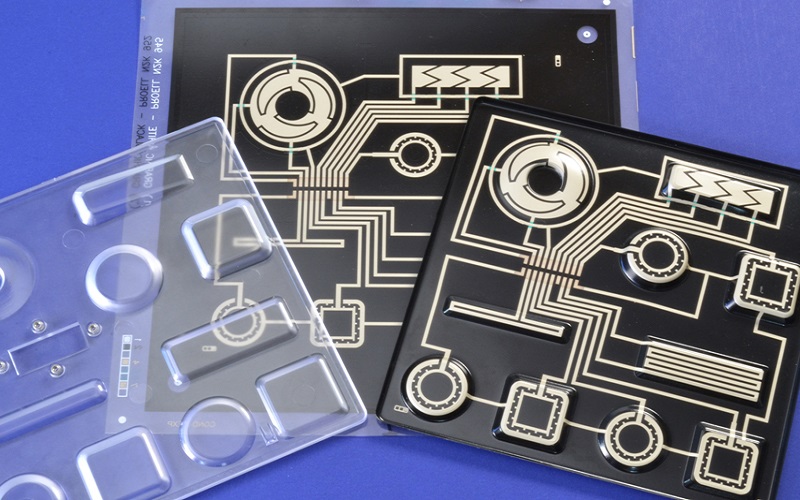
IME technology integrates printed electronic circuits directly into the injection molded plastic parts. This process involves printing conductive traces, sensors, and other electronic components onto a flexible substrate, which is then molded into the final shape.
IME eliminates the need for separate circuit boards and connectors, reducing part counts by up to 90% and lowering interface manufacturing costs by 20–30%. Additionally, IME technology can reduce product weight by up to 70%, making devices lighter and more compact.
IME control panels are also 300% more resistant to cleaning chemicals compared to traditional mechanical button arrays, enhancing durability and user experience.
Insert Molding
Insert molding involves placing pre-formed metal or electronic components, such as connectors or terminals, into the mold cavity before injecting plastic.
This process encapsulates the inserts within the plastic part, creating a strong mechanical and electrical bond. Insert molding reduces assembly steps and improves the reliability of electronic components by securely embedding them within the molded structure.
Overmolding
Overmolding is a process where one material is molded over another to create composite parts with enhanced functionality. In electronics, overmolding can add protective layers, improve grip, or integrate multiple materials with different properties.
This technology is commonly used to apply soft-touch surfaces or waterproof seals over rigid electronic housings.
Multi-Shot Molding
Multi-shot molding, also known as two-shot or multi-material molding, involves injecting two or more different materials sequentially into a single mold.
This technique allows the production of complex parts with multiple colors, textures, or material properties in one molding cycle, reducing assembly time and costs. It is particularly useful for electronic components that require integrated buttons, seals, or connectors made from different materials.
Automation and Smart Manufacturing
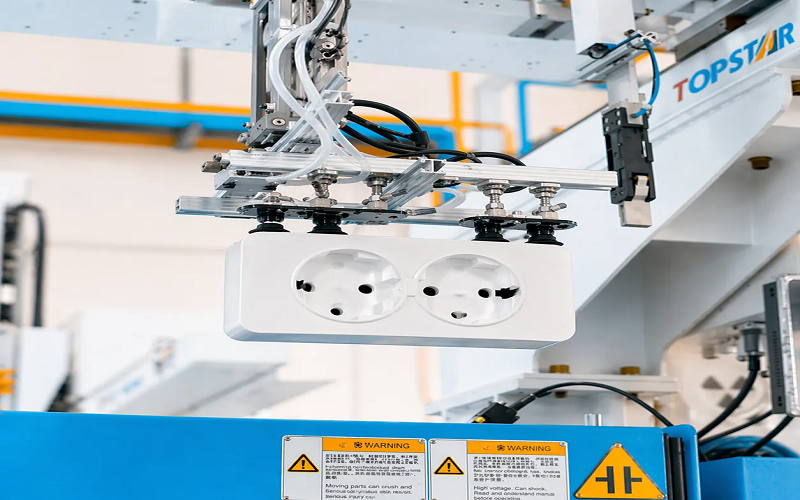
Modern injection molding facilities utilize automation technologies, including robotic part handling, automated quality inspection, and real-time process monitoring.
Smart manufacturing systems leverage machine learning and data analytics to optimize production parameters, reduce defects, and increase throughput. This integration enhances consistency, lowers costs, and accelerates time-to-market for electronic products.
These core technologies collectively enable the production of sophisticated injection molded electronic parts that meet the demanding requirements of modern electronics industries, from consumer devices to automotive and medical applications.
Which Electronic Parts Are Manufactured Using Injection Molding?
Injection molding technology is widely used to manufacture various electronic components, covering multiple key areas from housings to internal structures. Below are some common types of electronic components produced using injection molding techniques:
Housings and Protective Covers
Injection molding produces durable and well-insulated housings for devices like smartphones, laptops, and appliances. Materials such as ABS and PC ensure strength and protection.
Electrical Connectors and Ports
Injection molding is used for connectors like HDMI , USB ports and audio jacks require precise molding and strong mechanical integrity. Insert molding securely embeds metal terminals in plastic for reliable connections.
Buttons and Switches
Injection molding creates buttons and switches with complex shapes and good tactile feel. Multi-shot molding allows combining colors and materials to enhance user experience.
Insulators and Brackets
Internal insulators and brackets provide structural support and safety by securing circuit boards and batteries. Injection molding offers high precision and versatile designs.
Heat Dissipation Components
Plastic heat sinks made by injection molding help dissipate heat from electronics, preventing overheating. Metal inserts can be added to improve heat transfer.
Complex Functional Parts
In-mold electronics (IME) integrate printed circuits directly into molded plastic, simplifying assembly and enhancing functionality.
Conduit Fittings
Injection molding efficiently produces conduit fittings that protect and guide electrical wires, ensuring safety and easy installation.
Overall, injection molding provides the electronics industry with comprehensive solutions from physical form to functional integration, supporting the manufacture of high-performance, lightweight, and cost-effective electronic components.
With the development of material science and process technology, the application fields of injection molded electronic components will continue to expand, driving electronic products toward smarter, more compact, and more reliable directions.
Conclusion
Injection molding electronics is a transformative manufacturing process that enables the production of complex, high-precision electronic components with integrated functionality.
By combining advanced materials like ABS, PBT, PC, and nylon with core technologies such as in-mold electronics, insert molding, and multi-shot molding, manufacturers can create lightweight, durable, and cost-effective parts for a wide range of applications.
This process not only improves product performance and reliability but also reduces assembly steps and material waste.
With ongoing advancements in automation, smart manufacturing, and material science, injection molding electronics will continue to drive innovation and efficiency in the electronics industry, meeting the increasing demand for smarter, more compact, and sustainable electronic devices.