
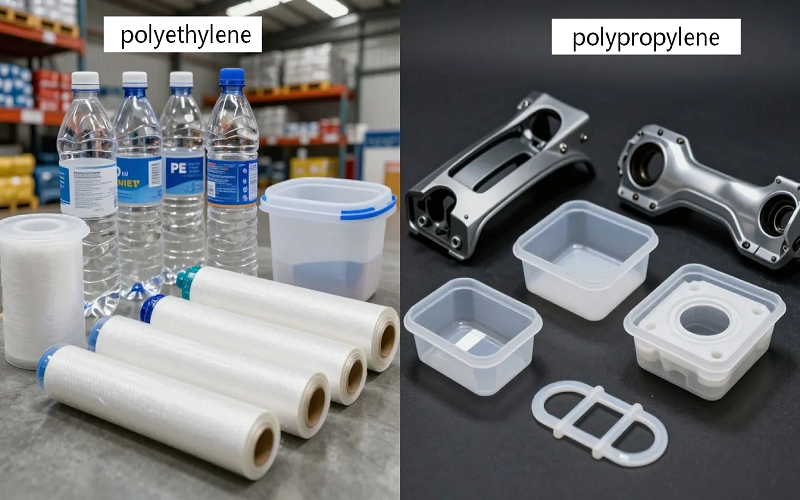
Polypropylene (PP) and polyethylene (PE) are two of the most commonly used thermoplastic polymers in the plastics industry today. They are widely applied in various fields including packaging, automotive, and consumer goods, prized for their unique physical and chemical properties.
Although these two materials share many similarities in structure and performance, they exhibit significant differences in density, melting point, chemical resistance, and application scenarios.
This article will provide an in-depth analysis of the key differences between polypropylene and polyethylene, as well as their respective advantages, to help manufacturers and designers select the most suitable material for their projects.
Chemical Composition And Molecular Structure Of Polyethylene And Polypropylene
Polyethylene and polypropylene are both members of the thermoplastic family, composed of long chains of hydrocarbons.
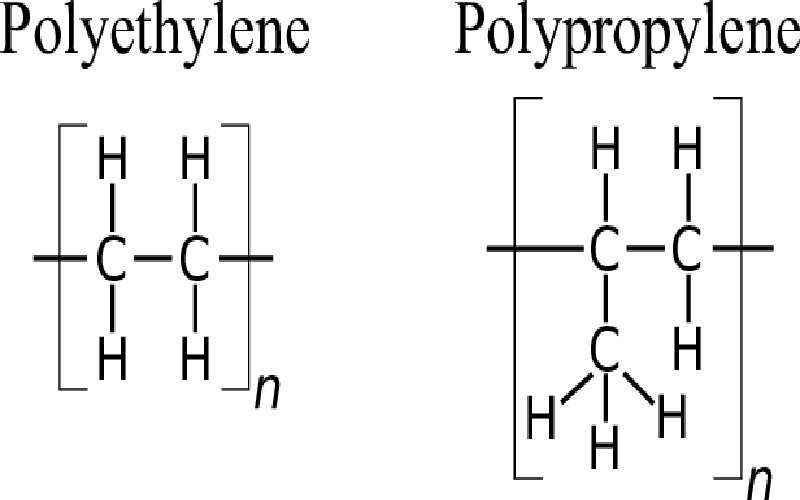
The primary difference lies in their monomer units: polyethylene is made from ethylene monomers (–CH2CH2–), while polypropylene is derived from propylene monomers (–CH2CH(CH3)–). This difference in chemical structure imparts distinct characteristics to each polymer.
Polyethylene’s molecular structure consists of repeating units of ethylene, which can be arranged in various ways to produce different grades such as low density polyethylene (LDPE), linear low density polyethylene (LLDPE), medium density polyethylene (MDPE), and high density polyethylene (HDPE).
These variations affect the polymer’s density, crystallinity, and physical properties, influencing its flexibility, tensile strength, and chemical resistance.
Unlike polyethylene ,Polypropylene has a methyl group attached to every other carbon atom in its chain, which increases its rigidity and melting point compared to polyethylene.
This semi-crystalline thermoplastic’s chemical structure gives it higher heat resistance, fatigue resistance, and good chemical resistance, making it suitable for demanding applications such as automotive parts and rigid containers.
Both polyethylene and polypropylene exhibit good chemical resistance, but polypropylene generally offers higher resistance to organic solvents and chemicals.
Their molecular weight and branching patterns also contribute to differences in water absorption, UV degradation resistance, and impact resistance.
Properties Comparison Between Polypropylene And Polyethylene
Polypropylene and polyethylene are among the most widely used plastics in various industries due to their unique qualities and cost-effectiveness.
While they share several similar characteristics as thermoplastic polymers, they differ in key physical and chemical properties that influence their practical applications. Understanding these differences is essential for selecting the right material for specific uses.
Physical Properties
Density and Weight
Polyethylene has a density between 0.91 and 0.965 g/cm³, depending on the type, such as low-density polyethylene (LDPE) or high-density polyethylene (HDPE).
Polypropylene is slightly lighter, with a density around 0.91 g/cm³. This makes polypropylene plastic more suitable for products where lightweight materials are preferred.
Appearance And Transparency
Polyethylene can be produced in several grades with varying levels of clarity, including translucent and opaque forms.
Polypropylene typically has a translucent appearance, similar to milk jugs, and is less transparent than polyethylene. This difference can influence the aesthetic and functional qualities of packaging materials.
Melting Point And Temperature Resistance
Polyethylene has a lower melting point (105°C to 115°C), which limits its use in high-temperature environments.Polypropylene melts at a higher temperature (165°C to 175°C), making it highly resistant to heat and giving it a higher melting point than polyethylene.
This allows its use in applications requiring exposure to higher temperatures, such as microwave-safe food containers and automotive parts.
Flexibility And Rigidity
Polyethylene is more flexible and impact-resistant, ideal for applications like plastic bags, stretch films, and food packaging that require durability and moisture protection.
Polypropylene is stiffer and holds its shape well under stress, making it suitable for strong packaging, industrial applications, and rigid containers.
Impact Of UV Radiation
Polyethylene is generally more resistant to UV radiation compared to polypropylene, which tends to degrade faster when exposed to sunlight unless stabilized with additives. This property affects the choice of material for outdoor applications where exposure to UV radiation is a concern.
Chemical Properties
Chemical Resistance
Both polymers are chemical resistant, but polypropylene offers higher chemical resistance, especially against organic solvents, acids, and alkalis.
This high chemical resistance makes polypropylene highly suitable for packaging products that come into contact with harsh chemicals and for use in various industries. Polyethylene is also chemically resistant but may have lower resistance to certain solvents.
Overall, polypropylene is more suitable for applications that require rigidity, heat resistance, and lightweight properties, while polyethylene has advantages in flexibility, low-temperature toughness, and impact resistance.
When selecting materials, it is important to consider specific application requirements, grade characteristics, and cost factors.
| Property | Polypropylene (PP) | Polyethylene (PE) |
|---|---|---|
| Density | Approximately 0.90–0.92 g/cm³ (lighter) | LDPE 0.91–0.93; HDPE 0.94–0.96 g/cm³ |
| Melting Point | Approximately 160–170°C | LDPE ≈105–115°C; HDPE ≈125–135°C |
| Heat Resistance | Better, can withstand higher temperatures (suitable for hot filling, microwave) | Relatively poor, softens and deforms at high temperatures |
| Low Temperature Resistance | Poor, homopolymer becomes brittle below 0°C | Excellent, especially LDPE remains tough in severe cold |
| Stiffness / Rigidity | Higher, more rigid | Lower (LDPE very soft, HDPE moderate) |
| Flexibility | Moderate, but thin-walled products have excellent “living hinge” performance | Better (especially LDPE, LLDPE very soft) |
| Impact Strength | Good at room temperature, poor at low temperature | Generally better, outstanding low temperature impact performance |
| Tensile Strength | Usually higher | Moderate (HDPE higher, LDPE lower) |
| Transparency | Mostly translucent, can be improved with nucleating agents | LDPE more transparent, HDPE mostly milky opaque |
| Fatigue / Hinge Performance | Excellent (best for repeated bending living hinges) | Average |
| UV Resistance | Slightly worse (requires stabilizers) | Relatively better (still requires stabilizers) |
Polypropylene vs Polyethylene : Processing Techniques
Both polypropylene and polyethylene are compatible with common manufacturing processes such as injection molding, blow molding, and extrusion.
Polypropylene’s higher melting point makes it particularly well-suited for injection molding of components requiring heat resistance and long-term durability.
Polypropylene injection molding is widely used in the automotive industry for producing parts like bumpers, interior panels, and under-the-hood components due to its excellent fatigue resistance and ability to maintain structural integrity under stress.
Polyethylene offers greater flexibility during processing, especially in blow molding and film extrusion. Low-density polyethylene (LDPE) is commonly used in film applications such as plastic bags and stretch films, where its superior impact resistance and moisture barrier properties are beneficial.
High-density polyethylene (HDPE) is favored for blow molding containers and bottles, providing rigidity and chemical resistance.
Both materials are also used in rotational molding to create hollow parts, with polyethylene being preferred for large tanks and containers due to its toughness and chemical resistance.
In extrusion applications, polyethylene’s versatility allows it to be formed into pipes, tubing, and sheets, while polypropylene is often extruded into fibers and films for packaging and textiles.
How To Choose Between Polypropylene And Polyethylene For Specific Applications?
Although polyethylene and polypropylene are among the most widely used plastics across various industries, the differences between them may make one material more suitable for certain specific applications.
Applications Of Polyethylene
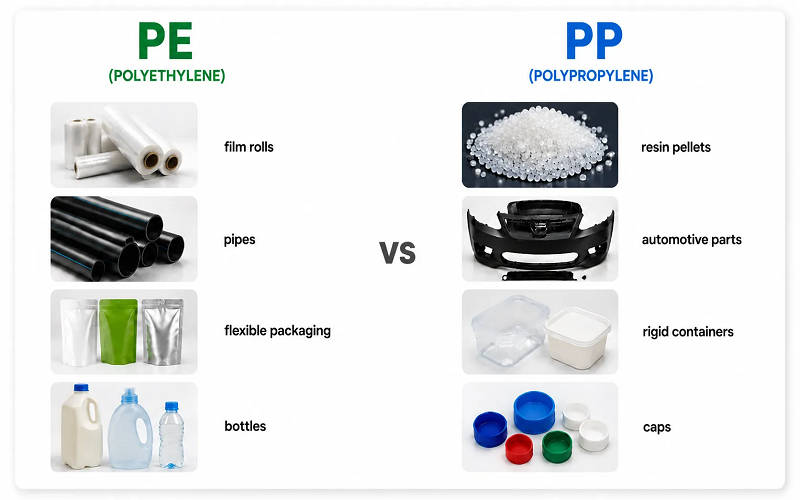
Polyethylene is commonly used for packaging materials that require durability and moisture resistance due to its excellent flexibility and impact resistance, such as plastic bags and stretch films.
Its low density and diverse molecular structures make it perform well in food packaging, pipe liners, and freezer bags.
Additionally, polyethylene’s corrosion resistance makes it an ideal choice for pipes in the chemical and water treatment industries.
Applications Of Polypropylene
In contrast, polypropylene has a higher melting point and rigidity, making it suitable for products that need to withstand higher temperatures and mechanical stress, such as microwave-safe food containers and automotive parts like bumpers.
Polypropylene’s excellent fatigue resistance makes it perform well in applications involving repeated bending, while its good chemical resistance also makes it suitable for containers in the packaging industry that come into contact with chemicals.
Moreover, polypropylene is more efficient in the circular economy with a higher recycling rate, helping to reduce environmental impact.
Both materials have low toxicity, meet food safety standards, and are widely used in food packaging. In terms of cost, polyethylene is generally more cost-effective, but polypropylene’s heat resistance and rigidity offer higher value in some demanding applications.
Environmental Concerns And Safety Of Polyethylene And Polypropylene
Both polyethylene and polypropylene are widely used plastics that offer many benefits, but they also pose certain environmental and safety challenges that must be considered.
Environmental Impact
Neither polyethylene nor polypropylene is biodegradable, meaning they can persist in the environment for hundreds of years if not properly managed. This contributes to plastic pollution and microplastic contamination in oceans, waterways, and soil.
The production of polyethylene involves significant energy consumption and carbon emissions, which contribute to climate change. Polypropylene production also has environmental impacts, though it is generally considered more energy-efficient to recycle compared to polyethylene.
Recycling both materials is crucial to reducing their environmental footprint. Polypropylene is often more efficiently recycled, and both polymers contribute to a more circular economy when properly collected and processed. However, challenges remain in sorting and recycling mixed plastic waste streams.
Safety Considerations
Both polyethylene and polypropylene are considered safe for food contact applications and meet regulatory standards for low toxicity and chemical inertness. They do not leach harmful chemicals under normal use conditions.
However, both materials can degrade under prolonged exposure to UV light, especially polypropylene, which is more vulnerable to UV degradation. This can lead to brittleness and fragmentation, increasing environmental risks.
Additionally, both plastics can release microplastics as they break down, which pose emerging concerns for human health and ecosystems.
Conclusion
In summary, the main difference between polypropylene and polyethylene lies in their chemical structure, which affects their physical properties and applications.
Polypropylene is more rigid, heat-resistant, and chemically resistant, making it ideal for high-temperature and structural uses such as automotive parts and microwave-safe containers.
Polyethylene, on the other hand, is lighter, more flexible, and offers superior impact resistance, which suits it well for packaging materials like plastic bags, films, and corrosion-resistant pipe liners.
Both materials are recyclable and contribute to sustainability efforts, though polypropylene generally has a more efficient recycling process.
Understanding how polypropylene and polyethylene differ helps manufacturers and designers select the most appropriate material for their specific needs, balancing performance, cost, and environmental considerations.